Quick Summary
A supermarket meal deal isn’t automatically unhealthy, but around 23% exceed the recommended 600 calorie lunch guideline, usually because of the side and drink rather than the main. Choosing a protein-and-fibre main, a fruit or yoghurt side, and water or a plain drink turns a genuinely convenient healthy supermarket lunch without cooking UK offices run on into something worth reaching for every day.
Introduction
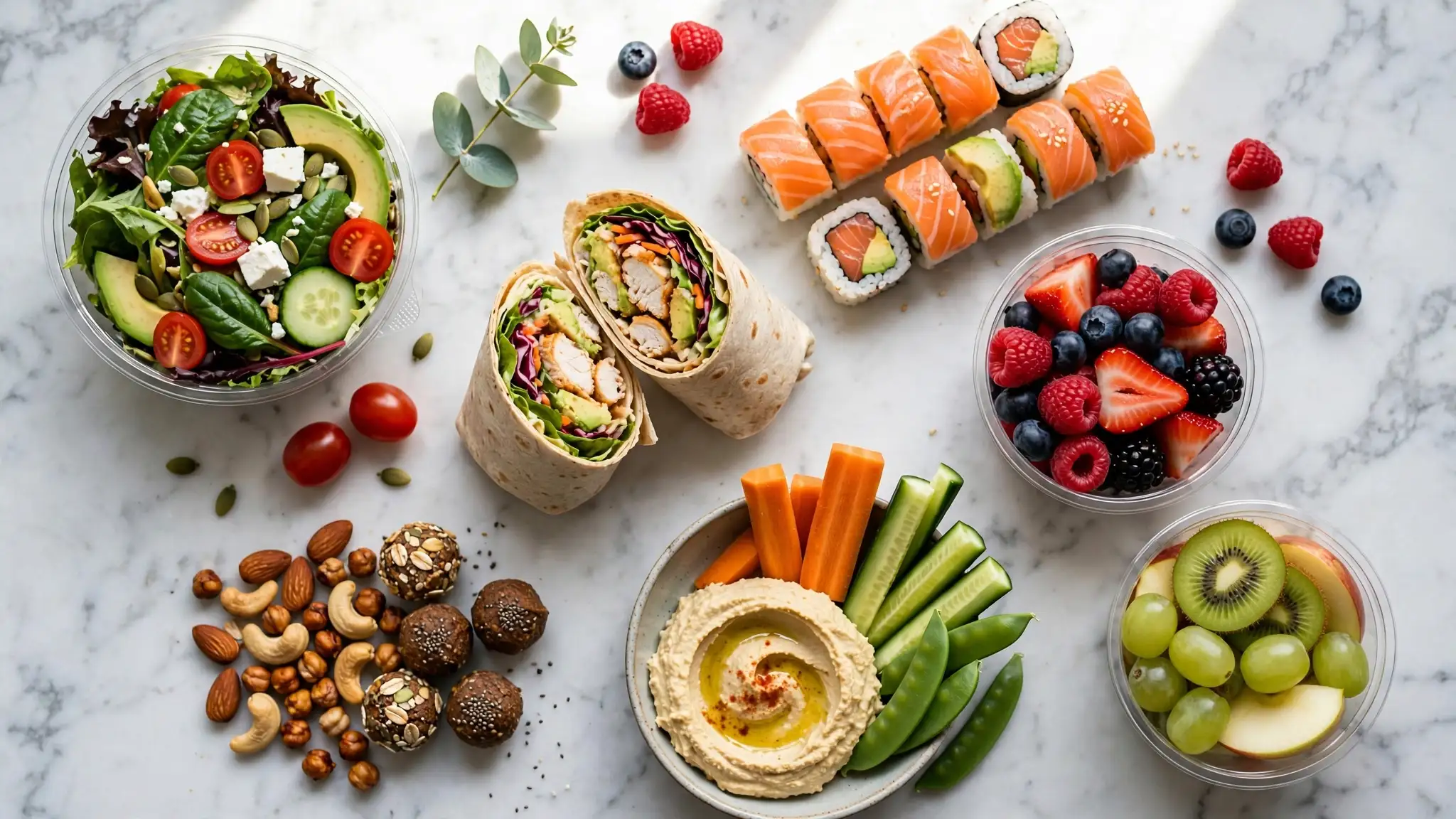
In the long life of the office, my lunch was the same meal that I had near the door on my way back from a meeting, without seeing what I was picking. It wasn’t until a colleague pointed out that my “healthy” chicken wrap blend had more calories than his burger meal, that I started paying attention. That’s why I created a healthy supermarket lunch without cooking UK shops can really provide, rather than any food deal that says “chicken” or “salad” is automatically fine. When I really started comparing a healthy supermarket lunch without cooking UK-wide, the difference between good and bad choices turned out to be huge, even if they were in exactly the same deal.
Table of Contents
Why the Standard Meal Deal Trips People Up
Meal deals aren’t the problem. The way most of us pick from them is, and understanding why makes the whole aisle far easier to navigate. Once you know what’s actually driving the poor choices, spotting a genuinely good combination takes seconds rather than careful label study every single time.
The £3.60 Psychology
Once you’ve paid for the deal, the side and drink feel free, which quietly removes the mental brake most people would apply if they were paying for a chocolate bar and a fizzy drink separately. “It’s included” does a lot of quiet damage to decision-making at the till, since the actual cost of a poor choice gets hidden inside a bundle that already felt like good value.
23% of Meal Deals Exceed the 600 Calorie Guideline
A 2022 review of supermarket lunch meal deals found that 23% exceeded the UK government’s 600 kilocalorie lunch guideline, with the average deal containing around 10% more calories than that benchmark. Given how many people are eating a meal deal at least once a week, more than seven million are sold across the UK on a typical weekday, that’s a meaningful, easily overlooked pattern rather than a rare exception.
Sides and Drinks Do More Damage Than the Main
In most of the meal deals I compared, the sandwich or salad main was rarely the biggest problem. Crisps, chocolate bars, and sugary drinks routinely added 300 to 400 calories on top of a perfectly reasonable main, often more than the main itself contained. Most people scrutinise the main and barely glance at the side, assuming a smaller item can’t do much damage — a large bag of crisps or a bottle of flavoured water with added sugar frequently proves that assumption wrong.
The Lunch Break That Made Me Actually Check What I Was Buying
The moment that changed things was genuinely small. A colleague and I compared our lunches out of curiosity, her burger meal deal against my chicken salad wrap with a smoothie and a bag of crisps. On paper, mine sounded obviously healthier. The numbers said otherwise — my smoothie alone carried more sugar than her can of cola, and the crisps pushed the total calories close to hers.
From that lunch onward, I started actually reading the calorie and sugar figures on the side and drink specifically, since that’s where the real variation was hiding, far more than in the sandwich or salad itself. It became a genuinely quick habit, maybe twenty extra seconds at the fridge, but it changed what ended up in my hands almost every time.
What to Actually Pick, Supermarket by Supermarket
This is based on comparing meal deal ranges and current 2026 pricing across several visits rather than a single trip, since exact products and prices rotate and change seasonally.
Tesco and Sainsbury’s Classic Meal Deals
Tesco’s meal deal currently runs at £3.85 with a Clubcard, and Sainsbury’s at £3.95. Both offer protein pots, salad boxes, and sushi alongside the standard sandwich range, and these consistently outperform a sandwich-and-crisps combination on protein and fibre. Sticking to a protein pot or salad box as the main, paired with fruit rather than a smoothie, keeps the whole deal well within a reasonable range.
Boots Meal Deal
At £3.60 with an Advantage Card, Boots has leaned harder into protein-focused options than most competitors, with dedicated protein boxes and wraps that genuinely deliver on the claim rather than just borrowing the word for marketing. It’s one of the more reliable places to build a properly balanced lunch without much label-reading required.
Waitrose’s Food To Go Range
Waitrose’s Food To Go deal sits at a higher price point, around £5 rather than the £3.50 to £3.95 typical elsewhere, but the baseline nutritional quality across the range tends to be stronger, similar to what I found comparing healthiest ready meals in UK supermarkets, where Waitrose consistently led on nutritional profile too. If you’re not watching every penny, it’s genuinely one of the easiest supermarkets to eat well from without much effort.
Co-op, ASDA, and Morrisons — Budget-Friendly Picks Worth Checking
These three are worth a closer look if price is the priority. Co-op’s £3.75 member deal and Morrisons’ £3.50 member deal both include a reasonable protein pot or salad box option, and ASDA’s £3.74 deal follows a similar pattern. None of the three match Boots or Tesco on dedicated high-protein ranges yet, but a salad box or protein pot paired with fruit works just as well here as anywhere else — it’s simply a matter of knowing which of the standard options to reach for. It’s also worth checking each supermarket’s app for personalised offers, since loyalty pricing on meal deals has become the norm rather than the exception across all three.
| Supermarket | Price | Best Main | Best Side | Skip |
| Boots | £3.60 | Protein box, chicken wrap | Nakd bar, fruit | Sweet treats |
| Co-op | £3.75 | Protein pot, salad box | Fruit, yoghurt | Crisps + chocolate combo |
| ASDA | £3.74 | Chicken salad, protein pot | Fruit pot | Sugary smoothies |
| Tesco | £3.85 | Chicken salad or protein pot | Fruit pot, protein shake | Crisps + chocolate combo |
| Morrisons | £3.50 | Salad box, protein pot | Yoghurt, fruit | Pasta pots, creamy sauces |
| Sainsbury’s | £3.95 | Salad box, sushi | Yoghurt, fruit | Pasta pots with creamy sauces |
| Waitrose | ~£5.00 | Food To Go salad, sushi | Smoothie, fruit | Premium pastries as “side” |
Building a Better Lunch Outside the Meal Deal
Stepping outside the formal meal deal structure, even slightly, opens up options that often work out just as affordable and considerably more nutritious.
Protein Pots, Egg Pots, and Grab-and-Go Options
Pre-packed protein pots, boiled egg pots, and similar grab-and-go items are some of the fastest ways to build a lunch that’s actually filling. If hitting a reasonable protein target matters to you generally, 22 easy ways to eat more protein covers this in more depth, and several of those ideas translate directly to what’s available in a supermarket chiller aisle. They also travel well, so keeping a spare in a bag or desk drawer covers you on days you don’t make it to the shop at all.
Salad Boxes vs Sandwiches
A salad box with a protein source — chicken, egg, or beans — tends to be more filling for fewer calories than an equivalent sandwich, mostly because bread adds calories without adding much satiety in return. A salad box is usually the better default if you’re choosing between similarly priced options, particularly if you find yourself hungry again within an hour or two of a sandwich lunch. Neither option is inherently wrong, and there’s no need to give up sandwiches entirely — it’s more about noticing the pattern on the days hunger creeps back early and adjusting from there. The dressing on a salad box is worth a quick check too, since some carry a surprising amount of sugar or oil on their own, occasionally enough to close the calorie gap with a sandwich completely.
Pairing for Fibre
Most meal deal mains are genuinely light on fibre, so pairing with fruit rather than a smoothie or crisps closes that gap without adding much. This is the same principle I’ve covered in more depth in high-fibre ready meals UK, where checking the actual numbers rather than assuming a meal is balanced made the biggest difference. An apple or a small pot of berries takes literally seconds longer to grab than a bag of crisps sitting right next to it.
What I’ve Noticed in Other People
A colleague who used to grab whatever meal deal was closest now specifically checks the protein figure on the main before choosing anything else, treating the side and drink as an afterthought rather than the other way round. She said the afternoon energy dip she used to blame on “just being tired” became noticeably less frequent once she made that one change. A friend who works nearby swears by building his own version outside the formal deal — a protein pot from the chiller aisle, a piece of fruit, and a bottle of water, usually costing about the same as the meal deal itself but with a noticeably better nutritional profile. A neighbour who works part-time in retail told me she started splitting her meal deal choices deliberately, a properly filling main most days, but allowing herself the crisps or chocolate on Fridays specifically, rather than trying to be strict every single day. She said that small bit of flexibility was what actually made the better choices stick the rest of the week, rather than the all-or-nothing approach she’d tried and abandoned before.
A Word of Caution: Meal Deal Savings Aren’t Always Real
Drinks and snacks inside a deal are sometimes priced higher individually than the same product elsewhere in the shop, specifically to make the bundled saving look more impressive than it is. It’s also worth watching portion creep — some “lunch for one” boxes are genuinely closer to one and a half servings once you check the pack.
Comparing the individual price of the drink and snack against the deal price occasionally reveals it’s barely a saving at all. The same scrutiny is worth applying to packaged snacks generally, not just meal deals — I’ve covered this pattern in more detail in 23 ultra-processed foods to always avoid, which is worth a read if crisps and chocolate bars feature heavily in your usual pick.
When Meal Prep Beats the Meal Deal
A meal deal is genuinely useful on busy days, but it shouldn’t be the only plan. On days I know I’ll be at my desk all day, batch-prepping a lunch at the weekend works out cheaper and gives me far more control over what’s actually in it. 60 healthy meal prep ideas covers several options that travel well to an office fridge and hold up better than a sandwich by Wednesday.
My Honest Lunch Routine Now
None of this requires giving up meal deals or switching to a packed lunch every day, just a slightly different set of defaults at the till:
1. I check the protein and fibre content of the main before anything else
2. I choose fruit or yoghurt over a smoothie or crisps as my side most days
3. I default to water or a plain drink rather than a sugary one
4. I lean toward a salad box or protein pot over a sandwich when the option’s there
5. On days even a meal deal feels like too much decision-making, I fall back on a batch-prepped lunch from the weekend instead
A Note on This Guide
This is general information based on comparing widely available products, not a personalised nutrition plan. Exact meal deal contents, prices, and nutritional figures shift regularly, so treat specific numbers here as a general guide rather than fixed, and it’s always worth checking the current pack for the most accurate figures before relying on any specific number mentioned here. Supermarkets also rotate seasonal options fairly often, so it’s worth checking the fridge each visit rather than assuming last week’s favourite is still the best available choice.
Final Thoughts
A healthy supermarket lunch can be achieved entirely without cooking in UK offices, but it rarely comes from choosing the healthiest item on that label. Sides and drinks are just as important as the main dish, and a 30-second check on the til is actually the difference between a good lunch and a lunch that just looks like it. Since many of us eat the same way most days, this small habit grows considerably in a working year. I still buy food deals most days. I just spend a few extra seconds deciding which parts come in my hands, and that’s all changed.
Frequently Asked Questions
What’s the healthiest supermarket meal deal in the UK?
Boots’ protein-focused options and Waitrose’s Food To Go range tend to offer the strongest overall nutritional profile, though pairing any main with fruit and water improves almost any deal.
Are meal deals actually unhealthy?
Not inherently. Around 23% exceed the 600 calorie lunch guideline, usually because of the side and drink rather than the main itself, so the choice within the deal matters more than the deal format.
What should I avoid in a supermarket meal deal?
Smoothies and sugary drinks, crisps, and chocolate bars tend to add the most unnecessary calories and sugar, often more than the sandwich or salad main itself.
Is a salad box healthier than a sandwich?
Generally yes, when it includes a protein source, since salad boxes tend to be more filling for fewer calories than an equivalent sandwich.
How can I make a meal deal more filling without adding calories?
Choose a protein-rich main like a protein pot or salad box, and pair it with fruit rather than crisps or a smoothie to add fibre without much extra calorie load.
This article is for general information only and isn’t a substitute for personalised medical or dietary advice from a qualified professional.
