THE SHORT VERSION
Eating more protein doesn’t require chicken breast at every meal or a tub of powder. These 22 small, mostly effortless swaps, from the yoghurt you buy to what you put on toast, took me from roughly 55-65g a day to consistently over 100g, and five of them did almost all of the work.
Introduction
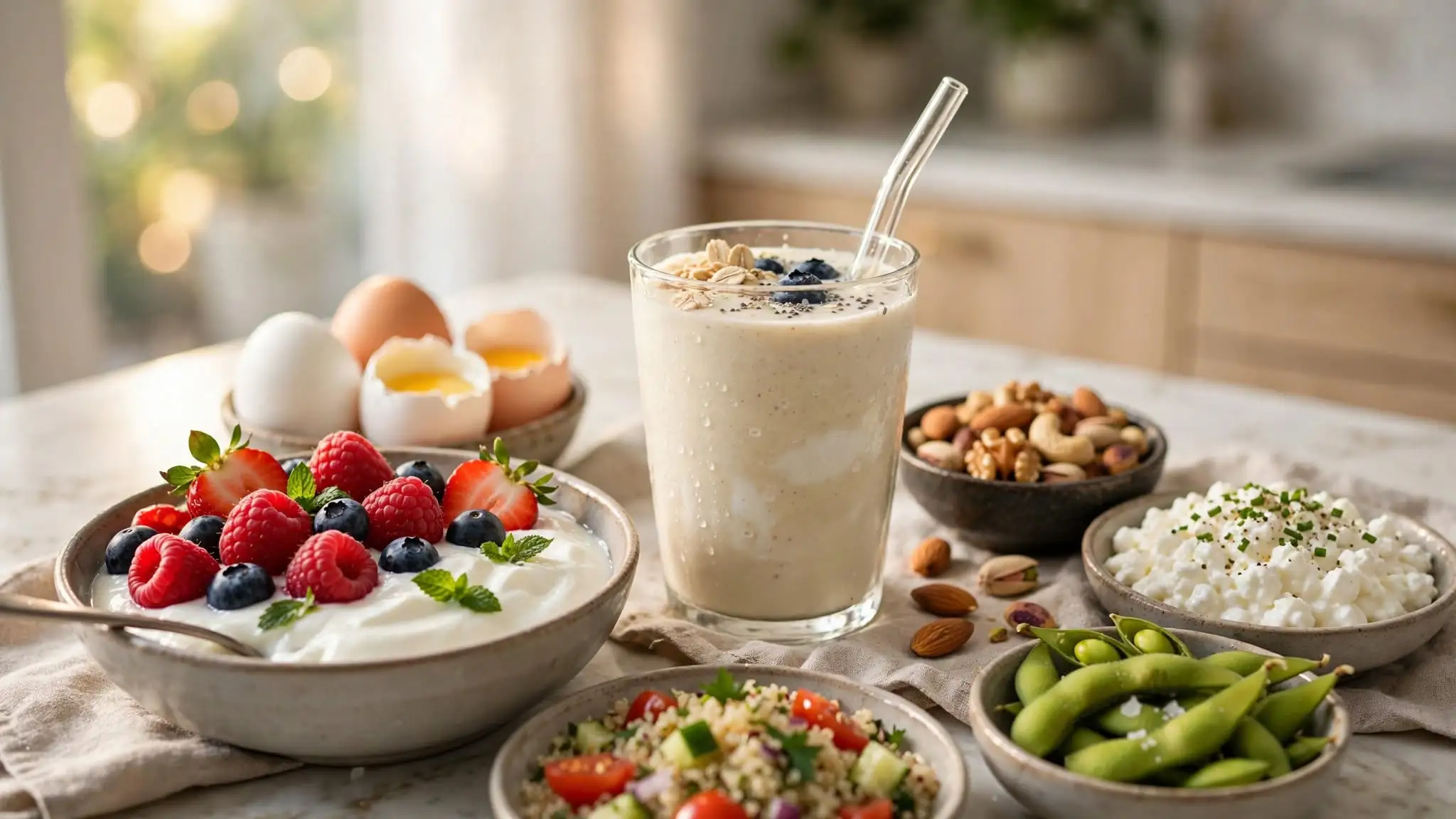
I only found out how little protein I was actually eating because a friend, Tariq, made me open a nutrition tracking app at his kitchen table one evening and log what I’d eaten that day. The number that came up was 54 grams. I remember I was actually arguing with the app, believing that it had counted something wrong, because I ate what I thought was a normal, reasonably healthy diet. Tariq just looked at me and said, “That’s probably half of what you need.” “
That evening made me consider easy ways to eat more protein, not through a complete diet change, but through small daily conversions that I could really maintain. After months of testing, these are 22 easy ways to eat more protein that really worked for me, and the truth is, five of them carried almost the entire load.
Table of Contents
Why Most People Are Eating Far Less Protein Than They Think
The NHS reference figure for a healthy adult is around 0.75g of protein per kilogram of body weight per day, which works out to roughly 56g for an average man and 45g for an average woman.[1] That’s the minimum to prevent deficiency, not necessarily the amount that supports steady energy, muscle maintenance, or a genuinely satisfying diet.
For anyone reasonably active or doing regular resistance training, the picture changes considerably. Research from the International Society of Sports Nutrition puts the useful range for active individuals at 1.4 to 2.0g per kilogram of body weight daily, nearly double the baseline NHS figure.[2] I was eating close to the bare minimum while training three times a week, which explains a lot about why my energy and recovery had felt mediocre for years without an obvious cause.
A typical UK diet leans heavily on carbohydrates by default, toast, cereal, pasta, rice, with protein treated as an afterthought rather than a foundation. I’ve written before about the specific portion sizes that make sense for meat at each meal in my piece on how much meat you should actually eat per meal, and the gap between what people assume they’re eating and what they’re actually eating shows up there too. What surprised me most, looking back at my own numbers, wasn’t that I was eating too little protein on any single bad day, it was that 54g had been my quiet, invisible average for years without a single moment where it felt obviously wrong.
WHAT MATTERED MOST The single most impactful change I made wasn’t a supplement or a meal plan. It was simply making sure breakfast had a genuine protein source in it, rather than treating protein as something to worry about later in the day.
The 22 Easy Ways to Eat More Protein

1. Build breakfast around protein first, not last
For years my breakfast was toast, sometimes with jam, occasionally with nothing at all if I was rushing. Restructuring the meal so a protein source came first, eggs, yoghurt, or a shake, changed how the rest of my day felt almost immediately. It’s a genuinely simple mental reordering, decide what the protein is before deciding what else goes on the plate, and it turned out to be the single change that made the other 21 easier to sustain.
The knock-on effect surprised me more than the change itself. Once breakfast had 20g or more of protein in it, I stopped reaching for a mid-morning pastry almost entirely, without ever deciding to cut them out. The craving simply didn’t show up the way it used to by 10:30.
2. Swap regular yoghurt for Greek yoghurt
Greek yoghurt contains roughly double the protein of regular yoghurt for a similar serving size, purely because of how it’s strained during production. It was one of the easiest single swaps on this entire list. Tariq had actually made this swap himself years earlier without ever framing it as a “protein strategy,” it was just the yoghurt he preferred, which is probably why it took his blunt comment about my own diet to make me notice the pattern in his kitchen.
A standard 150g pot of regular yoghurt gives you around 6g of protein; the same size pot of Greek yoghurt gives closer to 13g. Over a week of daily breakfasts, that’s an extra 49g of protein from changing literally nothing else about the meal.
3. Make two eggs the daily default, not the weekend treat
Two eggs provide around 12g of protein for very little effort or cost. I’d been treating eggs as a Sunday-morning indulgence rather than a weekday staple, which in hindsight made no sense at all.
The cost barrier I’d imagined turned out to be almost nothing; a box of six eggs costs less than most single coffees, and boiling or scrambling two takes under five minutes. The mental block was habit, not practicality.
4. Swap sugary spreads for a proper nut butter
Peanut or almond butter on toast adds a meaningful amount of protein and healthy fat compared with jam or chocolate spread, and it genuinely keeps you fuller for longer.
Two tablespoons of peanut butter carries around 7g of protein, versus essentially zero from jam. It’s worth checking the label though, since some supermarket own-brand versions add sugar and palm oil that quietly undercut the point of the swap.
5. Swap rice for quinoa in at least one meal a week
Quinoa is one of the few plant foods that’s a complete protein, containing all nine essential amino acids, and it slots into most rice-based meals without much adjustment to the recipe.
A cooked cup of quinoa provides around 8g of protein compared with roughly 4g from the same amount of white rice. I started with curry night specifically, since the flavour of the sauce covers quinoa’s slightly nuttier taste while you get used to it.
6. Keep tinned fish stocked for zero-effort protein
Tinned salmon, mackerel, and sardines require no cooking and deliver a substantial protein hit. I keep a small stock in the cupboard specifically for evenings when cooking feels like too much effort.
A single tin of sardines contains around 20g of protein for well under a pound, which makes it one of the cheapest protein sources on this entire list by weight. Mashed onto toast with a squeeze of lemon, it’s dinner in under two minutes.
7. Use cottage cheese as a savoury base, not just a diet food
Cottage cheese has a reputation as a slightly joyless diet food, but spread on toast or stirred through a bowl with vegetables, it’s a genuinely versatile high-protein base.
A 100g serving carries around 11g of protein, more than most people expect from something so mild-tasting. Blitzed briefly in a blender, it also loses the lumpy texture that puts a lot of people off in the first place.
8. Treat protein powder as an ingredient, not a supplement
Rather than drinking shakes on their own, I started stirring a scoop into porridge or pancake batter, which added protein without making an entire meal feel like a supplement.
A single scoop typically adds 20-25g of protein for barely any extra preparation time, and using it inside a meal rather than as a drink on its own made it feel like part of my normal cooking rather than a separate ritual I had to remember.
9. Swap crisps for edamame
Edamame beans, lightly salted and steamed, deliver considerably more protein than the equivalent volume of crisps, and they’re just as satisfying as a snack in front of the television.
A 100g serving of edamame provides around 11g of protein against roughly 6g of protein and considerably more saturated fat from the same weight of crisps. Frozen edamame steamed for a few minutes in the microwave takes barely longer than opening a packet.
10. Stir lentils into sauces, soups, and stews
Lentils blend into a bolognese or a curry without changing the flavour much, but they add fibre and a genuine protein boost to a meal that might otherwise be mostly carbohydrate.
A cooked cup of lentils adds around 18g of protein to whatever they’re stirred into, and dried lentils need no soaking, just added straight into a simmering sauce for the last 20 minutes of cooking.
11. Choose a higher-protein bread by checking the label
Some wholegrain and seeded breads contain nearly double the protein of standard white bread per slice, for roughly the same price. It’s a swap you make once at the supermarket and then never think about again, since it applies automatically to every sandwich or piece of toast from that point on.
Standard white bread runs around 3g of protein per slice; a good seeded wholemeal loaf can reach 6-7g per slice. Two slices at lunch, twice a week, adds up to a noticeable amount over a month without you doing anything differently.
12. Swap fruit juice for milk
A glass of milk provides a meaningful amount of protein that fruit juice simply doesn’t, alongside considerably less sugar. It was an easy swap once I stopped thinking of juice as the “healthy” default.
A 250ml glass of milk carries around 8g of protein and essentially zero from the same amount of orange juice. If you’re not keen on plain milk, a splash in porridge or a milky tea across the day adds up the same way without needing to drink a full glass at once.
13. Add chickpeas to salads and bowls by default
A tin of chickpeas is cheap, requires no preparation beyond draining, and adds a substantial amount of plant protein and fibre to almost any salad or grain bowl.
A full tin, drained, provides around 15g of protein across the tin, and roasting them briefly with a little oil and paprika turns them into a crunchy topping that works on almost anything, salads, soups, even eaten on their own as a snack.
14. Use meat as a flavouring, not the main event
Stretching a smaller amount of meat across a stir-fry or curry bulked out with lentils, beans, or vegetables actually increased my total protein intake for the week, since it let me afford better-quality meat more often.
Halving the meat in a recipe and replacing the volume with lentils or beans often barely changes the total protein of the dish, since both are genuine protein sources, while meaningfully cutting the cost per meal, which made it easier to justify buying better cuts on the days meat was the main focus.
15. Keep hard-boiled eggs in the fridge instead of biscuits
Batch-boiling a tray of eggs once a week gave me a genuinely satisfying snack sitting in the fridge, which made reaching for biscuits a much less automatic decision.
A single hard-boiled egg carries around 6g of protein for roughly 70 calories, considerably more satisfying gram for gram than two biscuits at a similar calorie count. I keep a batch of six ready at all times, since running out was the one thing that reliably sent me back to the biscuit tin.
16. Sprinkle hemp seeds on anything
Hemp seeds have a mild, nutty flavour and blend into porridge, salads, or yoghurt without changing the taste much, while adding a meaningful amount of complete plant protein.
Two tablespoons provide around 6-7g of protein along with a genuine dose of omega-3 fats, and because the flavour is so mild, they’re one of the few additions on this list that never once made a dish taste noticeably different to anyone I’ve served it to.
17. Choose a higher-protein pasta
Pasta made from lentils or chickpeas rather than wheat can contain two to three times the protein of standard pasta, and it cooks and tastes similar enough that most people don’t notice the difference.
A 75g dry portion of standard pasta gives around 9g of protein; the same portion of chickpea or lentil pasta can reach 20-25g. The texture is slightly firmer, which actually holds up better in a bolognese than softer wheat pasta does.
18. Build every plate around a protein-first rule
Rather than building a meal around a carbohydrate and adding protein as an afterthought, I started deciding the protein source first and building everything else around it. It’s a small mental shift with a genuinely large practical effect.
In practice this means opening the fridge and asking “what’s the protein tonight” before anything else, rather than defaulting to “what carb am I in the mood for.” The vegetables and starch then just fill in around whatever that answer is.
19. Batch-cook a protein source every Sunday
Cooking a large batch of chicken, lentils, or tofu on a Sunday meant protein was always ready to add to whatever I was making during the busy part of the week, rather than something I had to think about from scratch each evening. This turned out to be one of the five habits that mattered most, mainly because it removed decision fatigue entirely; on a Tuesday evening, tired and not wanting to cook, having protein already prepared was the difference between eating well and reaching for whatever was fastest.
A single Sunday batch, roughly four portions of chicken thighs or a large pot of lentils, takes about the same active effort as cooking one weeknight meal from scratch, but covers most of the week ahead.
20. Pick the highest-protein option when eating out
Restaurant menus almost always have a higher-protein option sitting quietly next to the popular choice. Making a habit of scanning for it, grilled over fried, a protein bowl over a plain wrap, adds up considerably over a month of eating out, especially since most people eat out or order in more often than they’d initially estimate if asked directly.
At most chain restaurants, a grilled chicken option typically carries 15-20g more protein than the equivalent breaded or fried version, for a similar price and often fewer calories overall.
21. Add a protein source to your drinks, not just your meals
A spoon of Greek yoghurt or a scoop of protein powder blended into a morning smoothie adds protein to a part of the day that’s otherwise almost entirely carbohydrate and sugar from fruit.
A typical fruit-only smoothie can carry less than 3g of protein despite feeling like a substantial breakfast; adding a spoon of Greek yoghurt or a scoop of powder can push that to 15-20g without noticeably changing the taste or texture.
22. Track your protein for two weeks to see what’s actually working
This is the step that actually revealed which of the other 21 habits mattered. Tracking honestly for two weeks showed me, in specific numbers, which swaps were carrying the most weight and which ones barely moved anything.
I used a free tracking app rather than anything paid, and the two weeks weren’t about eating perfectly, they were about seeing my actual numbers clearly enough to know where to focus. That’s genuinely the only reason I know which five habits, out of the 21 above, did most of the work.
How Much Protein Do You Actually Need Each Day?
This isn’t a one-size answer, but a rough reference based on body weight and activity level helps translate the numbers above into something practical for your own life. A sedentary adult sits close to the NHS baseline of 0.75g per kilogram. Someone moderately active generally does better around 1.2 to 1.6g per kilogram. Anyone doing regular resistance training benefits from being nearer 1.6 to 2.0g per kilogram, in line with the sports nutrition research mentioned earlier.[2]
| Activity Level | Protein Target (per kg body weight) |
| Sedentary adult | ~0.75g/kg (NHS baseline) |
| Moderately active | 1.2-1.6g/kg |
| Regular resistance training | 1.6-2.0g/kg |
For me specifically, at around 80kg and moderately active, that works out to a target of roughly 96 to 128g a day. I was previously hitting 55 to 65g most days without realising it. Seeing that gap in concrete numbers, rather than a vague sense that I “probably should eat more protein,” was what actually made the following months of changes stick.
My Honest Verdict — What Actually Moved the Needle
Twenty-two habits is a lot to hold in your head at once, so here’s the honest version: five of them did almost all of the work. Switching to Greek yoghurt, making two eggs the daily default, batch-cooking a protein source every Sunday, stirring lentils into sauces, and keeping hard-boiled eggs in the fridge accounted for the overwhelming majority of the gap I closed.
The rest of the list matters, and I still do most of it, but if you’re only going to adopt five habits from this entire article, those are the five I’d point you toward first. I’ve also looked more broadly at how consistent nutrition choices tie into reducing chronic inflammation and, separately, at the role protein and specific nutrients play in supporting healthy hormonal function, both of which reinforced for me that this wasn’t just about muscle or weight, but about a much wider set of things protein quietly supports.
What I’d Tell Anyone Starting From 54 Grams
If you had told me eighteen months ago that changing the brand of yogurt on Sunday and boiling trays of eggs would be more important than almost everything I changed, I wouldn’t have believed it. But in reality, it happened. None of these 22 changes required a dramatic change, a subscription, or skipping the food I really loved.
Tariq’s candor on the kitchen table is still the same thing I think about today when I take the habitually easy, lighter protein option. Pick two or three of them, honestly track for two weeks like I finally did, and you’ll find your own version of the five habits that matter most. The specific five habits won’t necessarily be the same as mine, but the process of finding them, small conversions, honest tracking, and then emphasizing whatever data really looks like is really worth it.
Medical Disclaimer: This article is for general informational purposes only and does not constitute medical or dietary advice. Individual protein needs vary based on age, health conditions, and activity level. Consult your GP or a registered dietitian before making significant changes to your diet, particularly if you have kidney disease or another condition affecting protein metabolism.
Frequently Asked Questions
What are the easiest ways to eat more protein every day?
Simple swaps like choosing Greek yoghurt over regular yoghurt, adding two eggs to breakfast, keeping tinned fish stocked, and batch-cooking a protein source once a week are among the easiest ways to meaningfully increase daily protein without a full diet overhaul.
How much protein should I eat every day?
The NHS baseline is around 0.75g per kilogram of body weight for a sedentary adult, while active individuals and those doing resistance training generally benefit from 1.2 to 2.0g per kilogram daily.
Can I eat too much protein?
For most healthy adults, moderately high protein intake is not harmful, though very high intakes over a sustained period may strain the kidneys in people with existing kidney conditions, so it’s worth discussing your specific needs with a GP.
What is the best high-protein breakfast?
A breakfast combining eggs or Greek yoghurt with a fibre source, such as oats or wholegrain toast, provides a strong protein base to start the day and supports steadier energy through the morning.
Do I need protein supplements to hit my protein goals?
No, most people can meet their protein targets through whole foods like eggs, dairy, fish, legumes, and meat; protein powder can be a convenient addition but isn’t a requirement for most healthy adults.

I got this web page from my buddy who informed me
regarding this site and now this time I am browsing this site and reading very informative articles here.