Quick Summary
Feeling drained, overstimulated, or oddly irritable after socialising is not a personality flaw — it is a nervous system responding to real sensory and cognitive load. Once I understood what was actually happening in my body, I stopped fighting it and started managing it, and the difference was immediate. This article walks through why it happens, how to tell it apart from social anxiety, and what has genuinely helped me recover faster.
Introduction
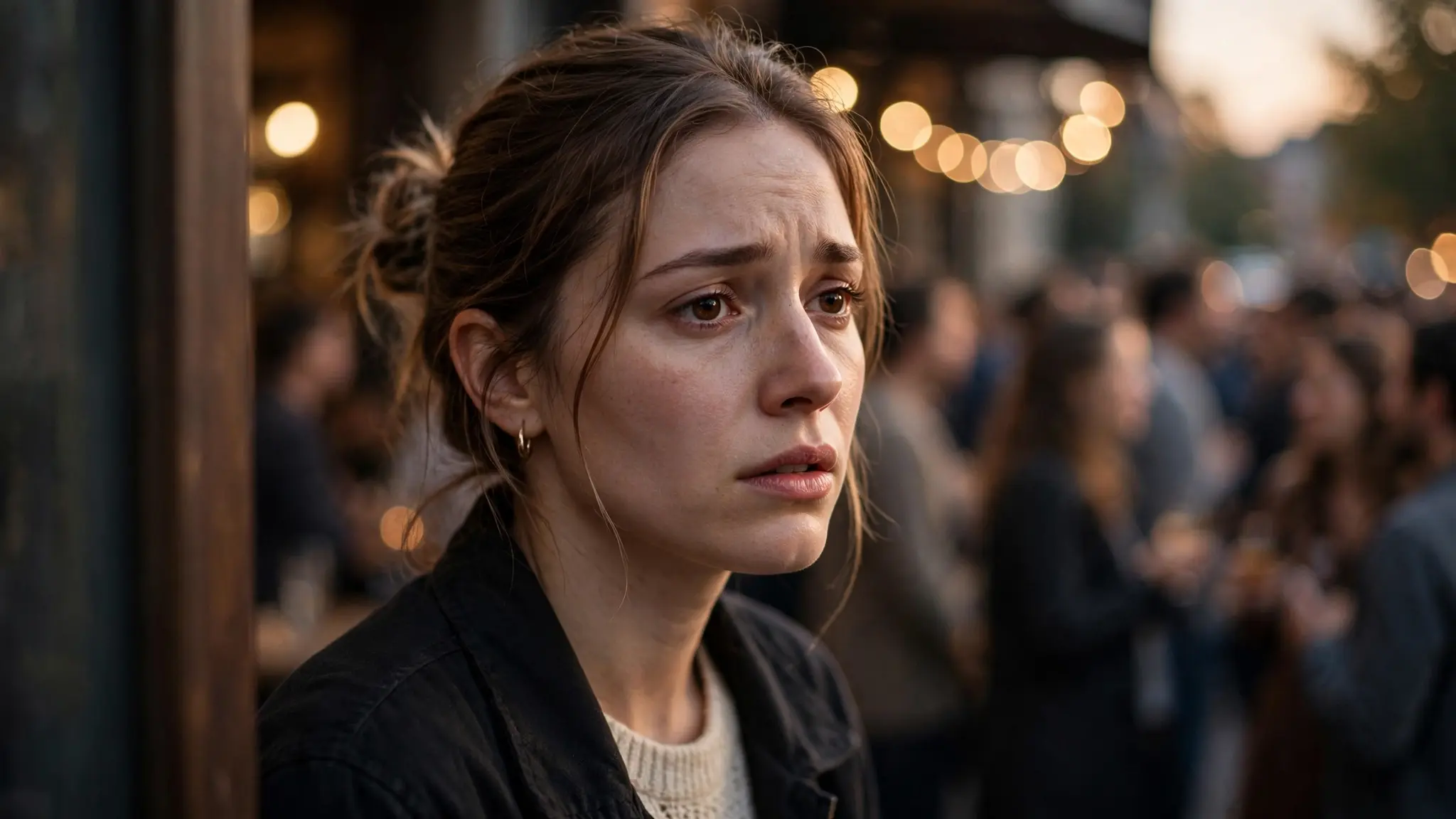
The first time it really occurred to me, I was standing in my kitchen at about midnight, the door closed behind the last guest, and I felt as if someone had locked me against the wall. I didn’t argue with anyone. I didn’t get any bad news. I had a really good evening with people I really like. And yet I felt overstimulated after socialising, which I couldn’t explain to anyone, not even myself.
For a long time, I thought something was wrong with me. I would repeat that evening and look for the moment when nothing really went wrong. What I did not know then, and what I have since spent time researching properly, is that feeling overstimulated after socialising has a real, physiological explanation. It’s not rudeness, it’s not a hidden introversion, and it’s not something you should just “get better” at.
This is the article I wish I had gotten on that particular night. It would have kept me from thinking for months that maybe I was bad at being with people. Instead, I want to dwell on what I actually found—the reasons behind it, the moments that made sense to me, and the small, practical changes that made social interaction sustainable again, rather than having me recover for two days.
Table of Contents
What Overstimulation After Socialising Actually Means
Overstimulation happens when your nervous system receives more sensory and cognitive input than it can process in real time. Voices overlapping, background music, bright lighting, physical closeness, small talk that requires constant social calculation — all of it is information your brain has to filter, interpret, and respond to at once. For most people, a couple of hours of that is manageable. For some of us, it builds up far faster than we expect.
It’s Not Shyness, Introversion, or “Being Antisocial”
One of the most frustrating parts of figuring this out was realising how often it gets mislabeled. I am not shy. I like people. I genuinely enjoy conversation. But sensory overload after a few hours of socialising is a different thing entirely from not wanting to be there. It is a physical response, not a personality trait or a social preference.
The Nervous System Explanation
According to sensory processing research referenced by health bodies including the NHS and NIH, the brain has a finite capacity for processing simultaneous input before it starts to struggle with filtering what matters from what doesn’t. When that threshold is crossed, the autonomic nervous system shifts into a low-grade stress response — the same system responsible for fight-or-flight, just dialled to a lower setting. That’s why overstimulation can feel physical: raised heart rate, tension, restlessness, a genuine urge to leave the room.
What made this click for me was learning that the brain isn’t just processing sound and light at a social event — it’s simultaneously tracking facial expressions, tone shifts, conversational turn-taking, and social rules, all at once, in real time. Researchers sometimes call this cognitive load stacking: each layer on its own is manageable, but stacked together for two or three hours, they add up to something your brain simply wasn’t built to sustain indefinitely without a break.
Overstimulation vs. Social Anxiety vs. Social Burnout — Where the Lines Blur
These three get tangled together constantly, and I tangled them myself for years. The table below is the clearest way I’ve found to separate them:
| Overstimulation | Social Anxiety | Social Burnout | |
| When it starts | During the event, builds gradually | Before the event, anticipatory | Over days or weeks of repeated events |
| Main feeling | Sensory flooding, restlessness | Fear of judgement, self-consciousness | Flat exhaustion, dread of plans |
| What helps | Quiet, low-stimulation recovery time | Reassurance, gradual exposure, therapy | Reducing commitments, deeper rest |
My First Real Encounter With It
The night that made me actually research this was a friend’s engagement party — a warm, well-lit room, maybe forty people, a playlist that was probably not even that loud. About two hours in, I noticed my jaw was tight. My eyes kept drifting to the door. When someone asked me a simple question, I genuinely lost the word I wanted to use. I remember stepping outside for “air” and standing in the car park for ten minutes, not upset, just completely overloaded.
I didn’t tell anyone what was actually happening, because I didn’t have language for it yet. I just said I needed a minute. Looking back, that was the moment my body was telling me it had hit its ceiling — and I had no idea that ceiling even existed.
What confused me most was the timing. I felt completely fine for the first hour. It wasn’t until the room filled up further, the conversations multiplied, and I’d been “on” for a stretch without a break that things shifted. It wasn’t sudden either — it built gradually, the way a phone battery drops from 40% to 10% far faster than it drops from 100% to 40%. By the time I noticed it, I was already deep into it.
I drove home in silence that night, which I now realise was my body already trying to self-regulate before I even understood what regulation meant. The next morning I felt strangely hollowed out, like I’d run a race I hadn’t signed up for. That was the point I started actually looking into why.
“I’m not antisocial. My nervous system just runs out of runway faster than I expect it to — and pretending otherwise was making it worse, not better.”
The Signs I Didn’t Know Were Overstimulation

Physical Signs
A racing heart, a tight jaw, sudden warmth or flushing, restlessness in your hands or legs, and a bone-deep fatigue that shows up almost the moment you’re alone again. Some people notice a headache creeping in an hour or two afterwards, or a sudden wave of tiredness that feels disproportionate to how physically active the evening actually was.
Emotional Signs
Irritability that seems to come from nowhere, snapping at someone you love over something tiny, or feeling strangely flat and detached right after an event that was, objectively, enjoyable. It can also show up as a low-grade tearfulness with no obvious trigger, or an urge to be completely alone that feels almost urgent rather than optional.
Cognitive Signs
Losing words mid-sentence, zoning out mid-conversation, or needing total silence the second you’re in the car. If these physical signs ever escalate into something sharper — a pounding chest, real difficulty breathing, a sense of losing control — I’ve written in detail about what a full panic attack actually feels like, and it’s worth knowing the difference.
Why Some People Get Hit Harder Than Others
Sensory Sensitivity and Personality Wiring
This isn’t a flaw — it’s a genuine difference in how some nervous systems register input. It’s the same underlying sensitivity I explored while writing about sensory processing differences, where I learned just how differently two brains can experience the exact same room.
How Chronic Stress Lowers Your Threshold
Your baseline stress load matters more than people realise. When I was going through a genuinely stressful stretch at work, the same dinner parties that used to leave me fine started leaving me wrecked. That connects directly to how chronic stress reshapes your body over time — a lower baseline means a lower ceiling before you tip into overload.
A Friend Who Experiences This Completely Differently
At that same engagement party, a friend of mine said she felt energised walking out — genuinely more alive than when she arrived. Same room, same noise, same length of evening. That contrast is what finally convinced me this was wiring, not willpower. She wasn’t handling the evening better than me; she was simply processing the exact same input in a completely different way, and neither response was wrong.
That conversation also taught me something useful: she’d learned her own limits years earlier, almost by accident, and had built small habits around them without ever calling it anything formal. She just knew she needed a walk after big family gatherings. I’d never given myself that same permission until I understood why I needed it.
What I Tried That Didn’t Help
I tried “pushing through” and just powering past the fatigue — it only made the crash afterwards worse. I tried cancelling every future plan out of fear of feeling that way again, which just made me lonelier and did nothing to actually address the underlying issue. And I tried over-caffeinating to stay “on” during events, which made the restlessness and the crash both sharper. None of it addressed what was actually happening.
I also tried simply avoiding bigger gatherings altogether for a while. It worked in the narrowest sense — fewer big events meant fewer crashes — but it also meant fewer of the relationships and moments I actually wanted in my life. Avoidance treated the symptom by removing the trigger entirely, rather than helping me understand or manage what was actually going on in my body.
What Actually Helped Me Recover Faster
The 10-Minute Reset Before I Even Leave the Event
I now step outside, or find a quiet corner, for ten minutes near the end of any gathering — before the overload peaks, not after. Slow breathing, no phone, no conversation. It sounds small. It has made a genuine difference.
Building Recovery Time Into My Calendar
I stopped stacking social plans back to back. If I have a big event on Saturday, Sunday is deliberately quiet. That single change cut my “overstimulation hangover” days by more than half.
Choosing My Environment, Not Just My Company
I started paying attention to venue, not just guest list. A quieter restaurant with good acoustics leaves me far less drained than a loud one, even with the exact same people. Where I can, I now suggest the venue myself — a small, practical shift that gives me some control over my own sensory input before the evening even starts.
A Small Habit Change That Made the Biggest Difference
I sit in my car in silence for five minutes before driving home from anything social — no radio, no calls. It gives my nervous system a clear boundary between “event” and “home,” and it’s the single habit that’s helped most, alongside the general mental resilience approach I wrote about in training your mind the way you train your body.
“I’m not avoiding people. I’m just giving my system a landing strip instead of asking it to stop mid-air.”
When It’s More Than Just Overstimulation
Signs It Might Be Social Anxiety Instead
If the dread shows up before an event, not during or after it, and it’s driven by fear of judgement rather than sensory load, that pattern points more towards social anxiety than overstimulation. Overstimulation tends to build once you’re actually in the environment; anxiety tends to build in anticipation of it.
When to Talk to a GP or Therapist
If this is affecting your work, relationships, or willingness to leave the house at all, it’s worth speaking to a GP or therapist rather than managing it alone. You can find more on emotional wellbeing and mental health topics like this one on the blog, but a professional conversation matters more than any article, mine included.
How I Socialise Differently Now
I still go to parties, dinners, and gatherings — I just do it on different terms. Smaller groups more often, rather than huge groups occasionally. Built-in exit points instead of feeling trapped until the end. And honesty with close friends about what I need, instead of quietly disappearing and hoping no one noticed.
A few close friends now know that if I go quiet at an event, it isn’t disinterest — it’s my system telling me it needs a minute. Saying that out loud the first time felt awkward. It has since become one of the more useful sentences I’ve ever said to the people I care about, because it means I no longer have to choose between showing up for people and protecting my own energy.
Understanding why I feel overstimulated after socialising didn’t make me less social. It made me sustainably social — and that’s a trade I’d make every time.
Frequently Asked Questions
Is feeling overstimulated after socialising normal?
Yes. It’s a common nervous system response to sensory and cognitive overload, not a sign that something is wrong with you.
What’s the difference between overstimulation and social anxiety?
Overstimulation builds during an event from sensory load; social anxiety usually starts before an event and is driven by fear of judgement.
How long should overstimulation after socialising last?
Most people recover within a few hours to a day with quiet rest. If it lasts much longer or worsens, it’s worth checking with a doctor.
Can introverts and extroverts both experience this?
Yes. It’s tied to sensory sensitivity and nervous system wiring, not simply introversion or extroversion.
What helps you recover quickly after feeling overstimulated?
Quiet, low-stimulation time alone, reduced screen and noise exposure, and avoiding back-to-back social commitments.
This article is for general information only and is not a substitute for professional medical or mental health advice. Please consult a doctor or qualified therapist for personal concerns.
