The Short Version:
I read a granola bar label properly for the first time and found nineteen ingredients, most of which I couldn’t identify. That night sent me through my whole kitchen looking for ultra processed foods to always avoid, and I found 23 of them hiding behind health-conscious packaging. This is the full list, grouped by meal, plus the realistic swaps that actually stuck.
Introduction
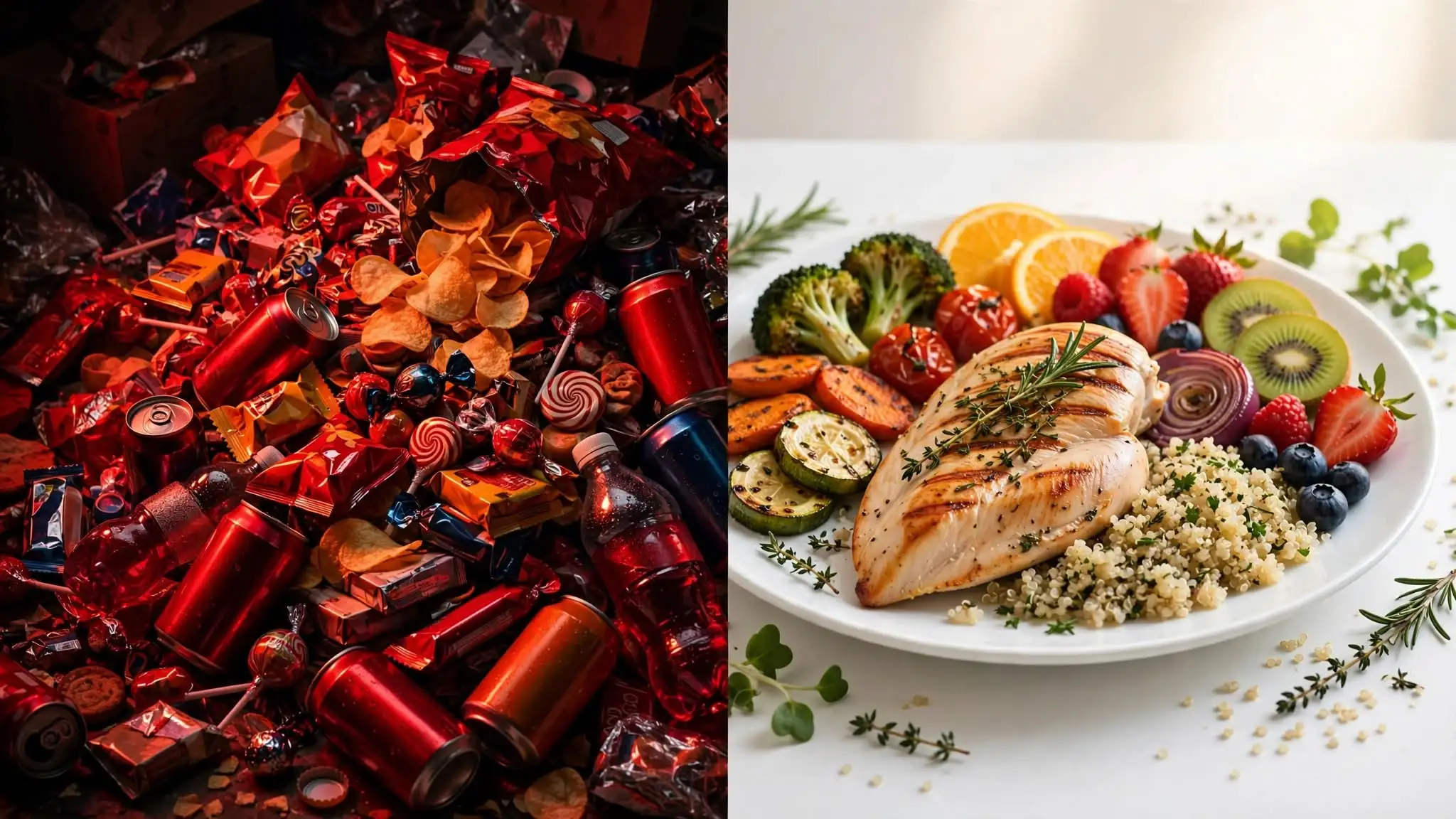
I used to buy a certain brand of granola bar because it had a picture of oatmeal and strawberries on its packaging and printed the word “natural” on top. I ate it two or three times a week for years, wholeheartedly believing that I was deciding to have a reasonable snack, until one night I flipped the package over and read the ingredient list thoroughly instead of just looking at the front.
There were nineteen ingredients. I recognized about six of them. The rest was emulsifiers, stabilizers, and a kind of syrup I’d never heard of, which I’d been calling healthy food for years. That same night, I began reading the labels correctly, which took me down a long, occasionally humbling path through my own kitchen cabinets in search of every hidden entry on the list of ultra processed foods to always avoid. This article is the culmination of the 23 I found, why I changed them, and why the difference between packing and ingredient list proved to be far more important than I’d ever appreciated that granola bar before.
Table of Contents
The Label That Made Me Start Actually Reading Ingredients
The granola bar wasn’t an isolated incident — it just happened to be the one that finally got my attention. Once I started reading labels properly, I realised how much of my grocery shopping had been guided entirely by front-of-pack marketing rather than anything resembling genuine nutritional judgement. Words like “natural,” “wholesome,” and “made with real fruit” had been doing an enormous amount of work convincing me a product deserved a place in my trolley.
I went through my kitchen that same week and read every label I owned properly, for what felt like the first time in years. The results were humbling. A surprising number of foods I’d considered safe, sensible choices belonged in the exact same category as the obviously indulgent things I’d always known were treats. The line between “treat” and “healthy everyday food” had been far blurrier than I’d ever admitted to myself.
I’d already started questioning which trends and products deserved scepticism when I worked through some of the unhealthy diet trends people fall for without checking the evidence, and this label-reading exercise turned out to be the practical, everyday version of that same scepticism applied directly to my own shopping basket.
What Ultra-Processed Actually Means
The NOVA Classification System, Explained Simply
Researchers commonly use a framework called the NOVA classification to sort food by how much industrial processing it’s been through, rather than vague categories like “junk food” or “health food” that don’t actually tell you much. NOVA group one covers unprocessed or minimally processed foods: fruit, vegetables, eggs, plain meat. Group two covers processed culinary ingredients like oil, salt, and butter. Group three covers foods made by combining group one and two items — fresh bread, canned vegetables, tinned fish.
Group four is where ultra-processed foods sit. These are industrial formulations typically containing five or more ingredients, many of which you wouldn’t find in a home kitchen at all: emulsifiers, stabilisers, modified starches, protein isolates, and flavour compounds engineered specifically to make a product more palatable and shelf-stable than its actual ingredients would otherwise allow.
Why Some Processing Is Fine and Some Isn’t
This distinction matters because processing itself isn’t the enemy. Freezing vegetables, pasteurising milk, and fermenting yogurt are all forms of processing that don’t strip out nutritional value or introduce a long list of unfamiliar additives. The concern is specifically with ultra-processing: the kind that transforms a food so significantly it barely resembles its original ingredients, while adding sugar, refined fat, salt, and additives in combinations rarely seen in any home kitchen.
This is the same distinction I’d already drawn when comparing genuinely nutrient-dense vegetables against the nutritionally lightweight ones that just happen to sit in the same supermarket aisle. Shelf position or packaging tells you almost nothing useful. What’s actually inside does.
The 23 Ultra Processed Foods I Used to Eat Without Thinking
Breakfast Foods That Are Not What They Seem

1. Breakfast cereals — marketed toward health-conscious shoppers frequently contain more added sugar per serving than a biscuit, dressed up with claims about whole grains and added vitamins printed prominently on the box. The fortification itself is genuine, but it doesn’t offset the sugar content, which is usually listed several ingredients down rather than in the headline claims. Checking the sugar line per 100g rather than per serving is the quickest way to compare boxes fairly, since serving sizes vary enough between brands to make direct comparison misleading otherwise.
2. Flavoured yogurts — particularly the ones aimed at children, often contain as much sugar as a small dessert alongside artificial colourings and thickeners added purely for visual appeal and shelf stability rather than nutrition. Plain yogurt with the same fruit stirred in at home typically contains a fraction of the sugar. The thickeners specifically are also why some flavoured yogurts hold their shape so uniformly, a texture cue that plain, unthickened yogurt with real fruit mixed in will never quite replicate.
3. Granola bars — my original offender, typically combine refined oils, several types of syrup, and emulsifiers into something marketed as a wholesome snack. The oats themselves, which is usually the only ingredient anyone actually notices, can make up a surprisingly small proportion of the overall bar. Homemade versions, baked in batches with honey and nut butter binding the oats instead of syrup, keep for over a week and cost a fraction of the shop-bought price once you’ve made them a couple of times.
4. Instant coffee mixes and flavoured coffee sachets — often add sugar, artificial creamer, and preservatives that turn a simple drink into something closer to a dessert, sometimes carrying more sugar per sachet than a chocolate biscuit for what’s marketed as a morning pick-me-up. Plain instant or ground coffee with a splash of real milk avoids the added sugar entirely, while still delivering the caffeine most people are actually after.
5. Shop-bought pastries and muffins — labelled as a quick breakfast option are typically loaded with refined flour, industrial fats, and preservatives that extend shelf life well beyond what a homemade version would ever manage, often using palm oil specifically for its stability at room temperature rather than any nutritional benefit. A muffin that stays soft on a shelf for three weeks is a reasonable clue that something other than flour, eggs, and sugar is doing a lot of the structural work.
6. Flavoured instant oatmeal sachets — despite the oats themselves being a genuinely healthy base ingredient, often arrive pre-mixed with significant added sugar and artificial flavouring, undoing much of the benefit of what would otherwise be one of the better breakfast choices on this entire list. Buying plain instant or rolled oats and adding your own fruit or a spoon of honey takes the same two minutes to prepare, for a fraction of the sugar.
Snacks Marketed as Healthy
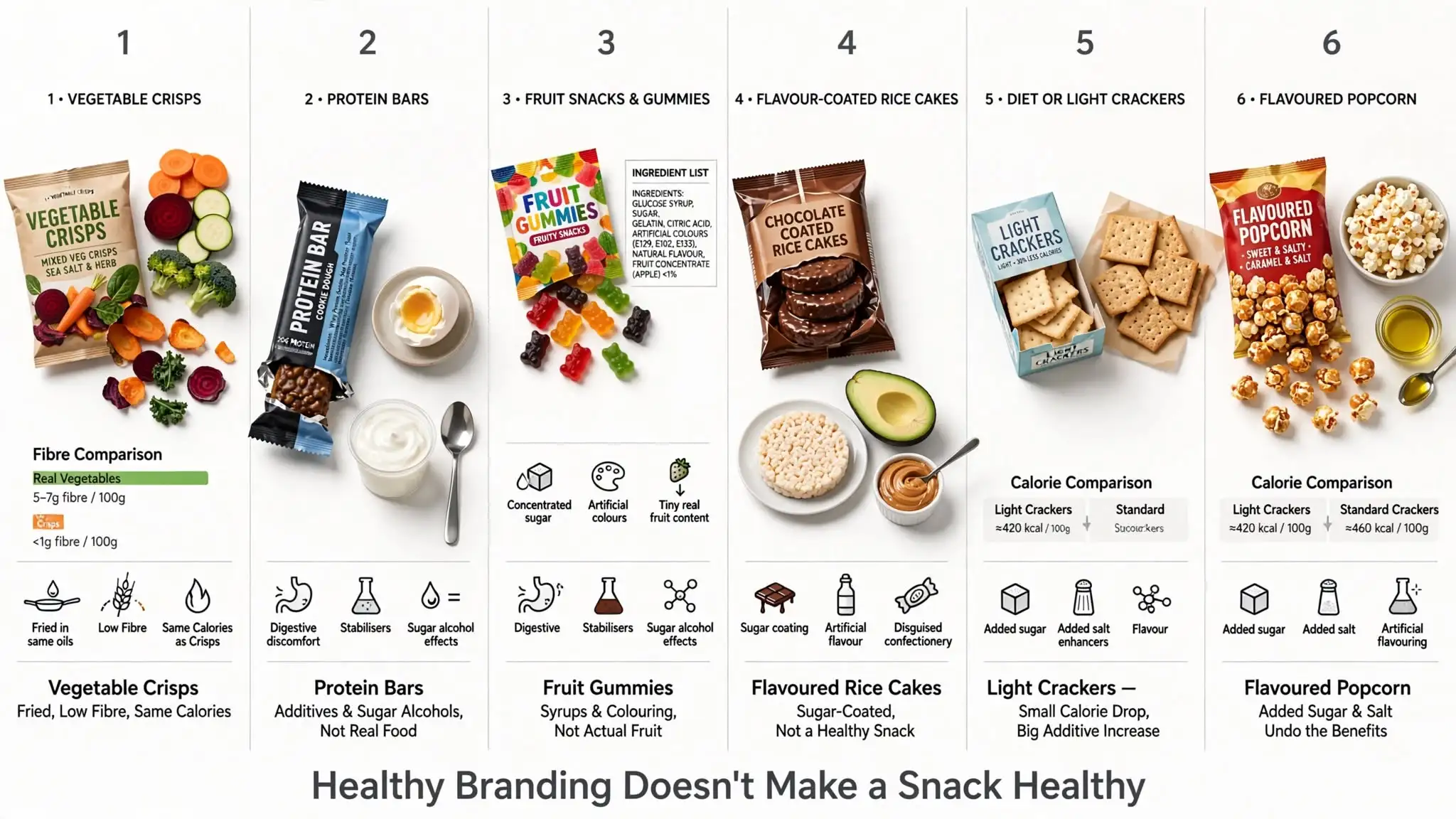
7. Vegetable crisps — despite the name, are frequently fried in the same oils as regular crisps and provide a fraction of the fibre and nutrients of the actual vegetable they’re named after, since most of what made the vegetable nutritious doesn’t survive the frying and dehydration process intact. The calorie count per bag is also frequently identical to a standard potato crisp, which the vegetable branding on the front rarely makes obvious.
8. Protein bars — marketed for fitness and weight management often rely on protein isolates, sugar alcohols, and a long list of stabilisers to hold their shape and texture, and the sugar alcohols specifically can cause noticeable digestive discomfort in anyone eating more than one a day. A boiled egg or a small portion of Greek yogurt delivers comparable protein with a far shorter, more recognisable ingredient list.
9. Fruit snacks and gummies — use the word “fruit” prominently while containing concentrated sugar syrups and artificial colouring rather than meaningful amounts of actual fruit, often listing fruit juice concentrate near the bottom of the ingredient list despite it being the headline word on the packet. Ingredient lists are ordered by quantity, so checking where “fruit” actually sits on that list, rather than trusting the name of the product, tells you nearly everything you need to know.
10. Flavour-coated rice cakes — undermine the simplicity of plain rice cakes by adding a sugar or artificial flavour coating that turns a genuinely light, low-calorie snack into something far closer to confectionery, while keeping the health-food reputation of the plain version. Plain rice cakes with a thin layer of nut butter or mashed avocado make a very similar snack with genuine nutritional substance added instead of a sugar coating.
11. “Diet” or “light” crackers — frequently compensate for reduced fat with additional sugar, salt, and artificial flavour enhancers to maintain the same level of palatability, which means the calorie saving is often smaller than the “light” labelling implies. Comparing the calorie count of the “light” version directly against the standard version on the same shelf is often a genuinely surprising exercise, since the gap is regularly far smaller than the packaging suggests.
12. Flavoured popcorn — particularly the sweet and savoury varieties sold in resealable bags, typically carries significant added sugar, salt, and artificial flavouring well beyond what plain air-popped corn would ever need, turning one of the genuinely better snack options into one of the more processed ones on shelf. A bag of plain kernels costs a fraction of the flavoured version and takes under three minutes to pop at home with a drizzle of olive oil and a pinch of salt.
This was the category that genuinely surprised me most, because so many of these products are positioned directly opposite the obviously indulgent snacks on supermarket shelves, as though proximity to crisps and biscuits alone made them the responsible choice.
Convenience Meals and Sauces
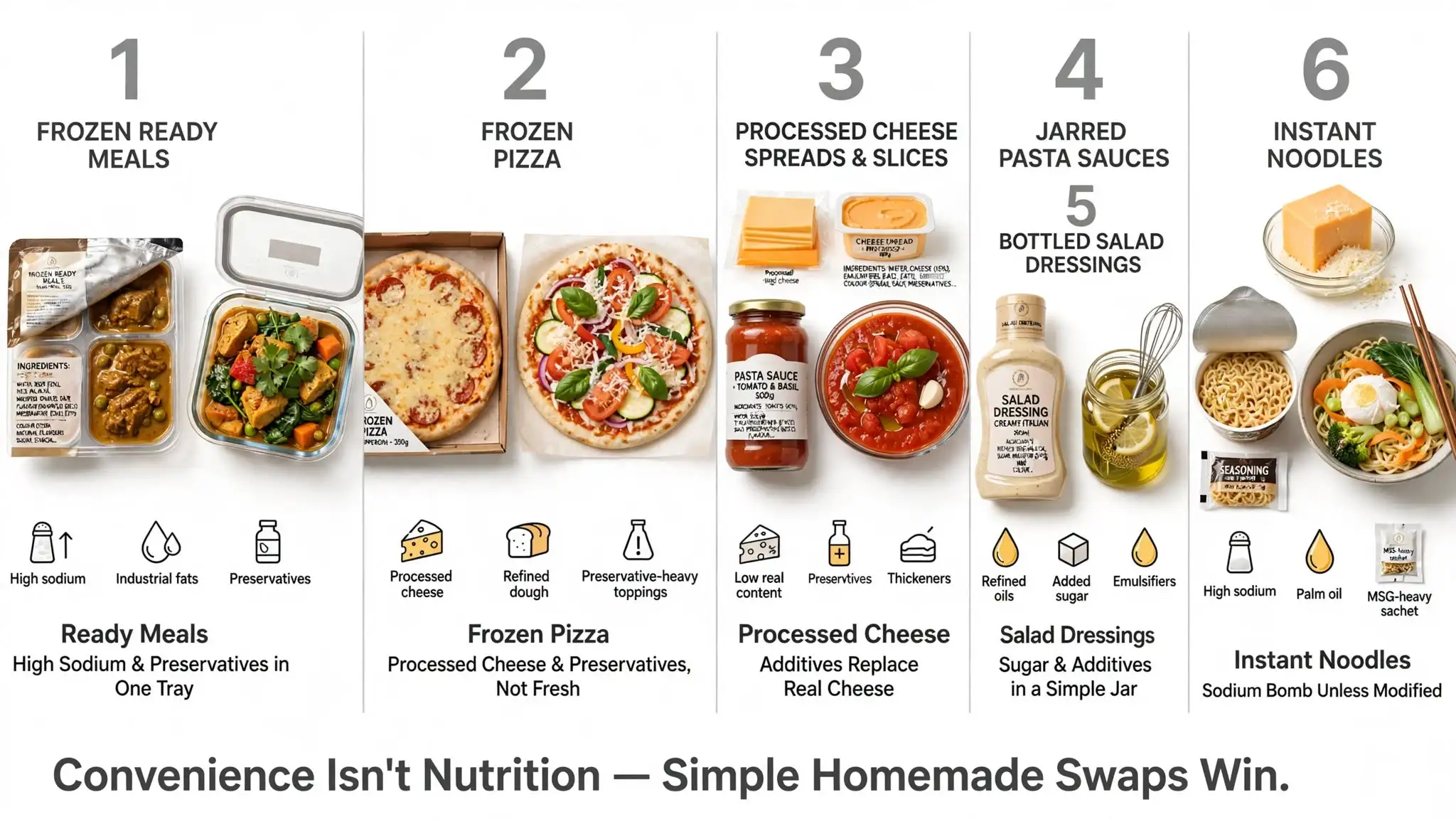
13. Frozen ready meals — typically combine high sodium content with industrial fats and a long list of preservatives needed to survive months in a freezer without degrading, with sodium levels in some meals reaching close to half a day’s recommended intake in a single portion. Batch-cooking a simple curry or stew and freezing it in portions yourself avoids nearly all of this while taking barely more effort than the shopping trip to buy the ready meal in the first place.
14. Frozen pizza — relies on processed cheese alternatives, refined dough, and preservative-heavy toppings to maintain consistency and shelf life across mass production, which is part of why it rarely tastes close to a fresh version made with real mozzarella and a simple dough. A flatbread base with real mozzarella, tomato passata, and whatever vegetables are in the fridge takes about the same fifteen minutes in the oven as a frozen one.
15. Processed cheese spreads and slices — contain a surprisingly small proportion of actual cheese, supplemented heavily with emulsifiers, colourings, and preservatives, which is why they melt so uniformly and never quite taste like the block cheese they’re derived from. A block of real cheddar or mozzarella, grated fresh, costs about the same per portion and melts just as easily in most everyday cooking.
16. Jarred pasta sauces — even ones marketed as simple or traditional, frequently contain added sugar, thickeners, and preservatives that a homemade tomato sauce would never need, with some jars carrying more added sugar per serving than a similarly sized portion of ice cream. A tin of chopped tomatoes, garlic, and a handful of basil simmered for fifteen minutes makes a sauce with none of that, for roughly the same price as the jar.
17. Bottled salad dressings — often undo much of the nutritional benefit of the salad itself, relying on refined oils, added sugar, and emulsifiers to achieve a long shelf life and consistent texture, turning what should be the healthiest part of a meal into one of its more processed components. A jar shaken with olive oil, vinegar or lemon juice, and a pinch of mustard keeps for weeks in the fridge and takes under a minute to make.
18. Instant noodles — combine refined flour, palm oil, and a flavour sachet loaded with sodium and monosodium glutamate into one of the most heavily processed convenience foods widely available, with a single sachet sometimes containing close to a full day’s recommended sodium intake on its own. Using only half the seasoning sachet and adding fresh vegetables or an egg cuts the sodium significantly while making the meal noticeably more filling.
Drinks and Sweet Treats
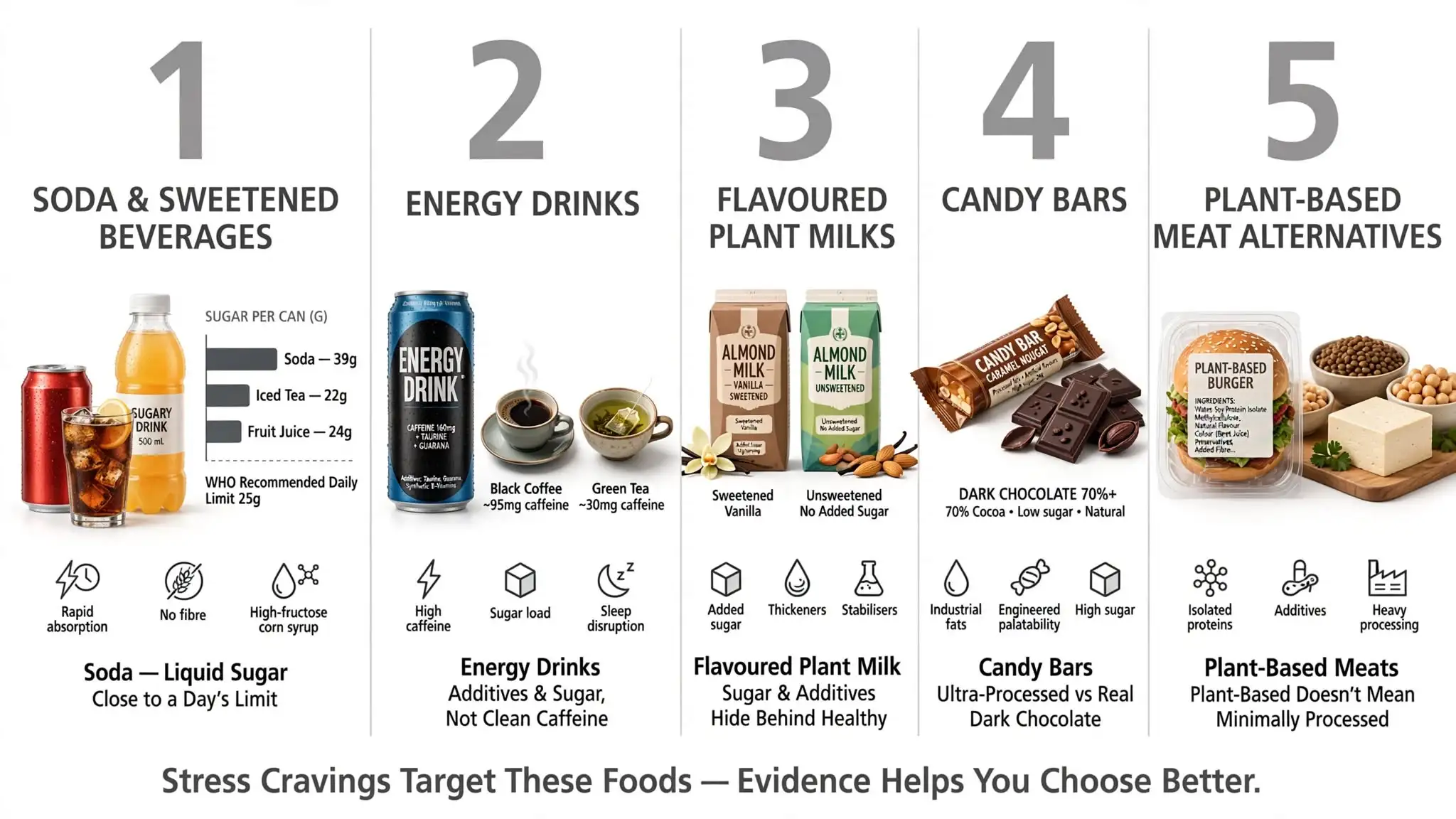
19. Soda and other sweetened beverages — deliver large amounts of added sugar or high-fructose corn syrup with essentially no nutritional value attached, and because it arrives in liquid form, the sugar is absorbed rapidly without any fibre to slow it down. A single can regularly contains close to the entire daily recommended added sugar limit for an adult, in one sitting, from a drink most people don’t think of as a meaningful source of sugar at all.
20. Energy drinks — combine high caffeine content with sugar, artificial flavouring, and a range of additives that can affect heart rate and sleep quality with regular consumption, particularly when consumed later in the day or stacked with other caffeinated drinks. Black coffee or green tea deliver a comparable caffeine boost without the sugar load or the taurine and additive blends found in most energy drink formulations.
21. Flavoured plant milks — despite their health-conscious positioning, frequently contain added sugar, thickeners, and stabilisers that plain dairy or unsweetened plant milk simply doesn’t need, undermining much of the reason people switch to them in the first place. The unsweetened version of the exact same brand often sits right next to it on the shelf, for the same price, with meaningfully less added sugar.
22. Candy bars — combine processed sugar, industrial fats, and artificial additives in a combination specifically engineered for palatability rather than nutrition, which is precisely why they’re formulated to be difficult to stop eating once started. A square or two of dark chocolate above 70% cocoa satisfies a similar craving with meaningfully less sugar and a shorter, more recognisable ingredient list.
23. Plant-based meat alternatives — often marketed heavily around their health credentials, frequently rely on extensive processing, isolated proteins, and a long list of additives to replicate the texture and flavour of meat, meaning “plant-based” doesn’t automatically translate to “minimally processed.” Whole plant proteins like lentils, chickpeas, and tofu deliver a comparable protein source with a fraction of the ingredient list and none of the isolates.
I’d already worked through how the foods we reach for under stress tend to be exactly this category — convenient, hyper-palatable, heavily marketed — and seeing them all listed together like this made that pattern impossible to ignore.
5 Ingredients to Watch for on Any Label: High-fructose corn syrup. Hydrogenated or partially hydrogenated oils. Modified starch. Protein isolates (soy, pea, or whey isolate specifically). Artificial colours listed by number (e.g. Red 40, Yellow 5).
What I Eat Instead, Realistic Swaps Not Perfection
The 80/20 Approach That Actually Works
I want to be clear that I haven’t eliminated every item on this list from my life completely, and I don’t think that’s a realistic or even necessary goal for most people. What changed is the proportion. Roughly 80 percent of what I eat now comes from whole or minimally processed ingredients, with the remaining 20 percent left genuinely flexible for convenience, social occasions, or simply wanting something I enjoy without overthinking it. This mirrors the same swap-based, non-perfectionist approach I detailed in 31 easy food swaps I actually tested myself, where the swaps that stuck were never the most extreme ones.
Building a Pantry That Makes the Better Choice the Easy One
The single biggest factor in making this sustainable wasn’t willpower — it was groundwork. Once I’d properly stocked my kitchen with the kind of pantry staples that make a quick, whole-ingredient meal just as convenient as reaching for something packaged, the choice mostly made itself on tired evenings rather than requiring constant deliberation.
That same principle extended naturally into how I started cooking on evenings I wanted something warm and comforting rather than something quick and packaged. Homemade versions of soup, pasta, and tray bakes turned out to take barely longer than heating a ready meal once I’d built the habit, while avoiding almost everything on this list in one go.
3 Swaps I Made That Stuck: Plain Greek yogurt with fresh fruit instead of flavoured yogurt. Homemade tomato sauce from tinned tomatoes instead of jarred sauce. Air-popped popcorn with a pinch of salt instead of flavoured packet popcorn.
Conclusion
That granola bar is still more vivid in my memory than it probably deserves, especially because I had confidently recommended it to my friends for years, before I read what was hidden behind the packet. The 23 ultra processed foods to always avoid on this list aren’t a recipe for perfection, and it’s not a matter of completely eliminating convenience. These are just the products that I would now ask anyone to read properly before relying on the front of the packaging, because the difference between the market and what actually exists is much greater for most of us than most of us do unless we check it ourselves.
This article is based on personal experience and general nutritional awareness, including the NOVA food classification framework. It is not medical advice. Occasional consumption of processed foods is not inherently harmful within an otherwise balanced diet. If you have specific dietary requirements or health conditions, please consult a GP or registered dietitian before making significant changes to your diet.
Frequently Asked Questions
What exactly counts as an ultra-processed food?
Ultra-processed foods are industrial formulations typically containing five or more ingredients, including additives like emulsifiers, stabilisers, and flavour compounds rarely used in home cooking, as defined by the NOVA food classification system.
Are all processed foods unhealthy?
No — processing itself isn’t inherently harmful, since freezing, pasteurising, and fermenting are all forms of processing that preserve nutritional value; the concern is specifically with ultra-processed foods that add significant sugar, refined fat, salt, and additives.
What are the health risks of eating too many ultra-processed foods?
Research has linked high ultra-processed food intake to increased risks of obesity, type 2 diabetes, cardiovascular disease, and digestive issues, largely due to excess sugar, sodium, unhealthy fats, and reduced nutrient density.
How can I tell if a food is ultra-processed from the label?
Look for five or more ingredients, particularly ones you wouldn’t recognise or use in home cooking, such as protein isolates, modified starches, emulsifiers, or numbered artificial colours and preservatives.
What are good swaps for common ultra-processed snacks?
Plain Greek yogurt with fresh fruit instead of flavoured yogurt, homemade tomato sauce instead of jarred sauce, and air-popped popcorn instead of flavoured packet popcorn are simple, sustainable starting points.

31 thoughts on “23 Ultra Processed Foods to Always Avoid”
Comments are closed.