The Short Version
My aunt spent years assuming getting active in your 50s wasn’t worth attempting once her knees started aching. A 15-year study on Australian women’s health changed her mind, and a genuinely small first step — a 15-minute walk after dinner — turned into a routine that reshaped her sleep, her joints, and her social life. None of it required a gym.
Introduction
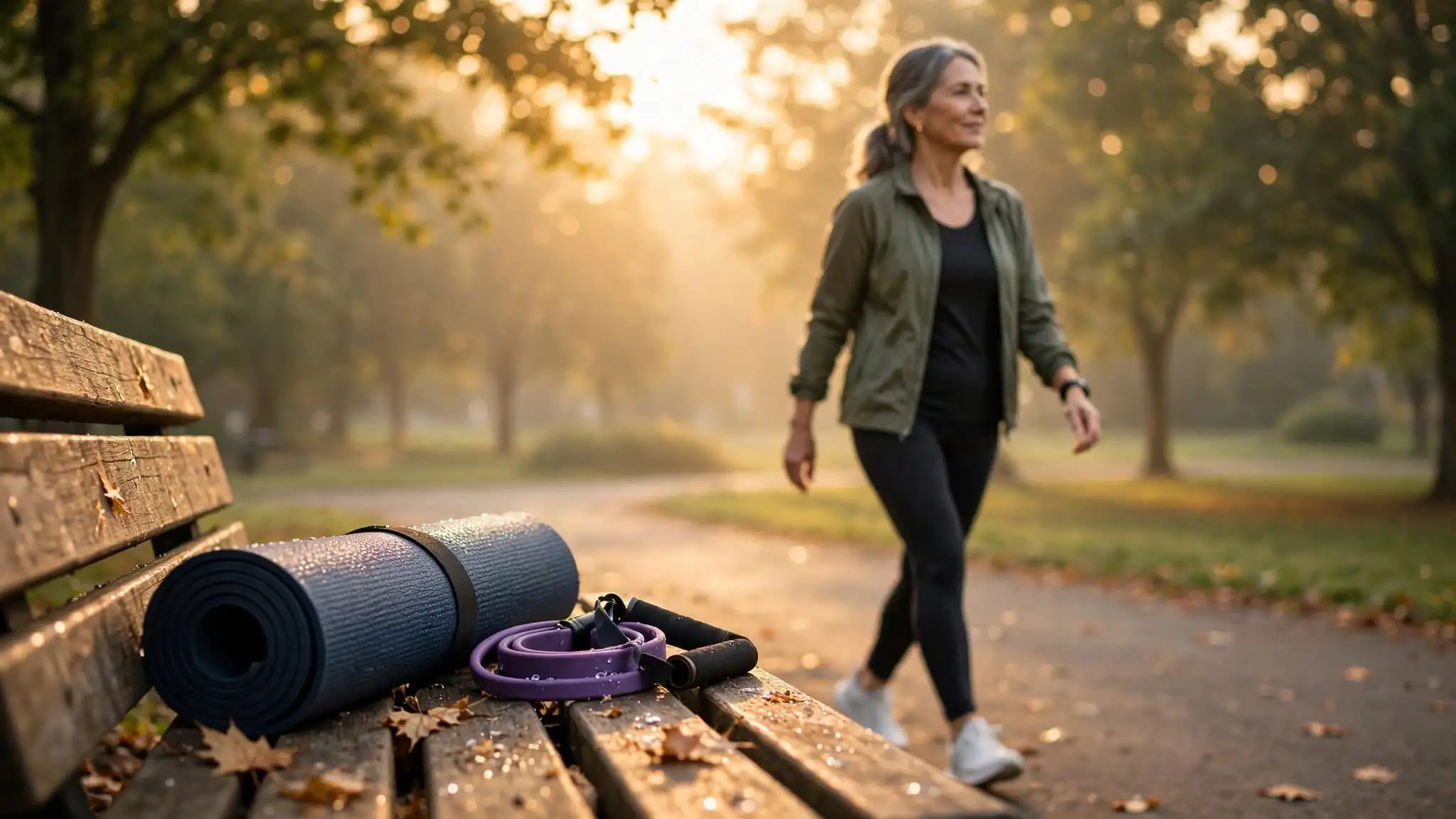
My aunt used to say the same thing at nearly every family gathering: she had gone through that phase, and there was no point in trying to keep up with it anymore. She would say this with a hand on her knee, half joking and half disappointed, and for years none of us—myself included—ever really objected to it.
I didn’t intend to write about getting active in your 50s. I started paying attention because I saw a person I’ve known my whole life quietly restraining herself from trying, based on an assumption she had never experienced. She wasn’t lazy, and wasn’t denying her health. She had just absorbed, as many of us do, the idea that fitness is something you’ve either consistently maintained since your twenties, or lost permanently.
What changed his mind wasn’t a lecture from me, which had never been successful before. It was a study that I came across almost by accident, and a version of getting active in your 50s that was completely different from the all-or-nothing picture he had made in his mind.
Table of Contents
Why She Believed It Was Too Late
Before I go further, it’s worth saying plainly what this article is not. It isn’t a claim that exercise fixes everything, and it isn’t a suggestion that my aunt’s experience will play out identically for every woman in her fifties. It’s simply an honest account of how one specific, deeply ingrained belief got dismantled — and what replaced it.
The Common Myth Around Midlife and Exercise
My aunt’s belief wasn’t unusual, and that’s part of why I think it’s worth writing about. I’ve heard some version of “that ship has sailed” from more women in my extended family than I can actually count. There’s a quiet, widely shared assumption that starting exercise later in midlife is either pointless or somehow risky — as if the body has a closing window that shuts sometime in your forties.
A few aches in her knees and lower back, which had crept in gradually over several years, only reinforced the idea for her. She read the stiffness as proof that her body had simply moved past the point where exercise made sense, rather than as a symptom of something reversible.
What Her GP Actually Told Her
She mentioned the knee pain at an unrelated GP appointment almost as an aside, expecting to be told it was just age. Instead, her doctor gently pushed back, pointing out that the stiffness was more likely the result of years of inactivity than her age specifically. That reframing, she told me afterwards, unsettled the story she’d been telling herself for a long time — and it mattered almost as much as the research that came later.
The Research That Changed Her Mind
A 15-Year Study on Australian Women
Not long after that conversation, I came across a study led by researchers at the University of Sydney, published in PLOS Medicine, which tracked more than 11,000 Australian women over 15 years as part of the Australian Longitudinal Study on Women’s Health1. The researchers were specifically interested in how different long-term patterns of physical activity in midlife related to physical functioning and quality of life later on.
I printed out the section that mattered most and left it on the kitchen table without saying much about it. My aunt read it twice before she brought it up herself a few days later — which, knowing her, told me it had actually landed.
The One Line That Actually Changed Her Mind
The detail that mattered to her wasn’t the sample size or the statistics. It was the researchers’ own conclusion: that staying active for as many years as possible — even for women who only started meeting activity guidelines in their mid-fifties — was linked to meaningfully better physical functioning later in life1.
She read that line twice before she said anything. Then she just said, “So it’s not too late.” Not a question. A statement.
I think that single sentence undid years of her assuming she’d missed some kind of window. It wasn’t that the research promised a dramatic transformation. It simply removed the excuse she’d been leaning on.
Why Long-Term Data Convinced Her More Than an Article Would
What struck me, looking into the study more closely myself, was that it followed real women over real time rather than measuring anything in a short lab trial. Fifteen years of consistent data carries a different kind of weight than a six-week study promising quick results, and I think she sensed that credibility before I’d even explained the methodology properly. She’s sceptical about most health claims by nature — she’s asked me twice before to double-check things I’d told her — so the fact that this one held up under her own scrutiny mattered.
How She Actually Started Getting Active in Her 50s

What I found interesting, watching this from the outside, is that she never once framed it as a health project. She never mentioned targets, calories, or a finish line she was working toward. It stayed something she did after dinner, roughly the way brushing her teeth is something she does before bed — which I think is exactly why it survived past the usual few-weeks drop-off point that catches most new routines.
Fifteen Minutes, Not a Gym Membership
To her credit, she didn’t attempt anything dramatic. No gym membership, no fitness app, no five-times-a-week plan destined to collapse within a fortnight. She started with a fifteen-minute walk after dinner, which is roughly a gradual, low-pressure approach to changing habits without burning out — the same pattern I’ve come to believe works better than most fitness advice I’ve read.
Within three weeks, the fifteen minutes had quietly become twenty-five, mostly because she’d started enjoying the walk rather than tolerating it. She added a second weekly walk with a neighbour not long after that, almost without deciding to. Small and repeatable beat ambitious and short-lived, in her experience and in most of the stories I’ve come across while researching this site.
The Small Purchase That Made a Bigger Difference Than Expected
She also bought a proper pair of walking shoes around this time, which sounds like a minor detail but turned out to matter more than either of us expected. The blister-free comfort removed one small excuse she’d previously used to skip a walk on a bad day. She’s since recommended the same shoes to two of her friends, which is probably the clearest sign of how much that small purchase actually mattered to her in practice.
Making It Fit an Already Busy Week
She still works part-time and helps look after her grandchildren twice a week, so this was never going to work if it demanded a fixed hour-long slot every day. The after-dinner timing mattered specifically because it didn’t compete with anything else already in her routine. On the two days her schedule genuinely didn’t allow for a walk, she simply skipped it without treating that as a failure — something I think matters just as much as the walking itself, since the all-or-nothing thinking is often what ends these routines early.
What Changed Physically and Mentally
Joints, Sleep, and the Parts No One Predicts
The knee complaints, which had been a near-constant theme at family dinners for years, became noticeably less frequent within about six weeks. She still gets occasional stiffness in colder weather, but the daily discomfort she had treated as permanent eased considerably.
Sleep improved too, which she mentioned almost as an aside one evening — she’d stopped waking up at 4am for the first time in longer than she could remember. Her energy through the afternoon, previously her lowest point of the day, became noticeably steadier.
Her mood lifted in a way that was harder to measure but obvious to everyone around her. She became more willing to make plans rather than defaulting to staying home, and started hosting family dinners again after a long stretch of avoiding it — something none of us had pushed her toward directly.
What the NHS Actually Recommends
NHS guidance recommends adults, including women in their 50s, aim for at least 150 minutes of moderate-intensity activity a week — such as brisk walking — alongside strength-based activity on two or more days.2 My aunt’s routine now sits close to this without her ever consciously chasing a specific number.
Getting the Protein Side Right Too
Muscle maintenance becomes more important with age, so alongside the walking, we looked into what actually happens in your body when protein intake goes up, which nudged her toward eating a bit more protein at lunch rather than treating it as an afterthought. It wasn’t a dramatic dietary overhaul — just a small, deliberate adjustment sitting alongside the walking.
The Social Side of Getting Active No One Talks About
The walking group she eventually joined, almost by accident through her neighbour, turned out to matter just as much as the exercise itself. She now has a small, loose network of women in similar life stages who walk together two or three mornings a week, and the conversation seems to matter to her as much as the steps do.
She’s also started bringing a small handful of dried fruit and nuts on longer walks instead of nothing at all, something she picked up after we looked at a few dried fruits worth keeping in your bag for longer walks together one afternoon. It’s a small habit, but it’s kept her from cutting walks short out of low energy.
This part rarely gets mentioned in articles about exercise and ageing, but for my aunt, the social rhythm of having somewhere to be and people expecting her turned out to be just as motivating as any physical benefit. One of the women in her walking group recently signed up for a local 5k to mark her sixtieth birthday — something that would have seemed unthinkable to either of them a year earlier.
After longer walks, she sometimes makes herself a simple protein-rich smoothie to help her recover — which would have seemed completely out of character for her two years ago.
What Watching Her Go Through This Taught Me
Watching this unfold changed some of my own assumptions about ageing and fitness more than I expected it to. I’d quietly absorbed the same “too late” narrative myself, without ever examining where it actually came from.
It also made me pay closer attention to the wider signs your body is asking for more movement, since a lot of them — low energy, poor sleep, stiffness that gets written off as “just getting older” — are easy to dismiss rather than treat as something you can actually act on.
I’ve also started being more careful, in my own writing on this site, about how casually I use phrases like “it’s just ageing,” without checking whether that’s actually true or just a convenient explanation that discourages people from trying anything different. Watching my aunt go from resigned to genuinely active taught me that the story we tell ourselves about our own bodies can be more limiting than the body itself.
Who Should Check With a Doctor Before Starting
My aunt’s gradual approach worked well for her, but it won’t be the right starting point for everyone without medical input first. A few groups in particular should speak to a GP before significantly increasing activity levels — age, fitness history, and existing conditions all factor into what counts as a sensible starting point. I’d rather include this section and have it feel obvious to most readers than leave it out for the sake of a tidier narrative.
Speak to a GP first if any of the following apply:
- Existing heart conditions or uncontrolled high blood pressure
- Joint conditions such as advanced arthritis, where activity type matters more than activity alone
- Returning to activity after a long period of inactivity, a recent illness, or surgery
- Unexplained pain, dizziness, or breathlessness during light activity
None of this is meant to discourage anyone in these groups from becoming more active. It simply means the right starting point and pace should be worked out with a professional first, rather than copying a routine that happened to work for someone else’s specific circumstances.
Conclusion
My aunt’s knees didn’t magically heal, and she hadn’t yet become a marathon runner. What changed was simpler and, I think, more believable: She stopped assuming getting active in your 50s was meaningless, and she took something that was too small to really stick.
If someone in your life isn’t walking like family like they used to, or if you recognize the same “it’s too late for me” voice in your mind, research shows that it’s not really too late to change it. The smallest first step — a walk around the block, proper shoes, a small routine you can actually repeat — is usually the right place to start. It wasn’t a dramatic before and after scene for my aunt. It was fifteen minutes long, most evenings, that slowly turned into something else.
Medical Disclaimer: This article is for informational purposes only and does not constitute medical advice. Please consult a GP before starting a new exercise routine, particularly if you have an existing health condition or haven’t been active in some time.
Frequently Asked Questions
Is it too late to start exercising in your 50s?
No. Long-term research on women’s health has linked starting to meet activity guidelines even in the mid-fifties with better physical functioning later in life.
How much exercise do women in their 50s need per week?
NHS guidance recommends at least 150 minutes of moderate-intensity activity weekly, alongside strength-based activity on two or more days. [2]
Can starting exercise later in life still improve quality of life?
Yes. Studies show meaningful improvements in physical functioning and quality of life even when activity habits begin later in midlife.
What’s the best type of exercise to start with in your 50s?
Low-impact options like walking are usually the most sustainable starting point, with strength training added gradually as confidence and fitness build.
Does exercise help with menopause symptoms?
Yes. Regular activity can support mood, sleep quality, and bone density, all of which are commonly affected during the menopause transition. [3]

17 thoughts on “Getting Active In Your 50s: What Changed My Aunt’s Life”
Comments are closed.