Quick Takeaway: California walnuts went from a forgotten bag at the back of my cupboard to a daily habit across breakfast, lunch, and dinner. The nutrition case turned out to be stronger than almost any other whole food I’ve written about, and the practical reason the habit stuck had almost nothing to do with willpower.
Introduction
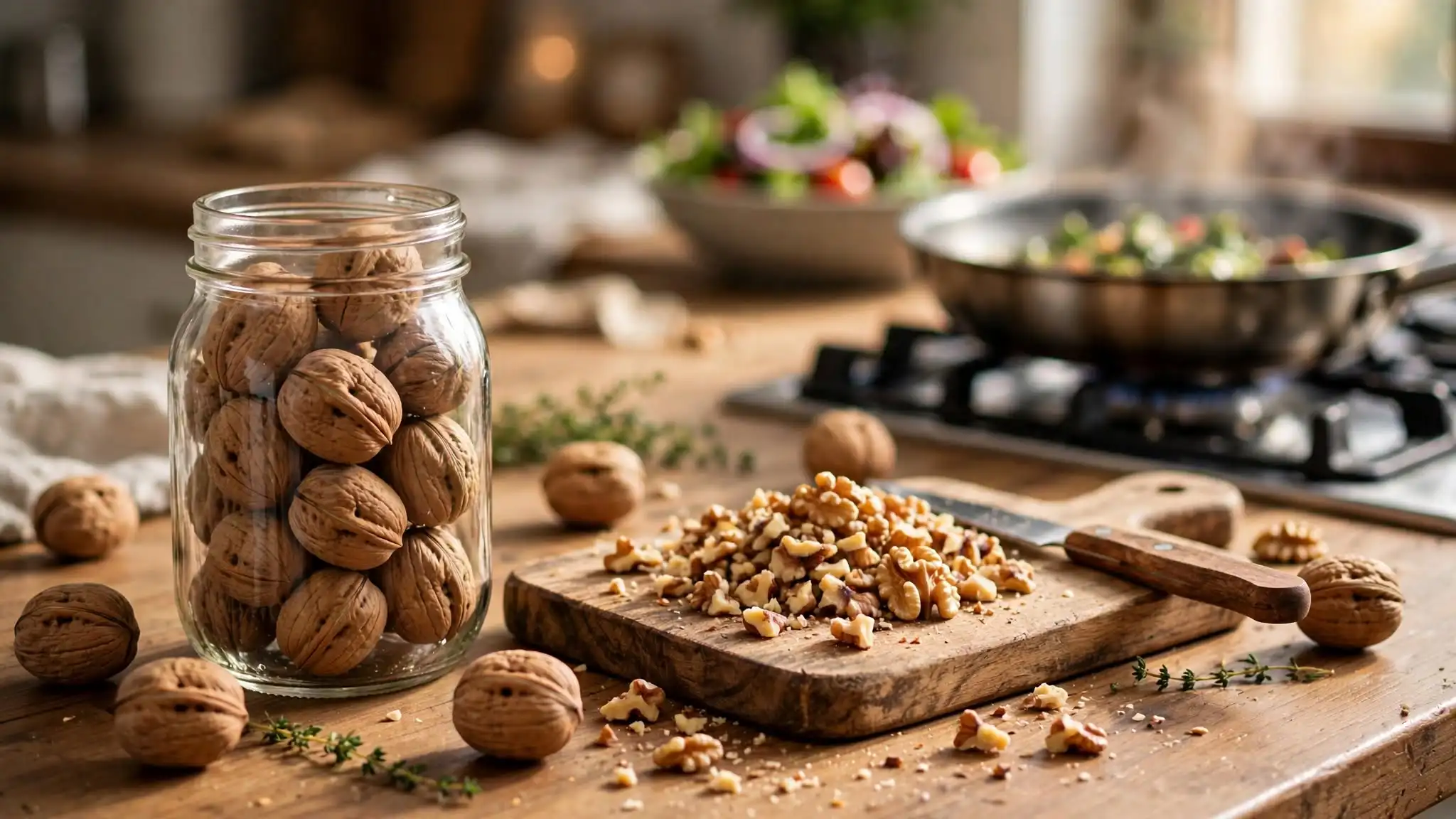
I’m really wary of anything that’s marketed as a superfood. Years of writing on nutrition do the same to you. But California walnuts have earned a different kind of place in my kitchen, not because of marketing claims but because of what they do after they are added to the meal. What started as a half-forgotten bag became a habit I’d kept for over a year, and the more I researched California walnuts, the more the habit felt legitimate, not accidental.
It’s an honest account of how it happened, what the research actually says, and I use them in almost every meal — breakfast, lunch, dinner, and the occasional batch of baking in between.
Table of Contents
What Makes California Walnuts Nutritionally Different from Other Nuts
I’ve written about nuts before purely from a protein angle, and walnuts don’t top that particular list. What sets them apart is a different nutrient entirely, and once you understand it, the distinction is hard to ignore.
The Only Tree Nut Meaningfully High in Omega-3 ALA
Walnuts are the only tree nut that provides a genuinely meaningful amount of alpha-linolenic acid, the plant-based omega-3 fat your body can’t manufacture on its own. A single one-ounce serving delivers roughly 2.5 grams of it, a solid contribution toward the intake linked to heart and brain health. Almonds, cashews, and pistachios each bring their own strengths, but none come close on this specific measure.
That matters most if oily fish isn’t a regular feature of your diet. ALA is one of the main plant-based routes to omega-3 intake, and walnuts are one of the cheapest, most accessible sources of it in any supermarket. I’ve covered the wider landscape of high-protein nuts and how they stack up nutritionally, but the omega-3 profile is what puts walnuts in a category of their own for functional nutrition.
What One Ounce Actually Gives You
A one-ounce serving — roughly a small palmful, or about fourteen halves — contains around four grams of plant-based protein, two grams of fibre, 45 milligrams of magnesium, and a useful amount of copper and manganese, both involved in energy metabolism and bone health. Total fat sits around 18 grams, most of it polyunsaturated, the type generally linked to better cardiovascular outcomes rather than the saturated fat found in most high-fat snacks.
Walnuts are calorie-dense, at around 185 calories per ounce, but several studies suggest regular consumption doesn’t translate into the weight gain that number implies, most likely because the combined fat and fibre increase satiety more than an equivalent snack. That’s the detail that surprised me most when I first read it, since “calorie-dense but not weight-gain-associated” isn’t something I’d expect from most snack foods.
Why the FDA Now Officially Calls Them “Healthy”
In December 2024, the FDA updated its official definition of a “healthy” food, and walnuts meet the new criteria, which requires meaningful nutrient content alongside limits on saturated fat, sodium, and added sugar.
The FDA had already approved a qualified health claim specifically for walnuts back in 2004, stating that 1.5 ounces daily as part of a low saturated fat diet may reduce coronary heart disease risk — one of the very few such claims ever granted to a whole food rather than a supplement.
The Research That Changed How I Think About Walnuts

The California Walnut Commission has funded more than 200 peer-reviewed studies over the past three decades. Going through a portion of that research, three areas stood out as more compelling than I expected, and a fourth surprised me the most.
Heart Health — The Evidence Is Unusually Consistent
Multiple clinical studies link regular walnut consumption to reductions in LDL cholesterol and improved overall lipid profiles [2]. The likely mechanism is that the high polyunsaturated fat content, particularly ALA and linoleic acid, displaces saturated fat in the diet in a way that directly benefits cardiovascular health.
This is the area with the strongest evidence, which is exactly why the FDA’s health claim references coronary heart disease specifically, and why a daily handful started feeling like a deliberate habit rather than a casual snack.
Brain Health and Cognitive Function
The cognitive research is newer and still developing, but genuinely interesting. Several observational studies associate regular walnut consumption with better memory, processing speed, and concentration, particularly in older adults. The proposed mechanisms include the ALA content, antioxidant compounds in the walnut’s skin, and polyphenols that may reduce neuroinflammation.
Gut Health and the Microbiome
More recently, researchers have started studying how walnuts affect the gut microbiome. Early findings suggest regular intake may increase the diversity of beneficial gut bacteria, with knock-on effects for inflammation, immune function, and even mood. The fibre in walnuts acts as a prebiotic, feeding the bacteria associated with a healthier gut environment. It’s still an emerging area of research rather than a settled one, but it’s consistent with what’s generally understood about high-fibre, high-polyphenol whole foods, and walnuts sit toward the stronger end of that category compared with most nuts.
Skin and Anti-Inflammatory Effects
This is the piece I hadn’t looked into before revisiting this article. The same polyphenols and antioxidants implicated in brain health also appear to play a role in reducing markers of systemic inflammation, which has knock-on effects for skin health, since chronic low-grade inflammation is linked to accelerated skin ageing. The evidence here is early and mostly observational, so I’m cautious about overstating it, but it’s a reasonable extra argument for treating walnuts as a genuine daily habit rather than an occasional garnish.
California Walnuts vs. Other Popular Nuts
Part of what makes walnuts genuinely versatile is how they compare against the nuts most people already keep in the cupboard. None of these are “better” outright — each has a different strength — but the comparison makes it clearer why walnuts earn a specific place rather than a general one.
| Food | Protein (per oz) | Omega-3 ALA | Fibre |
| Walnuts | ~4g | ~2.5g | ~2g |
| Almonds | ~6g | negligible | ~3.5g |
| Cashews | ~5g | negligible | ~1g |
| Pistachios | ~6g | negligible | ~3g |
Almonds and pistachios edge out walnuts on protein and fibre, but none of them meaningfully contribute omega-3 ALA. If your goal is muscle-focused protein, walnuts aren’t the first nut I’d reach for. If the goal is the specific cardiovascular and anti-inflammatory profile that ALA provides, walnuts are in a category by themselves. In practice, I don’t treat this as an either-or choice — a jar of walnuts and a jar of almonds sit next to each other on my counter, and which one I reach for depends on whether I’m after crunch and protein or the softer, richer flavour walnuts bring to a dish.
How I Actually Use California Walnuts Across Every Meal
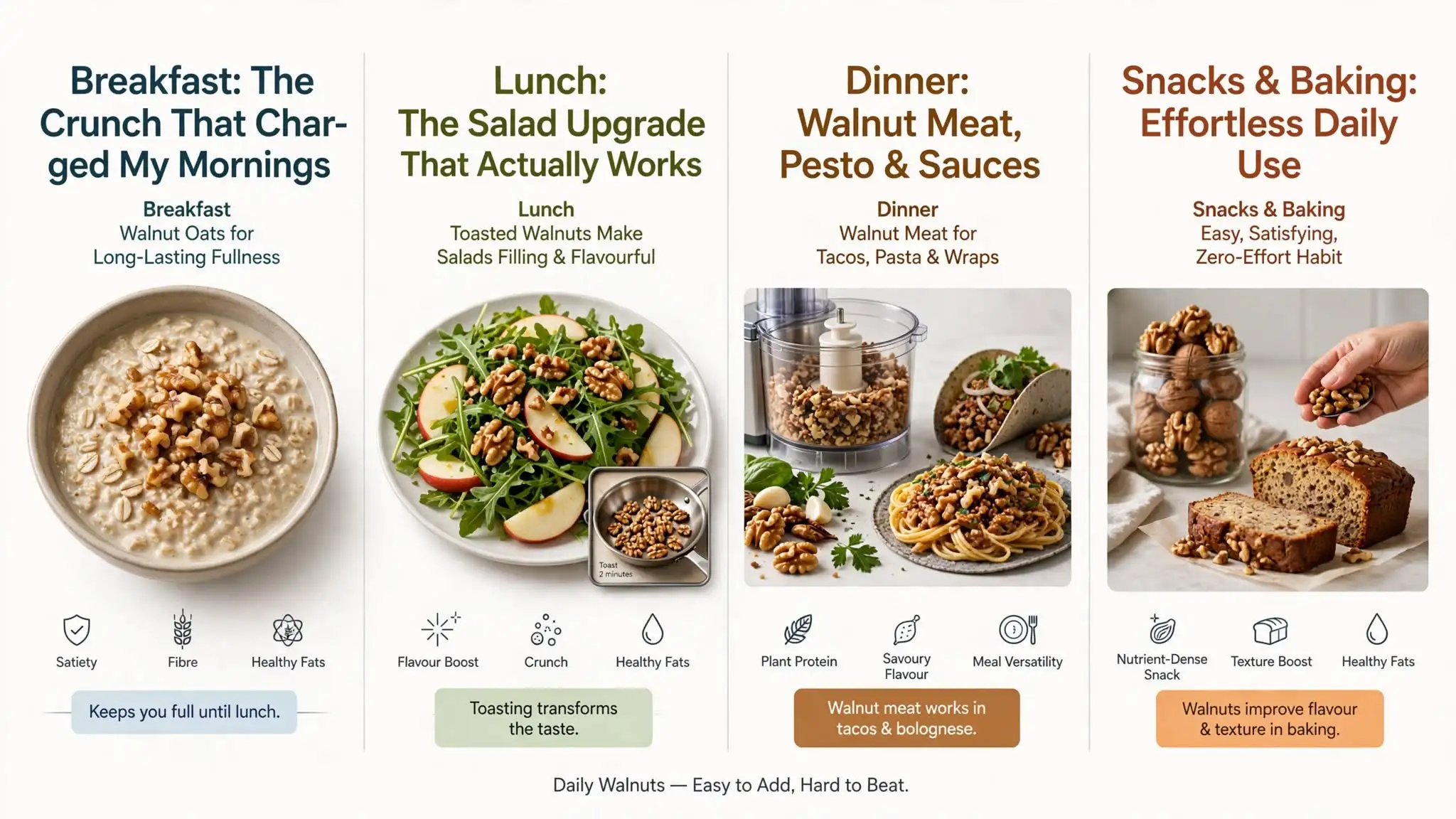
The nutritional case is compelling, but what actually built the habit was discovering how easily walnuts slot into meals I was already making. This is the practical section.
Breakfast — The Crunch That Changed My Mornings
The simplest change I made was also the one that stuck the longest: a small palmful of chopped walnuts stirred into morning oats, about thirty seconds of effort. The texture contrast against soft oats makes the meal noticeably more satisfying, and the combined fibre, protein, and fat keeps me full until lunch more reliably than oats alone ever did.
Lunch — The Salad Upgrade That Actually Works
I used to treat walnuts in salads as a textural afterthought, scattered on top and mostly ignored. What changed was toasting them first — two minutes in a dry pan until they smell nutty — and treating them as a real component of the salad rather than a garnish.
Toasted walnuts with rocket, apple, and a simple vinaigrette has become one of my most frequent lunches. It takes ten minutes, it’s genuinely filling, and toasted walnuts taste considerably better than raw ones.
Dinner — Walnut Meat, Pesto, and Sauces
This is where California walnuts surprised me most. Pulsed in a food processor with garlic, herbs, and a little soy sauce, they create what’s often called walnut meat — a textured, savoury mixture that works convincingly in tacos, pasta sauces, and wraps.
I made a walnut bolognese expecting an obviously inferior substitute. It wasn’t. The earthy walnut absorbs tomato and herb seasoning in a way that feels intentional rather than like something was left out. Walnut meat has become a fixture in the structured weekly meal plan I already follow, usually appearing at least twice, once in a pasta sauce and once in tacos or a wrap.
Snacks and Baking — Where They Earn Their Keep Without Effort
A small jar of walnuts on the counter is one of the lowest-effort habit changes I’ve made in years. They’re one of the few genuinely nutrient-dense snacks that satisfy a craving without tipping into mindless eating — a handful before reaching for anything processed is usually enough.
In baking, chopped walnuts go into banana bread and muffins without changing anything else in the recipe, and in every case they’ve improved both flavour and texture.
Buying, Storing, and Getting the Most Out of Them
Versatility only counts if the walnuts you’re using actually taste good, and storage matters more here than with most pantry staples. Walnuts are high in polyunsaturated fat, which makes them prone to going rancid faster than nuts like almonds or cashews.
Buying them in the shell keeps them fresher for longer, though it’s more effort day to day. If you buy shelled walnuts, as most people do, keeping them in an airtight container in the fridge or freezer noticeably extends how long they stay good, compared with leaving a bag in a warm cupboard.
Toasting walnuts briefly before eating them — 90 seconds to two minutes in a dry pan — improves flavour meaningfully and removes some of the mild bitterness that can come from the skin. It’s the single easiest change that makes the same ingredient taste noticeably better, and it’s a habit worth building regardless of which meal you’re adding them to.
As a rough guide, shelled walnuts kept in the fridge stay good for several months, and frozen walnuts can last considerably longer without any real loss in flavour once toasted. I keep a small amount in the counter jar for daily use and the rest in the freezer, which has stopped me throwing away rancid nuts, something that used to happen fairly regularly when I stored them at room temperature.
The Walnut Habit That Took the Least Effort and Made the Biggest Difference
Of everything I’ve changed in my diet over the past two years, the daily walnut habit is among the most consistent, and it required the least willpower to maintain. That’s usually a sign something has genuinely worked rather than just sounding good on paper.
The habit itself is simple: a small jar of walnuts kept in plain sight, refilled weekly. When it was hidden in a cupboard, I forgot it existed. When it sits on the counter, I eat from it daily. Location matters more than intention for most food habits, and it’s a similar principle to the small, sustainable changes that tend to outperform dramatic ones over time.
Who Should Be Careful With Walnuts
Walnut and tree nut allergies are among the most common food allergies, and even a small amount can trigger a reaction in someone with a confirmed allergy. If you have a known tree nut allergy, speak to a GP or allergy specialist before adding walnuts to your diet in any form.
Walnuts also contain oxalates, naturally occurring compounds that can contribute to kidney stone formation in people who are already prone to them. This isn’t a concern for most people, but if you have a personal or family history of calcium oxalate kidney stones, it’s worth discussing walnut intake with a doctor or dietitian rather than assuming a “healthy” food is automatically fine in any quantity.
More generally, “healthy” doesn’t mean unlimited. Walnuts are calorie-dense, and the research supporting their benefits is based on moderate daily amounts, around 1 to 1.5 ounces, not unrestricted snacking. I’ve found sticking to a small palmful rather than eating straight from a large bag is the difference between a beneficial daily habit and simply adding extra calories without added benefit.
Conclusion
The only cardiovascular evidence — three decades of peer-reviewed research and FDA-approved health claims — is far more than most foods marketed as superfoods. The real thing sticking to California walnuts for me wasn’t research; rather, moving them from a forgotten cupboard bag to a jar on the counter and finding four or five really easy ways to use them in pre-cooked meals. If you’ve ever had a few halves scattered on a salad, try a few weeks of garnish instead of using walnuts as a real ingredient before you decide if the habit is for you. Start by eating the food that fits most naturally into your routine, whether it’s morning barley or a sauce at dinner, rather than trying to swap out every meal at once.
Medical Disclaimer: This article reflects personal experience and general health information drawn from published research. It is not medical or dietary advice and should not replace a consultation with your GP or a qualified healthcare professional.
Frequently Asked Questions
What are California walnuts and how are they different from regular walnuts?
California walnuts are English walnuts grown in California’s Central Valley, which produces the vast majority of walnuts sold in the United States, subject to quality standards set by the California Walnut Commission.
How many walnuts should you eat per day for health benefits?
Most research showing cardiovascular and brain health benefits uses around 1 to 1.5 ounces daily, roughly 14 walnut halves or a small palmful.
Are California walnuts good for the brain?
Emerging research suggests a positive association, with several observational studies linking regular walnut consumption to better memory and cognitive function, particularly in older adults.
Can walnuts be used as a meat alternative in cooking?
Yes, pulsed with seasoning in a food processor, walnuts create a textured mixture that works well in tacos, pasta sauces, and wraps as a plant-based substitute for ground meat.
Are walnuts bad for kidney stones or oxalate-sensitive people?
Walnuts contain oxalates and may not be ideal in large amounts for people prone to calcium oxalate kidney stones, who should discuss intake with a doctor.

1 thought on “Flavor Up Your Meals with Versatile and Healthy California Walnuts”
Comments are closed.