Introduction
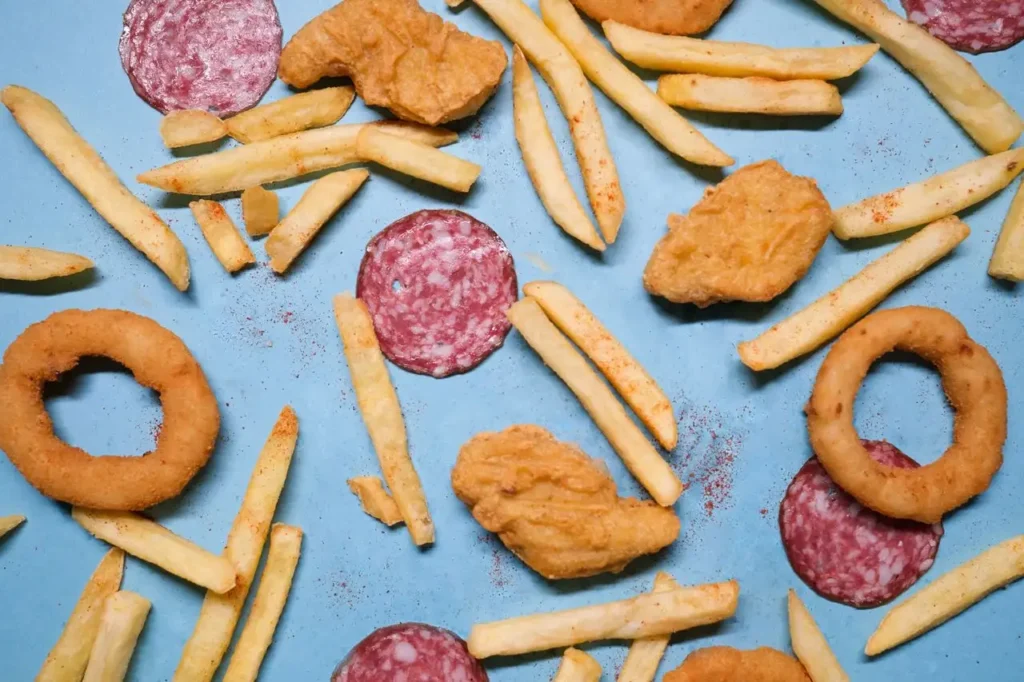
TL;DR: Ultra-processed food makes up far more of the average daily diet than most people realise, hiding in places like bread, yoghurt, and granola that seem healthy on the surface. Cutting it out for 30 days genuinely changed my energy, cravings, and digestion — though not in the dramatic, overnight way I half-expected.
I didn’t realize I was eating a lot of ultra-processed food until I read the ingredient labels in my kitchen. Between the “healthy” granola, flavored yogurt, and sliced bread I bought each week without hesitation, a really alarming part of my daily diet turned out to be ultra-processed food that wore a convincing mask. This realization led me to a proper 30-day experiment to see what would change if I let it go.
This story is not about extreme willpower or dramatic change. It’s a common story of what happened when I was paying serious attention to something in an automated way over the years, and what I learned was more surprising to me than I expected.
Table of Contents
Why I Decided to Actually Test This
My typical week, before this experiment, looked fairly normal by most standards: cereal or granola for breakfast, a sandwich on shop-bought bread for lunch, a flavoured yoghurt as an afternoon snack, and some kind of ready-made sauce stirred through dinner most nights. Nothing about it felt extreme or unhealthy at the time.
The moment that changed things was reading through the ingredient list on a granola I’d been eating for months, genuinely believing it was one of the healthier things in my cupboard. It contained more separate additives, stabilisers, and flavourings than actual identifiable food ingredients. That was the moment I realised I didn’t actually know how much ultra-processed food I was eating — I’d simply never looked closely enough to find out.
What made this uncomfortable rather than just mildly interesting was realising how deliberately I’d been avoiding the obvious junk food — crisps, sugary drinks, takeaways — while completely overlooking everything hiding behind a health-conscious label. I’d spent years feeling reasonably good about my choices based on packaging and marketing rather than actually reading what was inside.
What Ultra-Processed Food Actually Means
The most widely used definition comes from the NOVA classification system, developed by researchers to categorise food by the extent and purpose of industrial processing rather than by nutrients alone. Ultra-processed foods are defined as formulations made mostly or entirely from substances derived from food and additives, with little to no intact whole food remaining.
This is meaningfully different from food that’s simply “processed.” Canned beans, frozen vegetables, and plain yoghurt are processed, but they’re still recognisably the original food with minimal alteration. Ultra-processed food, by contrast, is engineered — reconstructed from refined ingredients, then rebuilt with additives designed to extend shelf life and maximise palatability, often in ways that bear little resemblance to how the food would ever be made in a home kitchen.
A simple test I now use, which I picked up while researching this properly, is asking whether a product contains any ingredient you wouldn’t find in a typical home kitchen. Emulsifiers, hydrolysed proteins, modified starches, and flavour enhancers are common giveaways. It’s not a perfect system, but it catches the vast majority of ultra-processed products within a few seconds of reading a label, without needing to memorise the full NOVA classification criteria.
I also learned that the number of ingredients alone isn’t always a reliable shortcut. Some genuinely healthy foods have longer ingredient lists simply because they combine several whole components, while some clearly ultra-processed products manage surprisingly short labels through concentrated additive blends. Reading what the ingredients actually are, rather than just counting them, turned out to matter far more than I expected.
The Hidden Ultra-Processed Foods I Didn’t Expect
This was the part of the experiment that reshaped how I shop far more than any calorie count or macro tracker ever had. It’s easy to picture ultra-processed food as obvious junk — crisps, sweets, fizzy drinks — and much harder to recognise it hiding inside products marketed specifically as convenient, family-friendly, or health-conscious.
Bread was the first surprise. Most shop-bought sliced bread contains emulsifiers, preservatives, and dough conditioners that home baking simply doesn’t require, which technically qualifies it as ultra-processed despite looking completely ordinary. Flavoured yoghurt was the second — many varieties contain as much added sugar as a dessert, alongside stabilisers and artificial colouring that a plain, unsweetened yoghurt never needs.
Breakfast cereal was another one I hadn’t questioned in years. Even cereals marketed around whole grains and fibre often contain added sugars, flavourings, and preservatives that push them firmly into ultra-processed territory, despite front-of-box messaging that implies otherwise. The gap between marketing language and actual ingredient composition was, honestly, the most eye-opening part of this whole experiment.
Plant-based meat alternatives caught me particularly off guard, since I’d assumed anything plant-based was automatically the healthier choice. Many are heavily reconstructed products with long additive lists, which is a distinction I’ve actually written about in more detail in a full breakdown of specific ultra-processed foods worth reconsidering, including exactly which everyday products tend to hide the most artificial ingredients behind a health-conscious label.
Even some products marketed specifically toward fitness and weight management — protein bars, meal replacement shakes, “diet” yoghurts — turned out to be some of the most heavily processed items in my entire kitchen once I actually checked. The irony of reaching for a “healthy” protein bar loaded with more additives than the chocolate bar next to it wasn’t lost on me.
What the Research Says About Ultra-Processed Food and Health
The evidence connecting ultra-processed food to negative health outcomes has grown substantially in recent years. Large-scale studies have linked higher ultra-processed food intake to increased risk of obesity, metabolic syndrome, type 2 diabetes, and cardiovascular disease, with some research also pointing toward associations with depression and certain cancers, according to systematic reviews published in peer-reviewed nutrition journals covering populations across multiple countries.
One mechanism that stood out to me is how these foods affect appetite regulation. Because ultra-processed food is engineered to be intensely palatable while often being lower in fibre and protein than whole food, it’s easier to overeat without feeling properly satisfied — a pattern researchers have observed consistently in controlled feeding studies comparing ultra-processed and minimally processed diets matched for calories.
What struck me most was a controlled feeding trial where participants ate roughly 500 more calories per day, entirely unprompted, when given an ultra-processed diet compared to an unprocessed one matched for calories, sugar, fat, and fibre on paper. Something about the texture, palatability, or eating speed of ultra-processed food appears to override normal fullness signals in a way that isn’t fully explained by nutrition labels alone.
My 30-Day Experiment
I swapped shop-bought bread for a bakery loaf made with just flour, water, yeast, and salt. Flavoured yoghurt became plain yoghurt with fresh fruit stirred in myself. Ready-made sauces were replaced with simple versions built from tinned tomatoes, garlic, and olive oil. None of this required specialist ingredients — just slightly more preparation time than opening a jar.
Breakfast took the most trial and error. I went through several attempts at a homemade granola before landing on a version I actually enjoyed as much as the shop-bought one, using oats, nuts, a small amount of honey, and nothing else. It took three tries to get the texture right, and I’ll admit the first batch was closer to burnt cereal than anything I’d willingly eat again.
The hardest part, by far, was convenience during busy weeks. Ultra-processed food exists largely because it saves time, and pretending that trade-off doesn’t matter would be dishonest. Social situations were the second challenge — most restaurant food, and nearly all packaged snacks offered at gatherings, sit firmly in ultra-processed territory, and there’s a real social cost to being visibly picky about it.
I handled that second challenge imperfectly, and I think that’s worth admitting rather than glossing over. I didn’t turn down food at other people’s houses or make a scene at social events. The 30-day rule applied mainly to what I bought and prepared myself, which felt like the honest, sustainable version of this experiment rather than an unrealistic, all-or-nothing standard I’d inevitably abandon.
“The craving that surprised me most wasn’t for anything sweet — it was for the specific, engineered saltiness of a packaged snack I’d eaten almost daily for years without ever questioning why I reached for it so automatically.”
Managing that craving without falling back on old habits meant addressing the underlying stress that often triggered it in the first place. I’ve written before about the evidence-based habits that genuinely support mental wellbeing, and several of those principles — particularly around noticing a stress response before reaching for food — turned out to be just as relevant to breaking an ultra-processed snacking habit as they are to managing anxiety generally.
What Actually Changed
By around day ten, my energy through the afternoon felt noticeably steadier, without the sharp dip I used to get roughly two hours after lunch. Digestion improved too, particularly once the flavoured yoghurt and packaged snacks were gone, likely due to the higher fibre content of whole foods replacing them.
Sleep quality was the change I least expected. I hadn’t set out to track it, but by the third week I noticed I was falling asleep faster and waking up less groggy, which several nutrition researchers have linked to reduced late-evening blood sugar spikes from processed snacking. I can’t claim certainty about the exact mechanism in my own case, but the timing of the change lined up too closely with the rest of the experiment to feel like coincidence.
Cravings didn’t disappear, but they became less frequent and less intense by the final week. Weight change was modest — a few pounds, most likely from reduced snacking rather than any dramatic metabolic shift. What surprised me most was that none of this felt like restriction by the end; it felt more like a different, calmer relationship with food generally.
There’s also a broader lesson here that echoes something I noticed writing about how vague, overlapping symptoms are often connected to underlying inflammation — several people managing chronic inflammatory conditions report noticeable symptom improvement after reducing ultra-processed food, which lines up with current research on diet and systemic inflammation, even though it isn’t a guaranteed or universal effect.
How I Eat Now (Realistically)
I haven’t eliminated ultra-processed food entirely, and I don’t think that’s a realistic or necessary goal for most people. What changed permanently is the default — whole and minimally processed food now makes up the majority of what I eat, with ultra-processed food as an occasional choice rather than the invisible backbone of most meals.
Practically, this looks like buying bread from a bakery instead of the supermarket aisle most weeks, keeping plain yoghurt as the default and treating flavoured varieties as an occasional treat, and reading labels on anything new before it becomes a regular purchase. None of it requires meal prepping every Sunday or following a rigid meal plan — it’s simply a slightly different set of default choices repeated consistently.
This kind of gradual, sustainable shift is one I’ve seen work well elsewhere too. Watching my own family’s approach to making sustainable lifestyle changes rather than expecting instant transformation reinforced that permanent change tends to stick better when it’s realistic rather than absolute — a principle that applies just as much to diet as it does to exercise or any other health habit.
Conclusion
If there’s one thing worth taking from my own month of cutting ultra-processed food, it’s that the biggest benefit came from the products I least expected — bread, yogurt, granola — rather than the obvious junk food I had already figured out the problem. Reading the labels right once allowed me to learn more about my diet than I did through years of vague efforts.
Thirty days is not a magic number, and it is not a permanent solution in itself. But it was enough time for me to really see what was beneficial to have and whether I was just eating habitually. If you want to know what’s actually in your own kitchen, it’s beneficial to just practice reading labels, before any dietary changes, just to see what you find.
If there’s one thing I’ve learned from cutting back on my own month-long highly processed diet , it’s that the biggest benefit came from the products I least expected — bread, yogurt, granola — rather than the obvious junk food I already understood was the problem. Reading labels well once gave me the opportunity to learn more about my diet than in years of lazy attempts.
Thirty days is not a magic number, and it is not a permanent solution in itself. But it was enough time to see if the food was beneficial and if he was simply eating on a regular basis. If you want to know what’s actually in your kitchen, it’s beneficial to practice reading labels before making dietary changes to see what you’re buying.
Frequently Asked Questions
What is considered an ultra-processed food?
Ultra-processed foods are industrial formulations made mostly from refined ingredients and additives, with little to no intact whole food remaining, such as packaged snacks, sodas, and many ready meals.
Is ultra-processed food always unhealthy?
Not universally, but most ultra-processed foods are lower in fibre and nutrients while being higher in sugar, salt, and unhealthy fats, which is consistently linked to poorer health outcomes.
What are examples of ultra-processed foods people don’t expect?
Sliced bread, flavoured yoghurt, breakfast cereal, and some plant-based meat alternatives are commonly ultra-processed despite appearing to be healthy choices.
How much of the average diet is ultra-processed food?
In the UK, US, and Canada, ultra-processed food accounts for roughly 50–60% of average daily calorie intake, according to national dietary surveys.
Can you reverse the effects of eating ultra-processed food?
Many effects, including weight, energy levels, and inflammation markers, can improve within weeks of reducing ultra-processed food intake, though individual results vary.
Disclaimer:
This article reflects personal experience and general nutrition research and is for informational purposes only — it is not medical or dietetic advice. Please consult a doctor or registered dietitian before making significant changes to your diet.

13 thoughts on “I Cut Ultra-Processed Food for 30 Days”
Comments are closed.