THE SHORT VERSION
The best antioxidant foods fall into seven categories: vitamin C, vitamin E, beta-carotene, lycopene, quercetin, resveratrol, and glutathione, and none of them require supplements or complicated protocols. The real shift is eating for colour and diversity on your plate, with garlic, onions, and cruciferous vegetables quietly supporting glutathione, the master antioxidant that keeps all the others working.
Introduction
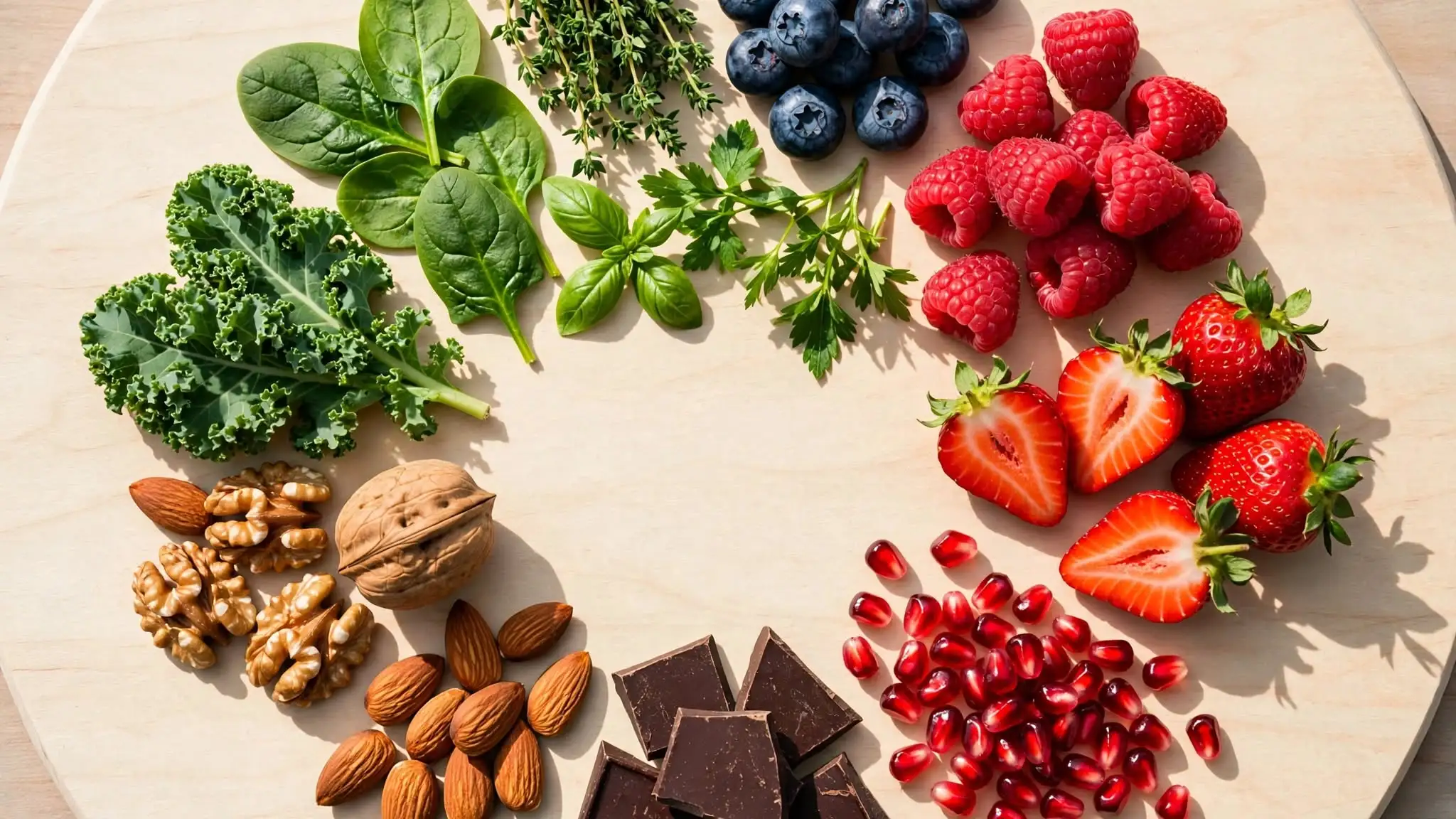
I was in my mid-twenties, craving caffeine, skipping good foods, and subsisting on foods that came in seed-coloured packaging. I felt constantly tired, my skin looked dull, and I caught every nasal and microscopic germ that came within five feet of me. I used to think that’s what adult life is like. Then, at a family meal, my uncle, who always looked about ten years younger than his age and still walks five miles without thinking, looked at my plate, then saw his plate, and said something that stuck in my mind.
“Faizan,” he said, pointing to pomegranates, mangoes, leafy vegetables, and a few nuts on his plate, “you eat seed-coloured food and then think about why you feel white.” “
It wasn’t going to the doctor. But at that moment, my real interest in the best antioxidant foods began, not from a textbook, but from looking at the person who had quietly incorporated these choices into their daily lives and had health as well. I started researching. I became interested in science. And I tailored my meals to what I learned. Here’s everything I wanted I to know first about what the best antioxidant foods and nutrients your body relies on every day, what they do, where to look for them, and how to make them part of your diet without turning food into a biology class.
Table of Contents
What Are Antioxidants — And Why Does Your Body Need Them?
Free Radicals: The Invisible Damage Accumulating Right Now
Every single day, your body produces molecules called free radicals, unstable atoms that form as a natural byproduct of converting food into energy, breathing, and fighting off infection. In small, controlled amounts, they’re not just harmless, they’re genuinely useful. Your immune system uses them as weapons to destroy pathogens.
The problem begins when free radicals accumulate faster than the body can neutralise them. In that state, called oxidative stress, they begin stealing electrons from healthy cells, proteins, and DNA. Over time, this damage has been linked by researchers at Harvard’s T.H. Chan School of Public Health to some of the most serious conditions in modern health: cardiovascular disease, cancer, Alzheimer’s disease, type 2 diabetes, and accelerated ageing.
Modern life is stacked with free radical triggers: urban pollution, UV radiation, cigarette smoke, processed food, chronic stress, and alcohol. When I look back at my late twenties, I was hitting most of those simultaneously. I wasn’t giving my body the tools it needed to fight back.
What Antioxidants Actually Do
Antioxidants are molecules that can donate an electron to a free radical without becoming unstable themselves, neutralising the threat before it causes cellular damage. A landmark 2026 review published in the journal Antioxidants (NIH) describes dietary antioxidants as bioactive molecules that mitigate oxidative stress and its pathological consequences.
Your body produces some antioxidants internally, most notably glutathione, which we’ll come to. But for the rest, it depends entirely on diet. A 2018 systematic review and dose-response meta-analysis in the American Journal of Clinical Nutrition found that higher dietary antioxidant intake was associated with reduced risk of cardiovascular disease, total cancer, and all-cause mortality. The evidence isn’t ambiguous: what you eat directly shapes how well your cells are protected.
FOOD VS. SUPPLEMENTS: WHAT THE EVIDENCE ACTUALLY SAYS
Harvard’s T.H. Chan School of Public Health is clear: the strongest antioxidant benefits consistently come from whole food sources, not high-dose supplements. Whole foods deliver antioxidants alongside fibre, phytonutrients, and co-factors that make absorption and efficacy far greater than isolated pills. For most healthy people, food is the most effective and safest delivery mechanism for antioxidant protection.
The 7 Best Antioxidant Foods and Nutrients

These seven aren’t chosen because they’re fashionable or expensive. They’re chosen because they’re backed by the deepest body of research, because my uncle has eaten versions of all of them for decades, and because I’ve personally eaten them consistently for years and felt the difference. Let me walk you through each one.
1. Vitamin C — The Water-Soluble Defender
Vitamin C is one of the most studied antioxidants in human health, and for good reason. It’s water-soluble, which means it works in the fluid-filled environments throughout the body: blood plasma, the fluid between cells, and inside cells themselves. Any excess the body doesn’t need is simply excreted, making toxicity from food sources essentially impossible.
Beyond neutralising free radicals, Vitamin C triggers collagen synthesis, supports the immune system, improves absorption of plant-based iron, and plays a documented role in cardiovascular health. It also has a remarkable secondary function: it helps regenerate Vitamin E after it’s been used, creating a team effect between the two that isolated supplements can’t replicate.
The richest food sources aren’t just citrus. Red bell peppers contain more Vitamin C gram for gram than oranges, a fact that genuinely surprised me when I first read it. Other excellent sources include kiwi, strawberries, broccoli, guava, and spinach.
I added a daily portion of steamed broccoli and a raw pepper to my meals within the first week of changing how I ate. It felt like a small change. Within a month, I noticed I was getting fewer headaches and my energy was steadier through the afternoon. I’m not making clinical claims, but the difference was real and noticeable.
Vitamin C’s relationship to fruit and overall nutritional intake is something I’ve explored in depth in my piece on the nutritional benefits of oranges and what makes citrus such a powerful daily food.
2. Vitamin E — The Fat-Soluble Cell Wall Protector
While Vitamin C defends the watery environments of your body, Vitamin E guards the fatty environments, most critically, the lipid-rich membranes of your cells. Cell membranes are the first line of defence for every cell in your body, and oxidative damage to these membranes is one of the earliest triggers of cellular dysfunction and disease.
Vitamin E is fat-soluble, meaning it needs dietary fat to be absorbed, another reason combining antioxidant-rich vegetables with healthy fats (olive oil, avocado, nuts) is consistently more effective than eating them plain. It reduces inflammation, supports immune function, and has been associated with neuroprotection and eye health in multiple studies.
The most concentrated food sources include sunflower seeds, almonds, hazelnuts, avocado, Swiss chard, spinach, and wheat germ oil. Sunflower seeds in particular are among the single richest sources available, more concentrated than most people expect from a small handful.
My own shift was simple: I started keeping a small container of mixed almonds and sunflower seeds at my desk. Replacing the biscuit habit with that one change gave me Vitamin E, healthy fat, magnesium, and protein in a single snack. Avocado on toast stopped feeling like a trend and started feeling like a genuinely protective choice.
3. Beta-Carotene — The Colour-Coded Carotenoid
If there’s one rule that holds across almost all antioxidant research, it’s this: the brighter the colour of the food, the higher the antioxidant content. Beta-carotene is the reason. It’s a carotenoid, one of the pigments responsible for the orange, red, and yellow colours in fruits and vegetables, and the body converts it into Vitamin A as needed.
Beta-carotene supports immune function, skin health, and vision. Research highlights its photoprotective effects; it quenches singlet oxygen species and contributes to collagen biosynthesis and the structural integrity of skin. People who consistently eat high-carotenoid diets tend to have measurably better skin tone and texture over time, something that isn’t just vanity, it reflects underlying cellular health.
The best food sources include carrots, sweet potato, pumpkin, cantaloupe melon, apricots, kale, and mango. These aren’t exotic ingredients. They’re everyday foods that happen to be extraordinarily well-equipped for cellular protection.
My uncle has eaten mango in season without fail for as long as I can remember, and the research on mango’s antioxidant profile is genuinely impressive. I’ve written about this at length, including the broader benefits of what mango does for your health across multiple body systems.
4. Lycopene — The Red Pigment With a Cardiovascular Edge
Lycopene is the carotenoid responsible for the deep red colour in tomatoes, watermelon, and pink grapefruit, and it’s one of the most potent antioxidants in the entire carotenoid family. It’s particularly well-researched for its role in cardiovascular protection and prostate health, with studies showing it reduces LDL oxidation, the chemical process that turns “bad” cholesterol into the arterial-plaque-forming variant that actually causes heart disease.
Here’s the detail that surprises most people: lycopene is significantly better absorbed from cooked or processed tomatoes than from raw ones. The heat breaks down the cell walls, making lycopene far more bioavailable. Tinned tomatoes, tomato paste, and cooked tomato sauce are therefore nutritionally superior to a fresh tomato for lycopene delivery, one of the rare cases where processing genuinely improves a food’s health impact.
Watermelon and guava are two other exceptional lycopene sources that most people overlook entirely. Guava, in fact, rivals tomatoes for lycopene content, and adds Vitamin C and fibre on top. I’ve written extensively about the nutritional profile of guava and why it earns its place as a genuine superfood.
5. Quercetin — The Anti-Inflammatory Flavonoid in Everyday Foods
Quercetin is a flavonoid, a class of polyphenols found in many foods you probably eat already without realising it’s there. It’s one of the most widely studied plant antioxidants in current nutritional science, with documented anti-inflammatory effects, cardiovascular benefits, blood pressure support, and emerging antiviral properties.
Harvard’s Nutrition Source lists quercetin alongside catechins and resveratrol as among the most important phenolic compounds in the human diet. It’s particularly interesting because it works synergistically with Vitamin C, the two compounds enhance each other’s bioavailability, which is why quercetin is sometimes combined with Vitamin C in supplement formulations. But you can get both from food, naturally, without the pill.
The richest food sources include red onions, apple skin, green tea, capers, broccoli, and berries. The apple skin point is worth emphasising: a significant proportion of the quercetin in an apple sits in or just beneath the skin. Peeling it removes much of the benefit. Eat the whole apple.
The “an apple a day” saying is almost certainly rooted in this, and there’s real substance behind it. I’ve explored the science of apples and their phytonutrient content before, including through the lens of apple cider vinegar and its active compounds, which share some of the same polyphenol origins as the whole fruit.
QUERCETIN + VITAMIN C: A NATURAL FOOD SYNERGY
Quercetin and Vitamin C enhance each other’s absorption and effectiveness when consumed together. You can get both naturally in a single meal: apples or berries with a Vitamin C-rich food. No supplements needed.
6. Resveratrol — The Longevity Polyphenol
Resveratrol is the polyphenol largely credited with the “French Paradox,” the observation that populations eating high-fat diets but drinking red wine had lower rates of heart disease than expected. The compound is found in grape skins, blueberries, cranberries, dark chocolate, and peanuts, and has been studied extensively for its potential role in cardiovascular protection, neuroprotection, anti-inflammatory action, and healthy ageing.
Resveratrol is thought to activate SIRT1, a gene pathway associated with longevity and cellular repair, though the translation from laboratory research to human clinical trials has been more nuanced than early headlines suggested. What’s well-established is that the foods richest in resveratrol consistently appear in diet patterns associated with better long-term health outcomes: the Mediterranean diet and traditional diets in some Blue Zone regions.
I switched from milk chocolate to dark chocolate with 70%+ cocoa content several years ago, primarily because of the flavonoid and resveratrol content. I’ll be honest: the first week felt like a compromise. Now, I genuinely prefer it. A couple of squares after dinner has become one of my most consistent daily antioxidant habits, and arguably the most enjoyable one.
The grape connection to antioxidant protection is something I’ve written about in depth, particularly in the context of what grapes do to the body and which varieties carry the most nutritional benefit.
7. Glutathione — The Master Antioxidant Your Body Makes Itself
Every antioxidant I’ve described above is something you ingest. Glutathione is different. It’s synthesised inside your cells from three amino acids: cysteine, glutamate, and glycine, and it’s called the “master antioxidant” for two reasons: it directly neutralises free radicals, and it regenerates Vitamins C and E after they’ve been used, restoring their antioxidant capacity so they can be used again. Without adequate glutathione, the entire antioxidant system becomes less effective.
The problem is that glutathione production declines with age, stress, illness, poor diet, alcohol, and environmental toxin exposure, all the things that modern life delivers in abundance. And here’s the catch: oral glutathione supplements are poorly absorbed. The digestive system breaks down the molecule before it reaches the cells that need it.
The evidence-backed approach is to eat the precursor foods that fuel the body’s own glutathione synthesis. These include garlic, onions, leeks, and cruciferous vegetables, broccoli, cauliflower, Brussels sprouts, and kale, which are rich in sulfur compounds the body uses to build cysteine, the rate-limiting amino acid in glutathione production. Vitamin C-rich foods also help maintain glutathione levels, and Brazil nuts and poultry provide selenium, a mineral that activates glutathione-producing enzymes.
When I started building broccoli and garlic into my evening meals as a foundation rather than an afterthought, it wasn’t glamorous. But the rationale was compelling: I wasn’t just adding another antioxidant, I was fuelling the system that powers all the others.
WHY GLUTATHIONE SUPPLEMENTS OFTEN DISAPPOINT
Glutathione is widely sold as a supplement but has poor oral bioavailability, the digestive tract breaks it down before cells can use it. The most effective strategy is dietary: eat garlic, broccoli, cauliflower, onions, and Brazil nuts to give your body the building blocks to synthesise glutathione internally.
How I Rebuilt My Meals Around These 7 — The Practical Framework
The Colour Rule That Changed How I Shop
The shift that made the biggest practical difference wasn’t tracking antioxidant milligrams or learning ORAC scores. It was looking at the colour distribution on my plate. If everything is brown, beige, or pale, you’re almost certainly low in antioxidants. If your plate has three or four distinct natural colours, you’re almost certainly covering multiple antioxidant families at once.
The rule my uncle had been quietly following for decades, without ever calling it a “strategy,” was colour diversity. A segment of orange or red. Something dark green. A handful of something purple or blue. A base of something white or pale that included garlic or onion.
What My Daily Antioxidant Intake Actually Looks Like
This isn’t a prescription. It’s just what I do consistently, and it maps directly onto the seven antioxidants above: berries, sunflower seeds, or almonds, and sometimes Greek yoghurt at breakfast; a salad or bowl built on leafy greens with a cooked tomato component and red pepper strips at lunch; garlic and onion as the flavour base of almost everything at dinner, at least one cruciferous vegetable, and mango or papaya as dessert in season; and a whole apple with the skin on, a small square of dark chocolate, or a handful of mixed nuts as snacks.
I didn’t overhaul everything in a week. I made one swap at a time. The change that had the single biggest impact on how I felt, more energy, fewer infections, noticeably better skin, was probably the daily cruciferous vegetable and the consistent use of garlic and onion. The glutathione support was the invisible engine running under everything else. The broader principle here, that eating foods that actively support your body’s internal defence mechanisms matters more than any single supplement, is something I return to again and again in everything I write about nutrition.
Two Antioxidant Myths Worth Clearing Up
Myth 1 — “More Is Always Better”
The supplement industry has done an effective job of suggesting that if a little antioxidant activity is good, a lot of it in concentrated pill form must be better. The science doesn’t support this. Your body operates in a state of carefully calibrated redox balance, a precise ratio of oxidants to antioxidants that’s essential for normal cellular function. Free radicals aren’t all bad; as noted earlier, they play active roles in immune defence and cellular signalling.
When you flood the system with mega-dose isolated antioxidant supplements, you can disrupt this balance. High-dose beta-carotene supplements have been specifically associated in clinical trials with increased lung cancer risk in smokers, the opposite of the protective effect seen from dietary beta-carotene in food. The Nordic Nutrition Recommendations 2023 scoping review was explicit: high doses from dietary supplements may cause adverse effects.
Food delivers antioxidants in the proportions and combinations the body evolved to handle. Isolated supplements don’t, and for some nutrients at high doses, they can be actively harmful.
Myth 2 — The ORAC Score Tells You What to Eat
The ORAC (Oxygen Radical Absorbance Capacity) score was a popular ranking system for measuring antioxidant power in foods. It was widely referenced in nutrition media for years. The FDA eventually stopped publishing ORAC databases because the score didn’t accurately predict antioxidant effects in the human body.
The reason is bioavailability, how much of a nutrient the body can actually absorb and use. Cooking tomatoes raises lycopene bioavailability; eating Vitamin E with fat raises its absorption; quercetin is better absorbed alongside Vitamin C. What matters isn’t just how much antioxidant power a food has in isolation, but how effectively your body can extract and use it as part of a real, varied meal.
What My Uncle’s Plate Was Really Teaching Me
My uncle didn’t give me dietary advice that night at dinner. He wasn’t referring to Harvard studies or the American Journal of Clinical Nutrition. He just pointed to his plate, the colours, the varieties, the intention, and silently showed what decades of consistent food choices actually look like.
What I found in the research confirmed everything on his plate. Vitamin C in citrus and peppers. Vitamin E in almonds. Beta-carotene in mangoes and sweet potatoes. Quercetin in apples and red onions. Resveratrol in a small handful of grapes. And underneath all that, garlic and broccoli quietly supporting glutathione, the master antioxidant system that keeps everything else running.
You don’t need supplements, protocols, or the budget of a specialist. You need colour, diversity, and consistency. The best antioxidant foods have always been sitting in ordinary supermarkets and farmers’ markets, we just stop noticing them because they don’t come with health promises printed on a capsule. Start with one change this week. Add a colour to your plate that wasn’t there before. Your cells will start working better before you know it.
Medical Disclaimer: This article is for informational purposes only and does not constitute medical advice. Always consult your GP, dietitian, or healthcare provider before making significant changes to your diet or starting any supplement regime, particularly if you have an existing health condition.
Frequently Asked Questions
What are the best antioxidant foods to eat daily?
The best antioxidant foods to eat daily include citrus fruits and red bell peppers for Vitamin C, nuts and sunflower seeds for Vitamin E, carrots and sweet potato for beta-carotene, cooked tomatoes and guava for lycopene, apples and red onions for quercetin, red grapes and dark chocolate for resveratrol, and broccoli and garlic to support internal glutathione production.
What is the most powerful antioxidant?
Glutathione is widely considered the body’s most powerful antioxidant because it neutralises free radicals directly and regenerates Vitamins C and E; it’s produced inside cells and best supported through foods like garlic, onions, broccoli, and Brazil nuts rather than oral supplements, which are poorly absorbed.
Can you get enough antioxidants from food without supplements?
For most healthy people, yes; a diet rich in colourful fruits, vegetables, nuts, seeds, and legumes provides the antioxidant protection the body needs without the risks associated with high-dose supplementation.
Do antioxidant supplements actually work?
The evidence is mixed; food-based antioxidants are generally more effective because whole foods deliver synergistic nutrients that improve absorption, while high-dose isolated supplements can disrupt the body’s natural redox balance and in some cases, notably beta-carotene in smokers, have been associated with increased risk.
What destroys antioxidants in the body?
Chronic stress, smoking, alcohol, pollution, processed food, excessive sun exposure, and poor sleep all generate excess free radicals and deplete the body’s antioxidant reserves, with a consistently poor diet low in fresh fruits and vegetables being the single largest controllable risk factor.

7 thoughts on “7 Best Antioxidant Foods That Shield Your Cells Daily”
Comments are closed.