The Short Version:
Comparing white tea vs black tea vs green tea properly, instead of just grabbing green tea out of habit, taught me there isn’t a single winner. White tea has the least caffeine and the highest catechin concentration, green tea leads specifically in EGCG, and black tea brings unique compounds called theaflavins along with the biggest caffeine hit. Which one is “healthier” genuinely depends on what you want it to do for you that day.
Introduction
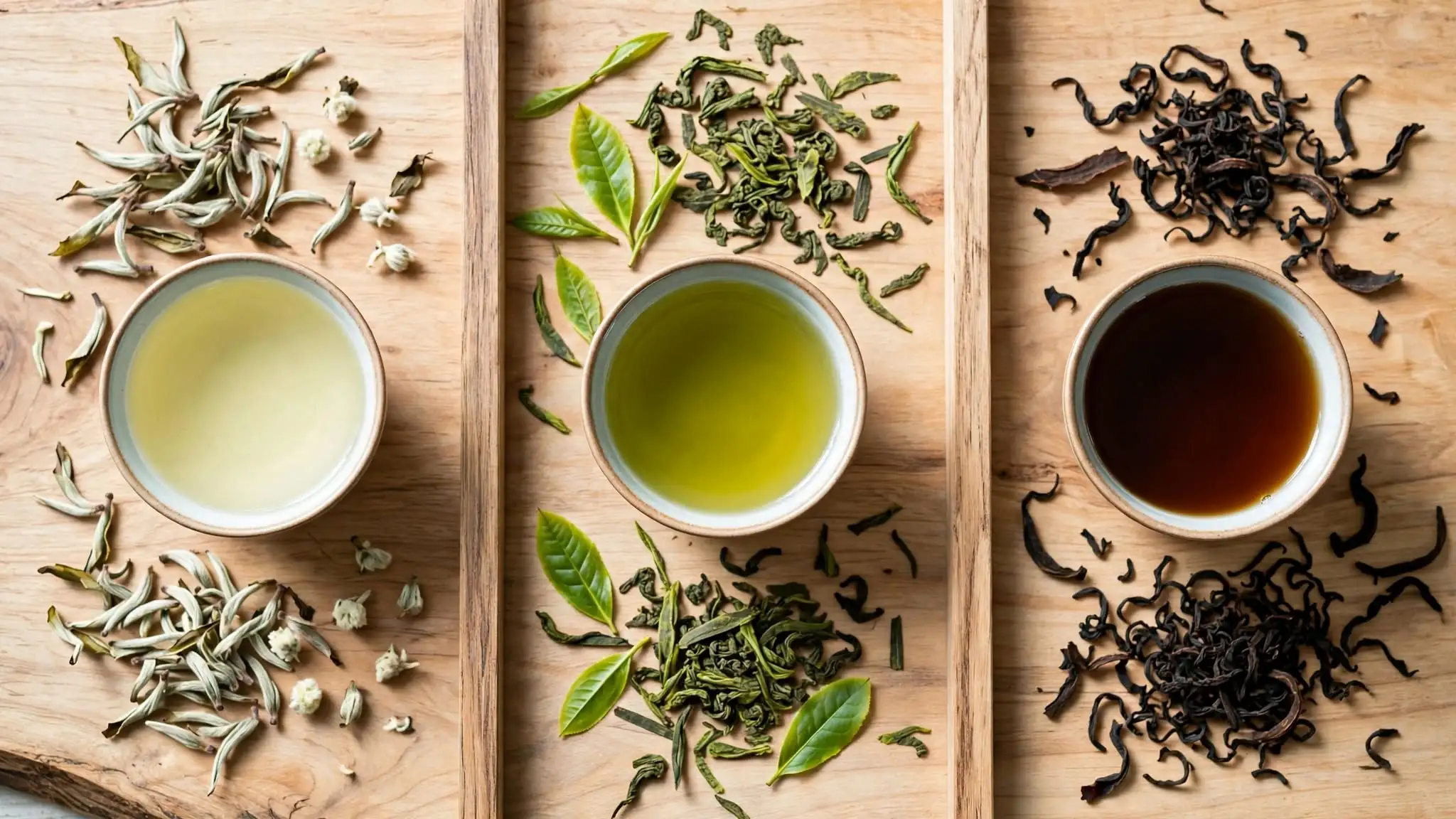
For years, I automatically bought green tea every time I went to the grocery store, mostly because I had accepted the vague notion that it was just “healthy tea.” My father, Iqbal, for as long as I can remember, has been drinking the same strong black tea every morning, and I always quietly thought he was just drinking caffeine and taking the extra step.
It wasn’t until I actually sat down and made the right comparison between white tea vs black tea vs green tea, instead of repeating what I had half read years ago, that I realized how cheap my thinking was. What I found was not the simple and neat result I was expecting. This is my honest analysis of white tea vs black tea vs green tea, written by someone who assumed he already knew the answer and turned out wrong.
I should be frank that I’m not a nutritionist or a tea sommelier — just someone who writes about health and was really embarrassed when I realized how little I knew about the beverage I drink every day.
Table of Contents
The Tea Aisle Confusion That Started This Investigation
It happened on a fairly ordinary trip to the supermarket. I was standing in front of the tea shelf, green tea box already in hand, when I noticed a small section of white tea I’d genuinely never paid attention to before. I picked it up, read the label, and realised I couldn’t actually explain what made it different from the green tea sitting right next to it, beyond a vague sense that it sounded more delicate and somehow more expensive.
That small moment of not knowing bothered me more than it probably should have. I write about nutrition for a living, and I’d been making tea decisions for years based on assumption rather than anything I could actually defend if someone asked me to explain it. Iqbal, who’d been dismissing green tea as “not a real cup of tea” for decades, suddenly looked considerably more vindicated than I was ready to admit. So I went home without buying anything, sat down with a few research papers, and started from scratch.
What Actually Separates White, Green, and Black Tea
Same Plant, Different Processing
The first thing that genuinely surprised me was learning that white, green, and black tea all come from exactly the same plant, Camellia sinensis. The differences come almost entirely from how the leaves are processed after harvesting, not from different plant varieties or exotic growing conditions — something I had never once considered across years of buying one and ignoring the others.
That single fact changed the whole framing for me. Instead of asking which plant was healthiest, the real question became: what does each processing method actually do to the leaf, and does it make the final drink more or less beneficial? It’s a bit like realising three completely different dishes came from the same base ingredient, just handled differently at every step after that — which, once I saw it that way, made the rest of the research considerably easier to follow.
Why Oxidation Changes Everything
Oxidation is the key process here, and understanding it unlocks most of the confusion. White tea is harvested young, from unopened buds and young leaves, and is minimally processed with almost no oxidation allowed. Green tea is steamed or pan-fired quickly to stop oxidation almost entirely, locking in a specific profile of antioxidants. Black tea goes through full oxidation, which produces that darker colour, stronger aroma, and more robust flavour most people associate with a classic cup.
That oxidation process also transforms the type of antioxidants present in each tea, even though all three remain genuinely high in beneficial compounds. I’d run into a similar idea before when I looked into some of the worst processed foods to keep eating, where the specific processing method turned out to matter just as much as the original ingredient. Tea follows the exact same logic, with considerably more pleasant results.
White Tea vs Black Tea vs Green Tea: Breaking Down Each One

White Tea, the Least Processed
White tea is made from the youngest leaves and buds, often still covered in fine white hairs, which is exactly where the name comes from. Because it’s barely processed and oxidation is kept to an absolute minimum, it tends to have a delicate, slightly sweet flavour and one of the highest concentrations of catechins, a specific type of antioxidant linked to reduced inflammation and cellular protection.
I’d assumed for years that “less processed” simply meant weaker or more subtle, in the same way I assumed a lighter-coloured drink must contain less of everything useful. The research suggests the opposite, at least for antioxidant concentration. White tea also typically contains the least caffeine of the three, which matters more than I’d previously given it credit for on mornings when I already feel alert and don’t need an extra push. It’s also, somewhat ironically, the tea Iqbal is least likely to ever try — he still associates a pale-coloured cup with weak tea, regardless of what’s actually in it.
Green Tea, the Reputation vs. the Reality
Green tea absolutely deserves a significant portion of its reputation, and I want to be fair about that even as someone who’d been using it lazily. It’s particularly rich in a catechin called EGCG, epigallocatechin gallate, which has been studied more extensively than almost any other compound found in tea, with research linking it to metabolic support, cardiovascular health, and anti-inflammatory effects.
What I hadn’t appreciated was that this reputation had made me genuinely lazy. I’d stopped asking whether green tea was actually better than the alternatives and instead just reached for it by default, the way people sometimes reach for “low fat” on a food label without checking what’s been added to replace the fat. Green tea is genuinely good. It’s just not the automatic winner I’d assumed it to be in every possible comparison.
Black Tea, More Than Just a Caffeine Hit
This is the section I most needed to write for Iqbal’s sake, even if he’ll never read it. Black tea contains theaflavins and thearubigins, compounds that form specifically through the oxidation process and don’t exist in white or green tea at all. There’s solid and growing research connecting these compounds to heart health, cholesterol management, and gut microbiome support — none of which I’d given black tea credit for before.
It also has the highest caffeine content of the three, typically between 40 and 70 milligrams per cup depending on steeping time. Caffeine combined with the L-theanine naturally present in all three teas produces a calmer, more sustained focus than caffeine alone, which explains why tea tends to feel different to coffee even at similar caffeine levels. I’d already been thinking about antioxidant claims more carefully after looking into whether pomegranate juice could actually lower cholesterol, and found the research to be far more compound-specific than most articles implied. The same proved true here — saying “black tea has antioxidants” is accurate but incomplete; the specific compounds and their documented effects are where the real story sits.
Quick Comparison — White vs Green vs Black Tea: White tea: lowest caffeine, highest catechin concentration, mildest and slightly sweet flavour. Green tea: moderate caffeine, richest in EGCG, grassy and vegetal flavour. Black tea: highest caffeine, rich in theaflavins and thearubigins, bold and robust flavour.
At a Glance
| White Tea | Green Tea | Black Tea | |
| Caffeine | Lowest | Moderate | Highest (40–70mg) |
| Key compound | Catechins | EGCG | Theaflavins/thearubigins |
| Oxidation | Minimal | Stopped early | Full |
| Flavour | Delicate, sweet | Grassy, vegetal | Bold, robust |
Which One Is Actually Healthier? My Honest Answer
After all this research, the honest answer is that there isn’t a single winner, which wasn’t the satisfying conclusion I’d gone in hoping to find. The healthiest choice genuinely depends on what you’re trying to support and what your body’s relationship with caffeine actually looks like day to day.
If you want the highest antioxidant concentration with the least caffeine and the mildest taste, white tea makes a strong case. If cardiovascular research is your primary interest, both green and black tea have meaningful bodies of clinical evidence behind them, just working via different compounds. If you need a reliable morning energy boost without reaching for coffee, black tea’s caffeine alongside L-theanine tends to deliver that more cleanly than I’d expected.
Caffeine sensitivity changed my own answer here considerably. On days I’ve slept well, white tea gives me everything I want without the edge. On mornings I wake up genuinely sluggish, black tea produces a noticeably different effect — something I understood far more clearly once I started looking properly into why some people feel persistently tired despite getting enough sleep and realised the caffeine-sleep relationship was more nuanced than I’d assumed. None of the three teas is wasted money or a worse choice in some absolute sense — they’re simply suited to different mornings, which is a far more useful way to think about it than ranking them once and sticking with the result forever.
How I Actually Drink Tea Now
These days, I rotate between all three rather than treating one as the default correct choice, which felt like a strange kind of freedom after years of green-tea loyalty. White tea most mornings, when I want something gentle and antioxidant-rich without the caffeine interrupting whatever focus I’ve woken up with. Green tea mid-morning, usually after a couple of hours at my desk when I want something with a slightly stronger presence. Black tea in the early afternoon specifically because the two o’clock energy dip is real, and black tea handles it better than I’d ever given it credit for.
Keeping all three stocked became one more small addition to the kind of pantry staples I’d already built a proper habit of maintaining. Having them readily available removed one tiny daily decision, which sounds trivial until you’re standing in your kitchen at seven in the morning not wanting to think about anything yet.
It also became part of a different kind of daily ritual, one that genuinely matters on difficult days. The few minutes of making and sitting with a cup of tea turned out to have a calming effect I’d previously underestimated, particularly on the kind of stressful afternoons I wrote about when looking at the foods that actually helped me manage stress. The tea itself is only part of it; the pause it forces you to take is doing its own quiet work. When I told Iqbal I’d finally tried white tea, his response was exactly what I expected: “Still tastes like hot water to me.” He’s stuck with his black tea, and having actually done the research now, I can’t really argue with his choice.
My Weekly Tea Rotation: White tea in the morning for antioxidants without the caffeine edge. Green tea mid-morning for EGCG and focused clarity. Black tea in the early afternoon for a calm, reliable energy lift. Herbal tea in the evening when caffeine isn’t wanted.
Conclusion
If you’d asked me a year ago which tea was healthier, I’d have said green without hesitation, the same automatic answer I gave every time I put myself in the trolley. Now I’ll tell you that the answer depends on what you want to do with a cup of tea that day, and my real mistake was that I never picked the wrong tea—assuming that there was only one correct answer from the start.
White, green, and black tea are all worth keeping in the cupboard. They work a little differently, and knowing the difference makes each cup feel less casual and feels like a real choice — which, looking back now, is a small but real upgrade from the way I drank tea for most of my adult life. Iqbal will continue to drink his black tea no matter what I write here, and now that I’ve done my research, I’ve finally understood why it’s a perfectly reasonable choice and not just a stubborn habit.
This article is based on personal experience and publicly available nutrition research. It is not medical advice. If you are pregnant, sensitive to caffeine, or taking medication that may interact with tea compounds, please speak with your GP or a qualified healthcare professional before making significant changes to your tea consumption.
Frequently Asked Questions
Which tea has the most antioxidants — white, green, or black?
White tea generally has the highest catechin concentration, green tea leads specifically in EGCG, and all three are rich in antioxidants via different compounds depending on how they’re processed.
Does white tea have less caffeine than green tea?
Yes — white tea typically contains less caffeine than green tea, making it a gentler option for those sensitive to caffeine who still want meaningful antioxidant benefits.
Is black tea worse for you than green tea?
No — black tea contains theaflavins and thearubigins, unique compounds formed through oxidation that support heart and gut health in their own right, alongside a higher caffeine content.
Which tea is best for weight loss?
Green tea has the most research linking it to modest metabolic support through its EGCG content, though no tea alone produces significant weight loss without broader lifestyle changes.
Can drinking too much tea cause side effects?
Yes — high intake can cause jitteriness, poor sleep, or stomach irritation due to caffeine and tannin content, especially with black tea consumed in large quantities.
