The Short Answer: Watermelon seeds are completely safe to eat — raw, roasted, or sprouted — and they’re packed with protein, magnesium, and healthy fats that most people throw away every summer. My neighbour Imran had spent years telling his kids the opposite, until one barbecue question sent me down a research rabbit hole that changed how our whole street eats watermelon now.
Introduction
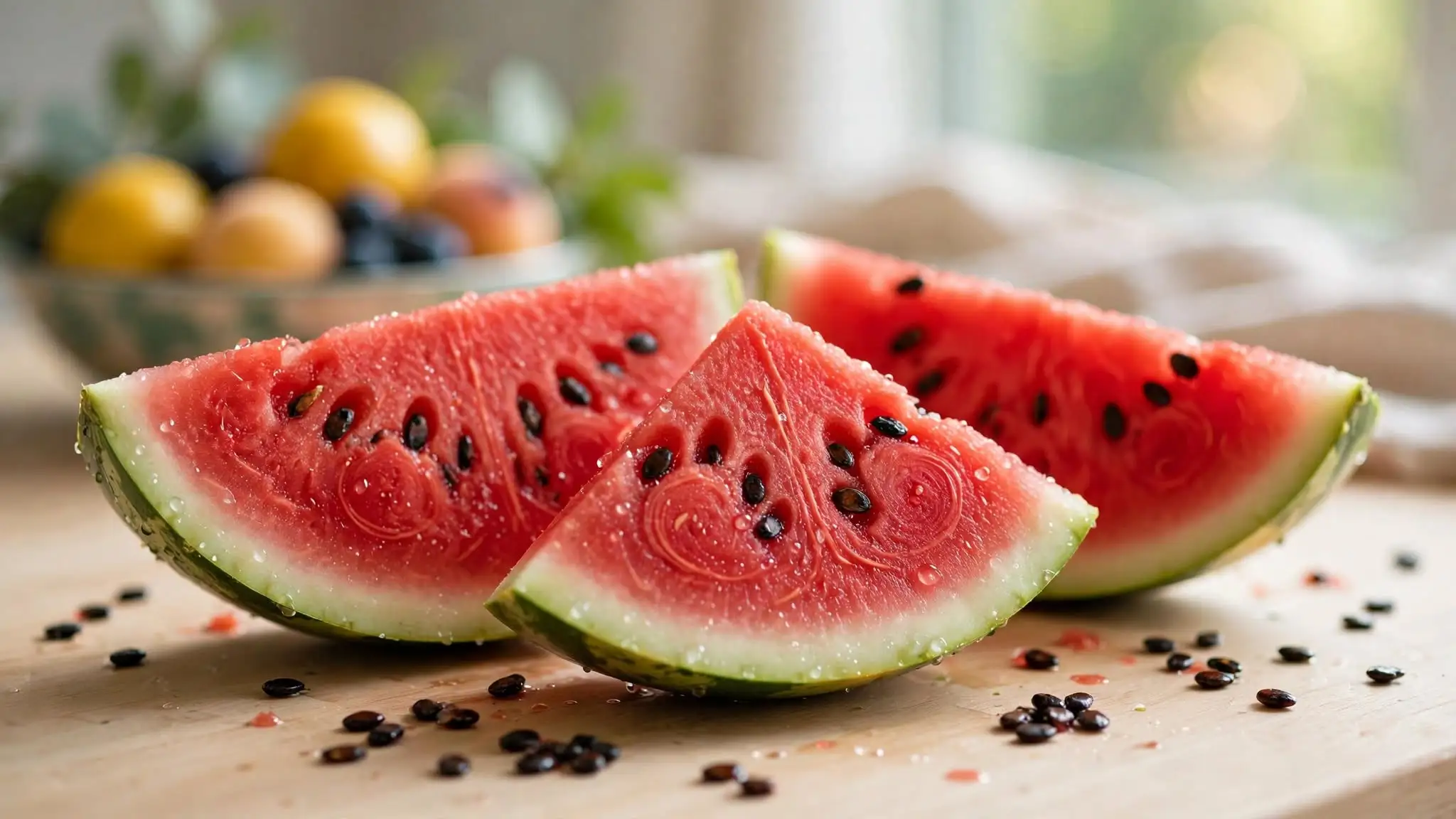
It was the kind of question that stops a barbecue conversation dead: “can i eat watermelon seeds, or is my mum right that they’ll grow inside you?” My neighbour Imran asked me this over paper plates and warm slices of watermelon last July, half-joking and half-genuinely worried, because he’d been repeating his own mother’s warning to his kids for years. I didn’t have a confident answer on the spot, which felt embarrassing given how many nutrition articles I’ve written. So I went home that evening and actually looked into whether you can eat watermelon seeds — and what I found made me want to march straight back over and tell him he’d been wasting one of the most nutrient-dense parts of the fruit for years.
Table of Contents
The Childhood Warning Almost Everyone Grew Up With
Where the “a watermelon will grow in your stomach” myth actually comes from
Nobody seems to know exactly where this warning started, but almost everyone I’ve ever asked heard some version of it as a child. The logic never held up to a moment’s scrutiny — the stomach is dark, acidic, and has no soil — but it’s the kind of thing repeated so consistently by well-meaning parents that it hardens into fact long before anyone thinks to question it.
It’s a similar pattern to a lot of inherited food advice: rarely malicious, rarely checked against any actual source, and passed down purely because it sounds plausible enough that questioning it feels unnecessary.
Why Imran’s kids were being told the same thing decades later
What struck me about Imran’s version of the story is how little the myth had changed since his own childhood in the 1990s. He wasn’t repeating something he’d half-forgotten — he was passing on a specific, confident instruction to spit out every seed, the same way it had been passed to him. It’s a small example of something I’ve written about before: how small, unexamined habits quietly shape our health for years without anyone stopping to check if they’re true. A seed-spitting habit is trivial on its own, but it’s exactly the kind of assumption worth checking.
What made it stick with me was watching his eldest daughter automatically pick every seed out of her slice before eating, the exact same way I used to as a kid. She’d never been told why — just that it was the rule. That’s usually how these food myths survive: not through any real evidence, but because the instruction gets repeated confidently enough, often enough, that nobody along the way stops to ask where it actually came from.
So — Can You Actually Eat Watermelon Seeds?
Yes, completely and without any real concern. Watermelon seeds are edible raw, roasted, or sprouted, and swallowing a few whole seeds by accident is harmless — your digestive system either breaks them down or passes them through unchanged. The old warning has no biological basis whatsoever.
The timing doesn’t matter either. Eating seeds with a slice at a lunchtime barbecue is no different to eating them with a bowl after dinner — if you’ve ever wondered whether eating watermelon at night affects digestion or sleep, the fruit itself behaves the same regardless of the clock. The genuinely interesting question isn’t whether the seeds are safe — it’s how to eat them in a way that’s actually worth the effort.
That distinction is what I tried to get across to Imran. Nobody had ever told him the seeds were dangerous in a way that held up to scrutiny — the warning was just never questioned. Once the safety question was settled, the far more useful conversation was about how to actually make use of something he’d been discarding without a second thought for thirty-odd years.
What’s Actually Inside a Watermelon Seed
Once I started looking at the nutrition panel, I understood why Imran’s kids were missing out. These seeds punch well above their size.
| Form | What Changes Nutritionally | Best For |
| Raw, in the shell | Passes through mostly undigested — very low nutrient uptake | Nothing in particular; safe but wasteful |
| Roasted | Shell softens, protein and fats become accessible, mild phytate reduction | Everyday snacking, salads, bowls |
| Sprouted | Phytate drops significantly, best iron and zinc absorption | Boosting mineral intake specifically |
| Ground / powdered | Nutrients fully accessible, texture disappears into food | Smoothies, porridge, baking |
Protein — more than you’d expect from something this small
Watermelon seeds contain roughly 28 to 30 grams of protein per 100 grams, which works out to around 8 grams per ounce of roasted kernels — comparable to a small handful of almonds. I’d already covered this territory when writing about high-protein nuts and how they stack up as snack alternatives, and watermelon seeds hold their own in that comparison far better than their reputation suggests.
Magnesium and zinc — the minerals most people don’t get enough of
Per 100 grams, watermelon seeds provide around 556 milligrams of magnesium, against a recommended adult intake of roughly 300–420 milligrams. Magnesium supports normal muscle function, energy metabolism, and psychological function[1], and mild deficiency is more common than most people realise. I’d already written about magnesium-rich foods when covering vegan foods that are naturally high in magnesium — watermelon seeds deserve a place on that list. They also carry meaningful zinc, which supports normal immune function[1], plus potassium for heart and fluid balance.
Healthy fats — the kind that actually help the heart
The seeds and their oil contain linoleic acid (an omega-6) and oleic acid (an omega-9 also found in olive oil), alongside smaller amounts of other unsaturated fats. Replacing saturated fat with unsaturated fat is linked to healthier cholesterol levels[2] — the same principle I covered when writing about what makes California walnuts nutritionally distinctive among tree nuts, and watermelon seeds deliver a similar profile in a smaller package.
The phytate caveat — what it means for iron absorption
One honest complication: watermelon seeds contain phytate, a compound that binds to minerals like iron and zinc during digestion and reduces how much your body actually absorbs. Sprouting the seeds before eating cuts phytate levels significantly; roasting helps a little too. If iron is your main goal, sprouted is the better choice.
Quick Nutrition Snapshot — Per 1oz Roasted Watermelon Seeds
Calories: ~158 • Protein: ~8g • Magnesium: ~21mg • Zinc: ~2.9mg • Iron: ~0.6mg (reduced by phytate) • Fats: mostly linoleic and oleic acid
What to Do If Your Watermelon Doesn’t Have Seeds
Imran’s first practical objection was a fair one: most watermelons sold in UK supermarkets now are seedless, bred specifically to remove the inconvenience we’d both grown up navigating. If that’s what you’re buying, you won’t have enough seeds from a single melon to bother roasting.
A couple of workarounds solve this. Farmers’ markets and specialist greengrocers, especially in late summer, often stock traditional seeded watermelons at a lower price than the seedless variety, partly because most shoppers now avoid them. Alternatively, dried watermelon seed snacks — sold as a health-food item in some shops, similar to how pumpkin seeds are sold — are widely available and give you the same nutritional profile without needing to source and roast your own.
The Health Benefits Worth Knowing About

Heart health — fats and magnesium working together
Unsaturated fats support healthy cholesterol, and magnesium plays a role in maintaining normal blood pressure and heart rhythm. Given how widely under-consumed magnesium is, a seed most people throw away is a genuinely useful source. Imran’s father, Sadiq, has kept an eye on his blood pressure for years, which is partly why the magnesium angle landed with Imran more than the protein figures did — it wasn’t an abstract nutrition stat, it connected to something he actually thinks about at family meals.
Blood sugar and metabolic support
Some early research suggests watermelon seed extract may support insulin sensitivity, though most of it is animal or early-stage human research and shouldn’t be overstated. What’s clearer is that the protein, fibre, and fat combination slows digestion and blunts the blood sugar spike compared with typical processed snacks. For Imran specifically, this mattered because he’d been trying to move away from mid-afternoon biscuits at work — a jar of roasted seeds at his desk turned out to be a far steadier option than he expected, without the sugar crash an hour later.
Immune function, bone strength, and antioxidants
Zinc supports immune function and cell division, folate supports DNA synthesis and repair, and the phenolic compounds in the seeds provide antioxidants that counter oxidative stress. None of this makes headlines, but it adds up when it’s part of a regular snack rather than an occasional afterthought.
How Imran Started Eating Them
The week after our barbecue conversation, I went over with a jar of roasted seeds and told Imran exactly what I’d found. He was sceptical at first — thirty years of habit doesn’t disappear because a neighbour shows up with snacks — but he tried a handful anyway.
Roasted — the easiest and best-tasting method
This is what I handed Imran, and it’s still what he makes most weeks. He’s since started saving seeds through the whole of watermelon season rather than treating each melon as a one-off — a small collection in the fridge that builds up over a few days until there’s enough for a proper tray.
How to Roast Watermelon Seeds at Home
1. Rinse seeds and pat dry. 2. Toss with a little olive oil and salt. 3. Spread on a baking tray. 4. Roast at 160°C (325°F) for 15–20 minutes, shaking halfway. 5. Cool completely before storing in an airtight jar for up to two weeks.
Sprouted — when you want maximum bioavailability
Soak the seeds for 24 hours, then rinse and leave them in a damp environment for a day or two until they germinate. It takes more patience than roasting, but it’s the better route if iron or zinc intake is the specific goal.
Ground into flour or blended into smoothies
Dried seeds can be ground into a powder and stirred into a smoothie or bowl of oats without changing the taste noticeably, while still adding a real protein and magnesium boost.
As a salad or bowl topping
Roasted seeds work exactly the way pumpkin or sunflower seeds do as a crunchy topping. It’s one of those simple food swaps that improve a meal’s nutrition without overhauling the recipe — swapping croutons for roasted seeds takes seconds and noticeably improves both texture and nutrition.
Who Should Be a Bit More Careful
For most people, there’s nothing to worry about. A few situations are worth naming honestly: anyone advised to limit fibre during a gut condition flare-up may need to go easy on seeds generally, and the calorie density of roasted seeds — around 158 calories per ounce — is worth bearing in mind if you’re tracking intake closely. Pre-portioning into a small jar solves this easily. Swallowing whole raw seeds is safe, but you’ll get very little nutritional benefit from them in that form.
It’s also worth being sensible about portion size if you’re adding seeds on top of an already varied diet. Watermelon seeds aren’t a substitute for other sources of protein or minerals — they’re a genuinely useful addition, not a replacement for eating well generally. Imran’s habit is a small handful most days, not a bowlful, and that’s roughly the right scale for most people.
What I Told Imran the Next Time I Saw Him
A couple of weeks later, I saw him in the garden with his kids, a bowl of roasted seeds between them instead of the usual spat-out pile on a paper plate. “I can’t believe I’ve been raising my kids on a myth for this long,” he told me, tipping a handful into his mouth like popcorn. His youngest now asks for “the crunchy seeds” by name.
It’s a small change, but it’s the same pattern I keep coming back to in my own writing — the easiest habits to build are the ones that replace an old default rather than requiring extra effort. Imran didn’t overhaul his diet. He just stopped throwing away something that was already on his plate.
Conclusion
The question that started all this — can you eat watermelon seeds — has a simple answer: yes, safely, in every form. But the more useful takeaway from Imran’s experience is how much nutrition gets lost to habits nobody ever questions. Roasted, sprouted, or ground into a smoothie, watermelon seeds are a genuinely worthwhile addition rather than a curiosity, and the switch from spitting them out to saving them takes almost no effort once the habit sticks.
If there’s one thing worth taking from a conversation that started as barbecue small talk, it’s this: the food habits we inherit as children are rarely re-examined as adults, even when we’re the ones now deciding what our own kids should believe. Sometimes the healthiest thing you can do with an old rule is simply ask whether it was ever actually true.
This article reflects my own experience and conversations, alongside general nutrition information drawn from published research. It is not medical advice and should not replace guidance from your GP or a registered dietitian, particularly if you have a diagnosed digestive condition.
Frequently Asked Questions
Is it safe to swallow watermelon seeds whole?
Yes. Whole seeds pass through the digestive system without harm, though the hard outer casing means you absorb very little of their nutritional value in that form. The old warning about seeds sprouting internally has no basis in how digestion actually works.
Do watermelon seeds cause any digestive issues?
For most people, no. Anyone with an active flare-up of a fibre-sensitive gut condition may want to go easy on seeds generally, but watermelon seeds themselves carry no specific digestive risk.
What’s the best way to eat watermelon seeds for maximum nutrition?
Roasting or sprouting is best. Both make the protein, magnesium, and healthy fats far more accessible than eating the raw, unshelled seed.
Can children eat watermelon seeds?
Yes, roasted or ground seeds are safe for most children old enough to eat solid, crunchy foods; whole seeds are a minor choking consideration for very young children, as with any small hard food.
How do watermelon seeds compare nutritionally to pumpkin seeds?
Both are strong choices. Pumpkin seeds are more calorie-dense and slightly higher in zinc and iron, while watermelon seeds carry more magnesium per serving and a marginally lighter calorie load

7 thoughts on “Can I Eat Watermelon Seeds? Everything I Learned”
Comments are closed.