The Short Answer:
Watermelon is a safe, hydrating choice for most pregnant women in sensible portions, and the old miscarriage myth has no basis in evidence. My cousin Sana leaned on it heavily through a heatwave pregnancy, and what her midwife told her about swelling, sugar, and food safety turned out to be far more useful than the family folklore she’d grown up hearing.
Introduction
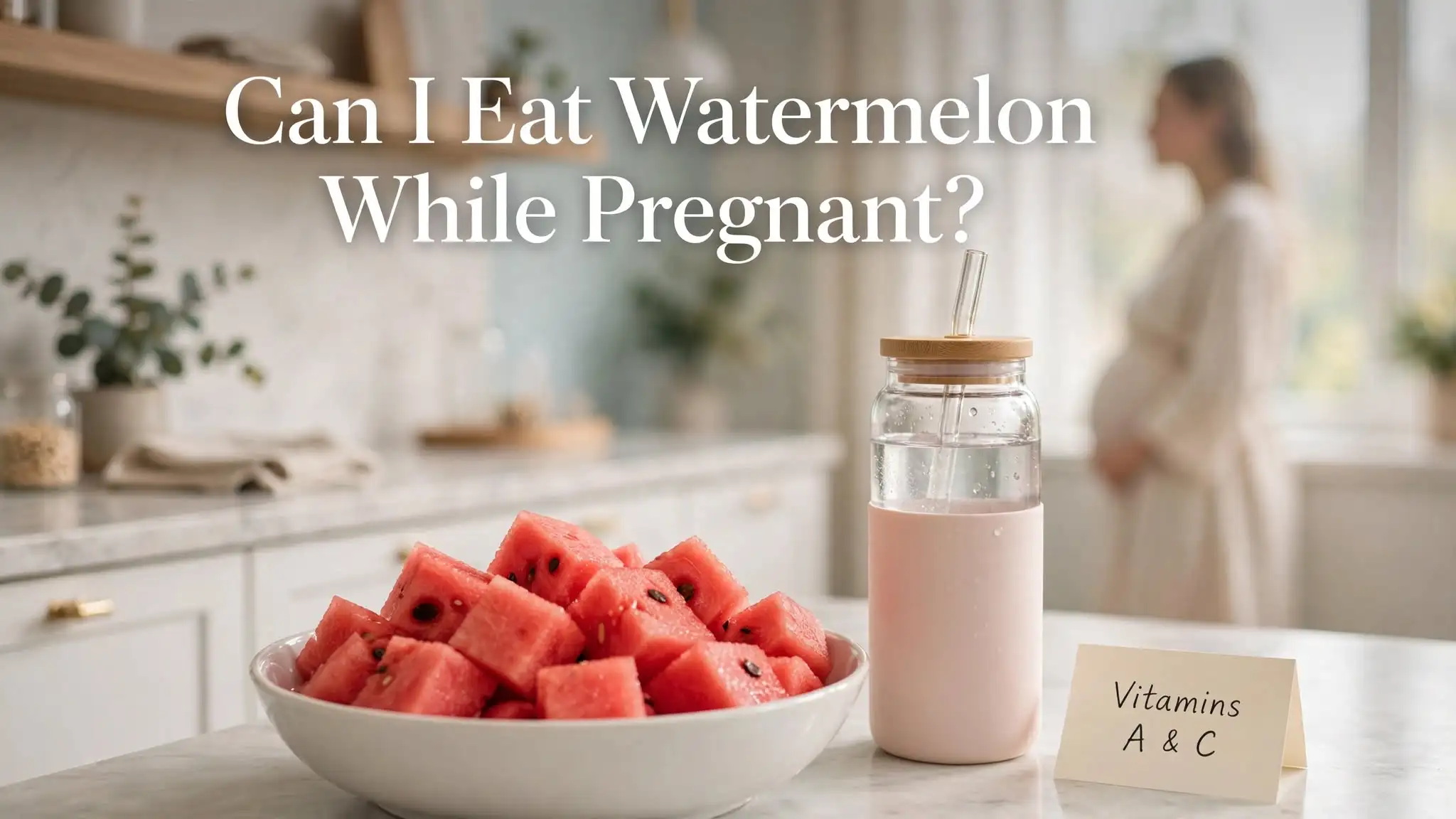
My cousin Sana was seven months pregnant during last year’s heatwave, and watermelon had basically become her survival food. Half a melon would disappear in a day, cut cold from the fridge and eaten on the sofa in front of a fan, because it was one of the only things that actually felt refreshing when the rest of the flat was unbearable. When she asked me, half-joking, “can you eat watermelon while pregnant, or am I overdoing it?”, I didn’t actually have a confident answer — despite writing about nutrition for a living. So when her midwife later mentioned, almost in passing, that her ankle swelling had improved noticeably over a few weeks, I went and properly researched whether you can eat watermelon while pregnant without any real limit, and what I found was more nuanced than either of us expected — part reassurance, part genuine caution, and one very persistent family myth that needed sorting out along the way.
Table of Contents
Old Wives’ Tales About Watermelon and Pregnancy I’d Grown Up Hearing
The “hot and cold foods” belief in South Asian food culture
Long before Sana was pregnant, I’d heard relatives sort foods into vague “hot” and “cold” categories, with certain fruits supposedly risky during pregnancy for reasons nobody could ever fully explain. Watermelon sits right in the middle of that folklore — praised for cooling the body in summer, but quietly treated with suspicion by an older generation raised on the same warnings.
Why Sana’s mother-in-law raised the miscarriage warning almost immediately
Sana’s mother-in-law, Nasreen, mentioned the miscarriage warning within days of seeing how much watermelon Sana was eating. It wasn’t delivered unkindly — Nasreen genuinely believed it, the way she’d believed it for over thirty years, because nobody in her own life had ever pushed back on it. That’s usually how these things survive: repeated with total confidence, never actually checked against anything.
What made it stick in my head was how specific the warning was. It wasn’t a vague “be careful with fruit” — Nasreen could describe exactly which trimester was supposedly riskiest and which relative had supposedly proven it decades earlier. That kind of specificity is often what makes food folklore so convincing; it sounds like lived evidence even when it’s really just a story that’s been repeated enough times to feel true.
So — Can You Actually Eat Watermelon While Pregnant?
Yes, for most women, watermelon is a genuinely solid choice during pregnancy. There is no scientific evidence linking watermelon to miscarriage — the belief traces back to traditional hot-and-cold food classifications, not clinical research. I said as much to Nasreen directly, gently, and it turned into a far better conversation than I expected rather than an argument.
It’s a similar reassurance to what I found when I looked into whether mango is safe to eat during pregnancy — most fruit-related pregnancy fears trace back to inherited caution rather than actual evidence, and watermelon is no exception.
What Watermelon Actually Offers During Pregnancy

Hydration — why fluid needs rise so much in pregnancy
Blood volume rises substantially during pregnancy, and pregnant women are generally advised to keep their fluid intake up, since dehydration can contribute to complications including reduced amniotic fluid and early contractions. At roughly 92 percent water, watermelon was doing more of that work for Sana than either of us initially credited it for — it simply felt like an actual treat rather than another glass of water forced down in the heat.
Potassium, vitamin C, and vitamin A
A single serving provides meaningful potassium, vitamin C, and vitamin A. Potassium in particular plays a role in fluid balance and blood pressure regulation — both genuinely relevant during pregnancy, when blood pressure gets checked at every appointment.
Lycopene and antioxidant research
Watermelon also carries lycopene, the same antioxidant found in tomatoes, which has been studied for a possible role in reducing oxidative stress during pregnancy. The research here is still developing rather than conclusive, but it’s a reasonable bonus on top of the hydration benefit — and it’s genuinely more concentrated in watermelon than in raw tomatoes, gram for gram, which surprised me when I first checked it.
Magnesium and Sana’s leg cramps
Smaller but still meaningful amounts of magnesium showed up too, which has been associated with reduced muscle cramping. Sana had been getting calf cramps most nights before bed, and while I can’t say the watermelon specifically fixed it, the timing of both things improving in the same few weeks was hard to write off entirely as coincidence.
The Swelling Question — What Sana’s Midwife Actually Said
When Sana asked her midwife directly about the swelling improvement, the answer was more careful than “watermelon fixed it.” Mild swelling in the ankles and feet is common in pregnancy and often related to fluid retention, and proper hydration actually helps the body manage fluid balance rather than making retention worse[2]. Watermelon’s potassium content plays a supporting role too, since potassium helps regulate the sodium balance that contributes to fluid retention.
The midwife was clear this was one contributing factor among several — elevating her feet in the evening and spending less time standing in the heat were probably doing just as much, if not more. It’s the kind of unglamorous, multi-factor explanation that never makes a good headline but is almost certainly closer to the truth than a single miracle food. Sana admitted afterward she’d half-hoped for a simpler answer, something she could point to and say “that’s what fixed it” — but the honest, boring answer turned out to be more useful precisely because it gave her several small things to adjust rather than one fragile fix to rely on.
What Genuinely Helps Mild Pregnancy Swelling
Staying well hydrated • Potassium-rich foods like watermelon and bananas • Elevating feet in the evening • Reducing time spent standing in heat • Comfortable, supportive footwear
How Much Is Too Much? Sugar and Gestational Diabetes
Half a watermelon in a day is, by any reasonable measure, a lot of natural sugar. Watermelon has a relatively low glycaemic load per serving, but large quantities still add up — and Sana’s glucose tolerance test was coming up within weeks of the habit really taking hold.
Important:
Watermelon’s natural sugar can affect blood sugar levels in larger portions. Women with gestational diabetes, or at higher risk of it, should discuss appropriate portion sizes with their midwife or GP[3] — generally around one cup at a time rather than eating it without any limit.
Sana scaled back to one to two cups at a time, spread across the day instead of one large sitting. The craving stayed satisfied, and her glucose tolerance test came back completely normal, though I can’t say for certain the portion change was the deciding factor — genetics, general diet, and activity levels all play a role too, and it would be misleading to credit one adjustment for the whole result.
Food Safety Precautions That Surprised Us Both
This part genuinely surprised us. Cut watermelon left at room temperature for more than about two hours can become a real food safety risk, since the moist, sugar-rich flesh is a hospitable environment for bacteria to multiply. Pregnant women are also more susceptible to certain foodborne illnesses, including listeria, which makes food safety around ready-to-eat fruit more relevant than it might be otherwise[4].
Sana had been leaving cut slices out on the counter through the afternoon more than once, simply because it was convenient and she wanted to graze on it while working from home. Once she knew this, she started refrigerating any cut watermelon immediately and discarding anything left out too long, rather than assuming it was fine because it looked and smelled normal.
Washing the rind thoroughly before cutting mattered too — how watermelon skin and rind should be handled safely applies here even if you’re not planning to eat the rind itself, since a knife cutting through an unwashed surface can transfer contamination straight into the flesh you’re about to eat. This was probably the single most useful practical change to come out of researching the whole topic — more useful, honestly, than anything about specific nutrients or portion sizes, simply because it’s the kind of detail that rarely comes up in casual pregnancy conversation despite being genuinely important.
How Sana Eats It Now
Her routine settled into something far more sustainable than the half-a-melon days. A bowl of cubed watermelon, roughly a cup, usually mid-morning, became the new normal — refrigerated immediately and never left out for long. Buying slightly smaller watermelons rather than the biggest one available also naturally limited how much sat around tempting her toward bigger portions, which turned out to be a simpler fix than any amount of willpower.
We also checked whether eating watermelon later in the evening causes any issues, since she’d started wanting a slice after dinner on hot evenings, and settled on smaller evening portions to avoid extra bathroom trips too close to bedtime — a small but genuinely welcome adjustment in the final stretch of pregnancy when sleep is already hard enough to come by. She even started saving the watermelon seeds most people throw away once I mentioned they carried genuine nutrition, though she admits she still spits most of them out from habit rather than eating them on purpose.
Who Should Be More Cautious
A few groups should think more carefully about watermelon during pregnancy specifically, beyond the general portion guidance above. None of this is meant to discourage anyone from enjoying watermelon during a hot pregnancy summer — it just means the right approach depends on individual circumstances rather than one rule fitting everyone.
- Women with gestational diabetes or a higher risk of it, who should monitor portions closely with their care team and treat watermelon the same way they would any other higher-sugar fruit.
- Anyone with sensitive digestion, since large amounts of watermelon can cause bloating or loose stools for some people, in a pattern similar to why certain fruits can cause bloating or gas in larger amounts — the fibre and natural sugar combination affects some digestive systems more than others, and pregnancy can make that sensitivity more noticeable than usual.
- Women managing fluid intake restrictions for a specific medical reason, such as certain kidney or heart conditions, who should check with their GP about total fluid contribution from food, not just from drinks.
It’s broadly similar territory to how peaches fit into the same kind of pregnancy diet questions, where the answer for most fruit during pregnancy comes down to genuine moderation rather than outright avoidance — the exceptions are specific and identifiable, not a reason for blanket caution.
What This Taught Me About Pregnancy Food Myths Generally
Researching this for Sana wasn’t really about watermelon in the end. It was a reminder of how much pregnancy advice gets passed down as absolute fact when the actual evidence, once you go looking for it, turns out to be far more measured and far less dramatic. Nobody sets out to spread bad information — Nasreen certainly wasn’t trying to worry anyone unnecessarily — but fear travels faster and sticks harder than nuance ever does.
The pattern kept repeating itself: a real, sensible caution (don’t overdo the sugar, watch food safety with cut fruit) gets flattened over time into a blanket “avoid this entirely” warning that’s easier to repeat than the more complicated, more accurate version. Untangling the two took some actual digging, but it was worth doing before simply accepting either the fear or the fruit at face value.
What I Told Sana After the Baby Arrived
A few weeks after her son was born, I asked Sana how the watermelon habit held up in hindsight. “It got me through the worst of the heat,” she told me, “and I still can’t believe Nasreen actually believed the miscarriage thing for that long.” Nasreen, to her credit, has since stopped repeating the warning to anyone else in the family — a small but genuine shift for a belief that old.
Conclusion
Sana’s swelling didn’t disappear because of watermelon alone, and I don’t think any single food deserves that much credit during pregnancy. What’s closer to the truth is that watermelon while pregnant, eaten in sensible portions, genuinely supported the hydration and potassium intake that helped alongside everything else her midwife was already monitoring. If a hot summer and a serious watermelon craving sound familiar, moderation and proper food safety are really the only adjustments worth making — and the old miscarriage myth genuinely isn’t one of them.
What stayed with me most, though, wasn’t the nutrition breakdown — it was watching a thirty-year-old family belief get quietly retired because someone finally asked where it came from. That’s a far more useful habit to pass on to the next generation than any specific fact about potassium or hydration.
This article is for informational purposes only and does not constitute medical advice. Please consult your midwife or GP about your specific diet during pregnancy, particularly if you have gestational diabetes or another health condition.
Frequently Asked Questions
Is it safe to eat watermelon every day during pregnancy?
Yes, in moderate portions of around one to two cups, watermelon is generally safe to eat daily during pregnancy for most women without gestational diabetes.
Can watermelon help with pregnancy swelling?
Watermelon’s hydration and potassium content can support healthy fluid balance, which may help with mild pregnancy-related swelling, though it works alongside other factors rather than as a standalone fix.
Does watermelon cause miscarriage?
No, there is no scientific evidence linking watermelon to miscarriage; this belief comes from traditional food folklore, not medical research.
Can too much watermelon raise blood sugar during pregnancy?
Yes, large portions can affect blood sugar due to natural sugar content, which is particularly relevant for women with or at risk of gestational diabetes.
Is watermelon good for morning sickness?
Many pregnant women find watermelon’s light, hydrating qualities easier to tolerate than heavier foods during nausea, though individual response varies and some women find any strong-smelling or very cold food unappealing during the first trimester regardless of how gentle it is nutritionally.

3 thoughts on “Can I Eat Watermelon While Pregnant? Here’s My Answer”
Comments are closed.