🟢 THE SHORT VERSION
You lose water simply by breathing overnight, and a hormone called vasopressin controls how well your body holds onto fluid while you sleep. Short or poor-quality sleep weakens that process, which is why sleep length matters as much as how much water you drink before bed.
Introduction

For a few weeks, I woke up most mornings with such a dry mouth that it felt as if I had slept soundly all night, along with a slight headache that took an hour and more to clear. I thought I wasn’t drinking enough water in the evening, so I started putting a glass by the bed. It didn’t make much difference. That’s when I really started asking why I feel dehydrated after sleeping, rather than assuming that the solution is obvious. Once I looked into why do I feel dehydrated after sleeping properly, I found that the answer was less about how much I drank before bed, and more about what my body was doing throughout the night.
Table of Contents
Yes, You Actually Lose Water Overnight, Even Without Sweating
It sounds strange, given you’re lying still for hours, but your body is losing fluid the entire time you sleep, whether or not you notice any sweating.
This was the part that genuinely surprised me. I’d always associated dehydration with exercise or heat, something active happening to you. Realising it was quietly happening every single night, regardless of activity, reframed how I thought about morning grogginess altogether.
Breathing alone causes fluid loss
Every breath you take releases a small amount of water vapour, and over seven or eight hours, that adds up to a meaningful amount of fluid loss, even in a cool, comfortable room. Multiply that by roughly fifteen breaths a minute for eight hours, and the total is far from trivial.
Why mouth breathing and snoring make it worse
Breathing through your nose conserves moisture far more effectively than breathing through your mouth. If you snore, breathe through your mouth at night, or have something like sleep apnoea, you’re likely losing noticeably more fluid than someone who breathes through their nose all night, since your nasal passages act as a kind of built-in humidifier that mouth breathing simply bypasses.
It’s normal to lose some water, the question is how much
None of this means something is wrong with you. Everyone loses some water overnight. The issue is when that loss outpaces what your body is able to regulate, which is where the next part of this comes in.
The Hormone Behind This: Vasopressin
What vasopressin actually does
Vasopressin, also called antidiuretic hormone, tells your kidneys to hold onto water rather than releasing it as urine. It’s one of your body’s main tools for keeping your fluid levels steady overnight, when you’re not drinking anything for hours at a stretch.
Without enough of it circulating, your kidneys let more water pass through as urine than your body can really afford to lose, particularly across a long stretch with no fluid intake at all.
Why it’s released more in later stages of sleep
Vasopressin release is tied to your sleep cycle, with more of it released later in the night, during deeper stages of sleep. If your sleep is cut short, disrupted, or you’re waking earlier than your body would naturally choose to, you may be missing the window where more of this hormone gets released, leaving your body less able to hold onto fluid properly.
This is why two people who drink the exact same amount of water before bed can wake up feeling completely different, one refreshed, one parched, depending entirely on how their sleep played out rather than anything about what either of them drank. It also explains why fixing this by drinking more water alone so often falls flat, since the bottleneck usually isn’t intake, it’s how well your body holds onto what you’ve already had.
💡 WHAT THE RESEARCH SHOWS
A Penn State study analysing over 20,000 adults found that people sleeping 6 hours a night had 16 to 59 percent higher odds of being inadequately hydrated than those sleeping 8 hours, with vasopressin identified as the likely driver.
The Morning I Realised It Wasn’t Random
I started tracking two things for a couple of weeks: roughly how much I’d slept, and how dehydrated I felt on waking, on a rough scale of fine to awful. I wasn’t expecting a clean pattern, but one showed up almost immediately.
On nights I got a full eight hours, even without doing anything differently about water intake, I woke up feeling noticeably less parched. On nights I’d cut sleep to six hours or less, chasing a deadline or staying up later than planned, the dry mouth and headache showed up reliably, water glass by the bed or not.
What made it click for me wasn’t a single dramatic morning, it was looking back at two weeks of rough notes and seeing sleep length line up with how dehydrated I felt far more consistently than anything else I’d been tracking, including how much water I’d actually had before bed.
That pattern lined up with the same mechanism I broke down when I looked into why a hot shower makes you tired — your body running specific, somewhat predictable processes overnight that most people never think to connect to how they actually feel in the morning.
Other Common Culprits Worth Ruling Out
Sleep length and vasopressin explain a lot of this, but they’re rarely the whole story. A handful of everyday habits can quietly compound the problem.
Alcohol and caffeine before bed
Both alcohol and caffeine are diuretics, meaning they increase how much fluid you lose through urination. An evening drink can leave you starting the night already at a fluid deficit before the normal overnight losses even begin, which is part of why a night out often comes with a dry, parched morning even without much of a hangover otherwise.
A hot or dry bedroom
Sleeping somewhere warm enough to sweat, even lightly, adds another route of fluid loss on top of breathing. A very dry room, particularly in winter with heating running, can also dry out your airway and worsen morning thirst, and central heating in the UK especially tends to strip moisture from the air far more than people expect.
Certain medications and underlying conditions
Diuretic medications, uncontrolled blood sugar, and some kidney conditions can all increase overnight fluid loss or thirst. This is worth genuinely ruling out rather than assuming, particularly if the dehydration feels severe or is a daily occurrence regardless of what you change about sleep, alcohol, or room temperature.
| Cause | What’s Happening | Easy to Fix? |
| Breathing overnight | Normal fluid loss through breath, worse if mouth breathing | Yes, mostly |
| Short sleep (under 7 hrs) | Less vasopressin released, weaker water retention | Yes, with better sleep habits |
| Alcohol before bed | Diuretic effect increases fluid loss | Yes, mostly |
| Hot or dry bedroom | Extra sweat loss and dry airway | Yes, mostly |
| Underlying condition | Diabetes, kidney issues, or medication side effects | Needs medical input |
How This Connects to Feeling Tired the Next Day
Even mild overnight dehydration can leave you feeling groggy, foggy, or low-energy the next morning, on top of whatever tiredness comes from sleep itself. It’s easy to blame a bad night’s sleep for how rough a morning feels, when part of what you’re actually feeling is a fluid deficit that built up while you were out cold and unable to do anything about it.
This is part of why the fix rarely feels obvious in the moment. A headache and low energy at 7am get blamed on a bad night, a stressful week, or just being a slow starter in the mornings, when the actual driver was something specific and fixable happening in your body for the last several hours.
What I’ve Noticed in Other People
A colleague of mine had dealt with near-daily morning headaches for months before trying a bedroom humidifier, almost as an afterthought, alongside cutting her last coffee back to early afternoon. Both changes together made a bigger difference than either had alone, and she told me she’d genuinely stopped expecting the headaches to be a permanent feature of her mornings.
A friend who snored heavily made a simple change to his sleep position, propping himself slightly on his side rather than flat on his back, and noticed his morning dry mouth improved within a couple of weeks, without changing anything else about his routine.
A neighbour of mine mentioned something I hadn’t considered, that her worst mornings for dehydration always followed nights she’d had a glass of wine with dinner, even just one. Once she noticed the pattern herself, she started saving that glass for nights she didn’t mind waking up a little dry, rather than cutting it out completely.
What Actually Helped Me
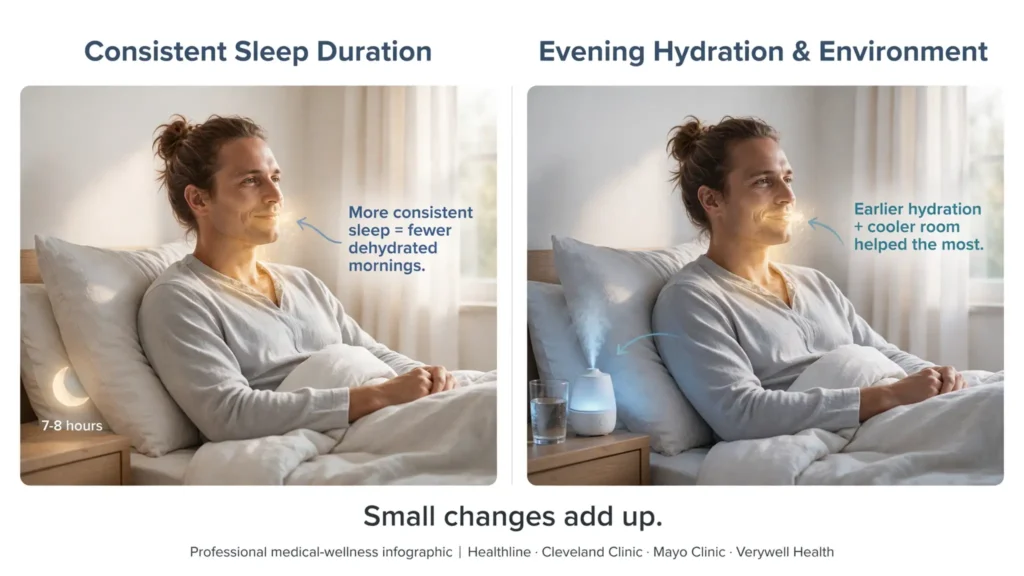
None of the individual changes here felt dramatic on their own. Together, over a few weeks, they added up to mornings that stopped starting with a headache.
Prioritising 7 to 8 hours instead of just water intake
This ended up mattering more than anything I changed about how much I drank. Once sleep length became consistent, the morning dehydration became far less frequent, even on nights I hadn’t been especially deliberate about water.
A small water intake habit at a specific time in the evening
Rather than drinking a large amount right before bed, which mostly just means waking up to use the bathroom, I moved most of my evening water intake earlier, alongside eating something water-rich in the evening a few times a week rather than relying on plain water alone.
Small environmental changes to the bedroom
Keeping the room a little cooler and, in drier months, running a small humidifier both made a noticeable difference to how dry my mouth felt on waking, independent of anything else I changed.
A Word of Caution
🔴 IMPORTANT
Occasional morning dehydration is common and usually easy to explain. If it’s happening most days, is severe, or comes with excessive thirst, frequent urination, or unexplained weight changes, it’s worth speaking to a GP rather than assuming a hydration habit alone will fix it, since these can sometimes point to an underlying condition. This can also relate to the two-way link between poor sleep and low mood, particularly if disrupted sleep is a recurring pattern for you rather than an occasional bad night.
My Honest Evening and Morning Routine Now
- I treat 7 to 8 hours of sleep as the actual priority, not just something I’ll get around to.
- I spread my water intake through the evening rather than drinking it all right before bed.
- I cut caffeine off by early afternoon and keep evening alcohol occasional rather than routine.
- I keep my bedroom cool and use a small humidifier during drier months.
- I pair this with a simple five-minute noticing habit in the morning, checking in on how I actually feel rather than assuming.
- If I do wake up dehydrated occasionally, I don’t panic about it, I just note whether it lines up with a short night or a late drink.
Final Thoughts
When I stopped understanding how much water I had been drinking the night before, why I feel dehydrated after bed, it was no longer a mystery. Breathing, hormone timing, sleep duration, and a few everyday habits all play a role, and most of them really get right when you know what you’re actually seeing. My problem wasn’t water. It was a sleep problem with a water problem.
If there’s only one thing you can take away from it, it’s that a glass of water near your bed was never a solution in itself. Settle for sleep first, everything else comes after that.
Frequently Asked Questions
Why do I feel dehydrated after sleeping even if I drink water before bed?
Because overnight fluid loss through breathing and hormone regulation matters more than pre-bed water intake alone, especially if your sleep is short or disrupted.
Is it normal to wake up dehydrated every day?
Occasional mild dehydration is common, but if it happens daily or comes with other symptoms, it’s worth checking with a doctor rather than assuming it’s just a habit issue.
Does sleep length actually affect hydration?
Yes. Research has linked shorter sleep to reduced vasopressin release, the hormone that helps your body retain water overnight, increasing the odds of waking up dehydrated.
Can a dry bedroom cause dehydration overnight?
Yes. A dry or overly warm room increases fluid loss through breathing and sweating, which can make morning dehydration more noticeable.
How much water should I drink before bed to avoid this?
A moderate amount spread through the evening works better than a large amount right before bed, which mostly just increases nighttime bathroom trips.
Medical disclaimer: This article is for general information only and is not a substitute for professional medical advice. Please consult a qualified healthcare provider for guidance specific to your health.
