🟢 THE SHORT VERSION
You get cold after a shower mainly because of evaporative cooling — water left on your skin pulls heat away as it evaporates. Hot water makes this feel more dramatic because it causes vasodilation, widening blood vessels near your skin, so the temperature swing when you step out feels bigger and sharper than it actually is.
Introduction
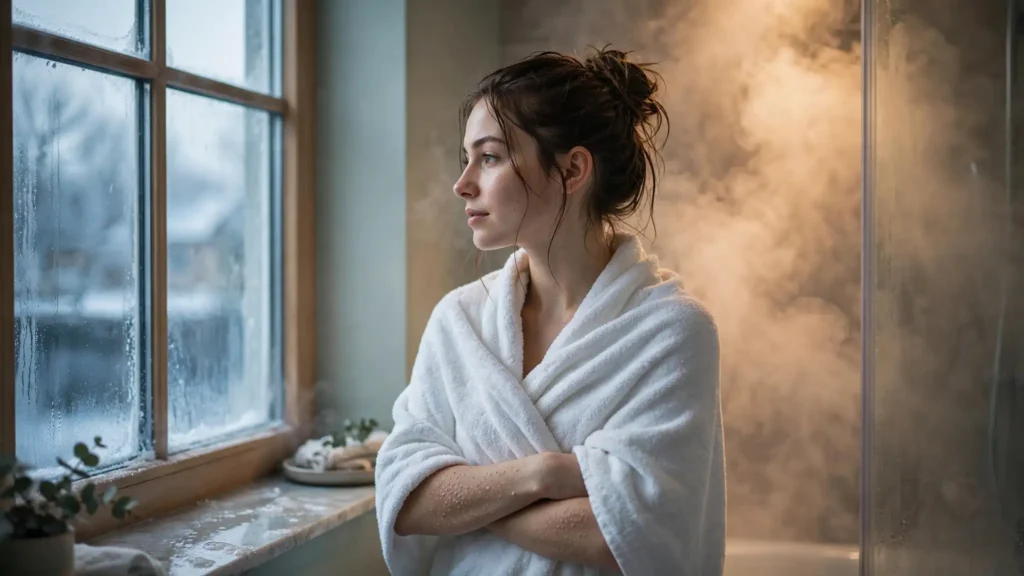
I felt it most on those evenings when I had a nice, long, hot shower after a cold day. Within a few seconds of turning off the water, I would be really trembling, wrapping my arms around me, even though the bathroom itself didn’t feel cold to anyone else. For a while, I thought I was extraordinarily sensitive to temperature. That’s why I really wanted to know why do I get cold after a shower, rather than taking it as a personal habit. When I understood why do I get cold after a shower at an actual physical level, the shivering stopped feeling mysterious, and I started doing a few little things differently that really made a difference, without leaving a hot shower.
Table of Contents
The Real Reason You Get Cold After a Shower
The most obvious culprit, a cold bathroom, is rarely the main story. Something more specific is happening on your skin the moment you step out, and it has almost nothing to do with the room’s actual temperature.
Evaporative cooling, the main mechanism
Water left clinging to your skin after a shower doesn’t just sit there, it evaporates, turning from liquid into vapour. That process requires energy, and it pulls that energy directly from your skin as heat. The result is a genuine, measurable drop in skin temperature, not just a feeling.
This is the exact same principle behind why sweating cools you down on a hot day, just happening in reverse circumstances. Your body isn’t trying to cool itself down after a shower, the water is simply doing what water does whenever it evaporates, regardless of whether you want it to.
Why hot water makes the drop feel bigger, not smaller
It seems backwards that a hot shower would leave you feeling colder afterward than a lukewarm one, but the contrast is exactly what makes it feel so sharp. Your skin has just spent several minutes at an elevated temperature, so the drop back down, combined with evaporation, registers as a much bigger swing than stepping out of a mild, room-temperature rinse.
Your nervous system reads temperature change relative to what it just experienced, not against some fixed baseline, which is part of why the exact same room can feel freezing after a hot shower and perfectly comfortable an hour later.
The bathroom-to-bedroom temperature gap
A steamy bathroom is often several degrees warmer and more humid than the rest of your home, simply from the hot water running. Stepping out into a cooler, drier hallway or bedroom adds another layer of temperature change on top of the evaporative cooling already happening on your skin.
Why This Happens More With Hot Showers Than Warm Ones
Hot water triggers vasodilation, widening the blood vessels near your skin’s surface to help release excess heat, which is the same vasodilation process I broke down when I looked into why a hot shower makes you tired. That same widening of blood vessels is part of why the cold hits harder once you step out, since your skin has more blood flowing near the surface, ready to lose heat quickly the moment the air around you is cooler than the water was.
It’s worth noting these two effects, feeling sleepy and feeling cold, come from the same underlying process happening in your body, just showing up as different sensations depending on what you’re paying attention to afterward. A lukewarm shower barely triggers either effect, which is exactly why it doesn’t leave you shivering the same way.
The Evening I Realised It Wasn’t Just Me Being Sensitive to Cold
For a stretch of a few weeks, I genuinely wondered if something was off with my circulation. I’d mentioned it to a friend, half joking, that I turned into an icicle the second I stepped out of a hot shower, and she looked at me like it was the most normal thing in the world.
That was the moment I stopped assuming it was unique to me and started actually reading into why it happened. Once I understood evaporative cooling and vasodilation together, the shivering stopped feeling like a sign something was wrong, and started feeling like a completely predictable, almost boring, physics problem.
What helped most was realising the timing mattered. The colder I felt was always in the first thirty seconds or so after stepping out, before I’d towelled off properly, which lined up exactly with when the most water was still sitting on my skin, evaporating as fast as it could.
I also noticed it varied by season in a way that made sense once I understood the mechanism. Winter showers left me colder for longer, not because the water was any different, but because the air I was stepping into was drier and further from my skin temperature, giving evaporation and the temperature gap both more room to work at once.
Why Some Parts of You Get Colder Than Others
Not every part of your body cools down at the same rate, and understanding why explains a lot of the specific complaints people have about post-shower cold.
Wet hair and why it cools you disproportionately
Hair holds onto water far longer than skin does, and a wet head loses heat quickly, which is part of why stepping out with soaking hair often feels colder than the rest of your body, even seconds after towelling off everywhere else. Hair also has a large surface area relative to how quickly it can be dried, which gives evaporation a much longer window to work with.
Cold feet and hands specifically
Your body prioritises keeping your core warm over your extremities, so blood vessels in your fingers and toes constrict first whenever your body senses a drop in temperature, redirecting blood flow inward. That’s why feet and hands often feel coldest of all, even when the rest of you has already warmed back up, and it’s also why a cold bathroom floor can make this feel even more pronounced underfoot.
| Body Area | Why It Feels Coldest | Quick Fix |
| Wet hair | Holds water against the scalp, prolonging evaporative cooling | Towel-dry thoroughly, tie up if long |
| Feet and hands | Blood vessels constrict here first to protect your core | Warm socks or slippers ready nearby |
| Torso and back | Largest surface area, dries and cools fastest | Towel off immediately after stepping out |
When It’s More Than Just Evaporation
For most people, the mechanisms above explain the whole story. Occasionally, though, cold sensitivity that seems out of proportion to the actual temperature change is worth a closer look.
Thyroid function and circulation
An underactive thyroid can lower your general tolerance for cold, making ordinary temperature swings, including the one after a shower, feel more intense and longer-lasting than they would otherwise. This usually shows up alongside other signs, like persistent tiredness or unexplained weight changes, rather than in isolation.
Low iron and anaemia
Iron deficiency can also increase cold sensitivity, since your body has less capacity to carry oxygen efficiently to your extremities. If this sounds like it might apply to you, the hydration and nutrient side of this is worth a look, alongside a simple blood test if the cold sensitivity feels disproportionate to what’s actually happening around you.
When to take it seriously
Feeling briefly cold after a shower is normal. Persistent, severe cold intolerance that lasts well beyond the shower itself, or that comes with fatigue, hair thinning, or unusual paleness, is a different matter and worth mentioning to a doctor rather than assuming it’s just sensitivity.
What I’ve Noticed in Other People
A colleague of mine towels off within seconds of turning the water off and swears she never feels the post-shower chill the rest of us complain about. Watching her routine, it was obvious the difference wasn’t tolerance, it was simply timing, she never gave the evaporation process much water to work with in the first place.
Circulation seems to play a part too. A friend who started walking more regularly, similar to a woman in her 50s who added a short morning walk to her routine that I’d read about, mentioned that her feet and hands didn’t feel nearly as cold after showers once she’d been more consistently active for a few months, which tracks with how regular movement supports circulation generally.
A neighbour of mine, who runs cold most of the year regardless of showers, told me the one thing that made a genuine difference was switching from air-drying her hair to towel-drying it properly first. She hadn’t connected it to evaporative cooling specifically, just noticed she stopped shivering at the back door on cold mornings once she changed that one habit.
How to Stop Getting Cold After a Shower
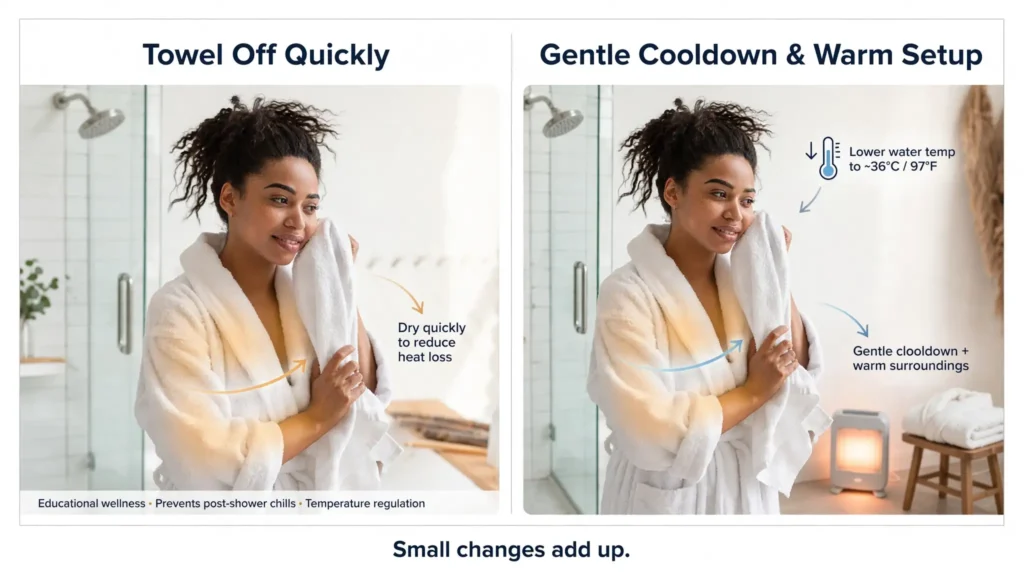
None of these changes are complicated, and most take no extra time at all, just a slightly different order of doing things.
Towel off quickly rather than air-drying
The single biggest lever here is speed. The less time water spends sitting on your skin, the less total heat you lose to evaporation, so a brisk, thorough towel-dry beats standing around letting yourself air-dry. Starting with your hair and torso, where the most surface area and the most water are, makes the biggest difference first.
Lower the water temperature slightly toward the end
Easing the temperature down for the last thirty seconds or so gives your body a smaller, gentler adjustment to make, rather than a sharp jump from very hot straight into room-temperature air. This is a small habit, but it noticeably softens the shock of stepping out.
Warm the bathroom or have clothes ready nearby
A few minutes of extra heating beforehand, or simply having a warm robe or clothes within arm’s reach, closes the gap between the shower and the rest of your home, so you’re not standing around cooling down before you can even get dressed.
A Word of Caution
🔴 IMPORTANT
Feeling briefly cold after a shower is a normal, harmless response. If cold sensitivity is severe, lasts long after the shower, or comes with symptoms like unusual fatigue, fingers turning white or blue, or unexplained weight changes, it’s worth speaking to a doctor rather than assuming it’s just sensitivity to temperature, since these can sometimes point toward a thyroid, circulation, or blood-related issue that’s worth ruling out properly.
My Honest Post-Shower Routine Now
- I towel off within the first few seconds of stepping out, starting with my hair.
- I ease the water temperature down slightly in the last thirty seconds rather than switching off from fully hot.
- I keep a robe or warm clothes within reach rather than crossing a cold hallway first.
- On especially cold evenings, I turn the bathroom heater on a few minutes before I even start.
- I pair drying off with a simple five-minute noticing exercise rather than rushing straight into the next task.
- If my hands or feet still feel cold afterward, I don’t panic, I just note whether it’s a one-off or a genuine pattern worth mentioning to a doctor.
Final Thoughts
Why do I get cold after a shower stopped feeling like a personal sensitivity once I understood it as evaporative cooling meeting a body that had just widened its blood vessels to release heat. It’s really a physical process, not a sign that something is wrong, and a few small changes in timing and drying made the shivering much less dramatic without changing anything else in the bathing style.
It’s a small thing, but understanding it clears up a small, recurring confusion that I didn’t even know I carried with me every evening.
Frequently Asked Questions
Why do I get cold after a shower even in summer?
Evaporative cooling happens regardless of season, since it depends on water evaporating off your skin, not on how warm the room already is.
Is it normal to shiver after a hot shower?
Yes. Shivering briefly after a hot shower is a normal response to evaporative cooling and vasodilation, and it typically passes within a few minutes.
Why do my feet get cold after a shower?
Your body prioritises your core over your extremities, so blood vessels in your feet and hands constrict first, often making them feel coldest of all.
Does lowering shower temperature at the end help?
Yes. Easing the water temperature down in the last thirty seconds gives your body a gentler adjustment and reduces how sharp the post-shower chill feels.
Could feeling cold after every shower mean something’s wrong?
Usually not, but persistent, severe cold sensitivity alongside fatigue or other symptoms is worth checking with a doctor, since it can occasionally relate to thyroid or circulation issues.
Medical disclaimer:
This article is for general information only and is not a substitute for professional medical advice. Please consult a qualified healthcare provider for guidance specific to your health.
