THE SIMPLE ANSWER
Yes, you can eat peaches while pregnant — they’re safe, genuinely beneficial, and address three of the most common pregnancy complaints directly. My friend Mariam texted me mid-panic after reading three contradictory articles in one afternoon, and the actual clinical guidance turned out to be far calmer and more reassuring than anything she’d found online.
Introduction
Mariam texted me on Sunday afternoon, really nervous. She had just eaten a ripe peach and then made the mistake of googling it later. One article warned about pesticides. Another mentioned sugar. A third added peaches to the vague list of fruits without giving a reason. ” Can I eat peaches while pregnant, or have I done something stupid?” she asked, half-jokingly. Nothing had actually happened to her, but the internet had turned a simple, ordinary piece of fruit into a real nuisance. This message took me deeper into my research into whether you can eat peaches during pregnancy, working through NHS guidance and maternity nutrition, rather than repeating the same repeated warnings she had already read three times.
Table of Contents
The Text That Sent Me Straight to the Research
Mariam isn’t someone who panics easily, which is part of why the message stood out to me. She’d read one article about pesticide residue, another about sugar content, and a third that simply listed peaches among fruits to be cautious with, with no explanation at all. Nothing in any of them was technically false, but none of them gave her an actual answer, just a vague sense of risk stacked on risk.
I told her I’d check properly rather than reassure her with a guess, and that’s what sent me through NHS pregnancy nutrition guidance and obstetric nutrition sources directly rather than the same blog content getting reshuffled and republished across dozens of sites.
The Nutritional Case for Peaches During Pregnancy
A medium peach, around 150g, gives a pregnant woman a genuinely useful nutrient profile. Folate, supporting neural tube development, critical in the first trimester. Vitamin C, enhancing iron absorption and supporting fetal collagen formation. Vitamin A from beta-carotene, supporting fetal eye, skin, and immune development. Potassium, helping regulate blood pressure and reduce pregnancy leg cramps. Fibre, both soluble and insoluble, relieving pregnancy constipation. Vitamin E, providing antioxidant protection for developing fetal cells. Niacin, supporting energy metabolism. Magnesium, helping with muscle relaxation and night cramps. And 88 percent water content, supporting hydration needs that increase meaningfully during pregnancy.
WORTH KNOWING
Vitamin C enhances non-haem iron absorption from plant sources by up to three times. Eating a peach alongside iron-rich foods like lentils or spinach is a genuinely evidence-backed strategy during pregnancy, when iron requirements increase significantly.
How Peaches Directly Address the Three Most Common Pregnancy Complaints
What makes peaches particularly well-suited to pregnancy is that the nutritional profile maps almost directly onto three of the most widespread pregnancy discomforts. Morning sickness responds poorly to strong flavours, high acidity, and heavy foods, and peaches are mild, naturally sweet, mostly water, and considerably gentler on a sensitive stomach than citrus. Chilled, peeled peach slices are one of the more reliably tolerated foods during first-trimester nausea. Constipation affects the majority of pregnant women, driven primarily by progesterone slowing gut motility, and peach’s soluble pectin fibre absorbs water and softens stool without the harsh urgency some high-insoluble-fibre foods cause. And leg cramps peak in the second and third trimesters, often driven by potassium deficiency, which peaches meaningfully contribute to.
Is It Safe to Eat Peaches While Pregnant? The Direct Answer
Yes. Peaches are safe during pregnancy for the vast majority of women, and mainstream clinical pregnancy nutrition guidance places them comfortably on the safe list with no specific restrictions. The concern around peaches during pregnancy comes primarily from four sources: pesticide residue on the skin, which is genuinely worth managing, sorbitol content in large portions, which is manageable, natural sugar content myths, which are largely unfounded for whole fruit, and traditional food beliefs without any clinical basis behind them. Each of those gets addressed properly below.
Eating Peaches While Pregnant — Trimester by Trimester

Pregnancy isn’t a single nutritional state. Needs, sensitivities, and risks shift meaningfully across three different trimesters, and peaches fit into each phase somewhat differently.
First Trimester — When Peaches Can Be Your Best Friend
The first trimester is defined by nausea, food aversions, fatigue, and the critical window for neural tube formation, occurring in weeks 3 to 8, often before a woman even knows she’s pregnant. Peaches contribute natural folate on top of supplemental folic acid, and chilled peach slices are among the more reliably tolerated foods for first-trimester nausea, easier on the stomach than citrus and less cloying than banana. Safe daily amount here is 1 to 2 small ripe peaches, 100 to 200g, peeled, washed thoroughly, eaten with other food, avoiding unripe fruit since higher sorbitol content is harder on an already sensitive stomach. Folate from whole foods like peaches doesn’t replace a folic acid supplement, though. The NHS recommends 400mcg of supplemental folic acid daily through at least the first 12 weeks, and peaches work alongside that, not instead of it.
Second Trimester — The Growth Phase
The second trimester typically brings relief from nausea and a return of appetite, alongside the period of most significant fetal growth. Leg cramps reach their peak here as blood volume increases, and peach’s potassium content directly addresses one of the primary nutritional drivers. Beta-carotene supports the rapid eye, skin, and immune development occurring through weeks 13 to 26, and unlike preformed vitamin A, it carries no toxicity risk in normal dietary amounts. Safe daily amount is 1 to 2 medium ripe peaches, 150 to 250g, and pairing with Greek yoghurt for protein, calcium, and probiotics makes one of the more nutritionally complete pregnancy snacks available.
Third Trimester — Mindful Eating as Baby Grows
The third trimester brings heartburn, reduced stomach capacity, gestational diabetes risk, and fluid retention. Peaches remain beneficial but need slightly more mindful consumption. They’re mildly acidic, so avoiding them within 1 to 2 hours of lying down and eating smaller portions more frequently reduces reflux risk while keeping the nutritional benefit. A medium peach contains roughly 12.5g of natural sugar with a relatively low glycaemic index around 42, but for women managing gestational diabetes or at elevated risk, one small peach, 100g maximum, always eaten with protein or healthy fat, is the safer approach. Safe daily amount here is 1 small ripe peach, 100 to 130g, for most women. For a directly parallel guide on another pregnancy fruit, I’ve written about whether watermelon is safe during pregnancy trimester by trimester, which follows a similar pattern of benefits shifting across the three stages.
The Real Risks — And How to Manage Them
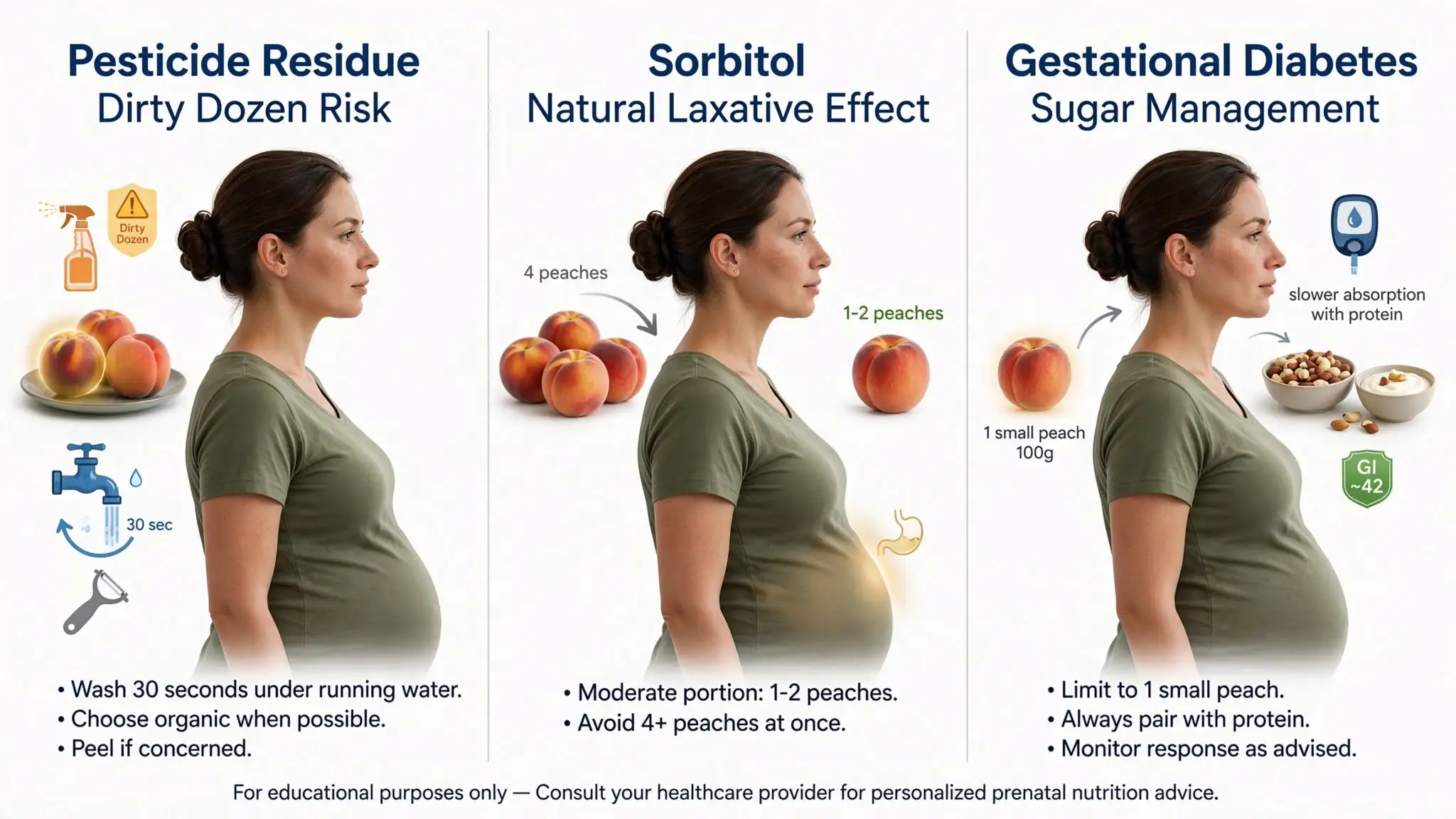
Being genuinely honest about the real, manageable risks is what actually reassures a worried reader, far more than blanket reassurance without any substance behind it.
Pesticide Residue — The Most Legitimate Concern
Peaches consistently appear near the top of the Environmental Working Group’s Dirty Dozen list, meaning conventionally grown peaches retain more pesticide residue than most other produce. Pregnancy is precisely the period when minimising unnecessary chemical exposure matters most. The fix is straightforward: wash thoroughly under running water for 30 seconds while rubbing gently, choose organic where affordable and available, and peel if pesticide residue is a significant personal concern, accepting the small trade-off in fibre content.
Sorbitol — Managing the Natural Laxative Effect in Pregnancy
Peaches contain natural sorbitol, a sugar alcohol with a mild osmotic laxative effect. During pregnancy, when constipation is already common, this is usually a genuine benefit rather than a risk. But eating several peaches at once can occasionally cause loose stools or cramping, particularly in a pregnancy-sensitive gut. I’ve gone into the full mechanism separately in a piece on what actually causes digestive upset after eating peaches, which is worth reading if this becomes a recurring pattern rather than a one-off. The practical fix during pregnancy is simply moderating portion size, one to two peaches rather than four.
Gestational Diabetes and Sugar Content
Peaches have a moderate natural sugar content but a relatively low glycaemic index, and whole fruit, unlike juice, comes bundled with fibre that slows sugar absorption meaningfully.
IF YOU HAVE GESTATIONAL DIABETES
Limit to one small peach, 100g, always paired with protein or healthy fat, and monitor your individual blood glucose response as advised by your midwife or diabetes team. Portion size and pairing matter more than avoiding the fruit entirely.
Canned, Frozen, or Dried — Which Form Is Safest During Pregnancy?
| Form | Safety | Notes |
| Fresh, ripe | Best choice | Fullest nutrient and fibre profile, no added sugar |
| Frozen | Very good | Nutritionally close to fresh, convenient year-round |
| Canned in juice | Good | Confirm no added sugar; heating reduces some vitamin C |
| Canned in syrup | Limit | Added sugar increases glycaemic load unnecessarily |
| Dried | Small amounts only | Concentrates sugar and sorbitol; pair with water |
Myths About Eating Peaches During Pregnancy — Debunked
Several myths persist around peaches and pregnancy that are worth addressing directly, since they cause real, unnecessary anxiety.
The miscarriage myth holds no basis in any clinical or nutritional evidence whatsoever. This belief appears to stem from unrelated folk traditions and has no supporting research. The “body heat” myth, common in South Asian and some other cultural food traditions, claims certain fruits, sometimes peaches, generate excess “heat” harmful during pregnancy. This has no basis in physiological or nutritional science, though it’s worth respecting as cultural context even while noting it isn’t clinically supported. The idea that peaches automatically cause gestational diabetes is also unfounded; whole fruit in normal portions doesn’t meaningfully increase gestational diabetes risk, and several dietary studies specifically recommend whole fruit, including stone fruit, as part of a healthy pregnancy diet. And the belief that all fruit sugar should be avoided during pregnancy misunderstands the difference between whole fruit fibre-bundled sugar and free sugars from processed food; NHS guidance specifically encourages whole fruit consumption throughout pregnancy. I found a similarly persistent set of myths while researching another common pregnancy fruit question, on whether mango is safe during pregnancy, where the same pattern of cultural belief outpacing actual evidence shows up again.
How Mariam’s Story Actually Played Out
I sent Mariam the full picture rather than a one-line reassurance. Her main relief was learning that the pesticide concern was real but manageable with washing, not a reason to avoid the fruit entirely, and that the sugar content she’d read panicked headlines about was genuinely fine in normal portions.
“I’ve been eating a peach most afternoons since,” she told me a few weeks later, “and I mentioned it to my midwife just to be safe, who said exactly what you found.” She’s currently in her second trimester, pairing her afternoon peach with yoghurt most days, and hasn’t had a single moment of doubt about it since.
How to Eat Peaches Safely During Pregnancy — The Complete Practical Guide
Wash thoroughly under running water for at least 30 seconds, rubbing gently to reduce pesticide residue and fuzz. Choose ripe fruit, not overripe or underripe, since ripe peaches have the most balanced fibre and sorbitol profile. Eat 1 to 2 peaches daily as a sensible general guideline, adjusted for trimester and any gestational diabetes management. Pair with protein or healthy fat, Greek yoghurt, nuts, or nut butter, to slow sugar absorption and improve satiety. Choose organic when available, given the Dirty Dozen classification. Avoid unripe or dried peaches in large amounts, since both concentrate sorbitol and are harder on a pregnancy-sensitive gut. And always mention any new dietary pattern to your midwife or GP if you have any pre-existing condition, particularly gestational diabetes or IBS.
Building a pregnancy diet around genuinely gut-supportive whole foods matters well beyond just one fruit. I’ve put together a broader list of foods worth prioritising for gut health during this period, and separately written about supporting your whole family’s health at home, which covers some of the same nutritional groundwork from a different angle.
My Honest Final Answer — Can You Eat Peaches While Pregnant?
Yes, confidently, for the majority of pregnant women. Peaches are safe, nutritionally valuable, and directly helpful for the three most common pregnancy complaints: nausea, constipation, and leg pain. The real risks, namely pesticide residues and high sorbitol from overeating, are both fully manageable through simple and practical steps.
Misconceptions, miscarriages, body heat, the risk of diabetes during spontaneous pregnancy, do not stand in the face of actual clinical evidence, and they cause far more unnecessary anxiety than fruit. Mary now eats her peaches without hesitation, and the same conclusion comes from good, well-researched information: less anxiety, not more, and the piece of fruit is as enjoyable as it should have always been.
Medical Disclaimer: This article is for informational purposes only and does not constitute medical advice. Pregnancy nutrition needs vary by individual health history and circumstances. Always consult your midwife, obstetrician, or GP before making significant dietary changes during pregnancy, particularly if you have gestational diabetes, IBS, or any other pre-existing condition.
Frequently Asked Questions
Can I eat peaches while pregnant?
Yes — peaches are safe throughout all three trimesters of pregnancy and provide folate, vitamin C, potassium, and fibre that directly support common pregnancy needs.
Are peaches good for pregnancy?
Yes — peaches help relieve three of the most common pregnancy complaints, nausea, constipation, and leg cramps, through their mild flavour, pectin fibre, and potassium content.
Can eating peaches cause miscarriage?
No — there is no clinical or nutritional evidence linking peach consumption to miscarriage; this belief has no basis in medical research.
Are canned peaches safe during pregnancy?
Yes, in moderation — canned peaches in juice, not syrup, are a safe pregnancy option, though fresh or frozen peaches offer the fullest nutrient profile.
How many peaches can I eat per day while pregnant?
Most pregnant women can safely eat 1 to 2 medium ripe peaches daily, adjusted lower to one small peach in the third trimester or if managing gestational diabetes.

5 thoughts on “Can I Eat Peaches While Pregnant? Full Safety Guide”