The Short Version
A friend’s confused reaction to my fridge full of iced coffee during a heatwave sent me looking into herbal teas to detoxify and cool the body properly. Three years on, five specific teas have stuck — not because they “detox” in any dramatic sense, but because of what they honestly do support: hydration, digestion, and a handful of documented plant compounds.
Introduction
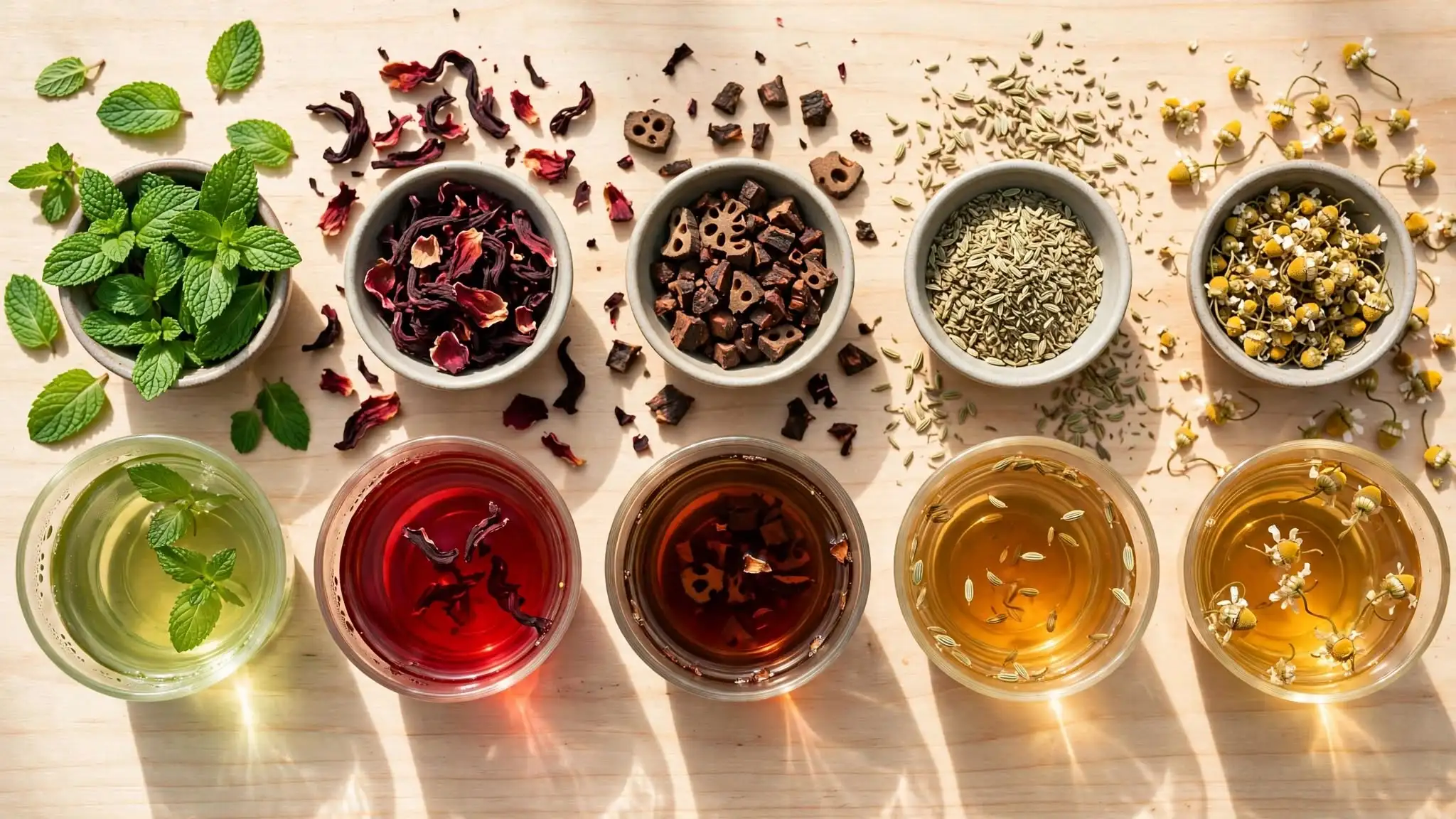
Three summers ago, during a heat wave that made our apartment close to the greenhouse, a friend who had come from Pakistan opened my fridge, saw it full of cold brews, and genuinely asked why I wasn’t drinking herbal teas to detoxify and cool the body his own family relied on every summer.
I always put tea in the category of “hot drink for cold weather,” which was the exact opposite of what they were referring to. That conversation put me in real research on herbal teas to detoxify and cool the body, and three years later, five specific teas made a permanent place in my kitchen—not as a temporary health trend, but as a real habit that survived that one summer.
“It’s not about the heat, it’s about what happens next,” he told me, looking at me with a mug of hot hibiscus tea, which was with obvious suspicion in the middle of a heat wave. That difference really starts where this whole article begins.
She explained that her mother and grandmother have relied on this kind of circulation from generation to generation, which is not a wellness phenomenon but a common, practical knowledge that is transmitted without any fuss. This framework ran deeper in my mind than any of the single facts mentioned that evening.
Table of Contents
Why I Didn’t Just Repeat the Standard “Detox Tea” List
A quick search for this topic turns up dozens of near-identical lists, most of them repeating the word “detox” without ever explaining what that actually means physiologically. I’d already been questioning some of my own drink choices after looking into some of the worst processed foods and drinks to keep avoiding, and herbal tea kept coming up as a swap that sounded almost too simple to matter. I wanted to actually test whether it did, rather than repeat a claim I hadn’t verified myself.
I didn’t change everything the first week. I spent the initial month mostly reading, cross-checking the specific claims made about each of these teas against actual research rather than the same three sentences repeated across a dozen blogs.
What “Detoxify and Cool the Body” Actually Means
Your Liver and Kidneys Already Do the Real Detox Work
I want to be upfront about this before going any further. No tea flushes toxins from your body in the dramatic way some marketing implies. Your liver and kidneys perform that function continuously, processing and eliminating waste products regardless of what you drink alongside them. Understanding this changed how I talk about these teas — the honest claim isn’t that they detoxify in a clinical sense, it’s that they support the systems already doing that work.
This was, honestly, the least comfortable part of the research for me. It’s a smaller, less exciting claim than what most articles on this topic promise, but it’s the one I could actually stand behind once I’d looked into it properly.
What Herbal Tea Genuinely Supports Instead
What herbal teas genuinely do well is support hydration, which is itself one of the simplest things you can do for how your body processes and eliminates waste. Several also contain specific plant compounds with documented anti-inflammatory or mild diuretic properties, which is closer to where the real benefit comes from. This is the same kind of nuance I’d already drawn when comparing white, green, and black tea properly instead of trusting vague reputation alone — caffeinated teas and caffeine-free herbal infusions work through entirely different mechanisms, and lumping them together misses what each one actually contributes.
Which Tea for Which Benefit — Quick Reference
| Tea | Key compound | Best for | Hot or iced |
| Peppermint | Menthol | Cooling sensation, digestion | Both — iced by day |
| Hibiscus | Anthocyanins | Antioxidants, mild BP support | Iced, with lime |
| Dandelion root | Bitter compounds | Mild diuretic, reduced puffiness | Hot, after meals |
| Fennel | Anethole | Bloating, post-meal comfort | Hot, after meals |
| Chamomile | Apigenin | Evening wind-down | Hot, evenings only |
The 5 Teas, One at a Time

Peppermint — Cooling Sensation and Digestion
Peppermint became my afternoon staple almost immediately. It contains menthol, which produces a genuine cooling sensation when it interacts with receptors in the mouth and throat. Most of the clinical research here actually studies concentrated, enteric-coated peppermint oil capsules for digestive symptoms like bloating and cramping1, rather than tea specifically, so I’d expect a cup of tea to have a milder version of the same effect — still noticeably settling after a heavy summer lunch, in my own experience.
I keep a small tin of loose peppermint leaves at my desk now, mostly because a strong cup after lunch has become as automatic as the lunch itself. It’s the one tea on this list I never had to talk myself into continuing.
Hibiscus — Antioxidants and Mild Blood Pressure Support
This was the tea my friend mentioned first, and it remains the one with the most genuinely interesting research behind it. Hibiscus is rich in anthocyanins, and some research suggests it may modestly help lower blood pressure in people with hypertension, though the evidence is limited and the effect is small2. Served cold with a slice of lime, it has a tart, almost cranberry-like flavour I now actively crave during hot weather.
It’s also become the tea I’m most likely to recommend to someone trying herbal tea for the first time, since the flavour is distinctive enough that it doesn’t feel like a compromise compared to a regular soft drink.
Dandelion Root — Mild Diuretic Support
Dandelion root took longer to win me over, mostly because the earthy flavour was unfamiliar at first. It has a long history of traditional use as a mild diuretic, and I noticed a genuine difference in how puffy I felt during particularly humid weeks once I added it into rotation. I roast a tablespoon of dried root in a dry pan for a minute before brewing, which mellows the bitterness considerably.
This one took genuine persistence on my part. I nearly gave up on it twice in the first month before the roasting trick made enough of a difference that I stopped dreading the cup.
Fennel — Bloating and Post-Meal Comfort
Fennel was the second tea my friend recommended, specifically for digestion, and it’s become my go-to after rich or spicy meals. The seeds contain compounds with documented carminative properties, meaning they help reduce gas and bloating, and the gentle aniseed flavour is genuinely pleasant rather than medicinal-tasting.
I crush the seeds lightly with the back of a spoon before brewing now, which releases noticeably more flavour than dropping them in whole. It’s a small step that took a few tries to get right, but it’s the difference between a weak, forgettable cup and one worth reaching for.
Chamomile — Evening Wind-Down and Sleep
Chamomile rounds out the list, though I want to be honest here rather than repeat the usual claim. The research on chamomile specifically for insomnia is genuinely inconclusive — reviews have found little to no measurable improvement in sleep from chamomile alone3. What it reliably does for me is act as a wind-down ritual rather than a proven sleep aid, which lines up with how sleep quality and mood are more connected than people expect — the routine itself may matter as much as anything in the cup.
Hot or Iced? The Brewing Science Behind the Cooling Effect
Counterintuitively, the hot versions of these teas often work better for actual cooling than drinking them iced, mostly because hot liquids encourage sweating, which is the body’s genuine cooling mechanism, while iced drinks provide only a brief, temporary sensation. That said, I drink most of these iced during the day for the refreshment factor, and hot in the evening when the cooling effect matters less than the ritual itself.
Peppermint and hibiscus work well cold, brewed strong and poured over ice with a slice of citrus. Fennel and dandelion root I almost always drink warm, partly because the flavour holds up better and partly because I’m usually reaching for them after a meal. Chamomile is exclusively an evening, warm cup for me.
My friend, when I explained this back to him, laughed and said this was exactly what his family had always done without ever needing to explain the mechanism behind it — hot in the evening, cold through the afternoon, without a single conversation about sweat glands.
Three Mistakes People Make Trying to “Detox” With Tea
Expecting a Dramatic Flush Instead of Gradual Support
The most common mistake is expecting a single cup, or even a few days of drinking these teas, to produce some dramatic, noticeable “detox” effect. That expectation sets people up to quit within a week when nothing dramatic happens, rather than sticking with what’s actually a slow, supportive habit.
I made exactly this mistake myself in the first two weeks, half-expecting to feel visibly different by day three. Nothing about these teas works that quickly, and treating them as a slow habit rather than a quick fix was the actual turning point.
Relying on Tea Instead of Water
The second mistake is treating herbal tea as a replacement for plain water rather than an addition to it. Herbal tea contributes to hydration, but it isn’t a substitute for drinking enough water throughout the day, particularly in hot weather.
Choosing the Wrong Tea for the Wrong Time of Day
The third mistake, one I made myself early on, is grabbing whichever tea is closest rather than matching it to the moment. A dandelion root tea before bed instead of chamomile, or a caffeinated green tea mistaken for one of these five, can undo the exact effect you’re trying to get.
How This Became an Actual Routine, Not a Trend
I didn’t change everything overnight. The first few weeks were genuinely just curiosity, brewing a cup of hibiscus here and there without much conviction. It was only once I noticed I’d stopped reaching for iced coffee by mid-afternoon, almost without deciding to, that I realised something had actually shifted. I’d already stocked chamomile and peppermint as pantry staples worth always having on hand somewhat by instinct, and this whole process made me understand exactly why they’d earned that permanent spot.
This routine ended up overlapping with something I’d already noticed when I looked into the foods that genuinely helped me manage stress, where the ritual of preparing something warm mattered almost as much as what was actually in the cup. These teas do double duty now, supporting hydration and digestion while marking a deliberate pause in an otherwise busy day.
Who Should Be Careful With Herbal Teas
Most of these five teas are safe for most healthy adults in normal quantities, but a few groups should check with a professional before making them a daily habit.
Speak to a GP before adding these teas to a daily routine if: You’re pregnant or breastfeeding, since some herbal teas aren’t recommended during this timeYou’re on blood pressure medication, given hibiscus’s mild blood-pressure-lowering effectYou take diuretic medication, since dandelion root has its own mild diuretic effectYou have a known allergy to ragweed or related plants, which can extend to chamomile
Conclusion
That heat wave seems to be a long time ago now, but I still remember my friend’s slightly bewildered face looking at a fridge filled with iced coffee. These 5 herbal teas to detoxify and cool the body haven’t replaced everything in my routine, but have taken up so much space that summer feels different now — calming, and kind enough for my stomach.
None of these will detox your body in the dramatic sense as the word suggests. What they really provide is hydration support, a few documented plant compounds, and an intentional break on a hot afternoon or busy evening. It’s a smaller and more honest claim than “detox,” and that’s why all five of them are stuck for three years rather than fading away.
If you’ve ever thought of tea as just a winter drink, I would really recommend trying at least one tea the next time the temperature rises—even if it’s the only one you usually order without thinking.
Medical Disclaimer: This article is based on personal experience and publicly available research. It is not medical advice. Some herbal teas, particularly hibiscus and dandelion root, can interact with certain medications or affect blood pressure, and may not be suitable during pregnancy or breastfeeding. Please consult a GP before adding new herbal teas to your routine if you have an existing health condition or take regular medication.
Frequently Asked Questions
Which herbal tea is best for detoxing the body?
No single tea detoxifies the body in a clinical sense, since the liver and kidneys handle that continuously. Dandelion root and hibiscus are most commonly associated with supporting hydration and mild diuretic effects.
Can herbal tea actually cool the body down?
Yes, though through hydration and mild physiological effects rather than a dramatic temperature drop. Hot herbal tea can promote sweating, the body’s natural cooling mechanism.
Is it safe to drink herbal tea every day?
For most healthy adults, moderate daily consumption of peppermint, chamomile, fennel, hibiscus, and dandelion root tea is considered safe, though those pregnant, breastfeeding, or on medication should check with a GP first.
What is the best herbal tea for bloating?
Peppermint and fennel tea are widely recognised for supporting digestion and reducing bloating, thanks to their carminative properties. [1]
Should herbal tea be drunk hot or cold for cooling benefits?
Both have benefits. Hot tea encourages sweating, the body’s natural cooling response, while iced tea offers immediate refreshment and hydration.
[author_code]