The Short Version:
A five-day juice cleanse taught me more about unhealthy diet trends you should always ignore than any article I’d read before trying it. This is the full list of twenty — from juice cleanses and detox teas to cortisol cocktails and sugar-free everything — grouped by why they fail, plus the boring, unglamorous approach that’s actually worked for three years since.
Introduction
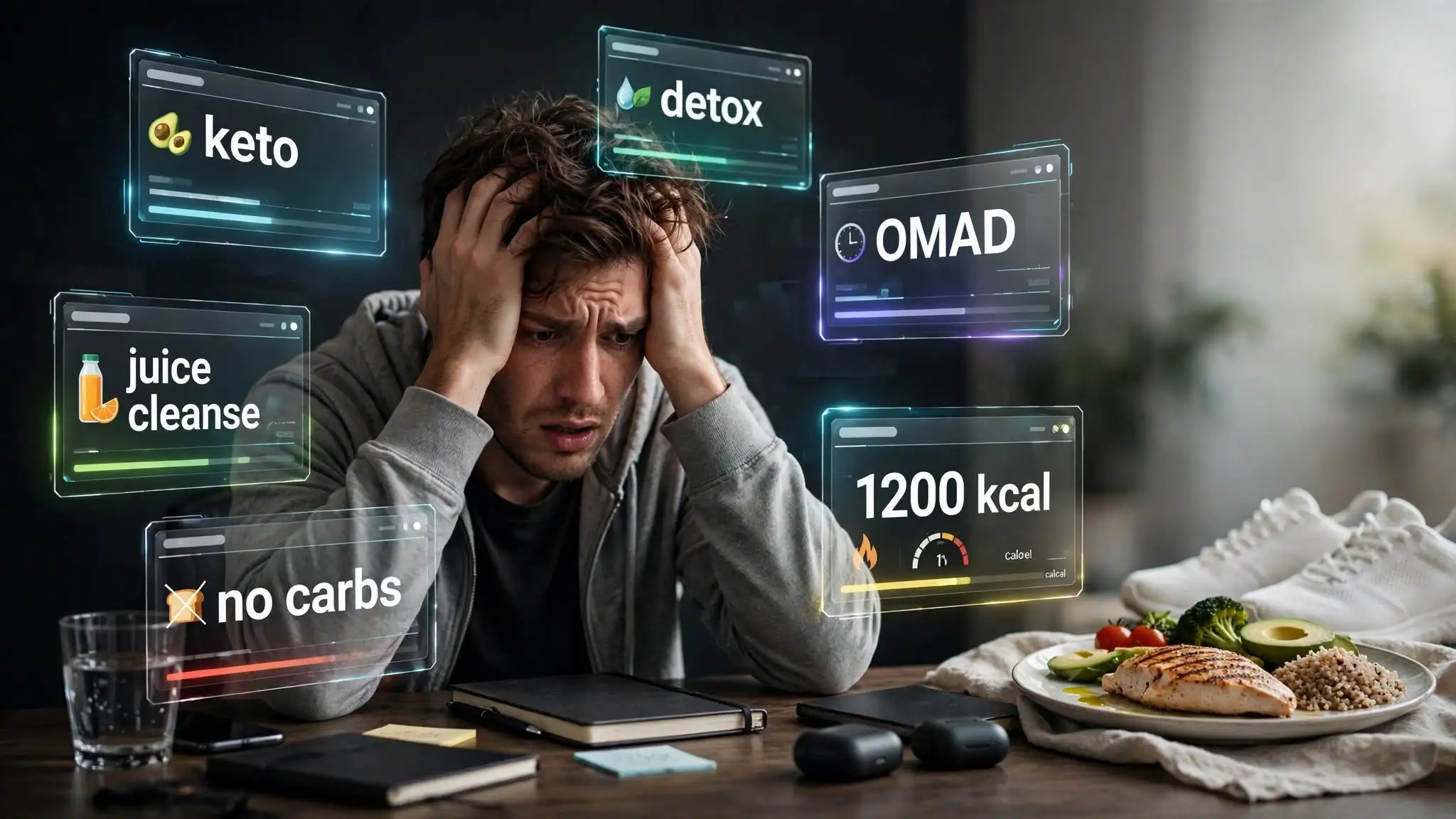
Three years ago, I did a five-day juice cleanse because an online follower swore he had “completely restarted” his digestion. On the third day, I was dizzy at my desk, the most irritable, and so hungry that I dreamed of toast. On the fifth day, I broke it down quickly and ate a simple rice dish because I couldn’t really keep up. I had lost some water weight, to no avail, and learned nothing about my actual digestion.
What I’ve learned is that most circulating health advice is based on trust and confidence, not evidence. This clarification became an introduction for me to the long list of unhealthy diet trends you should always ignore, and I’ve compiled the rest of the information in the years since. This article is the conclusion: twenty trends that I either tried myself, or watched someone close to me try, or researched so thoroughly that I’m sure they don’t deserve the attention they deserve. If you’ve ever wondered which unhealthy diet trends you should always ignore and which are only marketed under the pretext of science, this is an honest answer, from someone who has mostly learned it all the shamefully.
Table of Contents
The Trend That Finally Made Me Start Fact-Checking Everything
The juice cleanse wasn’t actually the worst decision I made that year — it was just the first one I was willing to admit to. After it failed so visibly, I started paying closer attention to what I was basing my health decisions on, and the honest answer was uncomfortable: mostly whoever had the most confident tone and the nicest-looking kitchen in their videos.
That realisation changed how I approach writing about nutrition entirely. I now look into the actual research behind a trend before I’ll even mention it, a standard I hold for everything published on this site. I’d already run into this exact pattern when researching some of the most harmful processed foods marketed as healthy choices — confident marketing dramatically outpacing the actual evidence, again and again.
How to Spot a Bad Diet Trend Before You Try It
The Red Flags That Should Make You Pause
A few consistent warning signs show up across nearly every bad diet trend I’ve encountered. Anything promising rapid results without effort is one. Anything requiring you to eliminate entire food groups without a medical reason is another. Anything sold primarily through testimonials rather than research is a significant red flag, and anything positioning a single food or ingredient as the solution to a genuinely complex problem is almost always overselling what it can deliver.
The clearest tell, in my experience, is how a trend responds to a direct, specific question. Genuine evidence-based advice tends to hold up reasonably well under scrutiny — you can ask a dietitian exactly how something works and get a mechanism, not a shrug. Trend-driven advice tends to deflect toward anecdote, toward “everybody’s different,” or toward treating scepticism itself as the problem rather than a reasonable response.
Why It Worked for Someone on Instagram Is Not Evidence
A single transformation story, however dramatic, tells you almost nothing about whether something works reliably across different bodies, conditions, and circumstances. I’d already worked through this exact distinction when comparing which vegetables deliver real nutritional value against vague reputation alone, and the same logic applies here with even more force. Anecdote is not evidence. It’s a starting point for a question, not an answer to one.
The 20 Unhealthy Diet Trends You Should Always Ignore
Restrictive and Extreme Trends

1. Juice cleanses — promise a detoxification your liver and kidneys are already performing continuously, while stripping out the fibre that whole fruit naturally provides. The resulting rapid sugar intake without fibre to slow it down frequently causes blood sugar instability, which is very likely what I was feeling as dizziness by day three of my own attempt. Most commercial cleanses also cost considerably more per day than simply eating whole fruit and vegetables would, for a fraction of the actual nutrition.
2. Detox teas — rely almost entirely on laxative effects rather than any genuine detoxification mechanism your body doesn’t already have. The weight lost is water and digestive waste, not fat, and it returns within days of stopping, along with a digestive system that can become dependent on the laxative effect with regular use. Some formulations also contain senna, a stimulant laxative not intended for long-term daily use, which can disrupt normal bowel function over time.
3. Extreme calorie restriction — eating under 1,200 calories daily without medical supervision, slows metabolism as the body adapts to perceived starvation, depletes muscle mass rather than only fat, and is rarely sustainable beyond a few weeks before a rebound in eating undoes most of the progress made. It also commonly disrupts sleep, mood, and concentration well before any noticeable change appears on the scale, which is usually the first sign something needs to change.
4. The carnivore diet — eliminates fibre entirely and removes the wide range of plant-based antioxidants and phytonutrients the body relies on for long-term cardiovascular and digestive health, regardless of how much short-term weight loss or energy improvement people report anecdotally in the first few weeks. Longer-term data on an entirely plant-free diet is genuinely limited, which itself is a reason for caution rather than reassurance.
5. One-food diets — whether built around grapefruit, cabbage soup, or any single ingredient, cannot provide balanced nutrition across even a single week, let alone long-term, and consistently produce rapid weight regain once a normal, varied diet resumes. The monotony itself is also a practical problem — most people can’t sustain eating one food group for more than a few days regardless of the health question entirely.
6. Water fasting for weight loss — carries genuine risks including electrolyte imbalances, dangerously low blood pressure, and in some documented cases, cardiac complications, and should never be attempted without direct medical guidance, regardless of how confidently it’s marketed online. Any weight lost during a water fast is overwhelmingly water and glycogen rather than fat, which makes the whole exercise misleading even on its own stated terms.
My own juice cleanse sits squarely in this first category, and I genuinely believed at the time that the discomfort I was feeling was evidence it was “working.” It wasn’t. It was simply my body objecting to being underfed.
Supplement and Miracle Trends
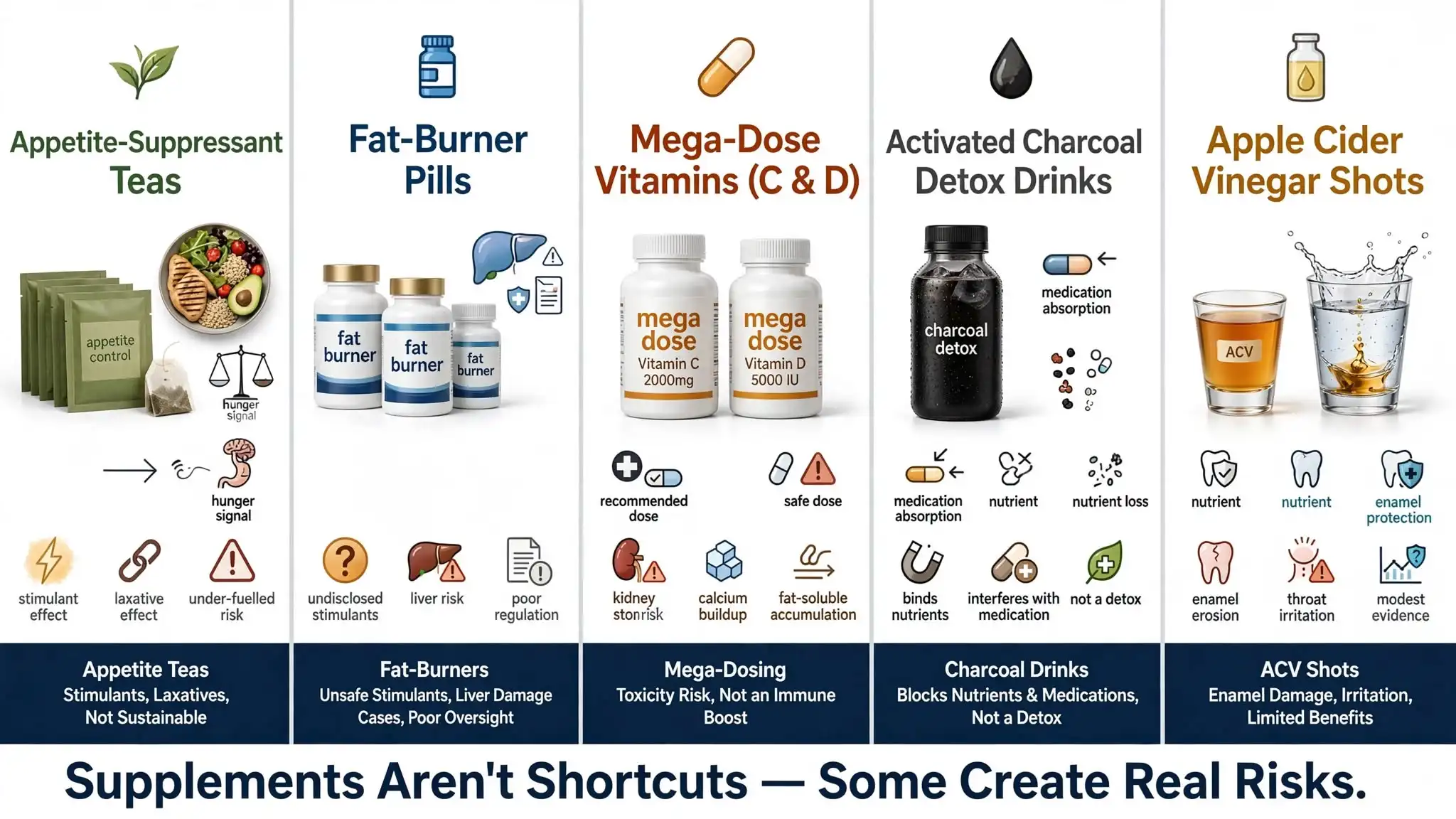
7. Appetite-suppressant teas — typically work through mild stimulant or laxative effects rather than any meaningful metabolic change, and the appetite suppression itself is rarely healthy or sustainable, often leaving people under-fuelled without addressing the underlying eating pattern. Suppressing hunger signals rather than understanding them also tends to make normal eating feel harder to return to once the tea stops.
8. Fat-burner pills — are a poorly regulated supplement category, frequently contain undisclosed stimulants not listed on the label, and have been linked to documented cases of liver damage severe enough to require hospitalisation. Because supplements aren’t approved the same way medications are before reaching shelves, the burden of proving safety often falls on regulators only after harm has already been reported.
9. Mega-dose vitamin trends — particularly around vitamin C or vitamin D taken far beyond recommended daily levels, can cause genuine toxicity — including kidney stones with excess vitamin C and dangerous calcium buildup with excess vitamin D — rather than the immune boost they’re marketed around. Unlike water-soluble vitamins that are simply excreted in excess, fat-soluble vitamins like D can accumulate in the body over weeks, making mega-dosing considerably riskier than most people assume.
10. Activated charcoal detox drinks — bind indiscriminately to nutrients and medications in your digestive system, meaning they can interfere with the absorption of any medication you’re taking, including contraceptives, without any warning on the packaging. Its legitimate medical use is for specific poisoning emergencies under supervision, a very different context from a daily wellness drink.
11. Apple cider vinegar shots — marketed as a cure-all for digestion, blood sugar, and weight loss, have a small amount of genuine supporting research for specific, modest uses — nowhere near the sweeping benefits typically claimed — and undiluted vinegar taken regularly can damage tooth enamel and irritate the oesophagus. Diluting it properly in water and drinking it through a straw reduces that risk considerably, if you want to try it despite the modest evidence.
Rule-Based Eating Trends
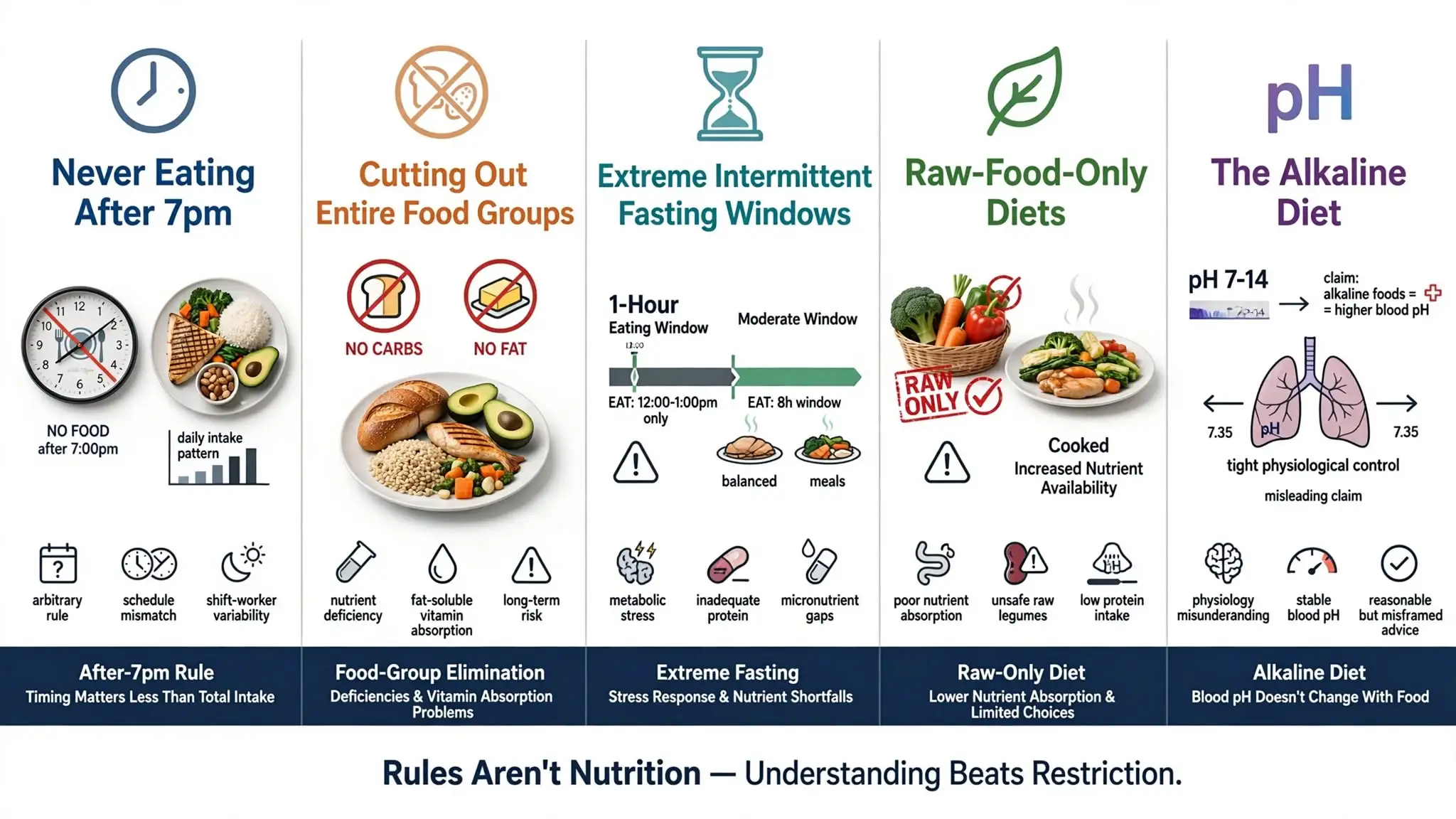
12. Never eating after 7pm — treats an arbitrary clock time as more important than total daily intake, which research consistently shows matters far more than timing for most people’s weight and metabolic health. It also ignores that shift workers, different time zones, and simply different daily schedules make a fixed clock cutoff meaningless as a universal rule.
13. Cutting out entire food groups — carbohydrates or fats specifically, without a medical reason such as coeliac disease or a diagnosed intolerance, risks genuine nutrient deficiencies over months and years, since whole food groups typically carry nutrients that are difficult to fully replace elsewhere. Fat-soluble vitamins A, D, E, and K specifically require dietary fat for absorption, so cutting fat too aggressively can undermine the very vitamins someone might be separately trying to get enough of.
14. Extreme intermittent fasting windows — eating within a single hour or less per day, go well beyond the moderate fasting protocols that have reasonable supporting research, and can produce the same metabolic stress response as straightforward severe calorie restriction. Cramming an entire day’s food into one sitting also makes it genuinely difficult to get adequate protein and micronutrients without discomfort.
15. Raw food only diets — eliminate the improved nutrient availability that cooking provides for many vegetables, since cooking breaks down cell walls and makes certain nutrients like lycopene and beta-carotene more absorbable, and can make it genuinely difficult to meet daily protein and calorie needs. Some raw legumes and grains are also difficult or unsafe to digest without cooking, which limits the practical food choices available considerably.
16. The alkaline diet — is built on a basic misunderstanding of human physiology — your blood pH is tightly regulated within an extremely narrow range regardless of what you eat, and no food can meaningfully shift it without causing serious, potentially fatal illness in the process. The diet’s actual recommendations, more vegetables and less processed food, are reasonable; it’s the underlying pH claim specifically that doesn’t hold up.
Social Media Specific Trends
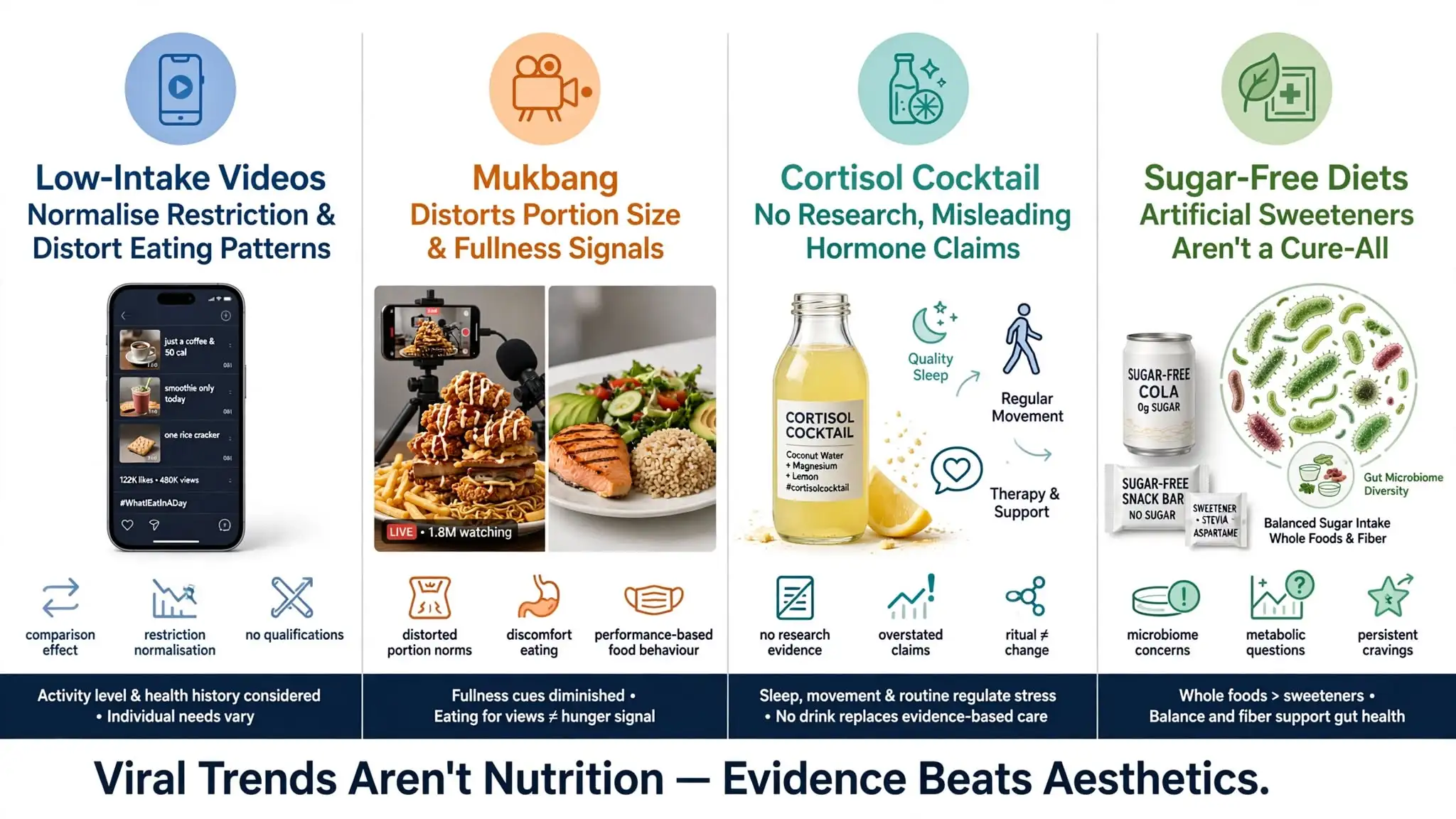
17. “What I eat in a day” content — showing extremely low intake, often filmed by people with no nutrition qualifications, normalises restriction and has been linked in research to disordered eating patterns among younger viewers especially. The comparison effect seems to matter as much as the content itself, since viewers rarely have visibility into a creator’s full context, activity level, or health history.
18. Mukbang-driven binge cycles — glamorise eating to the point of physical discomfort as entertainment, which research suggests can distort a regular viewer’s own internal sense of normal portion sizes and fullness cues over time. The genre sits at an odd intersection with disordered eating content generally, since it normalises the opposite extreme from restriction while still centring food around performance rather than genuine hunger.
19. The cortisol cocktail trend — a specific drink claimed to lower stress hormones, has no meaningful research behind the specific claim and conflates a pleasant evening ritual with an actual physiological intervention that would require far more than a mocktail to achieve. The ingredients themselves — usually coconut water, magnesium powder, and a citrus juice — aren’t harmful, but the marketing significantly overstates what a drink alone can do for genuine hormonal regulation.
20. Sugar-free everything — replacing all sugar with artificial sweeteners across an entire diet, isn’t inherently healthier, and recent research has raised genuine questions about the gut microbiome and metabolic effects of consistently high artificial sweetener intake specifically. Some people also find that intensely sweet artificial flavours keep sugar cravings active rather than resolving them, which defeats much of the original purpose.
I’d already looked into how the foods that genuinely help during difficult, stressful periods work biologically, and the contrast with trends like the cortisol cocktail became obvious almost immediately: one is grounded in an actual mechanism, the other in aesthetics and a catchy name.
Red Flags That Should Make You Pause Before Trying Any Diet Trend: Promises rapid results with no effort. Requires eliminating entire food groups without medical reason. Relies on testimonials rather than research. Positions one food or product as a cure-all. Deflects direct questions instead of answering them.
What I Do Instead, the Boring Unglamorous Approach That Actually Works
Building Meals Around Whole Foods, Not Rules
After enough failed trends, what I settled into was considerably less exciting than anything on this list, and considerably more effective. I stopped looking for rules and started building meals around whole, minimally processed ingredients most of the time, which meant keeping a reliable, well-stocked kitchen mattered more than any single dietary rule ever did.
Why Consistency Beats Intensity Every Time
The pattern I now trust completely is consistency over intensity. A reasonably good diet followed for years outperforms a perfect diet followed for two weeks, every single time, because the perfect version never survives contact with an actual life — work stress, holidays, a bad week, a family gathering. This is the same principle behind sustainable approaches to weight management, where the people who keep results long-term are rarely the ones who found the most extreme version of a trend, but the ones who found something boring enough to actually maintain.
It took me longer than I’d like to admit to trust this fully. Boring doesn’t film well, and it doesn’t generate the kind of dramatic before-and-after that makes a trend spread in the first place. But boring is also the only approach that’s still working for me three years after that juice cleanse failed, which is more than I can say for any of the twenty trends on this list.
3 Questions I Ask Before Trying Any New Diet Trend Now: Is there actual peer-reviewed research behind this, or just testimonials? Would a registered dietitian recommend this to a genuinely healthy person? Could I sustain this for five years, not five days?
Conclusion
I still think about this juice cleanse more than I’d like to admit, mostly because of how confident I felt before I joined it, and that confidence really meant very little. These twenty unhealthy dietary trends that you should always ignore have the same form: persuasive marketing, weak evidence, and popularity that comes from being able to share them, not from their actual performance.
It’s not all to make nutrition feel more complicated. Rather, it’s the opposite: give viral health claims the same scepticism you would on any other unverified claim online, and instead turn to the boring, evidence-based version. The method has been in the works for three years, longer than any trend on this list.
This article is based on personal experience and publicly available nutrition research. It is not medical advice. If you have a history of disordered eating, please be especially cautious around restrictive diet content and speak with a GP or registered dietitian before making significant dietary changes.
Frequently Asked Questions
How do I know if a diet trend is unhealthy?
Look for promises of rapid results without effort, elimination of entire food groups without medical reason, reliance on testimonials rather than research, and claims that one food or product can solve a complex health issue alone.
Are detox teas and cleanses actually harmful?
They can be — most rely on laxative effects rather than genuine detoxification, which your liver and kidneys already perform continuously, and can cause dehydration and electrolyte imbalances with regular use.
Is intermittent fasting an unhealthy trend?
Moderate intermittent fasting protocols have reasonable supporting research for some people, but extreme versions, such as eating within a single hour per day, go beyond what’s well supported.
Why do unhealthy diet trends keep going viral?
They typically offer a simple, dramatic promise that’s easy to share and film, while genuine evidence-based nutrition advice is comparatively slow and unglamorous to show results from.
What is a healthier alternative to following diet trends?
Building meals around whole, minimally processed foods consistently over time has the strongest long-term evidence behind it for both health and sustainable weight management.

2 thoughts on “20 Unhealthy Diet Trends You Should Always Ignore”
Comments are closed.