Quick Guide:
Erythritol doesn’t spike blood sugar, which made it popular with diabetics and keto dieters. But research from 2023 onward links regular high-dose use to increased blood clotting and cardiovascular risk. It’s not a reason to panic, but it is a reason to check labels and talk to your GP if you have existing heart risk.
Introduction
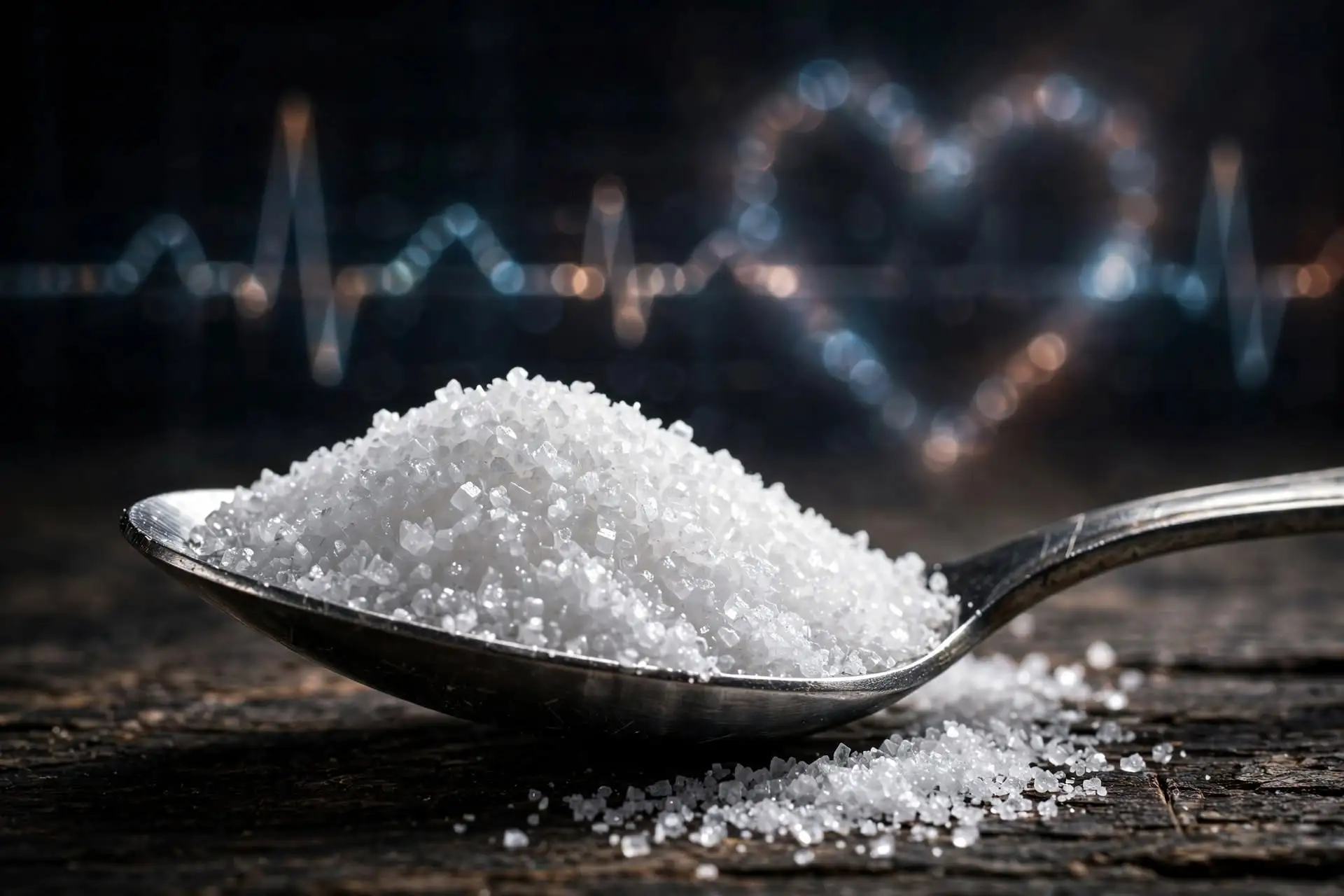
My uncle Rafiq had a minor heart attack two years into swapping sugar for erythritol on his doctor’s advice. His own doctors couldn’t pinpoint a cause. That gap is what sent me looking into erythritol side effects properly, and what I found wasn’t the reassuring “moderation is fine” answer I expected.
What follows is what that research actually says — the studies behind it, who it applies to most, what it doesn’t yet prove, and what changed in Rafiq’s kitchen once he saw it.
It’s a longer read than most of what I write, on purpose. This isn’t a topic that lends itself to a quick verdict, and I’d rather walk through the actual evidence with you than hand you a headline and move on.
Table of Contents
The Night Everything Changed
The call came from my aunt, not Rafiq. He’d been at the gym, felt chest tightness he assumed was heartburn, and ended up in A&E within the hour. The hospital ran the standard panel — blood pressure, cholesterol, an ECG — and nothing pointed to an obvious single cause. He didn’t smoke, wasn’t significantly overweight, and had been actively managing his health for two years.
“I’d done everything they told me to,” he said to me from the hospital bed, “and it still happened anyway.”
That sentence sat with me for weeks. “everything they told me to” had included swapping his tea, protein bars, and evening biscuits for erythritol-sweetened versions after a blood sugar scare a couple of years earlier. Nobody in that hospital room connected the two. I only started to once I went looking on my own.
I want to be clear about what I’m not saying here. I’m not saying erythritol caused Rafiq’s heart attack — nobody, including his own cardiologist, can say that with certainty from a single case. What I am saying is that once I read the actual research, the timeline stopped looking like a coincidence to me, and it changed how our whole family thinks about products marketed as “diabetic-friendly” or “heart-healthy.”
What Erythritol Actually Is (and Why We All Started Using It)
A Sugar Alcohol Marketed as a Miracle
Erythritol is a sugar alcohol, produced commercially by fermenting glucose from corn, and it’s been FDA-approved since 2001. It has almost no calories, tastes roughly 70 to 80% as sweet as table sugar, and — the detail that made it so popular — doesn’t spike blood glucose or insulin the way ordinary sugar does.
That single property turned it into a staple of the keto movement, diabetic-friendly product lines, and sugar-free everything. Small amounts occur naturally in fruit like pears, grapes, and melons, which gave it a reassuring, “nature already approved this” reputation that most people, Rafiq included, never questioned.
The gap between “naturally occurring in trace amounts” and “added in concentrated form to five products you eat daily” is exactly the gap that got missed. A pear might contain a fraction of a gram. A single sweetened protein bar can contain several grams, and most people eating one have no real reference point for how that compares.
Hidden Under “Sugar Alcohols” on Labels
What the marketing never mentioned is that erythritol added to manufactured food creates blood levels far higher than anything you’d get from a piece of fruit. In the UK and US, manufacturers aren’t required to list sugar alcohols individually — they’re bundled under a generic “sugar alcohols” line most people skip straight past.
Rafiq had no real sense of how much he was consuming daily across five separate products. It’s the same pattern I’ve written about with ultra-processed foods to always avoid — the real issue is often buried in an ingredient list under a name that sounds harmless.
The Research That Changed My Mind

The Cleveland Clinic Study and the Numbers That Stood Out
The study that started this was published in Nature Medicine in February 2023. A Cleveland Clinic team, led by Dr. Stanley Hazen, followed over 1,000 cardiac patients and found that those in the highest erythritol quartile faced roughly double the risk of a major cardiac event over the following three years, compared with those with the lowest levels [1]. The finding was replicated in separate US and European patient cohorts.
Reading that figure with Rafiq’s hospital bed still fresh in my mind was a genuinely uncomfortable moment. He fit the exact profile the study drew from — someone managing an existing cardiovascular risk factor, doing precisely what he’d been advised to do.
A doubled risk over three years isn’t a small effect size in cardiology terms — it’s the kind of number that normally prompts a guideline change once it’s confirmed. The fact that it hasn’t yet is less about the strength of the finding and more about how new it still is; large-scale nutrition research takes years to move from a single study to formal clinical guidance.
The Clotting Mechanism Behind the Risk
The Cleveland Clinic team didn’t stop at the statistics. Lab experiments showed erythritol enhances platelet aggregation — the clumping process behind blood clot formation. In a follow-up trial, healthy adults given a drink with 30 grams of erythritol (roughly what’s in one sweetened beverage) showed blood erythritol levels that spiked and stayed elevated for days, with platelet reactivity rising in step.
That detail is what moved this from statistic to mechanism for me. It wasn’t a vague correlation — it was a same-day biological response, in people with no diagnosed heart condition at all.
What the Colorado Brain Study Added
A 2025 University of Colorado Boulder study added a second angle, exposing human brain blood vessel cells to erythritol at levels equivalent to one sweetened drink. The cells showed increased oxidative stress, produced less nitric oxide (the compound that helps blood vessels relax and dilate), and became less able to break down existing blood clots.
Rafiq’s daily erythritol drink was providing roughly the dose used in that study. Three separate mechanisms, all pointing the same direction, made it very hard to file this under “probably nothing.”
Who Should Be Most Cautious
People With Existing Heart Risk
The original Cleveland Clinic cohort was drawn from people already undergoing cardiac risk assessment — high blood pressure, high cholesterol, diabetes, or family history of heart disease. Rafiq fit that description exactly, which is the cruel irony here: the group most heavily marketed to is the group the research suggests should be most cautious.
It’s a similar contrast to what I found researching whether pomegranate juice can support cholesterol and cardiovascular health — a natural, whole-food compound working with the cardiovascular system versus a manufactured sweetener that current evidence suggests may work against it.
Family history matters here too. Rafiq’s father had a heart attack in his early sixties, which is part of why his GP had been so proactive about lowering his sugar intake in the first place. That same family history is exactly the kind of factor the Cleveland Clinic cohort flagged as raising the stakes of daily erythritol exposure, not lowering them.
The Keto and Diabetic Community
Keto and diabetic-friendly products are erythritol’s two biggest markets. Browse almost any keto protein bar or sugar-free chocolate on a UK supermarket shelf and it’s likely in the top four ingredients. For people managing diabetes, who already carry elevated cardiovascular risk, that’s a genuinely difficult trade-off to hear about — the ingredient that protects blood sugar may be quietly working against blood vessel health.
None of this means diabetics should panic about every sweetened product overnight. It means the conversation about “safe for blood sugar” and “safe overall” needs to be treated as two separate questions, not one.
What the Science Doesn’t Prove Yet
Association vs. Causation, Honestly
I want to be straightforward about this: the Cleveland Clinic study was observational. It tracked patients over time; it didn’t randomly assign them to consume erythritol. It’s scientifically possible that people with already-declining cardiovascular health happened to consume more erythritol, rather than the erythritol driving the decline.
Balanced View: All approved sweeteners in the UK go through a safety assessment before use [2], and erythritol remains FDA and EFSA approved. The newer cardiovascular research shows a strong association backed by a plausible biological mechanism — but causation hasn’t been definitively proven, and researchers are calling for more controlled, long-term studies.
The body itself produces small amounts of erythritol as a byproduct of normal glucose metabolism, and some researchers have noted that elevated levels could partly reflect existing metabolic stress rather than cause it outright. That nuance matters, but it didn’t change what Rafiq decided to do about his own daily intake.
What tipped it for him, and honestly for me, wasn’t the observational study alone — it was the combination of an association in real patients and a plausible, tested mechanism in the lab. Either one on its own would be easier to set aside. Together, they were enough that “wait for more research” didn’t feel like the responsible option for someone already living with heart risk.
What Changed in My Uncle’s Kitchen
I sat down with Rafiq once he was home and walked him through what I’d found — not dramatically, just plainly. He had five erythritol-sweetened products in his kitchen: granules for his chai, keto protein bars, sugar-free chocolate, low-calorie yoghurt, and a protein powder. Over two years, he’d been consuming it multiple times a day, specifically to protect his heart.
The conversation wasn’t easy — undoing a habit you built on health grounds feels like a step backward. He didn’t overhaul everything overnight. He swapped the granules in his tea for a small amount of raw honey first, then started actually reading labels on the rest rather than trusting the front-of-pack claims.
What surprised him most was realising how many of the five products weren’t necessary substitutions at all — the yoghurt, for instance, tasted almost identical with a naturally lower-sugar variety and no added sweetener whatsoever. Two of the five swaps turned out to be genuinely easy once he looked properly; the protein bars were the hardest habit to let go of.
How I’d Approach Sweeteners Differently Now
Reading Labels Properly
Check the ingredients of protein bars, keto snacks, sugar-free drinks, and anything labelled “diabetic-friendly” for erythritol by name, or for “sugar alcohols” in the nutrition panel. Pay attention to where it sits in the ingredient list — the higher up, the larger the proportion in that product.
It takes maybe two extra minutes at the shop, and it’s the single habit that would have told Rafiq how much he was actually consuming, months before anything went wrong.
I’ve started doing the same thing myself, mostly out of habit now rather than active worry, and it’s genuinely changed how I shop. Products I’d assumed were “clean” simply for being sugar-free turned out to lean heavily on erythritol or a similar polyol to get there, which isn’t the same thing as being genuinely better for you.
Alternatives Worth Considering
Raw honey in small amounts, pure maple syrup used sparingly, and whole medjool dates all carry fewer current red flags than concentrated erythritol, largely because their fibre or trace compounds slow absorption rather than flooding the bloodstream directly. Monk fruit extract currently has fewer cardiovascular concerns in the published research too, though long-term human data is still limited.
None of these are a licence to overconsume — they’re simply better-understood trade-offs. It ties into something I keep coming back to when writing about what the gut actually needs from real, whole food: minimally processed ingredients consistently hold up better under scrutiny than engineered substitutes built to mimic one property of sugar while sidestepping another.
Conclusion
Rafiq’s heart attack wasn’t definitively caused by erythritol — nobody can say that with certainty, and I’m not going to pretend otherwise. But the research is strong enough, and the mechanism clear enough, that he’s not going back to consuming it daily while the evidence continues to develop. He checks labels now. He reads ingredient lists on anything claiming to be “healthy” before trusting the front of the packet.
If you’re managing an existing health condition with the help of a new medication or dietary change, it’s worth reading about medicine side effects worth watching for too — the same principle applies across the board: ask specific questions, don’t assume everything relevant has been volunteered upfront, and check in with your GP if anything about a health-focused change doesn’t add up.
Rafiq is doing well now, and his cardiologist has been supportive of the changes he’s made, even while stressing that no single dietary swap explains what happened to him. That’s honest, and it’s the same honesty I’ve tried to carry through this whole article — a strong signal worth acting on, not a settled verdict worth panicking over.
Medical Disclaimer: This article is for informational purposes only and does not constitute medical advice. Always consult your GP or a qualified healthcare professional before making dietary changes, especially if you have a cardiovascular condition, diabetes, or another chronic health issue.
Frequently Asked Questions
What are the main erythritol side effects?
Research links erythritol to increased platelet aggregation, reduced nitric oxide production in brain blood vessels, and higher oxidative stress — all of which raise clotting and cardiovascular risk.
Is erythritol safe to use every day?
It remains FDA-approved, but daily high-dose use is now under scrutiny, and current guidance leans toward monitoring and moderating intake, especially for those with existing cardiovascular risk.
Why might erythritol be bad for your heart?
It appears to enhance platelet clumping and reduce nitric oxide, the compound blood vessels use to relax and dilate, together raising the risk of clot formation.
Which sweeteners are considered safer than erythritol right now?
Monk fruit extract currently has fewer cardiovascular concerns in published research, and small amounts of raw honey or maple syrup are commonly used lower-risk alternatives.
Does erythritol raise blood sugar?
No — it doesn’t significantly raise blood glucose or insulin, which is exactly why it became popular with diabetics, even though that doesn’t make it risk-free overall.

3 thoughts on “Erythritol Side Effects: What New Research Reveals”
Comments are closed.