THE QUICK LIST The ten worst foods for acid reflux — fried and fatty foods, chocolate, coffee, alcohol, tomatoes, citrus, spicy food, mint, carbonated drinks, and processed high-salt foods — all work by relaxing the lower oesophageal sphincter, raising stomach acid, or slowing digestion. My university friend Danish lived with nightly antacids for years before either of us actually looked into why, and understanding the mechanisms changed how he eats completely.
Introduction
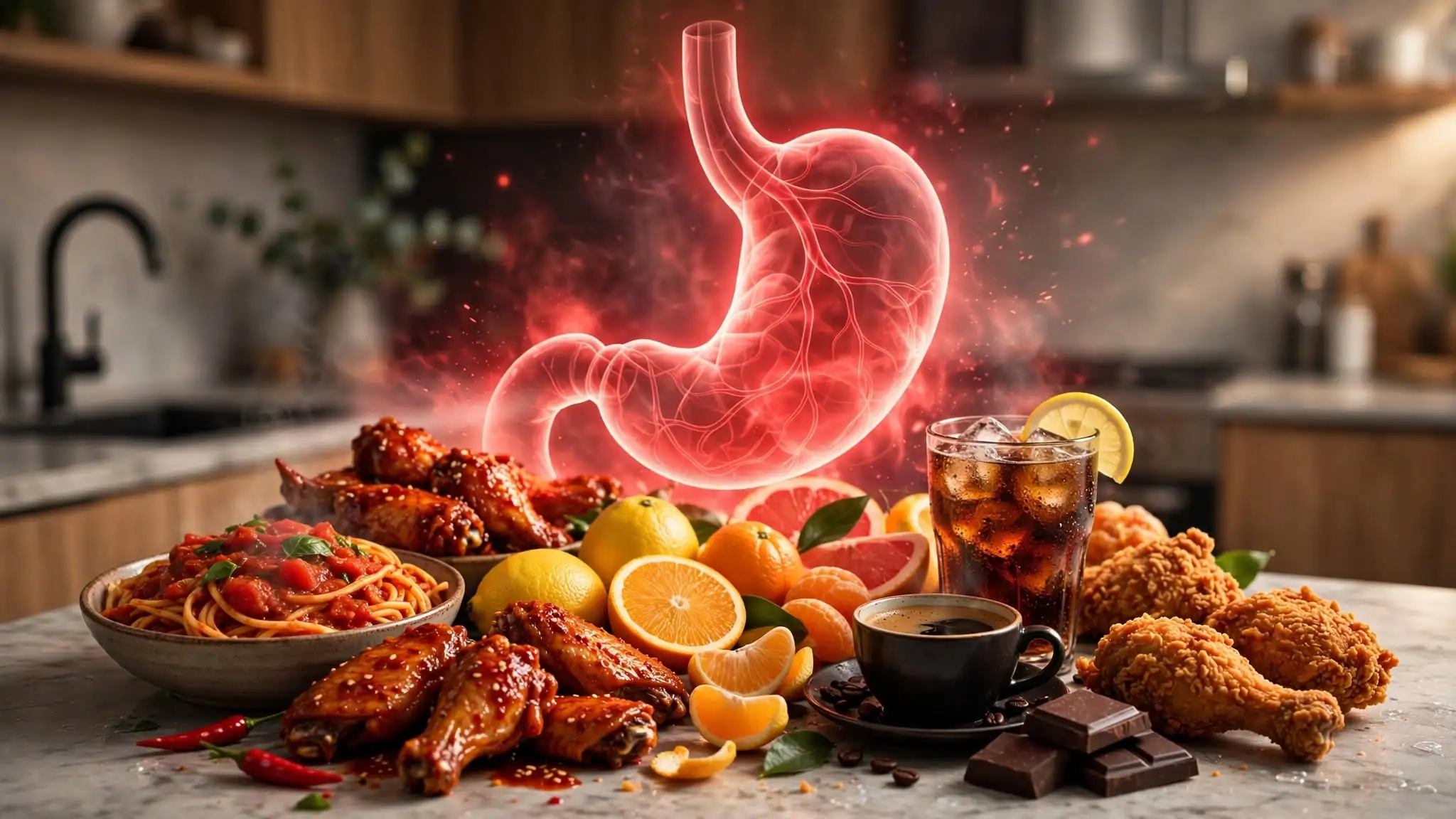
Danish and I were flatmates at university, and even then he would keep a strip of antacids on his nightstand, reaching out to them most nights without question. Years later, doing the same thing, he mentioned to me almost cursory, as if you mention something about your body that you’ve just accepted. I asked him what actually triggered him, and he didn’t really know. None of us had properly researched the worst foods for acid reflux, we just assumed it was age, or stress, or “how his body is.” This conversation took me into the literature of gastroenterology, and understanding the worst foods for acid reflux was almost everything Danish had endured for years.
Table of Contents
The Friend Whose Nightly Antacid Ritual I Never Questioned
What struck me once I actually asked Danish about his evenings was how normal the ritual had become. Dinner, television, antacid, bed. He’d stopped noticing the pattern because it had been there so long it felt like background noise rather than a signal.
“I just thought this was what happens when you get older,” he told me. That’s a genuinely common assumption, and it’s precisely why so many people live with manageable reflux for years without ever connecting it to specific, identifiable food triggers. I told him I’d actually read the gastroenterology research properly rather than repeat the same vague advice he’d already heard.
First, Understand What’s Actually Happening in the Body
The Physiology — The Lower Oesophageal Sphincter and Why It Matters
Acid reflux occurs when stomach acid travels back up through the oesophagus. The gatekeeper is a ring of muscle at the bottom called the lower oesophageal sphincter, or LES. When it works properly, it opens for food and closes firmly to keep acid contained below.
When the LES weakens, relaxes at the wrong moment, or is overwhelmed by gastric pressure, acid escapes upward. The critical insight that reframed this for me: most reflux-triggering foods don’t just increase stomach acid, they specifically target the LES itself, chemically relaxing it or increasing the pressure it has to work against.
WORTH KNOWING
The oesophagus has no protective mucous lining like the stomach does. Repeated acid exposure damages the tissue over time, and in severe cases can progress toward Barrett’s oesophagus, a recognised precursor to oesophageal cancer. Managing reflux through diet isn’t just about comfort — it protects the long-term integrity of the digestive tract.
Three Mechanisms — How Food Triggers Reflux
Every food on this list works through one of three mechanisms. LES relaxation, where fat, caffeine, and menthol chemically relax the sphincter. Increased acid production, where coffee, tomatoes, and citrus stimulate excess stomach acid. And delayed gastric emptying, where fatty foods sit longer, extending the pressure window. Most trigger foods work through more than one mechanism at once, which is why some produce far worse symptoms than others.
The 10 Worst Foods for Acid Reflux — At a Glance
| # | Food | Primary Mechanism | Severity |
| 1 | Fried & Fatty Foods | LES relaxation + delayed gastric emptying | Highest |
| 2 | Chocolate | Methylxanthines + fat + acidity | Very High |
| 3 | Coffee & Caffeine | Acid stimulation + LES relaxation | Very High |
| 4 | Alcohol | LES relaxation + acid production + clearing impairment | Very High |
| 5 | Tomatoes & Tomato Products | Direct acidity | High |
| 6 | Citrus Fruits & Juices | Direct acidity — very low pH | High |
| 7 | Spicy Foods | Oesophageal sensitisation via capsaicin | High |
| 8 | Mint (Peppermint/Spearmint) | Direct LES relaxation via menthol | Moderate-High |
| 9 | Carbonated Drinks | Increased gastric pressure forces LES open | Moderate-High |
| 10 | Processed & High-Salt Foods | LES tone reduction + GI irritation | Moderate |
The 10 Worst Foods for Acid Reflux — Explained

1. Fried and Fatty Foods
LES relaxation + delayed gastric emptying
This is consistently the highest-impact trigger in gastroenterology research. Fat directly signals the LES to relax while slowing gastric emptying from 2-3 hours to 4-6 hours or more, extending the reflux window across an entire evening. Grilling, baking, or steaming the same proteins instead of frying makes a measurable difference within two weeks.
2. Chocolate
Triple threat: methylxanthines + fat + acidity
This one genuinely surprised Danish, since he’d never connected his evening dessert habit to his reflux at all. Chocolate attacks through three mechanisms at once: methylxanthines relax the LES, cocoa butter fat slows gastric emptying, and dark chocolate adds its own acidity — actually worse than milk chocolate for reflux specifically.
3. Coffee and Caffeine
Acid stimulation + LES relaxation — even decaf isn’t safe
This was the hardest change for Danish to accept, since his mornings revolved around it. Regular coffee acidifies the stomach, stimulates excess acid production, and uses caffeine to relax the LES. Decaffeinated coffee isn’t the fix people hope for either, since it retains the acidity and acid-stimulating compounds independent of caffeine. Cold brew is measurably less acidic and better tolerated, and drinking with food rather than on an empty stomach helps meaningfully. Rethinking drink choices generally is something I’ve explored separately in a piece on choosing smarter everyday drinks, which covers the same principle from a different angle.
4. Alcohol
LES relaxation + acid stimulation + clearing impairment
Alcohol works against reflux sufferers through three pathways, which is why even moderate drinking produces disproportionately severe symptoms. It relaxes the LES, stimulates acid production, and impairs the oesophagus’s normal acid-clearance mechanism, so acid sits in contact with the lining longer once it refluxes. Red wine and beer appear consistently as the worst types.
5. Tomatoes and Tomato Products
Direct acidity — acid on acid
Tomatoes work differently from fatty foods, adding direct acid load rather than relaxing the LES. Cooked tomato products are significantly more problematic than fresh, since cooking concentrates the acidity. A cup of tomato pasta sauce can carry the acidity of multiple fresh tomatoes. White sauce, pesto, or roasted red peppers are far gentler alternatives.
6. Citrus Fruits and Juices
Extreme direct acidity
Citrus ranks among the most acidic foods in regular consumption, with lemon juice approaching the acidity of stomach acid itself. Orange juice at breakfast on an empty stomach is one of the most reliably brutal combinations for anyone with reflux, since nothing dilutes the acidity and the LES is already at its lowest overnight tone. Low-acid fruit like banana, melon, or pear provides fruit nutrition without the acid load.
7. Spicy Foods
Oesophageal sensitisation via capsaicin
Spicy food works differently from everything else on this list. Capsaicin doesn’t significantly raise stomach acid or relax the LES. Instead, it sensitises pain receptors in the oesophageal lining, meaning existing acid exposure feels far more severe than it actually is. During active reflux periods, removing capsaicin allows the lining to desensitise, reducing the perceived severity of all other triggers simultaneously. Understanding what genuinely supports digestion rather than aggravating it is something I’ve covered in more depth in a separate piece on foods that actively help your gut.
8. Mint (Peppermint and Spearmint)
Direct LES relaxation through menthol — the most counterintuitive entry
This is the entry that genuinely stopped both of us when we read it, since mint is so widely associated with soothing digestion. Menthol directly relaxes smooth muscle, including the LES, creating the exact conditions for acid to escape. Post-meal peppermint tea, one of the most common after-dinner habits, can actively worsen reflux in susceptible people. Chamomile or ginger tea are genuinely better alternatives that soothe digestion without compromising the LES.
9. Carbonated Drinks
Increased gastric pressure forces the LES open
Carbonation introduces CO2 bubbles that raise intragastric pressure above the LES’s closing pressure, physically forcing it open regardless of what else was eaten. Diet sodas are no better than regular ones for reflux specifically, since carbonation itself is the mechanism, not sugar content. Letting fizzy drinks partially go flat and avoiding them with meals reduces the pressure effect.
10. Processed and High-Salt Foods
LES tone reduction over time + GI irritation
This entry works chronically rather than acutely. Research has found associations between high dietary sodium and increased reflux frequency, independent of other factors, with high salt intake progressively reducing LES resting tone over time. Reducing ultra-processed food addresses high salt, fat, and additives simultaneously. I’ve written more broadly about how ultra-processed food affects the body beyond just reflux, which is worth reading for the fuller picture.
The Triggers Silently Working Against Danish — Beyond the Food List
After Danish eliminated the ten foods above, he noticed improvement, but not complete resolution. What remained had nothing to do with which foods he ate and everything to do with how and when.
Raw onions and garlic ferment easily, producing gas that raises intragastric pressure, though cooked versions are generally well tolerated. Large meal portions increase gastric pressure regardless of content, and Danish switching to two smaller evening meals instead of one large dinner was one of his most effective single changes. Eating within two to three hours of lying down removes gravity’s assistance in clearing acid, and he hadn’t realised the sofa counts as partially reclined for this purpose. And eating quickly swallows excess air and sends larger food volumes into the stomach at once. Recognising these kinds of hidden patterns in how food affects the body is something I’ve written about from a completely different angle in a piece on an unexpected apple habit that wrecked someone’s digestion, and the diagnostic process is remarkably similar regardless of the specific trigger.
What Danish Eats Now — Building a Reflux-Friendly Diet
Foods That Naturally Support the LES and Oesophagus
Bananas, low acid and naturally coating, contain compounds that soothe the oesophageal lining. Oatmeal absorbs excess stomach acid without stimulating more. Fresh ginger reduces gastric inflammation without relaxing the LES. Lean proteins like grilled chicken and white fish mean less LES relaxation and faster emptying. Leafy greens are low acid and alkaline-forming. Melon is gentle, low acid, and high in water. Wholegrain bread and rice digest without stimulating excess acid. And almond milk is naturally alkaline, directly buffering stomach acid where dairy can sometimes increase it. Building these habits into a household’s regular routine, not just one person’s diet, is something I’ve explored more broadly in a piece on how family health habits compound over time.
Lifestyle Changes That Work Alongside Dietary Changes
Eating smaller, more frequent meals reduces pressure at each sitting. Avoiding lying down for two to three hours after eating allows proper gastric emptying first. Elevating the head of the bed by 15 to 20cm maintains a gravitational advantage even during sleep. Maintaining a healthy body weight reduces sustained abdominal pressure on the LES. And eating slowly and chewing thoroughly reduces air swallowing.
When It’s Not Just Diet — When to See a Doctor
Dietary management works well for mild to moderate reflux, but certain symptoms need medical attention rather than self-management through diet alone.
SEE A DOCTOR PROMPTLY IF YOU EXPERIENCE
Difficulty swallowing (dysphagia); reflux occurring more than twice a week despite dietary changes; blood in vomit or black, tarry stools; persistent chest pain (always rule out cardiac causes first); unexplained significant weight loss; or symptoms that regularly wake you from sleep. Any of these warrant prompt medical evaluation rather than continued dietary self-management.
My Honest Takeaway — And What Changed for Danish
Understanding the mechanism behind each stimulus completely changed the Danish way of eating, rather than adding to a vague list of things to avoid without knowing why any of them mattered. Fried foods, chocolate, coffee, and alcohol are the most intense stimuli, addressing LES relaxation and delayed gastric emptying simultaneously. Tomatoes and citrus fruits add acidity directly to an already acidic environment. Spicy foods increase acidity rather than increase it. Mint, by contrast, is the most harmful of the entire list. And carbonated and processed foods work through stress and chronic tone reduction, respectively, which work longer than others.
Danish still drinks coffee most mornings, now with food instead of empty stomach, and with cold brew instead of hot. He has changed his evening mint tea, eats the biggest meal at lunch instead of dinner, and hasn’t taken antacids for months. The food itself was less important to him than he understood why they had been influencing him for years without question.
Medical Disclaimer:
This article is for general educational purposes only, based on personal research and publicly available peer-reviewed gastroenterological and nutritional evidence. It is not a substitute for professional medical advice, diagnosis, or treatment. If you experience persistent acid reflux, difficulty swallowing, chest pain, blood in vomit, black stools, or unexplained weight loss, consult a qualified healthcare provider promptly.
Frequently Asked Questions
What are the worst foods for acid reflux?
The ten worst foods are fried and fatty foods, chocolate, coffee, alcohol, tomatoes, citrus fruits, spicy foods, mint, carbonated drinks, and processed high-salt foods, most working by relaxing the LES or increasing stomach acid.
What is the single worst food for acid reflux?
Fried and high-fat foods are consistently the most significant trigger, since fat both relaxes the LES and slows gastric emptying from 2-3 hours to 4-6 hours or more.
Is coffee bad for acid reflux?
Yes, including decaf, since coffee acidifies the stomach and stimulates excess acid production independent of caffeine, though cold brew and drinking with food reduce the impact.
Is mint tea good or bad for acid reflux?
Mint tea is bad for reflux despite its reputation as a digestive aid, since menthol directly relaxes the LES, allowing acid to escape more easily.
What can I drink if I have acid reflux?
Still water, ginger tea, chamomile tea, almond milk, and coconut water are reflux-friendly options, while coffee, alcohol, citrus juice, and carbonated drinks should be limited.

I like the valuable info you provide to your articles. I will bookmark your weblog and check once more here regularly. I am reasonably sure I’ll be told lots of new stuff proper right here! Best of luck for the following!
I am really impressed along with your writing abilities
as neatly as with the format on your blog. Is that this a paid subject matter or did you customize it your self?
Either way keep up the excellent high quality writing,
it’s rare to see a great weblog like this one these days..