QUICK SUMMARY
Bad posture from years of desk work is rarely just a back problem — it’s a two-sided imbalance where the chest and neck tighten while the upper back weakens, called upper crossed syndrome. Resistance band exercises for posture work because they correct both sides at once, not just one. The five-move routine below needs nothing more than a light resistance band and a wall or sturdy anchor point.
Introduction

My colleague Danish saw himself in the shop window one evening and stopped walking. He couldn’t recognize the outline at first—shoulders tilted forward, head slightly forward, a gesture that had slowly come up in a way he had never felt. He told me this the next day, half-jokingly, half really upset, and that informal comment made me do thorough research about resistance band exercises for posture, as it turned out that fixing it wasn’t as easy as “sitting upright” or “chest pulling.” I tried a proper band-based routine with Danish for several weeks, which revolved around the actual muscle imbalance, and in the end the change in his style was really obvious. Here’s exactly what we got.
Table of Contents
Why Posture Breaks Down the Way It Does
The Muscle Imbalance Behind “Desk Posture” (Upper Crossed Syndrome)
What most people call “bad posture” has a specific pattern behind it, sometimes referred to as upper crossed syndrome. Hours spent hunched over a desk or phone shorten and tighten the chest and neck muscles, while the muscles across the upper back — the rhomboids, mid-traps, and rear delts — gradually weaken and stop doing their job of holding the shoulders back.
It’s genuinely a two-sided problem, not a one-sided one. Tight muscles pull the shoulders forward, and weak muscles fail to pull them back, and both sides of that equation need addressing for posture to actually improve rather than just temporarily straightening for a few minutes after a stretch.
This was the piece that had never quite clicked for Danish before. He’d always assumed his posture was simply a habit — something he could fix through willpower and remembering to sit up straighter throughout the day. In reality, by the time posture has visibly changed, the muscles involved have already physically adapted to the slouched position, which is exactly why willpower alone rarely holds for more than an hour or two.
Why Stretching Alone Never Fixes It
Danish had tried chest stretches on and off for months, and they genuinely felt good in the moment. But stretching only addresses half of upper crossed syndrome — the tight side. Without strengthening the weak upper back muscles at the same time, the shoulders simply drift right back into the same rounded position within a day or two. That’s part of why resistance bands come up so often alongside posture and stability work, since bands make it easy to add resistance specifically to the weak side of the equation, not just stretch the tight side.
Why I Took a Band-Specific Approach Seriously
The Reflection That Made the Pattern Impossible to Ignore
That shop window moment stuck with Danish more than either of us expected. It wasn’t dramatic or painful, which is exactly why it had gone unnoticed for so long — there was no single injury or bad day to point to, just a slow, invisible drift that only became obvious once he saw it from the outside.
That’s often how posture changes happen. Nobody wakes up one day with rounded shoulders — it accumulates across thousands of small, unremarkable hours at a desk, which means it rarely triggers the kind of concern that prompts someone to actually do something about it, until a mirror, a photo, or a comment from someone else makes it suddenly visible.
It reminded me of a similar reset move I’d built into a different routine — the shoulder blade squeeze used as a posture reset during a normal workday — which works on the same principle of reactivating the upper back muscles that sitting tends to switch off. That existing move became the starting point for a fuller, band-based routine built specifically around correcting the whole pattern, not just one moment of it.
The Resistance Band Routine That Actually Corrected It
This is the exact routine Danish worked through, using a light-to-medium resistance band throughout. Each move takes under two minutes, and none of it requires a gym.
Band Pull-Apart
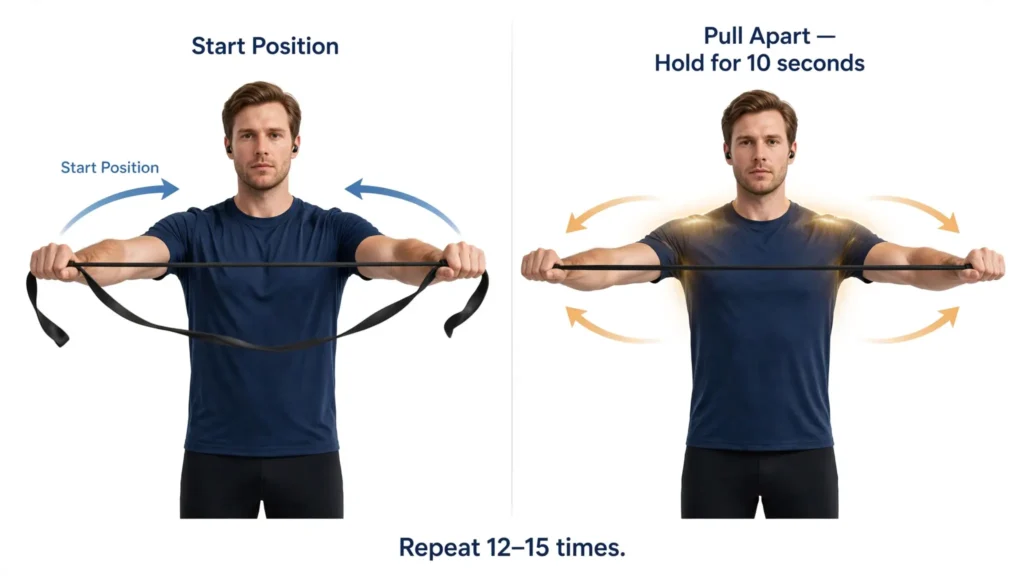
Holding the band with both hands at chest height, arms extended, pull the band apart by squeezing the shoulder blades together, then return slowly. 12–15 reps. This directly targets the rhomboids and rear delts, the muscles most responsible for pulling rounded shoulders back into place.
Seated Row
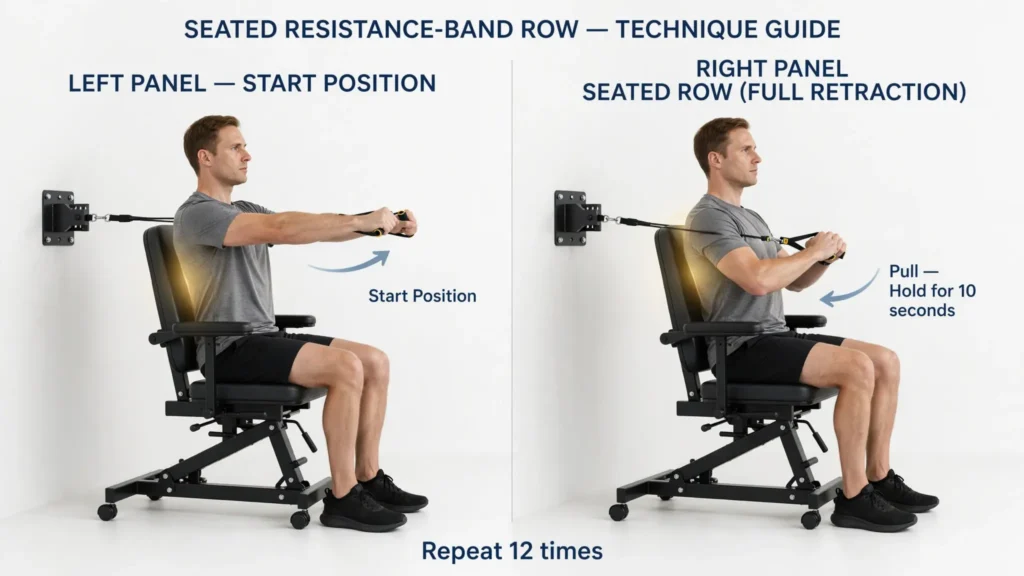
Looping the band around a sturdy anchor at chest height, sit or stand facing it and pull the band toward your torso, squeezing the shoulder blades at the end of the movement. 12 reps. This builds mid-back strength that supports upright posture throughout the day, not just during the exercise itself.
Reverse Fly
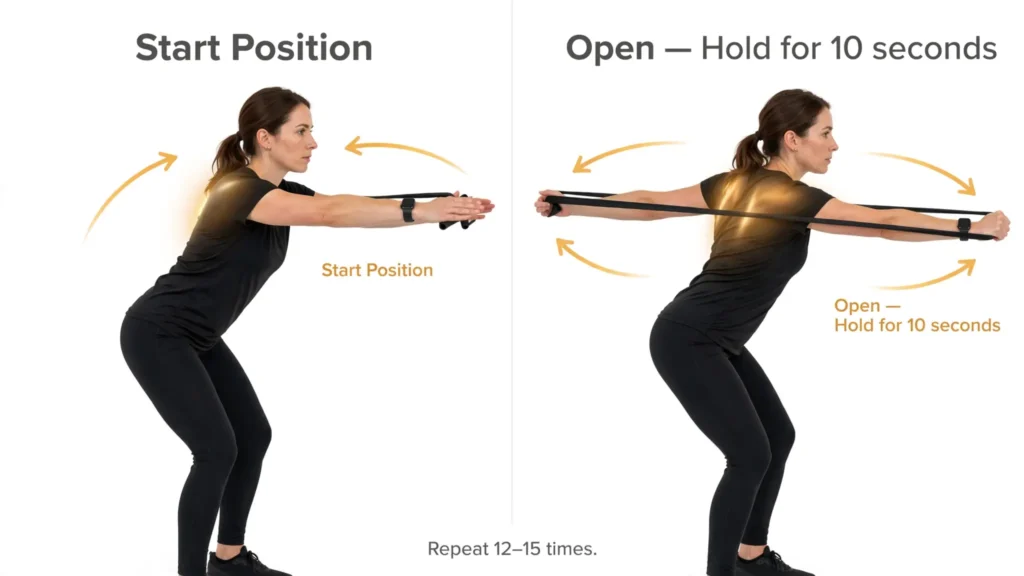
Holding the band with a slight bend at the hips, arms extended forward, open the arms out to the sides, squeezing the shoulder blades together. 12–15 reps. This isolates the rear deltoids, a muscle group that standard desk-based movement almost never engages.
Face Pull
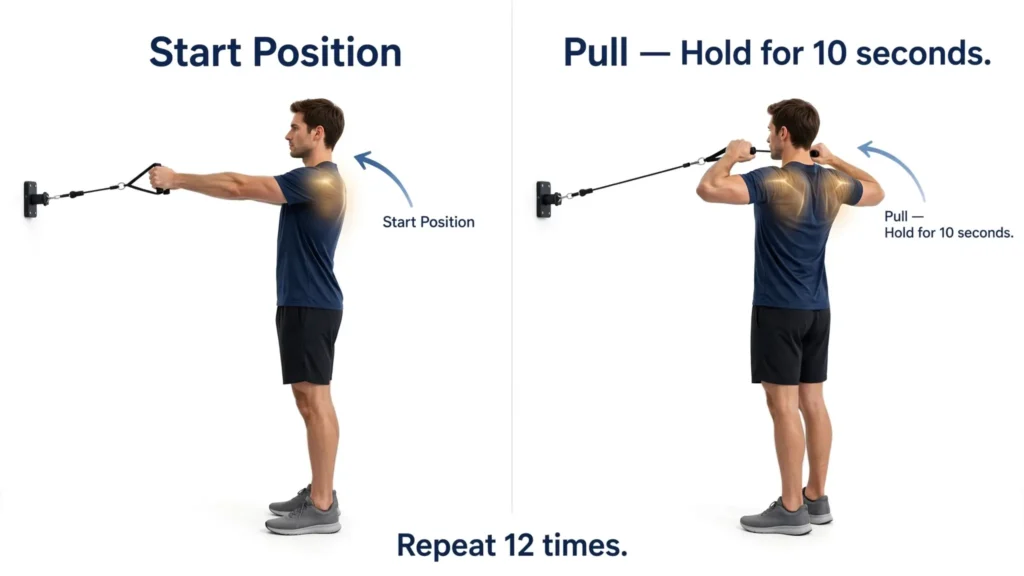
Anchoring the band at roughly eye level, pull it toward your face, elbows flaring out wide, squeezing the shoulder blades at the end. 12 reps. This targets the rear delts and upper back together while also gently working the rotator cuff, making it one of the more complete posture-correcting moves available. Danish found this one the hardest to get right initially, since the elbow height and pulling angle take a bit of practice, but it became one of the moves he noticed the most benefit from once the form clicked.
Standing Chest Opener Stretch
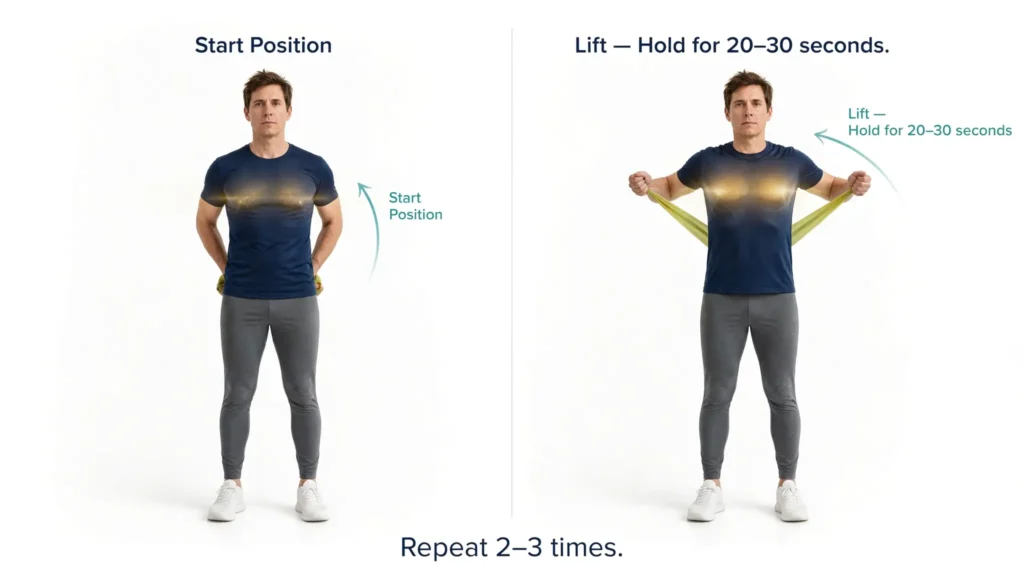
Holding the band behind your back with both hands, gently lift and open the arms to stretch across the chest. Hold for 20–30 seconds. This addresses the tight side of the imbalance, releasing the chest muscles that the strengthening moves above are working against.
“The real shift wasn’t any single exercise — it was finally training the tight side and the weak side together instead of only stretching the chest and hoping that alone would fix it.”
Quick Reference: The Routine at a Glance
| Exercise | Targets | Band Tension |
| Band pull-apart | Rhomboids/rear delts | Light–medium |
| Seated row | Mid-back | Medium |
| Reverse fly | Rear delts | Light |
| Face pull | Rear delts/rotator cuff | Light–medium |
| Standing chest opener | Chest/front shoulders | Light, hold only |
Building It Into a Weekly Routine
How Often Posture-Specific Training Actually Needs to Happen
Three to four sessions a week, roughly 10 minutes each, gave Danish’s upper back enough consistent stimulus to start actively holding a corrected position rather than reverting within hours. Consistency mattered more than intensity here, since the goal was retraining a pattern, not building maximum strength.
Why Consistency Mattered More Than Band Resistance Level
Danish assumed a heavier band would speed things up. It didn’t — what actually moved the needle was showing up consistently with a manageable resistance level rather than occasionally with a harder one. That echoes something I’ve written about before, that small, sustainable habits tend to outperform occasional intense effort, and posture correction turned out to follow exactly the same logic.
It took a couple of weeks of underwhelming-feeling sessions before Danish trusted this enough to stop second-guessing the lighter band. The visible change, once it arrived, made the case far more convincingly than any explanation of the underlying logic ever could.
What Changed After a Few Consistent Weeks
By week three, Danish’s shoulders started sitting back in a relaxed, upright position without him consciously correcting them — something that used to require deliberate effort throughout the day. That shift, from conscious correction to automatic default, is really the whole point of training the muscles rather than just reminding yourself to sit up straight.
Mistakes That Slowed the Correction Down
A few habits quietly worked against progress early on, and they’re easy mistakes to make when you’re focused on fixing something you can finally see clearly and want results as quickly as possible.
Only Training the Back, Ignoring the Tight Chest
Danish’s first instinct was to skip the chest opener stretch entirely, assuming strengthening the back alone would be enough. Leaving the tight side untouched meant the chest kept pulling the shoulders forward just as strongly as before, undoing a good portion of the strengthening work.
Using Too Much Resistance Too Soon
A heavier band felt like faster progress, but it actually encouraged compensating with the arms and shoulders instead of properly engaging the upper back muscles the routine was meant to target. Dropping to a lighter band and focusing on the shoulder blade squeeze specifically produced far better results than the heavier version ever did. It’s a counterintuitive lesson — more resistance usually means more progress in strength training generally, but posture correction depends on precise muscle activation more than raw load.
Treating It as a One-Time Fix Instead of Ongoing Maintenance
Posture correction isn’t a problem that gets solved once and stays solved — the same sitting habits that caused it in the first place are still part of daily life. Staying consistently active in a broader sense supports this long term, something explored in more depth around why ongoing activity protects posture and independence as we get older, which applies directly to keeping posture gains from quietly slipping back over time.
When Posture Correction Needs More Than Exercise
Resistance band training helps correct the muscular imbalance behind most desk-related posture problems, but it isn’t the right response to every case. It’s worth speaking to a doctor or physiotherapist if any of the following apply:
- Numbness or tingling in the arms or hands
- Persistent neck pain that doesn’t ease with consistent training
- Pain that worsens rather than improves over several weeks
- A known structural condition such as scoliosis or a previous spinal injury
“Danish mentioned an old shoulder injury before starting, and a quick check-in with a physio confirmed the routine was a sensible fit for his situation. That kind of check costs very little and removes any guesswork when there’s injury history involved.”
What Changed After a Few Consistent Weeks
By the end of the first month, Danish caught his reflection in that same shop window and actually stopped to notice the difference this time, for the opposite reason. His shoulders sat further back, his head aligned more naturally over his spine, and none of it required him to consciously think about “standing up straight” anymore.
Neither of us treated this as a permanent, one-time correction. It’s an ongoing muscular balance that needs occasional upkeep, especially given how much of both our days are still spent sitting — but it’s genuinely maintainable once the initial imbalance has been properly addressed rather than just temporarily stretched.
What stayed with me was how little of this was really about exercise technique. Danish didn’t need a more advanced routine or heavier resistance — he needed to understand that both sides of the imbalance had to be trained together, and then simply show up consistently enough for that understanding to translate into an actual change his body could hold onto without thinking about it.
FAQs
Can resistance bands actually fix bad posture?
Yes, for most cases caused by muscular imbalance. Resistance bands strengthen the weak upper back muscles while allowing the tight chest muscles to be stretched alongside them.
How long does it take to see posture improvement with resistance bands?
Many people notice their shoulders holding a more upright position without conscious effort within 3–4 weeks of consistent training.
What is the best resistance band exercise for rounded shoulders?
The band pull-apart is typically the most direct exercise for rounded shoulders, targeting the rhomboids and rear delts responsible for pulling shoulders back.
Do resistance band posture exercises work for desk jobs specifically?
Yes. Desk-related posture problems come from the same muscular imbalance these exercises are designed to correct, making them particularly well-suited to office workers.
How often should posture-correcting resistance band exercises be done?
Three to four sessions a week, around 10 minutes each, is generally enough to retrain the muscular pattern behind most posture issues.
Final Thoughts
None of these require gym memberships or special equipment. A simple workout of the resistance band for the posture, which was based around actual muscle imbalances and not just pulling the tight side, was making a noticeable difference when I found myself wondering in a shop window — and if your own shoulders are quietly bending forward, it’s beneficial to try it without you feeling fully Done.
If you take one thing away from this, consider it a balance on effort: Strengthening the weak side and pulling the tight side together is what actually fixes the posture, not just pushing one half. Start by stretching the band pull apart and chest opener together, as this pair tackles both aspects together, and add the rest of the routine when the combination feels comfortable.
This article is for general information only and is not a substitute for professional medical advice. Please consult a doctor or physiotherapist if you have persistent pain, numbness, or a known spinal condition.

3 thoughts on “Resistance Band Exercises for Posture I Rely On”