QUICK SUMMARY
Weak wrists are almost always a forearm strength problem, not a wrist problem — the muscles that actually control grip and wrist stability sit further up the arm. Forearm exercises for weak wrists, done consistently with light loads, build that strength back gradually. The five-move routine below needs nothing more than a light dumbbell or a full water bottle.
Introduction
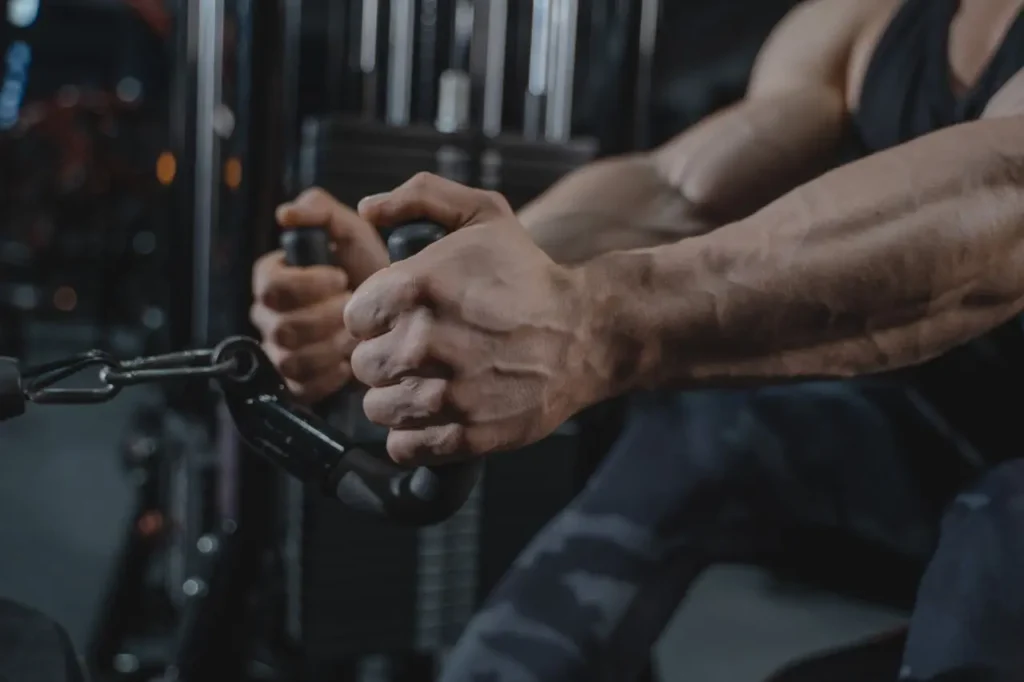
My colleague Waqas was struggling with things that should have been absolutely unusual—a stiff jar lid at lunchtime, carrying two shopping bags on the stairs, his wrists visibly trembling after about twenty seconds during the team fitness challenge. He laughed every time and called himself “just weak in the wrists”, as if it was a permanent feature, not worth training. Seeing the same little struggles over and over again was what prompted me to thoroughly research forearm exercises for weak wrists, as it turned out that the real problem is usually not in the wrist. I tried a proper stretching routine with intervals for several weeks, and the change in my ability to think without thinking was really noticeable. Here’s exactly what we got.
Table of Contents
Why “Weak Wrists” Is Usually a Forearm Problem
The Muscles Doing the Real Work Aren’t in Your Hand
Most of the muscles responsible for gripping, holding, and stabilising the wrist are actually located in the forearm, not the hand or wrist itself. These extrinsic muscles have long tendons that cross the wrist joint, which is why forearm strength and wrist stability are really the same system, not two separate things.
That’s exactly why Waqas’s wrists shook during a plank — the forearm muscles supporting that position simply hadn’t been trained to hold up his bodyweight for any length of time. It wasn’t a wrist injury or fragility. It was an untrained muscle group doing a job it had never been asked to do before.
This distinction matters more than it seems. Treating the wrist itself as fragile, and avoiding anything that loads it, actually reinforces the weakness over time. The forearm muscles need progressive load to strengthen, the same way any other muscle does — avoidance protects against short-term discomfort but does nothing to fix the underlying gap.
Why Grip Strength Is About More Than Just Grip
Grip strength has been studied as a genuine marker of overall physical health, and it correlates with measures of strength and function well beyond the hand itself. Building it back up isn’t just about jars and grocery bags — it connects to broader, long-term physical resilience, something explored in more depth around why staying active protects strength and independence as we get older, which lines up closely with what the research on grip strength and healthy aging actually shows.
That framing changed how Waqas thought about the whole routine. It stopped being about fixing an isolated weak point and started feeling more like a long-term investment, the same category as staying generally active or eating well — something worth doing consistently regardless of age, not a problem to solve once and forget about.
Why I Started Taking This Seriously
The Moment a Simple Plank Became a Wrist Problem
The plank moment was what made it click. Waqas wasn’t out of shape generally — he ran regularly and had decent overall fitness. But the second any exercise asked his wrists to bear weight for more than a few seconds, everything else became irrelevant. That’s a very specific, very common gap: general fitness doesn’t automatically train the forearm muscles that wrist-bearing exercises depend on.
It’s actually the same wrist-loading demand that shows up in a standing plank-style move I’ve covered separately in a routine built around a wall or desk-supported plank position — anyone whose wrists fatigue quickly during that kind of move is running into exactly the gap Waqas had, and the forearm routine below is what closes it.
What made it easy to overlook for so long was that Waqas rarely needed to hold weight through his wrists in daily life. Typing doesn’t demand much forearm strength, and neither does most of an average desk job. The gap only ever showed up in specific moments — a plank, a heavy bag, a stubborn jar — which meant it never accumulated into a problem worth addressing until those moments started happening often enough to notice.
The Forearm Routine That Actually Built Strength
This is the exact routine Waqas worked through, starting light and progressing gradually. Every move can be done with a light dumbbell or even a full water bottle to start, and none of it requires a gym or any specialist equipment beyond something small to hold.
Wrist Curls (Light Dumbbell or Water Bottle)
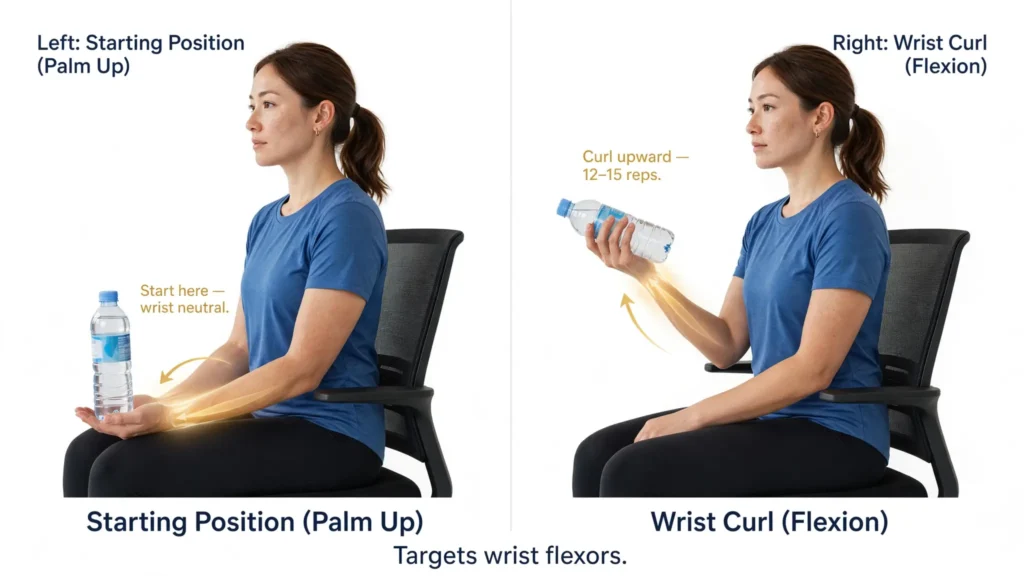
Sitting with your forearm resting on your thigh, palm facing up, curl the weight upward using only the wrist, then lower slowly. 12–15 reps. This directly targets the wrist flexors responsible for grip and gentle curling motions, and it’s usually the first exercise where people notice a genuine strength difference within the first couple of weeks.
Reverse Wrist Curls
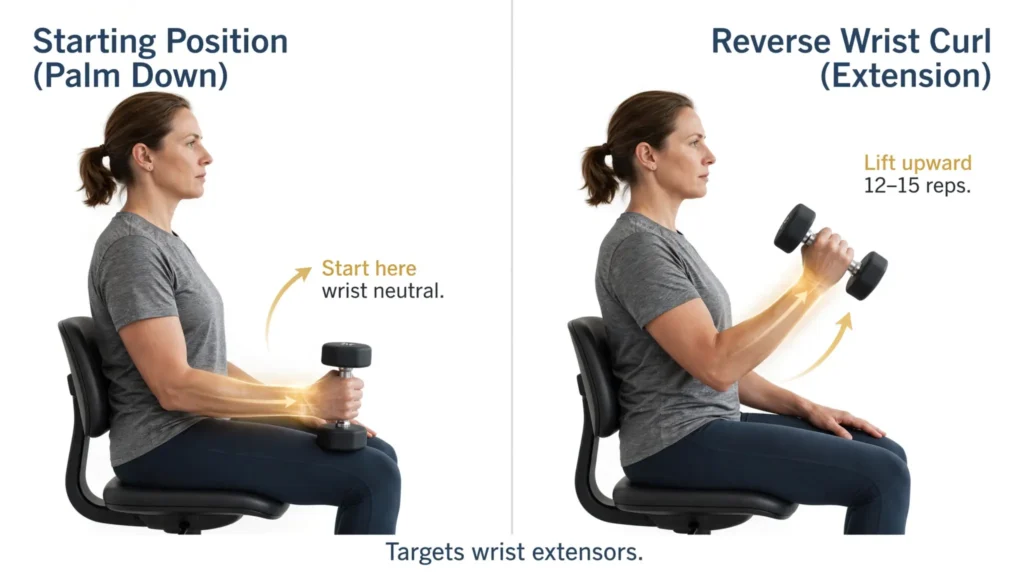
Same position, palm facing down this time, lifting the weight using the back of the wrist. 12–15 reps with noticeably lighter weight than the curl. This targets the wrist extensors, which are almost always weaker and more neglected than the flexors.
Towel Wring
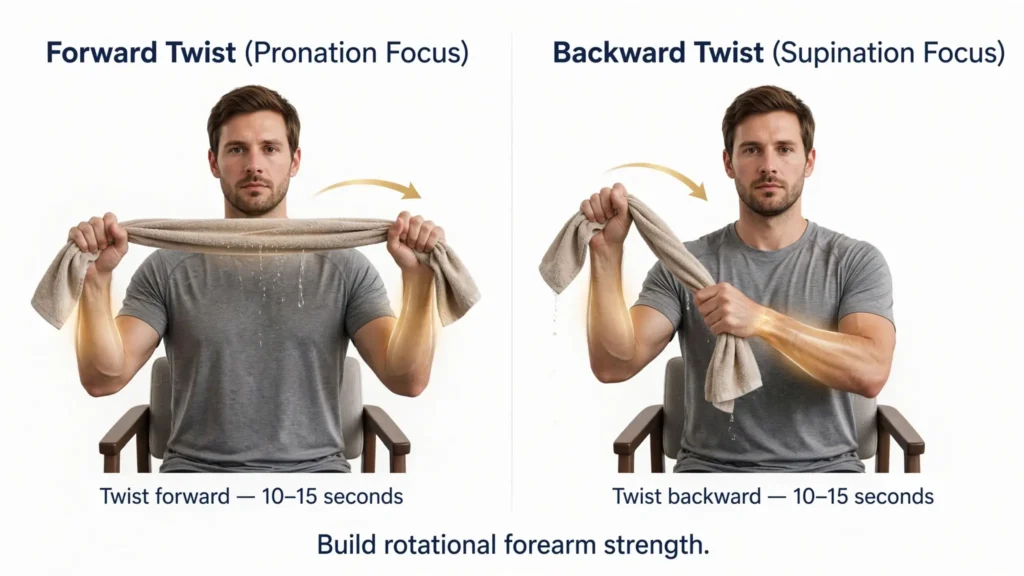
Holding a damp towel with both hands, twist it in opposite directions as if wringing out water, alternating direction after 10–15 seconds. This builds rotational forearm strength through pronation and supination, movements most standard routines skip entirely, despite how often they show up in everyday tasks like turning a key or opening a stubborn lid.
Farmer’s Carry Hold
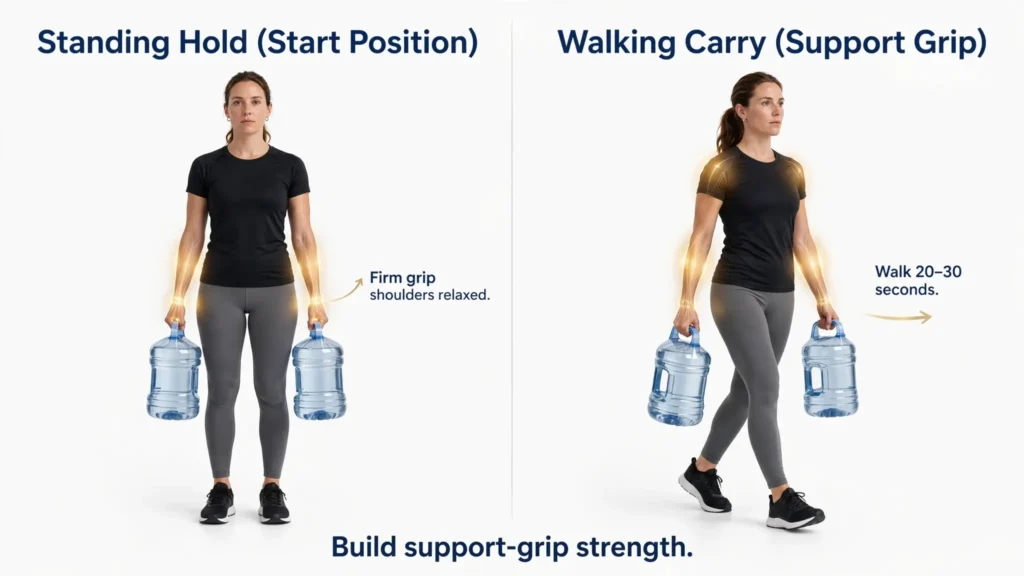
Holding a moderately heavy object in each hand, walk for 20–30 seconds while keeping the grip firm and shoulders relaxed. This builds the support grip used for carrying groceries, bags, or anything held for an extended time, and it’s the single move that most directly mirrors the everyday tasks that originally prompted Waqas to start this whole routine.
Finger Extensions With a Rubber Band
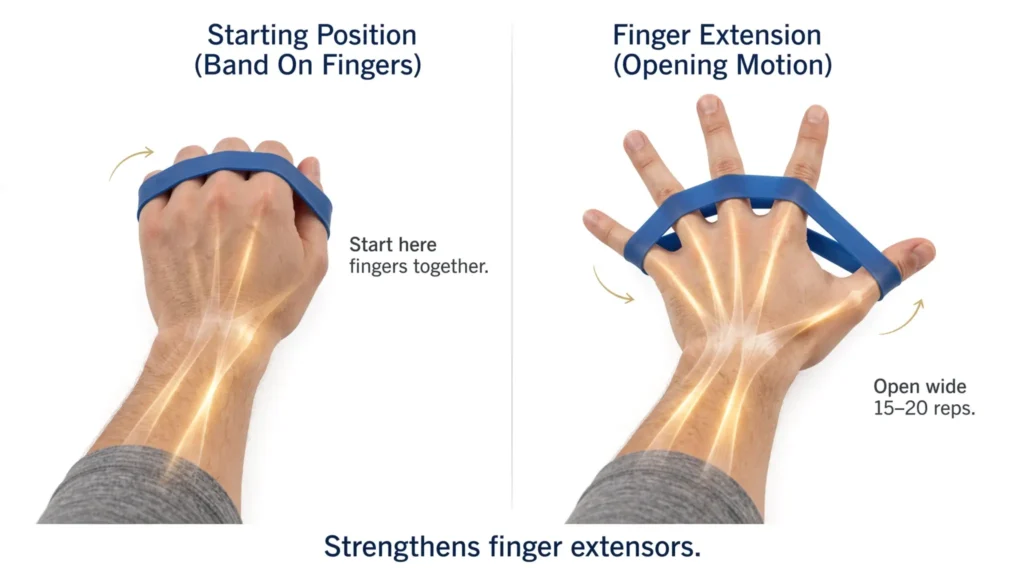
Looping a rubber band around the fingers and thumb, open the hand against the resistance, then relax. 15–20 reps. This trains the often-ignored opening motion, balancing out all the gripping and closing work the rest of the routine focuses on.
“The real shift wasn’t a single exercise — it was accepting how light the starting weight needed to be. Forearm tendons adapt slowly, and Waqas’s early progress came from patience, not intensity.”
Quick Reference: The Routine at a Glance
| Exercise | Targets | Starting Load |
| Wrist curls | Wrist flexors | 1–2 kg / water bottle |
| Reverse wrist curls | Wrist extensors | 0.5–1 kg |
| Towel wring | Rotational strength | Bodyweight/towel |
| Farmer’s carry hold | Support grip | Light-moderate |
| Finger extensions | Opening strength | Light rubber band |
Building It Into a Weekly Routine
How Often Forearms Actually Need Training
Two to three sessions a week, with a rest day between, gave Waqas’s forearms enough time to adapt without overloading tendons that respond slowly to training. Daily training at this stage tends to backfire, since forearm tendons adapt considerably slower than larger muscle groups.
This is a genuinely different rhythm from most strength training advice, which often leans toward more frequent sessions for faster results. Forearms and grip work respond better to restraint here — skipping a planned rest day in the name of extra progress is one of the more common ways people accidentally slow their own results down.
Why Progress Feels Slower Than Other Muscle Groups
It’s easy to get discouraged when forearm strength seems to build more slowly than, say, leg or chest strength. That’s expected, not a sign something’s wrong. Technique and patience matter more here than almost anywhere else — something that echoes a broader lesson from how correcting form transformed results that pure effort alone couldn’t, where the right approach mattered more than sheer intensity.
Supporting Recovery Through Diet Too
Muscle and tendon recovery benefits from adequate magnesium intake, which supports normal muscle function and relaxation between sessions. I’ve written before about magnesium-rich foods that support muscle and tissue recovery, and it’s a sensible addition alongside a forearm-strengthening routine rather than a replacement for it.
Mistakes That Slowed Progress Down
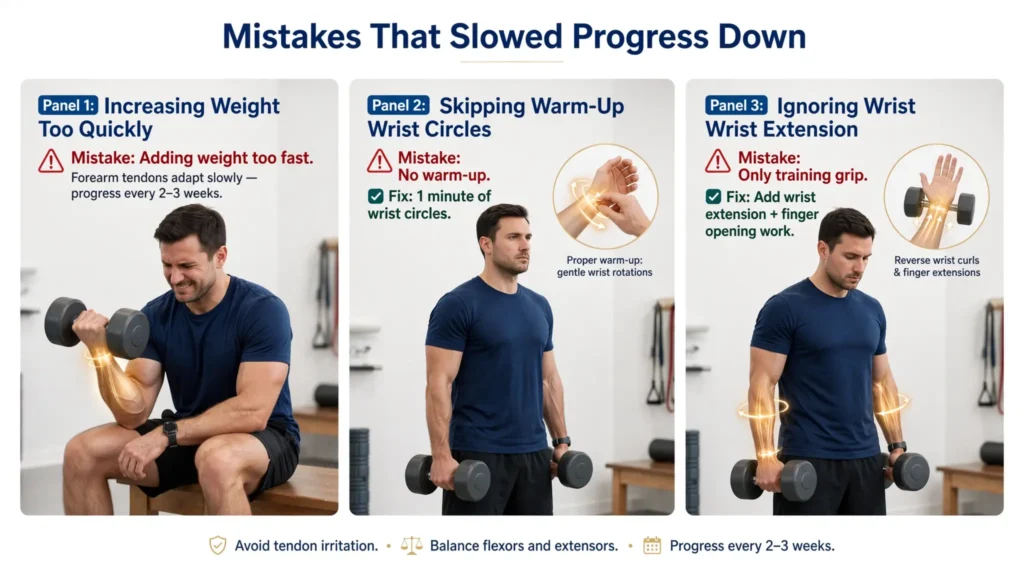
A few habits actively worked against progress early on, and they’re easy mistakes to make when you’re eager to see results quickly and forearm strength doesn’t seem to be moving as fast as everything else.
Increasing Weight Too Quickly
Waqas’s instinct was to add weight as soon as an exercise started to feel manageable. Forearm tendons need considerably longer to adapt than muscle tissue does, and progressing every 2–3 weeks rather than weekly avoided the overuse irritation that comes from rushing this specific kind of training. It’s a genuinely counterintuitive rule for anyone used to standard strength training, where adding weight as soon as something feels easy is usually the correct move.
Skipping the Warm-Up Wrist Circles
Jumping straight into wrist curls without any warm-up occasionally left the wrists feeling stiff afterwards. A minute of gentle wrist circles and side-to-side movement before starting made the rest of the routine noticeably more comfortable. It’s a small addition that takes almost no extra time but makes a genuine difference in how the joint feels during the heavier moves that follow.
Training Grip but Ignoring Wrist Extension
Waqas focused almost entirely on gripping and curling movements early on, since those felt more directly connected to “grip strength.” Neglecting the extensor muscles on the back of the forearm created an imbalance that, left unaddressed, tends to be one of the more common causes of forearm strain in people who train grip but skip extension work entirely. Adding the reverse wrist curls and finger extensions back in corrected the imbalance within a couple of weeks, and the forearm felt noticeably more stable overall once both sides were being trained evenly.
When Weak Wrists Need More Than Exercise
Forearm training helps build genuine strength over time, but it isn’t the right response to every kind of wrist weakness, and it’s worth being honest about that distinction before starting. It’s worth speaking to a doctor if any of the following apply:
- Sharp pain, rather than normal muscle fatigue, during or after exercises
- Swelling around the wrist or forearm
- Numbness or tingling spreading into the fingers
- Sudden weakness following a fall, impact, or injury
“Waqas checked in with a physio before starting, mainly because of an old wrist sprain from years earlier, and got clear reassurance that gradual forearm strengthening was exactly the right next step for his situation. A quick check-in removes any guesswork when there’s injury history involved.”
What Changed After a Few Consistent Weeks
By week five, Waqas held a plank for a full minute without his wrists shaking, something that had felt genuinely impossible when he started. Jar lids stopped being a running joke at lunch, and carrying shopping up the stairs stopped requiring a pause halfway up. Even opening a stiff car door handle in cold weather, something he’d never consciously connected to wrist strength before, had quietly stopped being an issue.
Neither of us treated this as a quick fix. It’s a gradual strength-building routine — slower than most muscle groups respond to training, but genuinely effective once given the time forearm tendons actually need.
What stood out most was how Waqas stopped mentioning his wrists altogether, rather than mentioning them less. The jokes about being “just weak in the wrists” quietly disappeared, not because he made a point of dropping them, but because the ordinary tasks that used to prompt them simply stopped being difficult enough to comment on.
FAQs
Can forearm exercises actually fix weak wrists?
Yes, for most cases of general weakness. Consistent forearm training builds the muscles and tendons that actually control wrist stability and grip.
How long does it take to strengthen weak wrists?
Many people notice functional improvements within 4–6 weeks of consistent training, with continued gains over 8–12 weeks.
What is the best beginner exercise for weak wrists?
Light wrist curls with a water bottle or small dumbbell are the most accessible starting point for building initial strength safely.
Can weak wrists be a sign of a bigger problem?
Occasionally. Sharp pain, swelling, or numbness alongside weakness is worth a doctor’s assessment rather than assuming it’s just deconditioning.
How often should forearm exercises be done each week?
Two to three sessions a week, with rest days between, allows the slower-adapting forearm tendons to recover properly between sessions.
Final Thoughts
None of these require gym memberships or special equipment. A simple, consistent arm workout for weak wrists makes a real and measurable difference for the person I’ve seen struggling with normal tasks week after week — and it’s worth trying if jars, grocery bags, or basic planks have become more difficult than silence.
If there’s one thing you learn from it, think of it as intensity rather than patience: arm strength increases more slowly than almost every other muscle group, and it’s better to develop steadily and slowly at the start of a brace than to rush every time. Just start with Rust Curls and Reverse Curls, keep the weight light for the first few weeks, and add the rest of the routine when both feel really comfortable.
This article is for general information only and is not a substitute for professional medical advice. Please consult a doctor if wrist weakness is accompanied by pain, swelling, or numbness.
