Here’s What Nobody Tells You About Starting When You’re Slim
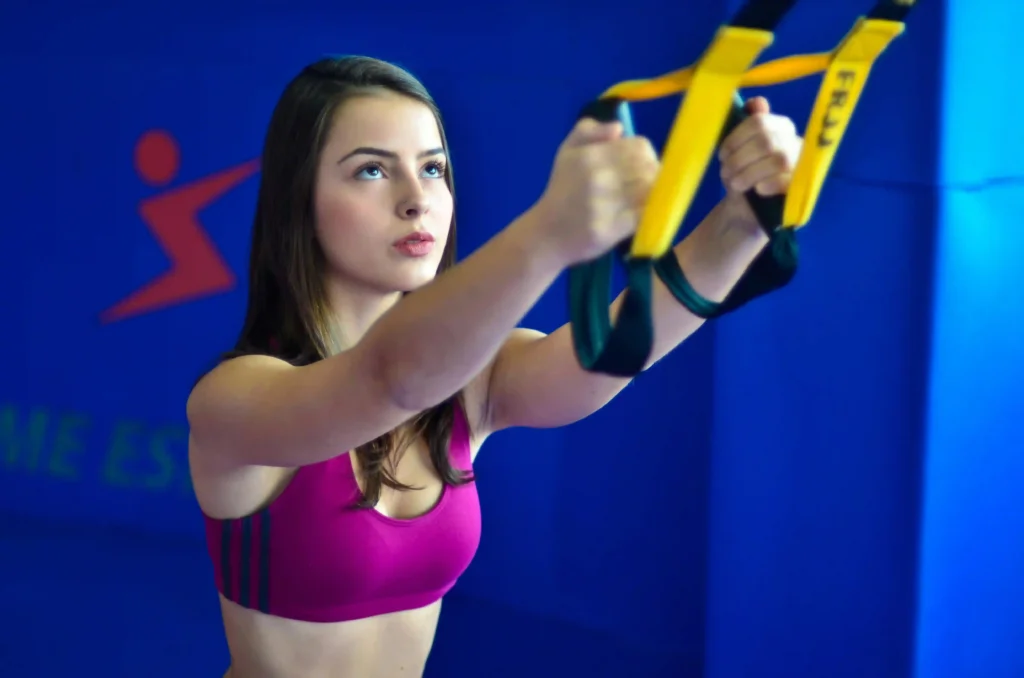
My cousin Layla was the first person who came to the gym, and immediately walked away.
It wasn’t the equipment that intimidated her. Nor was it the noise or the mirrors or the strange machines. It was the instant sense — the gut sense — the sense that was so unexpected that it was there that she didn’t belong. Not because she wasn’t fit enough, or strong enough, or committed enough. But he was slender, and that didn’t matter. Very slim. The gym, in her mind, and in the nearly every picture she had ever seen of fitness was a place for people to get smaller. She was already a small child. What was she doing there then?
That evening, she called me and half laughed at herself, “can a skinny girl really go to the gym? Thinking: “Is it worthwhile?
Actually, it is a question that is asked more often than you may realize by more women that deserves an appropriate response. Not a paragraph that tells you that of course you can! or leaves it at that. A true, sincere, thorough response that covers the actual concerns, the actual advantages, and the actual way that will help a thin woman accomplish her actual objectives and body type while training in the gym.
This is the answer.
⚡ The thing most fitness content never says
Being slim does not equal being healthy — and it does not mean the gym has nothing to offer. Research shows that low muscle mass despite low body weight (known as “skinny-fat” or sarcopenic obesity) carries real metabolic and skeletal health risks. Gym training directly addresses every one of them.
Table of Contents
Yes — And Here’s Why the Gym May Work Better for You Than You Think
The short and sweet reply — unequivocally, yes, a slim woman can go to the gym and she should. Not because of her size. Because of it.
Slim women will see the benefits of resistance training more quickly, and more visibly than just about anyone else, and most fitness information you’ll read won’t tell you that.
With a leaner woman working the muscles regularly with resistance training, the muscles will show up in a relatively short time — since there is less body fat covering the muscles. This is because the shape she’s creating has been showing up earlier than it would for a person with a higher body fat percentage. The alterations— the posture, the arm definition, the curve of the glutes, the broadness of the shoulders—are visible and motivational and keep her going.
The bone density point deserves its own paragraph because it is a very under-appreciated point. Slim women, especially those who have been slim since birth, have a greater risk of low bone mineral density than other women. Diet alone does not affect bone density. It is created and maintained by mechanical loading, or stress to the skeleton. The most effective non-pharmacological way of increasing bone density that we have is resistance training. This is a health risk that can creep up on a slim woman who doesn’t train for years and years.
But, there’s the skinny-fat thing, too. Body weight does not necessarily equal body composition. If a woman is thin and has little muscle mass, her body fat level could be more than it is in a heavier woman. It is a condition known as a sarcopenic obesity that is linked to insulin resistance, metabolic dysfunction and risk of death from all causes. It cannot be seen on a scale. Addressed by resistance training.
“The gym was never designed for one body type. It was designed for the human body — and every slim woman walking in for the first time belongs there completely.”
The 5 Fears Slim Women Have About the Gym — Answered Honestly
These are the things that Layla was afraid of. They’re the fears that I hear often from slim women. They are entitled to straight answers, not an “excuse.
FEAR 1 “I’ll Lose Even More Weight and Look Even Thinner”
This is the most prevalent fear, and it’s based on a misconception of what resistance training is! Weight lifting does not cause you to be smaller, it makes you denser. The density of muscle tissue is about 18% greater than fat. If the slim woman has been doing a regular program of resistance training, her weight at the end is almost certain to be higher than it was at the beginning. Her clothes can fit different, better, I think, they can fit different. However, she will not be able to lose weight.
The secret is to eat enough, during training. When resistance training is added to a diet that does not increase calorie consumption, it is possible to stay about the same size. With a slight calorie surplus (or minimal deficit) and enough protein, you will slowly and visibly gain some muscle mass. Not the scale climbing up is something to be wary about. It’s something to be proud of!
FEAR 2 “Everyone Will Stare Because I’m So Thin”
No one is watching you. I can say this with surety as everyone who ever walked through a gym door has experienced this fear, no matter their body type. The woman was concerned that she would be too big to be there. The man is afraid that he is too weak. The youth was concerned with their shape. They’re all focused on their own session, set, and mirror. In today’s life, the gym is one of the most self-centred environments.
After her third week of training, Layla told me that she had forgotten all about what anyone else thought, since she was so immersed in learning her movements and monitoring her progress. That’s the usual course of events. There’s a sense of fear before you go that’s huge, Evaporates in 2 weeks.
FEAR 3 “I’m Too Weak to Do Anything Useful”
In fact, one of the best starting positions to be in when it comes to fitness is if you are a complete beginner with a thin, under-trained frame. The reason is “newbie gains”: the quick adaptation that takes place during the initial 8–16 weeks of resistance training after a person hasn’t trained previously. Your body will be reacting to this stimulus in such a way that strength and muscle development will be accelerated during this time period in comparison to any other period of training in your life.
A poor start does not imply a poor finish. It involves a high ceiling for progress, rapid changes and the motivation that comes from seeing those numbers improve every week is real and strong. It’s a good idea to be a beginner.
FEAR 4 “The Gym Is for People Who Want to Lose Weight. Not Me.”
This misconception has been propagated to the extent of the fitness industry’s marketing push in the weight loss arena. Yet, it is gravely wrong. There are a hundred different reasons to attend the gym, people go to build strength, to improve athletic performance, they go to manage their mental health, to rehabilitate injuries, to build bone density, improve posture, to manage chronic conditions, to increase their energy, and so on! One of the many things is weight loss.
Building muscles, getting into shape, getting stronger, making your body healthier — these are all normal gym objectives for a thin woman. In many respects, they are more in tune with the intent of resistance training than weight loss.
FEAR 5 “I Don’t Know What to Do and I’ll Look Stupid”
This one has a solution that is worked out. Not a hard to complete one. Walking in knowing exactly what you are going to do, means that 90% of all gym anxiety is taken away after just 2 weeks of a simple 3 days beginner programme. It is not necessary to know all of the equipment. The only tools you will need are 6 exercises, a notebook and consistency.
What Should a Slim Girl Do at the Gym? — The Best Training Approach
Most thin women pursue training to build lean body mass while keeping their body weight more or less the same – or gaining a little more weight. This is known as body recomposition training. This is a distinct objective to weight loss and needs a diverse approach.
Resistance training is the priority
Compound resistance exercises create the maximum amount of muscle in the shortest amount of time and the shape and strength changes that slim women really want, in the least amount of time. These are the 6 best exercises for slim women beginners:
| Exercise | What it builds | Why it matters for slim women |
| Squat | Glutes, quads, hamstrings | Builds the lower body shape most women want. Can be loaded progressively as strength grows. |
| Hip thrust | Glutes specifically | The most effective glute-building exercise. Gives a slim frame visible shape and curves. |
| Deadlift (light) | Full posterior chain | Builds back, glutes, and hamstrings. Improves posture — a common issue in slim women. |
| Dumbbell row | Back, biceps | Builds upper body strength and posture. Creates definition visible in clothing. |
| Overhead press | Shoulders, triceps | Builds the shoulder width that creates a more defined, athletic silhouette. |
| Push-up | Chest, shoulders, core | No equipment, full upper body. Tracks strength progress clearly over weeks. |
These six movements – with progressive loading (gradually increase weight, reps over time) – generate most of the visible change that slim women seek.
How much cardio?
This is the part that will blow the minds of slim women. If the main interest of the individual is in creating muscle and figure, too much cardio is a hindrance. Long bouts of cardio burn the same number of calories that are used to repair and grow muscles. Never overdo the cardio, it’s best to have 2 sessions a week of 20-30 minutes of walking, cycling or swimming; focus on resistance training as the main piece of every gym week.
A simple beginner weekly structure
| Day | Focus |
| Monday | Full body resistance training — squat, push, pull, hip hinge (45–55 min) |
| Tuesday | Rest or 20–30 min light walk / gentle yoga |
| Wednesday | Full body resistance training — variation of Monday’s movements |
| Thursday | Rest or 20 min light cycling / swimming |
| Friday | Full body resistance training — compound + accessory work |
| Saturday | Active rest — walking, dancing, sport |
| Sunday | Full rest and recovery — prioritise 8+ hours sleep |
The 7-day gym diet plan is designed to give a more comprehensive day by day eating plan that fits well with this training week for a whole week, but was built around real food, not supplements, which makes it easy for a slim woman starting at the gym to follow.
What Should a Slim Girl Eat to See Results at the Gym?
When it comes to getting good gym results, one thing can make or break a slim woman: eating enough. Not eating perfectly. Failure to adhere to an elaborate plan. Just eating enough.
The most frequent reason slim women don’t receive benefits from their gym training is under-eating, often times without realizing it. A thin girl might simply not have a big appetite, or have a lot of other things to do and not eat, or have a cultural belief that eating more is just too much weight. These are all challenges to the simple law of nutrient intake for muscle growth: a moderate caloric excess.
Protein — the non-negotiable
You have to provide your body with an adequate amount of amino acids from protein in order to build muscle, which is 1.6 to 2.0 grams of protein per kg of body weight per day. For a 55kg woman, this is 88-110g of protein a day. The majority of thin women with normal food intake are getting at best 40-60 grams. The difference between those numbers is the difference between what is possible and a frustrating plateau. The whole story of the effects of regular high protein consumption is detailed in the article “What Happens If You Take 100 Grams Of Protein Per Day” — one of the most usefully written articles for women who want to start building muscles.
The best affordable protein options are eggs, plain greek yogurt, cottage cheese, chicken breast, tinned tuna, lentils, edamame. Prioritise protein at every meal — not just at dinner.
Carbohydrates fuel your sessions
During resistance training, your muscles are fueled by complex carbohydrates, including oats, sweet potato, wholegrain bread, banana. If carbs are not consumed well, sessions tend to be flat, weights heavy before they should be, and energy levels plummet making sticking to the program difficult. A thin person who has too few carbs is going to have the most difficult time doing any physical activity.
Eat before AND after every session
Carbohydrate (plus protein) meal 60 – 90 minutes before training and a protein snack or meal 45 minutes after training. Together, these two practices, when done consistently, make a difference in recovery and progress for building muscle. The complete what to eat before and after workout guide is detailed with exact meals, timings, and workout specific changes.
Practical Tips for Starting With Confidence
Here are a few things that made a difference from the start for Layla — and I wish someone had consolidated them into a single location.
- Come with a plan. Even a basic program that you may write on your phone. If you know what you’re doing, 90% of the walking in anxiety is gone.
- Use machines, then free weights. The machines help you to move easier and decrease anxiety about technique as you gain confidence. Once comfortable with the movements, progress to barbells and dumbbells.
- Do not focus on a scale, but rather on strength. A slimmer woman who is trying to gain muscle will find these numbers on the scale very poor indicators. Record the amount of weight used. Monitor the experience of exercises. Keep an eye on the fit of your clothes. It’s the statistics that count.
- Be sure to not skip the weights section. This is where your results are stored. The cardio machines are suitable for warm-up or light recovery workouts. Your body is changing in the resistance training area.
- Eat more than feels comfortable. If you don’t eat until you are just a little bit full, you are very likely not eating enough for your targets. You need more fuel than is needed for maintenance to build muscle. Lean into it.
- Change the objective completely. You don’t come to the gym to get smaller. You’re in here to make yourself better. That one thought change makes all the difference: what you see, how you define their progress, how you feel in your own body, each week.
The Bottom line: The Gym Is for You
Layla has been training for seven months. I’m three kilograms heavier at the start of today than when I first started, and this girl is the most confident I’ve ever seen her. She has a squat of over her bodyweight. She is obviously looking better in her posture. She has arms that she can be proud of. She sleeps well. She eats well.
As I mentioned to her recently, I can’t imagine that she had gotten so close to talking herself out of starting because she believed she was “too skinny” to start. Not because she got fat, but because she knew what her body could do.
The gym isn’t designed for any specific body type. It’s for a specific purpose – and you can walk in for that purpose, no matter your weight, your appearance or how intimidated you are in the first week.
Your starter checklist:
1. Resistance training 3x per week — squats, deadlifts, rows, presses
2. Keep cardio light (2x 20–30 min walking/cycling) — weights are the priority
3. Eat 1.6–2.0g of protein per kg of bodyweight daily
4. Eat a real meal 60–90 min before training and protein within 45 min after
5. Add a modest calorie surplus (200–300 kcal) to support muscle growth
6. Track strength gains and how clothes fit — not just the scale
7. Sleep 7–9 hours — muscles are built during recovery, not during training
8. Arrive with a programme — never wander into a session without a plan
Are you a slim woman who has been putting off starting at the gym? Tell me what’s been holding you back in the comments — I want to know.
Medical Disclaimer
The information in this article is for general informational and educational purposes only and does not constitute medical, nutritional, or fitness advice. If you are underweight, have an eating disorder history, or any health condition that may be relevant to starting an exercise programme, please consult a qualified doctor or registered healthcare professional before beginning. The training and nutrition guidance provided is general in nature and not a substitute for personalised professional advice. Pure Vitality Tips content is not intended to diagnose, treat, or cure any condition. Individual results vary. Reliance on any information on this website is solely at your own risk.