A Teenager Asked Me This and I Dug Into the Science
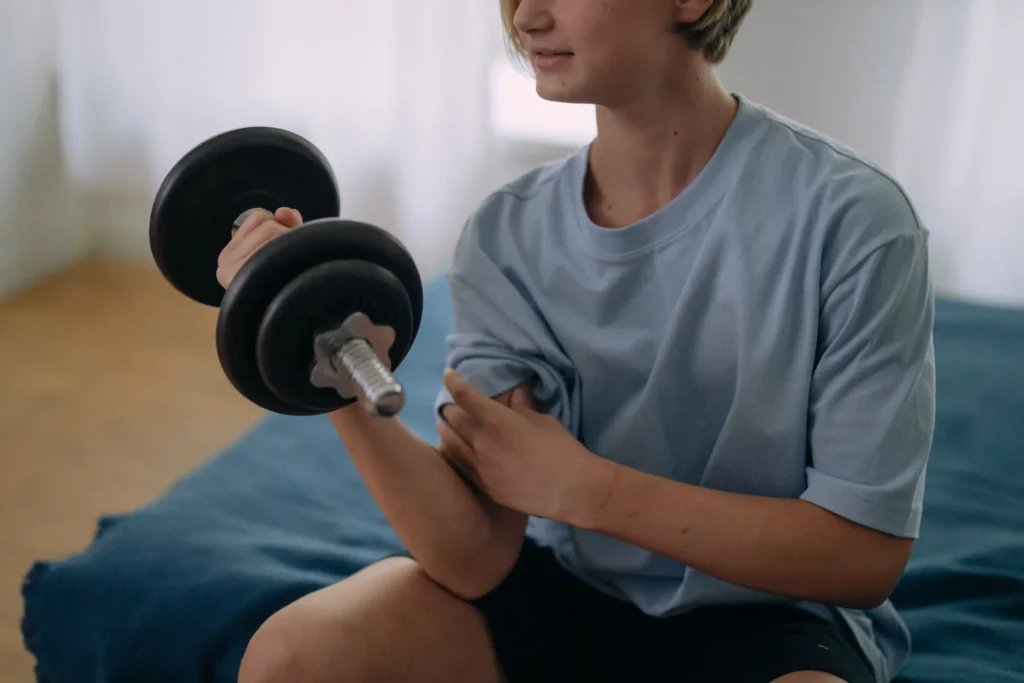
Omar was my cousin and a fifteen-year-old wanting to join his local gym for months. He was playing football 3 times per week, had begun doing push-ups in his bedroom every night and was really excited to get stronger. His parents were supportive, until one of his family members, his uncle, in a family gathering said, “Don’t let him lift weights yet, it’ll stunt his growth.
That one sentence put the whole plan on hold. Omar came to me a week later and asked: “Is it actually true? Will the gym stop my height?”
I said that I would “get the real story” from him. Not a Google answer nor a YouTube opinion, but the actual research. What I discovered was simple, and yet little reported, the scientific community made this resolution years ago. The gym won’t mess with your growth. However, as a myth that is so widely assumed, so firmly embedded in the beliefs of parents and coaches, and so unchallenged by the well-meaning relatives and other people who come and go for the child, the truth will never be heard by most teens and their families.
This article is that answer — the complete picture, including the one real risk that does exist and what genuinely does threaten height during the growing years.
⚡ The official position
The American Academy of Paediatrics (AAP) and the National Strength and Conditioning Association (NSCA) both confirm that properly supervised resistance training is safe for children and teenagers and does not stunt growth or damage growth plates. This is the settled medical consensus.
Table of Contents
How Height Actually Works — Growth Plates and What Closes Them
Before one can comprehend why the gym does not stunt growth, it is important to understand what growth is first, and most people have never been told.
Your height depends largely on the length of your long bones (the femur in the thigh, the tibia in the shin and the humerus in the top upper arm) As children grow, these bones grow by adding length to them at areas known as growth plates or epiphyseal plates. Growth Plates are areas of special cartilage near the end of long bones. The bone will keep growing as long as they’re active and open.
The gym myth dies on that single point: Growth plates close due to physical activity. These shut down due to hormones.
Growth plate fusion actually occurs due to the sex hormones that are released during puberty, oestrogen and testosterone. As puberty continues, the hormones slowly turn the cartilage into bone, closing the growth plate and stopping the growth process. This usually occurs between the ages of 14-16 for girls and 16-18 for boys, but may be earlier or later depending on the timing of puberty.
This has been directly demonstrated in a 2020 research study which showed that exercise has no effect on the closure of the growth plates. What does influence it are sex steroids, puberty development, body mass index, and nutrition. The list doesn’t include exercise, not as a risk factor and not even as a useful variable.
When it comes to determining your final height: ~80% is genetic. The remaining 20% is related to nutrition, sleep and overall health in the growth years. If done properly, the gym is completely outside of the realm of factors that undermine height.
“Growth plates close because of hormones — not because of the gym. The science on this is settled. The myth isn’t.”
Does the Gym Stunt Height? What the Science Actually Says
The answer is simple: No. The full answer is: Gym training doesn’t stunt height — it actually promotes healthy bones.
First, let’s discuss the origin of the myth. During the 1970s, the Japanese documented child labourers with short stature in the 1960s, who were engaged in repetitive and heavy manual labour, such as carrying loads, unvaried physical labour for long periods with poor nutrition. These results were extrapolated to all types of physical loading in young people, and the notion that “heavy physical work stunts growth” became a cultural cliché for “lifting weights stunts growth. That statement has always been without foundation, however.
It’s the opposite story in the actual research on deliberate exercise training. Any weight bearing exercise (i.e. any exercise which puts load on the skeleton) stimulates bone remodelling and increases bone mineral density. When you place a load on your bones they get denser and stronger. This is not a hazard for growth, but a favor to the bones. In several studies with young athletes in sports with high training loads (gymnastics, football, athletics), the early, continued training had no negative effect on final adult height.
The myth vs. reality break down is as follows:
| The myth | What the science says |
| “Gym training closes growth plates” | Growth plates close due to sex hormones (puberty) — not exercise |
| “Weightlifting stunts height” | No evidence supports this. AAP, NSCA confirm safe training does not stunt growth |
| “Teenagers shouldn’t lift weights” | Supervised resistance training is safe and beneficial for teenagers from age 7–8+ |
| “Heavy lifting = growth plate damage” | Injury risk comes from poor form + unsupervised max loading — not normal training |
Over decades of research and a number of sporting populations, the evidence is consistent. The gym does not close growth plates, nor compress the spine in any permanent manner, nor affect the hormonal change necessary for growth. It does not do what it is said to do as part of the myth.
The One Real Risk — When the Gym CAN Be Harmful for Teenagers
There is one real worry, and it should be put to the fore instead of being lost in assurances.
Dislocations of the growth plate do happen. The cartilage at the growth plate areas of the bones is less dense than the other bone tissue in adolescents, making it more susceptible to fracture under specific conditions. A fracture through a growth plate (Salter-Harris fracture) can, in severe instances, stop the growth of the bone in that region and cause a difference in bone length if the fracture is not treated appropriately.
However, the one thing that almost no piece of literature on the subject conveys is the fact that growth plate injuries in teenagers occur primarily due to accidents, falls, trauma from contact sports and — most applicable to gym training — unsupervised maximal lifting with poor form. They are not generated by normal, supervised, technique based resistance training.
THE RISK Unsupervised maximal loading with poor form — not supervised training
The difference is so significant. A teen doing body weight squats or moderately loaded deadlifts with supervised technique or progressions of pulls isn’t taking on significant risk of growth plate injury. A teen trying to do one-rep max bench press, with no instruction, in a gym without supervision is.
The AAP is clear that the vast majority of growth plate injuries in the gym setting are due to poor technique, uncontrolled movements, and training loads that are too high for the teenager’s current level — all of which are a problem with training, not with resistance training itself.
Signs of a growth plate injury to watch for
- Pain in the end of a bone (close to a joint) instead of in the belly of the muscle.
- Swelling around a joint following training
- Limited motion or stiffness following loading of a joint
- Tenderness when pressing near the growth plate area
- Any pain that does not subside after normal muscle pain (24 – 72 hours)
In a teenager, any of these signs or symptoms while or after training should be evaluated by a doctor. Early diagnosis of growth plate injuries can be treated and most do not become permanent issues when treated appropriately.
What Actually DOES Threaten Height in Teenagers
This is the part of the article that most parents should read twice as much as all other parts — as it’s the only part that’s actually a true threat to taller heights and has nothing to do with attending the gym.
REAL THREAT 1 Poor Nutrition — The Biggest Factor You Can Control
The three nutrients that are most directly associated with growth during adolescence are protein, calcium and vitamin D. Protein is used for the production and activity of growth hormone, and to build the matrix of the bones. Calcium is the major mineral in bones. Vitamin D allows calcium to be absorbed from the gut, otherwise calcium consumption in the diet is largely not effective.
The UK is one of the most vitamin D deficient places in the world with limited sunlight access for teenagers during the school year. Being vitamin D deficient in childhood and adolescence is much more of a risk to growth and stature than any workout. The article on 15 foods to boost the immune system and overall health discusses what certain foods are beneficial for bone development and overall health — and some of these foods are relevant to the nutrients teens need during these busy growing years.
REAL THREAT 2 Chronic Sleep Deprivation — The Silent Growth Suppressor
The main hormone that promotes bone growth during adolescence is human growth hormone (HGH). About 75% of HGH production per day happens during deep sleep, which is the slow wave sleep that takes place in the first half of the night. Even nightly sleeping less than eight hours, youngsters are cutting their own growth hormone production, night after night.
One of the least recognized aspects of adolescent health is the connection between sleep and physical growth. The message to teens is clear: eight to ten hours is not a choice. It is during growth that it takes place.
REAL THREAT 3 Chronic Stress and Elevated Cortisol
Long term, uncontrolled stress increases the levels of cortisol (stress hormone). Increased cortisol levels chronically inhibit the production of growth hormone, set a catabolic (breakdown) hormonal environment, and alter the normal hormonal fluctuations involved in the growth at puberty. That is why, if a child gets seriously ill, or experiences a prolonged time of psychological stress or chronic anxiety, this can have a meaningful impact on final height, but the gym, which in most cases will have a calming effect, won’t.
The irony of being stuck with when I think about this subject: families who refuse to allow teenagers to go to the gym because of growth are the same families who have their teens looking at screens until 1 a.m. and never eating breakfast, or consuming ultra-processed foods every day. All of those behaviours have a more direct negative impact on growth than supervised resistance training ever would.
Safe Gym Training for Teenagers — What It Looks Like in Practice
So we’ve covered the gym and how it doesn’t stunt heights, and that there is one real danger, which is training quality — not training — what does safe, beneficial gym training for teens look like?
| ✅ Safe for teenagers | ⚠️ Avoid until adulthood |
| Bodyweight squats, lunges, push-ups | 1-rep max (1RM) testing or maximal loading |
| Pull-ups, dips, resistance band work | Adult bodybuilding split programmes |
| Deadlifts and squats with light weight + perfect form | Heavy Olympic lifts without qualified coaching |
| Core work: planks, dead bugs, hollow holds | Pre-exhaust and drop-set protocols |
| Athletic movement, agility, and coordination drills | Extreme calorie restriction alongside training |
| Supervised sessions with gradual progression | Unsupervised training with no technique foundation |
All of the above is based on the principle of having technique first, load second. If a teenager can squat, do a perfect push up, and do a controlled Romanian deadlift with a light barbell, then they have the basis for making progressive loading safe. A teenager who doesn’t take that foundation is the one who is at risk of injury.
It’s also essential to have supervision in the early stages. Not because teenagers are not able to train safely, but because poor movement patterns will become ingrained and difficult to fix later. During the learning phase, injury risk is significantly decreased with a qualified coach presence of even a few sessions per week.
For teenagers who are also thinking about their diet alongside gym training, the foundational guide to diet for gym beginners is the most straightforward starting point — covering protein, carbohydrates, and meal timing in plain English without the complexity of advanced sports nutrition.
What Teenagers and Parents Should Actually Focus On
The data is clear when it comes to maximising growth potential during the growing years: consistent, adequate nutrition (with protein, calcium, and vitamin D being the priority nutrients), no less than 8-10 hours of sleep per night, and an active lifestyle with regular activity of any kind.
When handled safely and supervised, the gym indirectly serves all three. Allows for the development of the appetite that facilitates healthy eating. It creates a physical tiredness that helps to promote deeper, more restorative sleep. It lowers cortisol which inhibits growth hormone. If it is done right, gym training is not a danger to the development of teens. It’s a backing of it.
The Verdict — Let Them Train
Omar’s been at the gym for two weeks since we talked. Had a body weight programme, practiced with a coach, and has been training for 5 months. He is taller than when he first began, which is, of course, what you’d expect, as 16 year olds grow, whether they train or not. More than the height, he is stronger, more confident, back to footballing better, and sleeping better than before.
The notion that gymnastics stunt growth is not a harmless misconception. It helps keep teens away from one of the healthiest environments they have, at perhaps the most physically formative years of their life! That is the time to put to an end that myth.
Summary — what every teenager and parent should know:
1. The gym does NOT stunt growth — this is settled science, not opinion
2. Growth plates close because of puberty hormones — not exercise
3. The AAP and NSCA confirm supervised training is safe for teenagers
4. The one real risk is growth plate injury from unsupervised maximal loading with poor form
5. What actually threatens height: poor nutrition, sleep deprivation, chronic stress
6. Safe training = technique first, supervision, gradual loading, age-appropriate exercise
7. Sleep 8–10 hours nightly — 75% of growth hormone is released during sleep
8. Prioritise protein, calcium and vitamin D — the three nutrients most critical for growth
Are you a parent who’s been worried about this — or a teenager who’s been told to avoid the gym? Drop it in the comments. I read every one.
⚕ Medical Disclaimer
The information in this article is provided for general informational and educational purposes only and does not constitute medical or professional fitness advice. The content is not intended to replace guidance from a qualified doctor, paediatrician, orthopaedic specialist, or certified youth fitness coach. If you are a parent or teenager with concerns about training safety, growth plate health, or physical development, please consult a qualified healthcare professional. Individual development varies significantly. Any pain around joints or bone ends during or after exercise in a teenager should be assessed by a doctor promptly. Reliance on any information on this website is solely at your own risk.
1 thought on “Does the Gym Stunt Your Growth?”