QUICK SUMMARY
Plantar fasciitis pain gets worse from sitting still, not better, so a short, consistent set of desk exercises did more for morning heel pain than any single big stretching session. The five-move routine below takes under ten minutes a day and only needs a chair, a frozen water bottle, and a bit of consistency.
Introduction
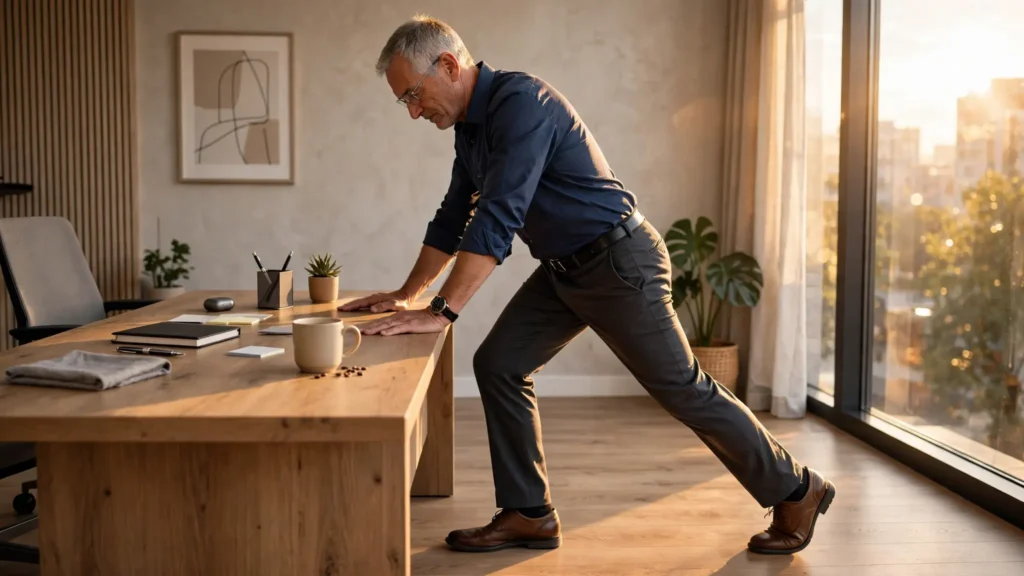
For the first time, I saw all this with a colleague Naveed, who used to make a face every morning as he walked from the car park to his desk. He described it as stepping on a broken glass as soon as he got out of bed—a sharp rash under his heel that lightened within an hour, and returned the next morning. It’s plantar fasciitis, and when I watched him sit at a desk all day trying to handle it, I was intrigued by something that most guides never talk about properly: What do you actually do about it when you’re stuck in an office chair for eight hours? So I searched for desk exercises for plantar fasciitis I tried the ones that fit into the workday in practice, the ones that seemed really useful, and I started a version of this routine myself as a prevention, because I sit for as much time as they do. Here’s exactly what I found, what helped, and what wasted my time.
Table of Contents
What Plantar Fasciitis Feels Like When You’re Desk-Bound
The Morning Heel Pain Nobody Warns You About
Plantar fasciitis is inflammation of the plantar fascia — the thick band of tissue that runs from your heel to the ball of your foot. It supports your arch and acts almost like a spring every time you step. When it’s strained or overused, that spring gets stiff and inflamed instead.
Naveed’s pain was always worst first thing in the morning or after he’d been sitting still for a while. That’s not a coincidence — it’s the classic pattern of this condition, and according to the NHS and Mayo Clinic, it’s one of the most reliable warning signs doctors look for when diagnosing it.
What struck me watching him was how ordinary his day looked from the outside. He wasn’t a runner, and he hadn’t had any obvious injury. He was simply sitting at a desk for most of eight hours, which is exactly the profile that seems to be showing up more often — heel pain among office-based workers rather than only athletes or people on their feet all day.
Why Sitting All Day Makes It Worse, Not Better
This is the part that surprised me most. It seems logical to assume that resting your foot all day at a desk would help it heal. In reality, prolonged sitting lets the fascia tighten and shorten, so the first steps you take after standing up stretch it again, sharply, from a shortened position. That’s why office workers often report the same morning-style pain that runners get — not from overuse, but from underuse followed by sudden strain.
Muscle and tissue recovery also depends on nutrients like magnesium, which supports relaxed, well-functioning muscle fibres around the foot and calf. If you’re curious about food sources that help with this, I’ve written about magnesium-rich foods that support muscle and tissue recovery separately, and it’s worth pairing with any stretching routine.
Why I Started Looking for Desk-Specific Exercises
The Moment Office Life Became the Real Problem
Watching Naveed shift in his chair every twenty minutes, trying to find a position that didn’t aggravate his heel, made it obvious that generic stretching PDFs weren’t built for office life. Most of them assume you have a yoga mat, ten free minutes, and privacy — not a shared desk and a 10am call in six minutes. He tried a few of those handouts from an old physio appointment, and by his own admission, he’d stopped doing them within a week simply because they didn’t fit around meetings, open-plan offices, or the general awkwardness of stretching in front of colleagues.
That gap is exactly what pushed me to rebuild a version of my own movement habits around a desk job in the first place. I’d already learned, while rethinking how I fit exercise into an office routine, that small, consistent movement beats occasional intense effort. Applying that same logic to foot and calf care made far more sense than trying to squeeze in a full physio session on a lunch break.
The Desk Exercise Routine That Actually Helped
This is the exact five-move routine Naveed and I both settled on after a few weeks of trial and error. Each move takes under two minutes, and none of them require you to leave your chair. We tried a longer version first — closer to what a physiotherapy handout usually recommends — and it simply didn’t survive contact with a real working day. Meetings ran long, the stretches got skipped, and within a few days the routine had quietly disappeared altogether. Cutting it down to these five moves was what actually made it stick.
1. Seated Towel Stretch (First Move of the Morning)
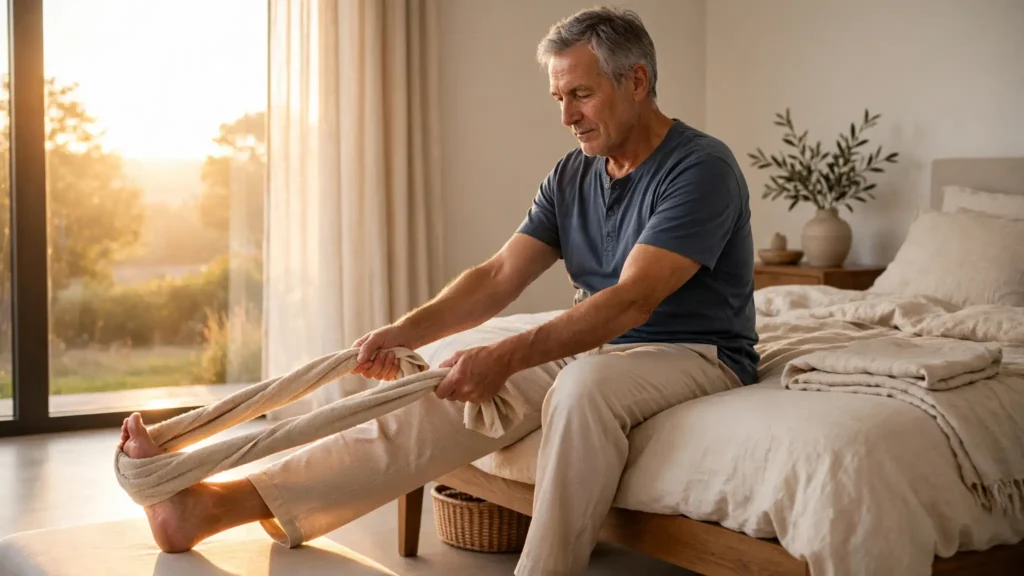
Loop a towel or resistance band around the ball of your foot while seated, leg extended, and gently pull toward you until you feel a stretch through the arch and calf. Hold for 20–30 seconds, repeat 3 times per foot. Doing this before your first step out of bed reduces that initial sharp pain significantly.
2. Frozen Bottle Roll Under the Desk
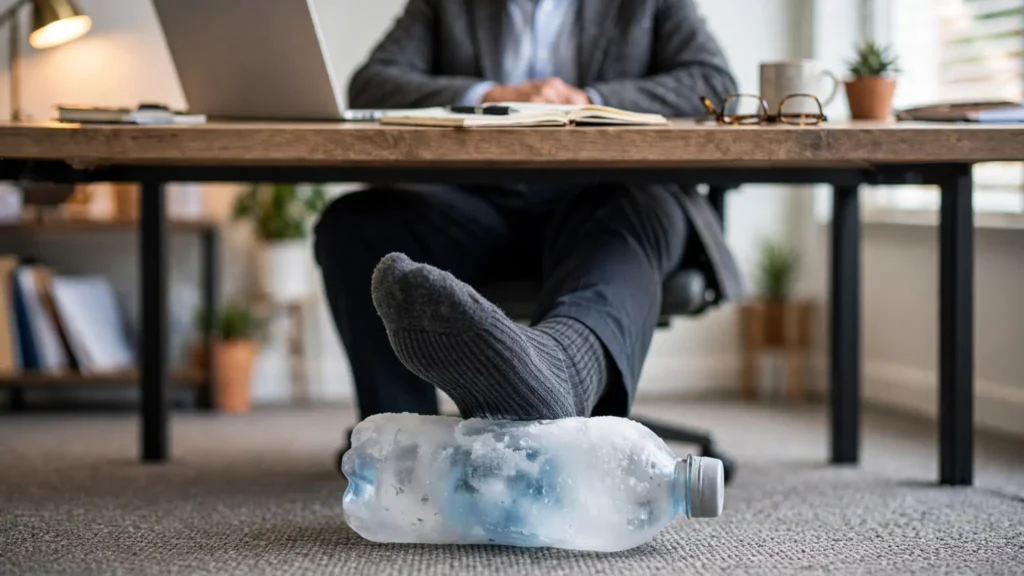
Keep a frozen water bottle under your desk and roll it under the arch of your foot for 5–10 minutes. The cold plus rolling combination reduces inflammation while gently massaging the fascia — it’s the single move Naveed said made the biggest difference by mid-afternoon.
3. Toe Extension and Point Stretch
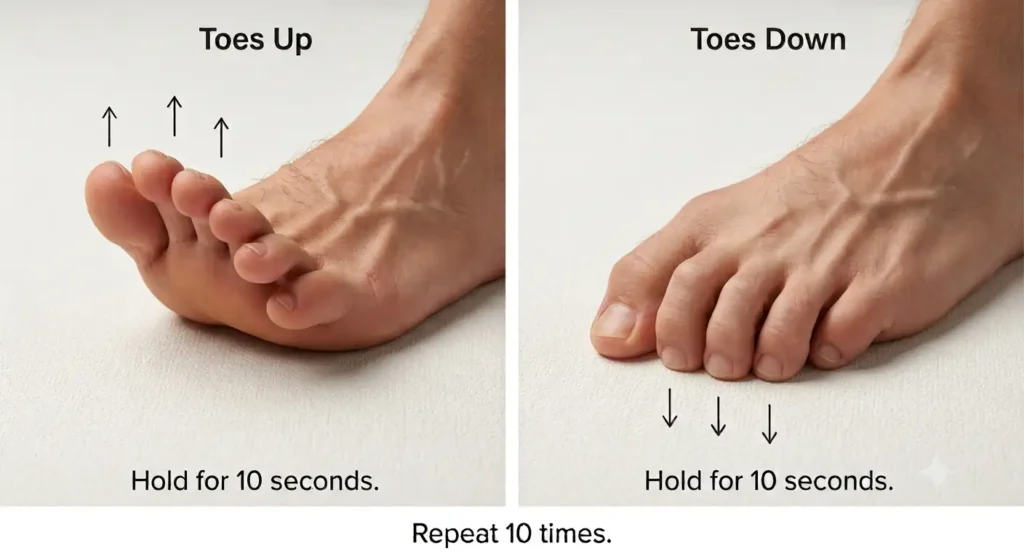
Point your toes toward your nose, hold for 10 seconds, then point them away, hold for 10 seconds. Repeat 10 times. This directly mobilises the fascia and surrounding tendons without needing to stand up at all.
4. Seated Calf Raises
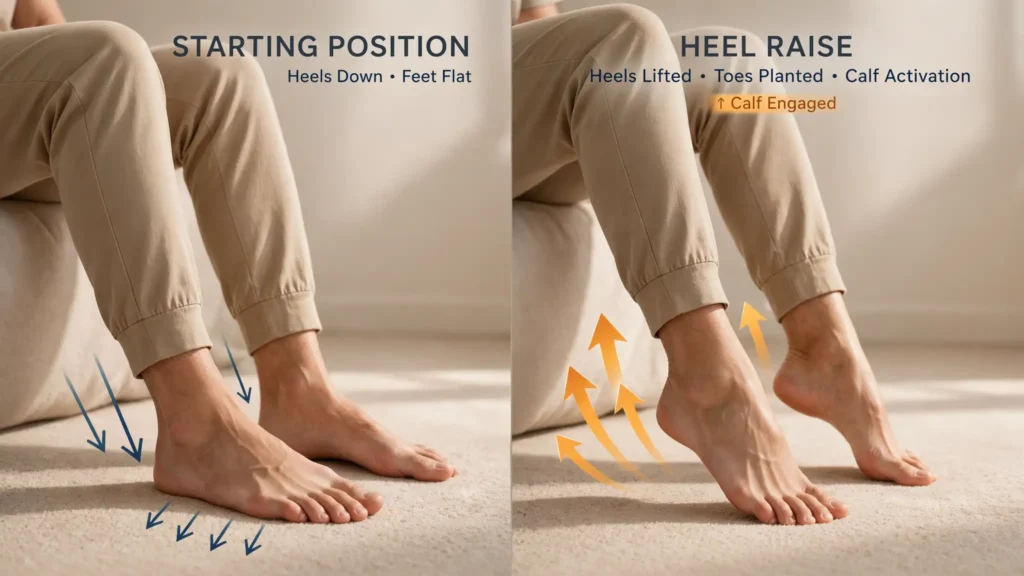
Feet flat on the floor, raise your heels off the ground and hold for 2–3 seconds before lowering slowly. Do 15 reps. The calf and plantar fascia are directly connected, so tight calves are one of the most overlooked contributors to heel pain.
5. Ankle Circles Between Meetings
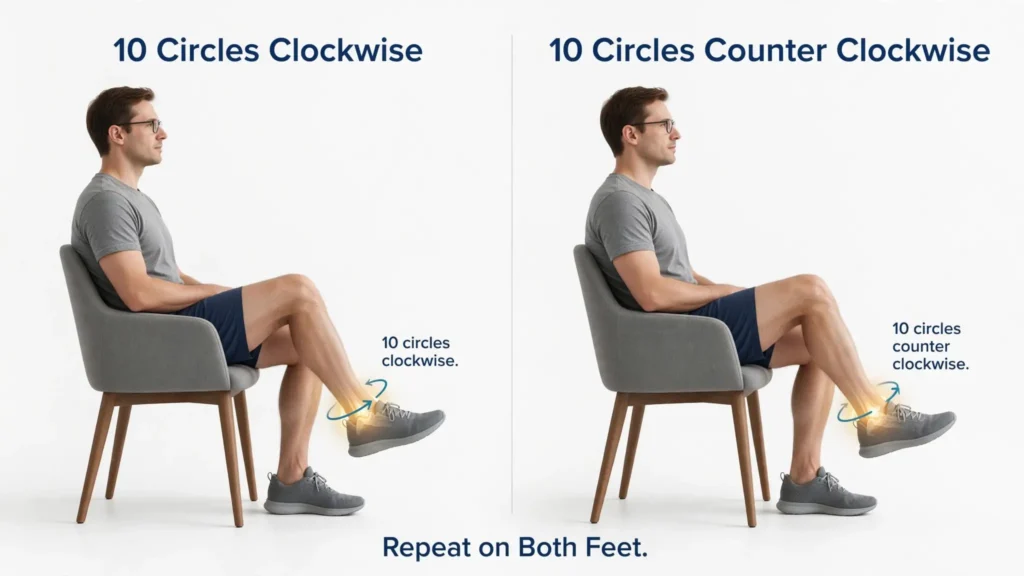
Lift one foot slightly off the floor and rotate the ankle slowly, 10 circles each direction, both feet. It sounds too simple to matter, but it keeps circulation moving during long stretches of stillness — exactly the pattern that makes plantar fasciitis worse.
“The biggest shift wasn’t any single stretch — it was doing something small every single hour instead of one long session once a day. Consistency did more than intensity ever did.”
Quick Reference: The Routine at a Glance
| Exercise | Duration | Best Time |
| Seated towel stretch | 1–2 min | Before standing up |
| Frozen bottle roll | 5–10 min | Mid-morning |
| Toe extension/point | 2 min | Any seated break |
| Seated calf raises | 2 min | Every 60–90 min |
| Ankle circles | 1 min | Between calls |
Building It Into an 8-Hour Workday Without Losing Focus
The 60–90 Minute Reset Rule
Setting a quiet timer for every 60–90 minutes was the change that made this routine stick. It’s a short enough gap that it doesn’t feel disruptive, but frequent enough to stop the fascia from fully tightening up between movements.
In practice, that looks like this: the timer goes off mid-email, Naveed does 15 seated calf raises without breaking eye contact with the screen, and moves on. It’s not a wellness ritual, and it doesn’t need to be. The whole point is that it’s small enough to survive a genuinely busy day rather than being one more thing that gets abandoned by Wednesday.
Stretches for Sitting vs. Standing Moments
Save the towel stretch and bottle roll for moments you’re already seated and focused. Save calf raises and ankle circles for the seconds you’re standing anyway — walking to get water, waiting for a printer, or stepping away for a call.
What’s Worth Keeping in a Desk Drawer
A small resistance band, a spare frozen bottle, and supportive indoor shoes with proper arch support cover almost everything. Posture matters here too — the same slouching that puts unnecessary strain through the spine and lower body also shifts extra pressure down through the feet over a full working day.
Mistakes We Made Early On
None of this went smoothly from day one. A few habits actively slowed things down before we figured out what was going wrong, and most of them are easy to fall into without realising it.
Overdoing It in Week One
Naveed’s first instinct was to do every stretch, every hour, at full intensity. Within days, the area felt more irritated, not less. Gradual, consistent movement outperformed an aggressive routine almost every time.
Ignoring Footwear Under the Desk
Slippers and unsupportive indoor shoes undid a lot of the progress from the exercises themselves. It’s easy to assume footwear doesn’t matter much once you’re sitting down, but the moment you stand up — for the kettle, a meeting room, or the walk to the car park — unsupportive shoes put the fascia straight back under strain. Switching to shoes with real arch support, even for time spent mostly indoors, made a noticeable difference within a couple of weeks.
Skipping the Calf Connection
It’s tempting to focus only on the heel and ignore the calf entirely. But because the two are structurally linked, tight calves quietly worsen fascia strain even when every foot-specific stretch is done correctly. This is also where general activity level matters — something I explored in more depth around why activity type matters more than activity alone for joint-related pain, which applies just as much to foot and calf issues as it does to joints.
Doing It Only When the Pain Was Already Bad
The routine worked best as a preventive habit, done on a schedule regardless of how the foot felt that day. Waiting until the pain flared up and only stretching then meant starting from a worse position every single time, which made the whole process feel far less effective than it actually was.
When Desk Exercises Aren’t Enough
Desk exercises help manage day-to-day discomfort, but they’re not a substitute for a proper diagnosis. It’s worth speaking to a GP or podiatrist if any of the following apply:
- Pain that keeps worsening despite weeks of consistent stretching
- Noticeable swelling that doesn’t reduce with rest or ice
- Numbness, tingling, or pain spreading beyond the heel
- Pain severe enough to change how you walk
“The point where Naveed finally booked a podiatrist appointment wasn’t when the pain was worst — it was when he realised he’d quietly changed the way he walked to avoid it. That’s usually the real signal to get it checked properly.”
What Changed After a Few Consistent Weeks
By week three, Naveed’s morning pain had gone from a sharp stab to a mild ache that faded within minutes. My own preventive routine, done as a colleague sitting through the same long days, kept any early stiffness from building up in the first place.
Neither of us treated this as a cure. It’s a management routine — simple, low-effort, and realistic enough that it actually gets done during a real working day, which is the part most generic stretching guides miss entirely.
The bigger shift, honestly, was in how little Naveed thought about his foot by the end of the day. In the first week, it was constantly on his mind — every step to the printer, every time he stood up from a long call. By week four, it had faded into the background, which is a fairly ordinary but genuinely satisfying outcome for something that started out feeling fairly disruptive.
FAQs
Can plantar fasciitis be managed with desk exercises alone?
For mild to moderate cases, consistent desk exercises can meaningfully reduce daily discomfort. Severe or worsening pain still needs a professional diagnosis.
How often should I do plantar fasciitis stretches at my desk?
Aim for a short stretch every 60–90 minutes, plus one longer session first thing in the morning before standing up.
What is the fastest desk exercise for plantar fasciitis heel pain?
The frozen bottle roll gives the quickest relief, combining cold therapy with gentle massage in under five minutes.
Can sitting all day make plantar fasciitis worse?
Yes. Prolonged sitting lets the fascia tighten, which increases pain when you first stand up and start walking again.
Do I need special equipment for desk-based plantar fasciitis exercises?
No. A towel, a frozen water bottle, and a chair are enough to do the full routine.
Final Thoughts
Not going to the gym for any of them, having a physio appointment every week, or hours you don’t have. A few small, consistent movements around a typical desk job really made a difference for the person I sit next to every day — and if heel pain has become part of your routine, it’s worth trying.
If there’s one thing you can learn from it, it’s a matter of time, not a single stretch: less and often, spread throughout the workday, better than one long session at a time. It was this part that turned a routine that we used to forget over and over again into a habit that really became a habit.
Desk-related pain rarely stops at one spot, either. If it’s a shooting pain down the leg rather than heel pain, the same hourly-movement approach applies — I’ve broken that down separately in desk exercises for sciatica pain. And if it’s your knees that ache by mid-afternoon instead, desk exercises for knee pain works on exactly the same logic.
This article is for general information only and is not a substitute for professional medical advice. Please consult a doctor or podiatrist for persistent or worsening foot pain.

1 thought on “Desk Exercises for Plantar Fasciitis I Actually Tried”