THE SIMPLE RULE
Peaches can be refrigerated, but only once they’re fully ripe — refrigerate an unripe one and you permanently damage its texture through a process called chilling injury. I learned this the expensive way after ruining three separate batches of farmer’s market peaches, and once I understood why, I haven’t wasted a single peach since.
Introduction
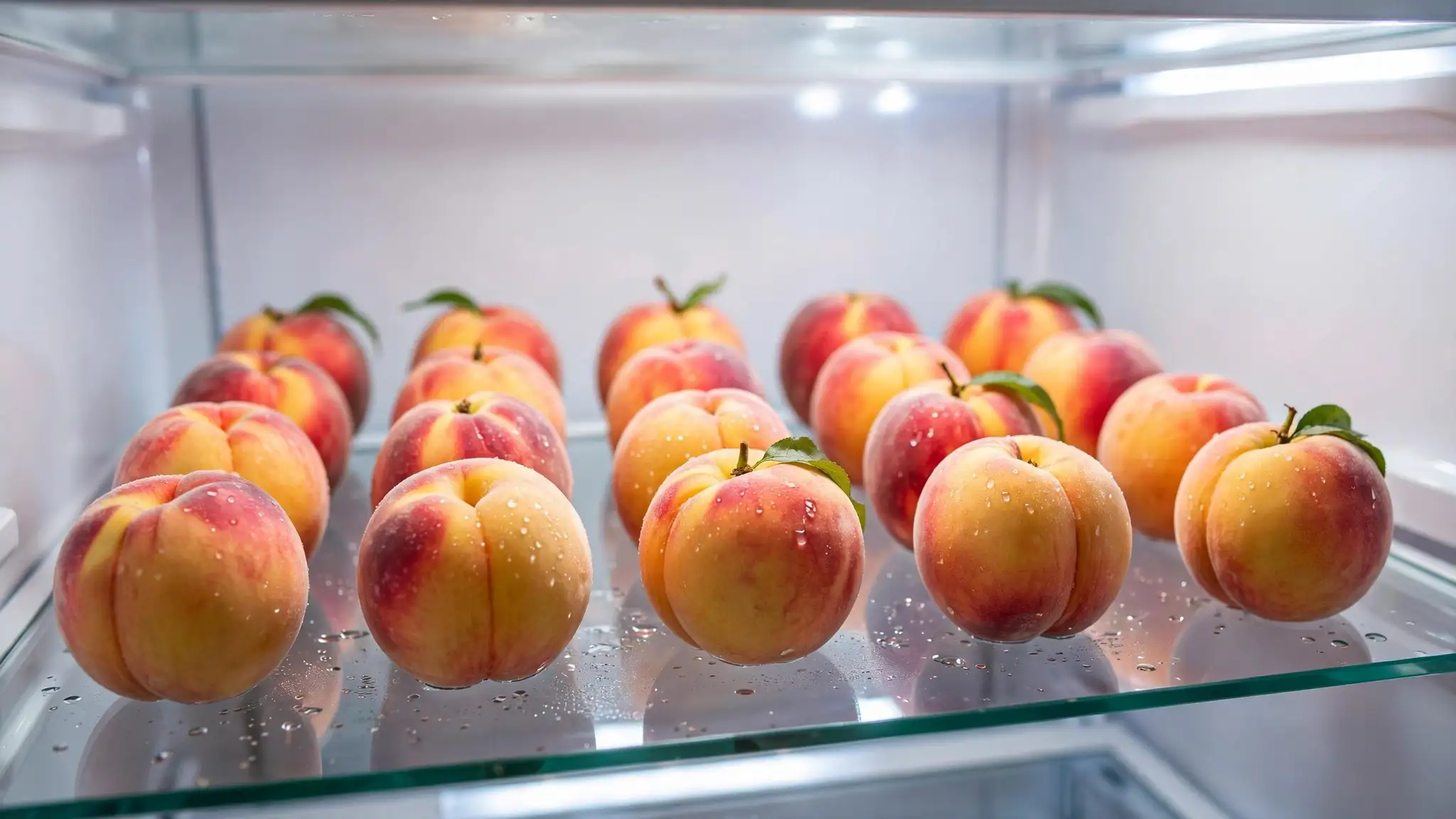
A few summers ago, I came home from the farmers’ market and had the most beautiful peach bag ever. Deep orange blush, the vivid floral scent that reached me even across the paper bag. I was really proud of myself for buying real seasonal fruit instead of the usual supermarket standby. I put them straight in the crisper drawer, because that’s what is done with fruits, and told myself that I would like them in the next few days. Three days later, I opened one and really thought maybe I’d been sold something bad. The texture was grainy and almost dry. The taste was smooth, barely sweet. I was standing in my kitchen, believing that I had wasted my money on bad peaches. After a few more bad batches I really looked at Can Peaches Be Refrigerated, and the answer turned out to be more specific than I expected. If you’ve ever wondered can peaches be refrigerated and you pulled out a disappointing, mealy peach as the answer, this is exactly for you.
Table of Contents
The Mistake That Cost Me a Bag of Farmer’s Market Peaches
My assumption had always been straightforward: fruit belongs in the fridge. That’s what I grew up watching my family do. Grapes, strawberries, leftover melon, all went straight into the crisper. So when I bought peaches, the same reflex kicked in automatically. They looked firm and beautiful. The fridge felt like the responsible choice.
What I didn’t understand is that a firm peach is almost always an unripe peach. Supermarkets and market stalls sell peaches picked before full ripeness, because they need to be firm enough to survive transport without bruising. The fruit isn’t finished developing yet, and it still has days of ripening ahead. Putting it straight into a cold fridge the moment you get home isn’t a pause on that process. It’s damage.
That was my mistake, three times over, before I finally understood what was going wrong.
Can Peaches Be Refrigerated? The Science That Changed How I Think About Fruit
Peaches Are Climacteric Fruits — And That Changes Everything
The first thing to understand is that peaches are climacteric fruits, a category that also includes bananas, avocados, mangoes, and pears. Climacteric fruits continue to ripen after they’re picked, driven by a plant hormone called ethylene gas. As the fruit produces ethylene, the flesh softens, natural sugars develop, cell walls break down gradually, and the aroma compounds that create a ripe peach’s distinctive fragrance are released.
The critical detail is that all of this requires warmth. Ethylene production slows dramatically in cold conditions. Put an unripe peach in a refrigerator and you suppress the very process that was supposed to turn it into something worth eating. The fruit sits there, cold and chemically stalled, until the cell structure begins to degrade in ways it was never meant to.
What “Chilling Injury” Actually Does to a Peach
There’s a specific, documented phenomenon that explains every bad peach I’ve ever had. It’s called chilling injury, a well-established condition in stone fruits that occurs when they’re exposed to cold before they’ve finished ripening.
Chilling injury disrupts the cell membrane structure of the flesh and halts the enzymatic activity that drives sugar development and texture formation. The result is a peach that breaks down abnormally, producing the mealy, dry, grainy texture I’d been blaming on the market, the variety, or bad luck. The cold was the culprit every time.
WHY YOUR FRIDGE RUINED THAT PEACH
When you refrigerate an unripe peach, you aren’t pausing its development, you’re permanently damaging its cell structure. The cold disrupts the enzymatic processes that build sweetness and juicy texture before the fruit has finished developing them. Once chilling injury occurs, it cannot be undone. That mealy, flavourless peach wasn’t a bad peach — it was a good peach stored at the wrong time.
The Simple Rule That Governs Everything
Once I understood chilling injury, the rule became completely obvious, and I’ve never forgotten it since. An unripe peach, firm with little or no fragrance, should never go in the fridge. Leave it on the counter at room temperature, stem-side down, until ripe, which usually takes one to three days depending on how firm it was at purchase. A ripe peach, one that gives gently when pressed and is fragrant from a distance, should go in the fridge immediately if you aren’t eating it that day, where it will keep for three to five days in the crisper drawer. And always, remove it from the fridge twenty to thirty minutes before eating, since cold dulls the flavour and aroma of even a perfectly ripe peach.
That’s genuinely the whole framework. Three rules, all of them simple once you understand why chilling injury happens and what ethylene gas does.
How to Know Exactly When a Peach Is Ready for the Fridge

This used to feel mysterious to me. I could never tell by looking whether a peach was ready. Now I check three things, and I’m right almost every time.
The Squeeze Test — Your Most Reliable Signal
Press the flesh gently near the stem with your thumb pad, not a fingertip, which can bruise the fruit. Completely firm means it’s not ready. Slight give that springs back means one more day. Gentle give that doesn’t fully spring back means it’s ripe. Soft or mushy means overripe, best used in cooking today.
The squeeze test is the most reliable single indicator of peach ripeness because it directly measures the cell softening that comes with proper ethylene-driven development. No guesswork, no colour-matching, just a gentle press.
The Smell Test — Your Second Confirmation
A ripe peach has a sweet, floral fragrance you can detect without pressing your nose to the skin. Hold it a few inches from your face — if you can smell it clearly, it’s ripe or close. If you have to press your nose right against the skin, it isn’t ready.
I use the smell test as confirmation after the squeeze test. If both say ripe, I’m confident. If they disagree, I leave it another half day and check again.
The Colour Guide — Helpful But Not Definitive
Deep golden-yellow flesh around the base and stem typically signals ripeness in most varieties. A green tinge near the stem almost always means underripe.
The caveat is that colour alone is unreliable, because peach varieties vary enormously. White-fleshed peaches and some heirloom yellow varieties can be fully ripe while appearing quite pale. The red blush on the skin tells you about sun exposure, not ripeness. Always treat colour as supporting information and let the squeeze and smell tests make the final call.
How to Speed Up Ripening When You Can’t Wait
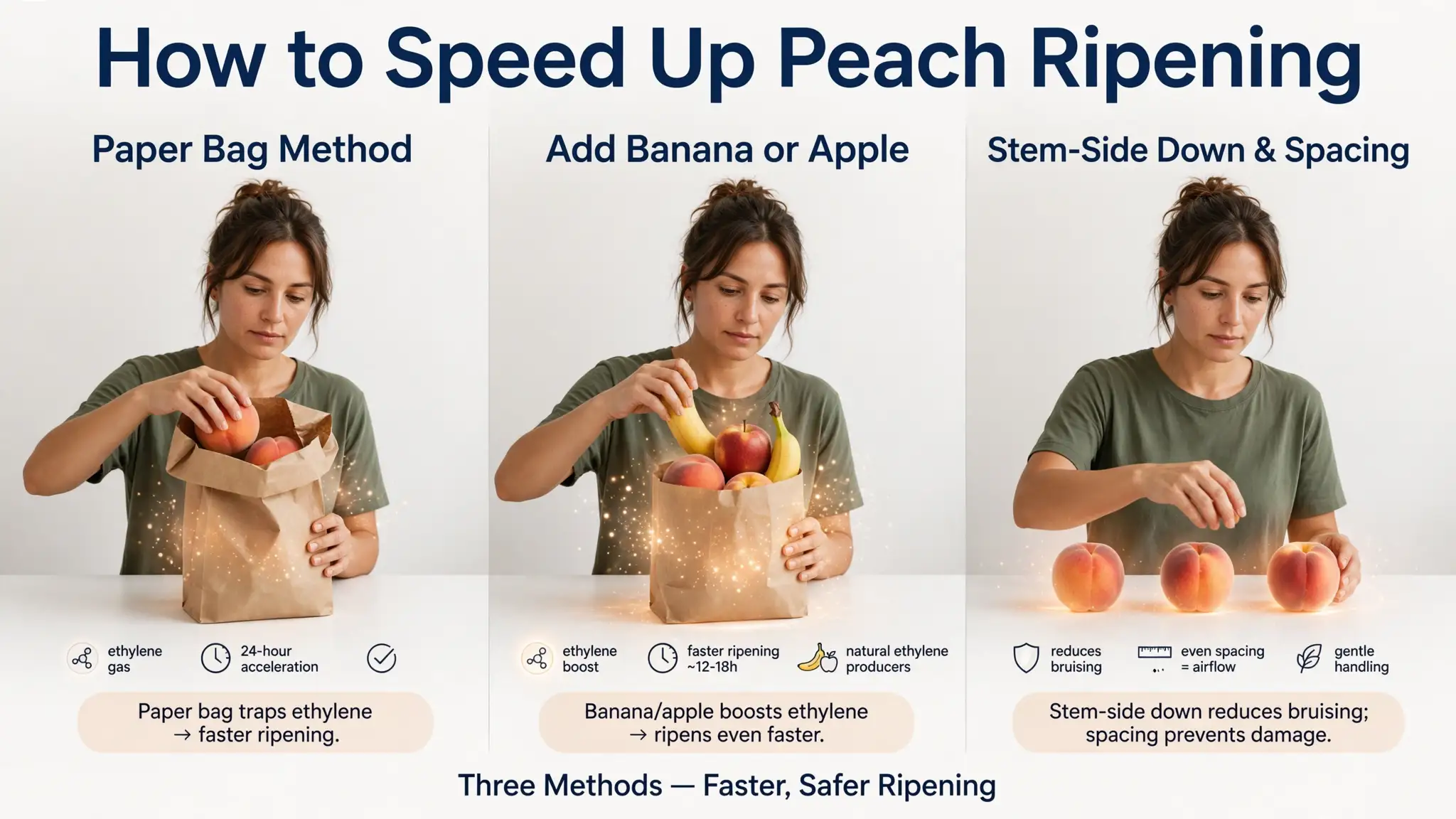
Some evenings I buy peaches at the market and want them ripe by tomorrow. This is entirely achievable without any tricks involving heat or chemicals. Here’s what I actually do.
The Paper Bag Method
Place firm peaches in a brown paper bag and fold the top loosely closed. Leave on the counter at room temperature. The bag traps the ethylene gas the peaches are naturally producing, creating a concentrated ripening environment. Most peaches ripen one full day faster using this method compared to sitting on an open counter.
Check every 12 hours by opening the bag and doing the squeeze test. Once you feel that gentle give, they’re ready.
Add a Banana or Apple to the Bag
Bananas and apples are among the highest ethylene producers in the fruit world. Adding one to the paper bag with your peaches creates a significantly higher concentration of ethylene in the enclosed space, accelerating ripening by another half day or more. This is genuinely useful when you need ripe peaches for a specific recipe tomorrow rather than in two days. I use this trick regularly.
Store Stem-Side Down and Give Them Space
Always rest peaches stem-side down on a flat surface, the orientation they grew in naturally and the position that minimises pressure bruising. If you have multiple peaches at different stages of ripeness, keep them with space between them, since peaches touching each other during ripening can bruise at the contact point.
What About Sliced or Cut Peaches? The Rules Are Different
Once a peach is sliced, every guideline above goes out the window. Cut fruit is a completely different situation.
Sliced peach flesh is exposed to air and oxidises quickly, turning brown within minutes through enzymatic reactions. Always refrigerate sliced peaches immediately in a sealed container. Toss immediately with a squeeze of fresh lemon juice, since the ascorbic acid slows oxidation without affecting flavour. Store in an airtight container, not loosely wrapped, which prevents moisture loss and reduces browning. Eat within three to five days for the best texture and flavour. For longer storage, freeze them: arrange slices in a single layer on a baking sheet, freeze until solid, then transfer to a sealed freezer bag, where they’ll last two to three months.
Whole fruit and cut fruit have completely separate storage logic. Once you’ve sliced a ripe peach, the fridge is always the right answer. It’s only the unripe, whole fruit that the fridge damages.
How Long Do Peaches Last? A Quick Reference
Here’s the timeline I work from now, and it’s meant I genuinely don’t waste peaches anymore.
| Storage Scenario | How Long It Lasts |
| Unripe peach on counter | 1 to 3 days to reach ripeness |
| Ripe peach on counter | 1 to 2 days before overripe |
| Ripe peach in fridge (crisper) | 3 to 5 days, up to a week for firm varieties |
| Sliced peach, airtight + lemon juice, fridge | 3 to 5 days |
| Flash-frozen peach slices, sealed bag | 2 to 3 months |
| Peach slices frozen in light syrup | Up to 12 months |
The pattern to notice: the fridge dramatically extends the life of a ripe peach, and it permanently ruins an unripe one. That single distinction, timed around ripeness, is the whole strategy.
What to Do With Peaches That Are Going Overripe
Even with the best storage routine, sometimes life gets in the way. You planned to eat them on Friday and it’s now Sunday. They’re very soft, the skin has a few brown spots, the fragrance is almost fermented. Don’t throw them away.
Overripe peaches are some of the best fruit for cooking precisely because they’re so intensely sweet. I use them in smoothies, just peel, remove the stone, and blend. I stir them into overnight oats or a warm porridge with a little honey. And if I have a few at once, I cook them down briefly in a pan with a splash of water and a sprinkle of cinnamon, then spoon the result over Greek yoghurt. It takes four minutes and tastes like something I planned.
Where This Fits Into How I Eat Peaches Generally
Getting the storage right changed more than just how my peaches tasted, it changed how consistently I actually ate them, rather than throwing half a bag away every week. Peaches sit well alongside other nutritious fruit worth keeping in regular rotation, which is something I’ve written about separately if you’re looking to build out a broader fruit habit.
Storage was only one piece of the puzzle for me, though. Once I sorted out when to refrigerate, I found myself asking other questions I’d never bothered with before, like whether the skin was worth eating rather than peeling, which turned out to have a surprisingly clear answer. I also looked into whether peach can cause digestive issues in some people, since overripe or fermented fruit was clearly part of my own earlier problem, and separately into whether eating peach at night makes any real difference to sleep or digestion, since that’s a question I get asked almost as often as the refrigeration one.
My Final Rule for Buying and Storing Peaches
Now I buy peaches differently. At the market, I look for fruits in different stages: one or two that are already fragrant and a little soft, are for today and tomorrow. Something that is tough but is starting to show colour, they will put it in a paper bag tonight and be ready the day after tomorrow. And if I want to stock up on peak season fruits, I buy a big batch when everything is fully ripe, then freeze it that afternoon.
The fridge is the last step, never the first. I let the ethylene gas do its thing at room temperature until the peaches become what they always used to be, sweet, juicy, aromatic, with that special tenderness that squeezes a little under your teeth and then releases the juice. Then, and only then, does it go into the crisper drawer.
The rule is not complicated. Immature: Counter. Cooked: Refrigerated. Return to room temperature for 30 minutes before eating. That’s all there is to it, and that’s the difference between a peach that tastes like a summer reminder and one that looks like a very light imitation of it.
Disclaimer: This content is for general informational purposes only and should not be taken as professional food safety or medical advice. While refrigeration can help extend the freshness of ripe peaches, individual results may vary depending on storage conditions. Always follow local food safety guidelines and consult a qualified professional if you have specific health concerns or dietary restrictions.
Frequently Asked Questions
Can peaches be refrigerated?
Yes, but only once they’re fully ripe — refrigerating an unripe peach causes chilling injury, which permanently damages its texture and flavour.
Why do my refrigerated peaches taste mealy and dry?
Mealy peaches have almost always been refrigerated before fully ripening, causing chilling injury that damages the cell structure and cannot be reversed.
How long do peaches last in the fridge?
Ripe peaches last three to five days in the refrigerator’s crisper drawer, and should sit at room temperature for twenty to thirty minutes before eating.
How do I ripen peaches quickly at home?
Place unripe peaches in a brown paper bag with a ripe banana at room temperature; most peaches ripen within 18 to 24 hours using this method.
Can you freeze peaches?
Yes — slice ripe peaches, flash freeze on a baking sheet, then transfer to a sealed freezer bag, where they keep for two to three months.

4 thoughts on “Can Peaches Be Refrigerated?”
Comments are closed.