The Short Version:
My friend Sana’s fingers turned white and blue in a supermarket aisle, and it sent us both looking into what actually helps poor blood circulation beyond thermal gloves and warmer socks. A blood test found the real answer: mildly low vitamin D and borderline low B12. Five nutrients — B12, D, E, C, and magnesium — made a measurable difference once she treated it as a specific, identifiable gap rather than something to simply tolerate.
Introduction
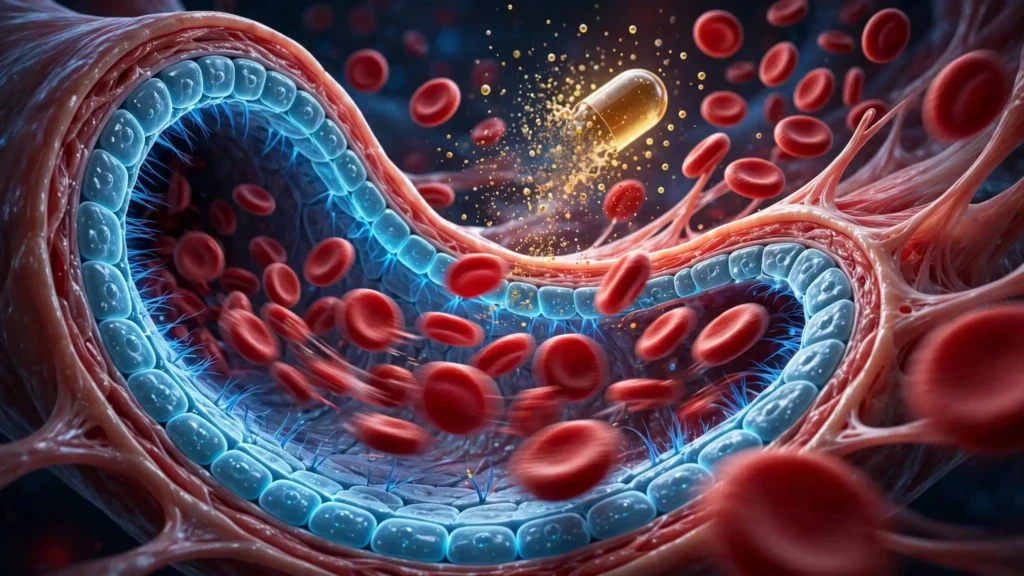
My friend Sana was putting her hand in the freezer of the supermarket last February when a stranger touched her arm and asked if she was okay. Her fingers had turned white, with a faint blue glow on her head, as if she had stopped bleeding. She hadn’t even gone out — she had been inside the shop for less than ten minutes.
“I really thought there was something serious,” she said later, still a little worried. That was the moment that made her, and then I joined her, to stop taking it as “just cold hands” and start researching poor blood circulation— what exactly causes it, and what’s really helpful.
What we found surprised both of us. I always thought that a blood disorder is one of those things that some people are unlucky to do, for no apparent reason. It turned out that often there is a specific, identifiable reason behind it, and in Sana’s case, the answer came from a blood test that she had almost stopped herself from.
I should be frank that none of us are doctors. What we found next is when Sana actually got the right blood test, instead of trying to diagnose herself from a checklist of symptoms, which is exactly the same trap that health content quietly encourages people to get trapped in.
Table of Contents
What Poor Blood Circulation Actually Feels Like
Poor circulation isn’t always as dramatic as that supermarket moment. For Sana, it mostly showed up as a quiet, repetitive pattern: cold hands and feet even indoors, a tingling, prickly sensation after sitting too long, and a low-grade afternoon fatigue she’d been blaming on poor sleep for months.
The white-and-blue fingers were the most obvious sign, but looking back, smaller signs had been there for a while. She mentioned standing at a bus stop in winter and feeling her toes go numb within minutes, long after everyone else around her seemed perfectly fine, something she’d simply accepted as normal for her.
My own dad, Iqbal, has long complained of heavy, achy legs by the end of a working day — a completely different presentation of what turned out to be an overlapping issue. Poor circulation clearly doesn’t look identical for everyone, even when some of the underlying causes overlap. Sana also noticed it took her longer than most people to warm back up after coming in from the cold, sometimes twenty minutes or more with her hands wrapped around a hot mug before feeling normal again. Hearing her describe that alongside Iqbal’s evening leg aches made me realise how easily two genuinely different symptoms can share a similar root cause without either person ever connecting the two.
Why I Looked at Vitamins, Not Just Lifestyle Changes
Sana’s first instinct was lifestyle. She started walking more on her lunch breaks, switched to warmer gloves, and cut back on caffeine in case it was constricting her blood vessels. Around this time, I pointed her toward some of the research I’d already covered on staying active to support circulation, even though it had originally been written with an older audience in mind — the underlying principle about movement and blood flow applies regardless of age.
It helped a little, but the cold hands and occasional pins-and-needles feeling kept returning, particularly through the worst of winter. “If exercise alone was going to fix this,” she said, “I figured it would’ve happened in a few weeks, not stayed exactly the same for months.” Thermal gloves and hand warmers helped marginally in the moment but never touched the underlying pattern, which in hindsight should have told both of us this wasn’t purely a lifestyle problem.
Eventually Sana mentioned it to her GP during a routine check-up, mostly as an afterthought. The GP asked about her diet and sun exposure, then ordered a blood test. The results showed mildly low vitamin D and borderline low B12 — something her GP explained is genuinely common in the UK, particularly for people with darker skin tones who naturally produce less vitamin D from sunlight even with reasonable time spent outdoors. That conversation reframed everything. This wasn’t just “bad circulation” as a vague catch-all. It was a specific, identifiable gap that diet and supplementation could actually help close. “I’d genuinely never have guessed it was something so ordinary,” Sana told me afterwards, still slightly baffled that a routine blood test had explained something she’d quietly lived with for years.
The 5 Vitamins and Nutrients That Helped Sana’s Circulation
1. Vitamin B12
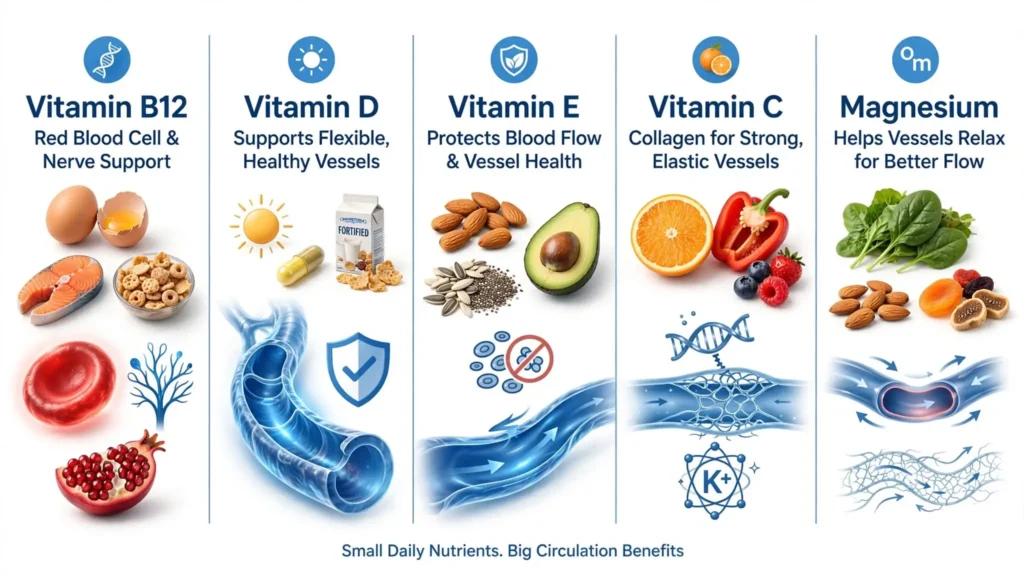
B12 plays a direct role in red blood cell production and nerve function, both essential for healthy circulation and for the tingling, nerve-related symptoms Sana had been experiencing. Once her GP confirmed her levels were borderline low, she started a B12 supplement alongside more eggs, fish, and fortified cereals. Healthy red blood cell function is also why she started paying closer attention to pomegranate’s role in supporting healthy blood cells, which turned out to be a useful addition alongside the supplement.
2. Vitamin D
Vitamin D supports vascular health and helps keep blood vessels flexible rather than stiff. Given her blood test results, this became the most important piece for Sana personally. She started a daily vitamin D supplement, specifically recommended by her GP given how common deficiency is among UK residents with her skin tone, especially through autumn and winter. She now treats it as a non-negotiable part of her morning routine, alongside breakfast rather than as an afterthought.
3. Vitamin E
Vitamin E helps protect blood vessels and supports healthy blood flow by preventing platelets from clumping together unnecessarily. Sana added more nuts and seeds to her diet rather than a separate supplement, since meaningful amounts are fairly easy to get through food alone. Around the same time, she also started reading about pomegranate’s effect on blood vessel health, since the two nutrients seemed to support similar goals from different angles.
4. Vitamin C
Vitamin C supports collagen production, which keeps blood vessel walls strong and elastic. Sana leaned into citrus fruit and peppers at meals rather than supplementing directly, since she was already getting a reasonable amount once she actually paid attention. Alongside this, understanding potassium’s role in blood pressure regulation helped her see how several everyday nutrients work together rather than in isolation.
5. Magnesium
Magnesium helps blood vessels relax, which supports smoother blood flow throughout the body. Sana started eating more leafy greens and a small handful of almonds most days, which made it easy to increase intake without an additional pill. On busier days, reaching for dried fruits that support healthy blood flow became a convenient way to tick several of these nutrients off at once without overthinking each meal.
Quick Reference — The 5 Nutrients: Vitamin B12 for red blood cells and nerve function. Vitamin D for flexible, healthy blood vessels. Vitamin E to prevent unnecessary platelet clumping. Vitamin C for strong, elastic vessel walls. Magnesium to help blood vessels relax and blood flow more smoothly.
Sana’s Sources: Food First, Supplement Second
| Nutrient | Sana’s Main Source | Supplement Used? |
| Vitamin B12 | Eggs, fish, fortified cereals | Yes, GP-recommended |
| Vitamin D | Sunlight, oily fish | Yes, daily |
| Vitamin E | Nuts and seeds | No, food only |
| Vitamin C | Citrus fruit, peppers | No, food only |
| Magnesium | Leafy greens, almonds | No, food only |
What Changed After Sana Started Taking Them Seriously
I want to be realistic here. Nothing happened overnight, and Sana didn’t wake up one morning with perfectly warm hands. But within about two months of consistent supplementation, alongside the lifestyle changes she’d already made, the white-and-blue-finger episodes became noticeably rarer. Her hands still get cold faster than most people’s in winter, but the prickling, numb sensation that used to follow has mostly disappeared.
The research lines up with what she experienced. Vitamin D deficiency has been linked to stiffer arteries and reduced vascular function, while B12 deficiency is well documented as a cause of nerve-related symptoms like tingling and numbness. Correcting an actual, confirmed deficiency, rather than guessing, made a measurable difference for her. Her afternoon energy also improved slightly, something neither of us expected going into this — it makes sense in retrospect, since both B12 and vitamin D deficiencies are independently linked to fatigue, separate from their effects on circulation specifically.
What stood out most to me, watching this play out in a friend rather than reading about it in a study, is how long she’d treated this as something to simply tolerate rather than investigate. A single blood test changed the entire direction of how she approached it, which makes me wonder how many other people are quietly living with the same fixable gap, assuming their cold hands are just a personality trait rather than something worth actually checking.
What Vitamins Cannot Do
This is the part I think gets glossed over far too often in wellness content. Vitamins can help with poor circulation linked to a genuine deficiency or general vascular support. They cannot treat or reverse conditions like peripheral artery disease, diabetes-related circulation problems, or Raynaud’s phenomenon.
Important: if you experience sudden numbness on one side of your body, chest pain, leg pain that worsens with walking and eases with rest, or skin that turns unusually pale, blue, or cold without an obvious cause, these can be signs of a more serious circulatory or cardiovascular issue. Seek medical attention rather than reaching for a supplement first.
Nothing in this article is meant to replace that kind of medical evaluation. Sana’s experience involved a confirmed, mild deficiency identified by a doctor — not a guess made from a symptom checklist online. That distinction matters more than most supplement marketing would like people to notice.
How Sana Takes These Safely Now
These days, Sana’s approach is food-first, with supplements filling in the specific gaps her blood test actually identified, rather than taking a long list of vitamins on guesswork. She still takes vitamin D daily, particularly through the colder months, and gets her levels rechecked periodically rather than assuming the same dose works forever.
She also makes a point of getting outside during daylight hours whenever possible, even on cloudy days, since natural sunlight exposure remains one of the most effective ways to support vitamin D levels alongside supplementation. It’s a small, low-effort habit that costs nothing and stacks neatly on top of everything else. She’s also stopped buying random multivitamin blends that promise to cover everything at once — targeted supplementation, based on an actual blood test, has been far more useful to her than a generic one-size-fits-all capsule ever was.
Who Should Be Extra Careful With Circulation Supplements
A few groups should be particularly cautious before adding vitamins for circulation. People on blood-thinning medication should be careful with vitamin E and vitamin K, since both interact with how blood clots. Diabetics managing circulation-related symptoms should treat supplements as a complement to medical care, not a replacement.
Pregnant women and anyone with kidney conditions should also check with a doctor before starting any new supplement routine, since dosing needs can be quite different, and excess amounts of certain vitamins are processed differently when kidney function is already reduced. None of these groups need to avoid the topic altogether — it simply means the right move is a conversation with a GP or pharmacist first, rather than picking something up at random based on a friend’s recommendation or an online list like this one.
Conclusion
Watching Sana go through all of this took me into a real deep pit of research, blood tests, and trial and error, and I’m glad it happened. Identifying an original, verified deficiency, rather than inferring from random supplements, was what made a real difference for her. My father Iqbal’s sore legs are still on my list to be thoroughly researched, as I suspect that even this version of his overlapping picture has a specific, identifiable gap that remains to be explored.
If cold hands and twitchy fingers sound familiar to you, poor blood circulation is worth investigating properly, preferably from your GP’s opinion and an actual blood test, and not just in the supplement queue. Sana’s story didn’t end with a miraculous solution — it ended with a specific, boring, completely manageable answer, which was exactly what she needed in the end. Sometimes the least interesting explanation is also the most useful, and this was one of those occasions.
This article is for informational purposes only and does not constitute medical advice. Please consult your GP or a qualified healthcare professional before starting any new supplement, especially if you have an existing health condition.
Frequently Asked Questions
What vitamin deficiency causes poor blood circulation?
Low levels of vitamin B12, vitamin D, or iron are among the most common deficiencies linked to poor circulation and related symptoms like numbness and fatigue.
Can vitamin D improve blood circulation?
Yes — for people who are deficient, correcting vitamin D levels can support healthier blood vessel function and improved circulation over time.
Is vitamin B12 good for poor circulation?
Yes — B12 supports red blood cell production and nerve function, both important for healthy circulation, especially with a confirmed deficiency.
How long does it take for vitamins to improve circulation?
Most people notice gradual improvement over six to eight weeks of consistent supplementation, though this depends on the severity of any underlying deficiency.
When should I see a doctor about poor circulation?
See a doctor if you experience sudden numbness, persistent pain, skin colour changes, or symptoms that worsen with activity, as these can indicate a more serious underlying condition.
