Quick Summary: The diphtheria vaccine protects against a serious bacterial infection that can cause severe breathing problems and, in extreme cases, damage the heart. In the UK it’s never given on its own, but as part of combination vaccines given at set points from 8 weeks old right through to adult travel boosters.
The Question I Actually Asked at My Daughter’s 8-Week Jab Appointment
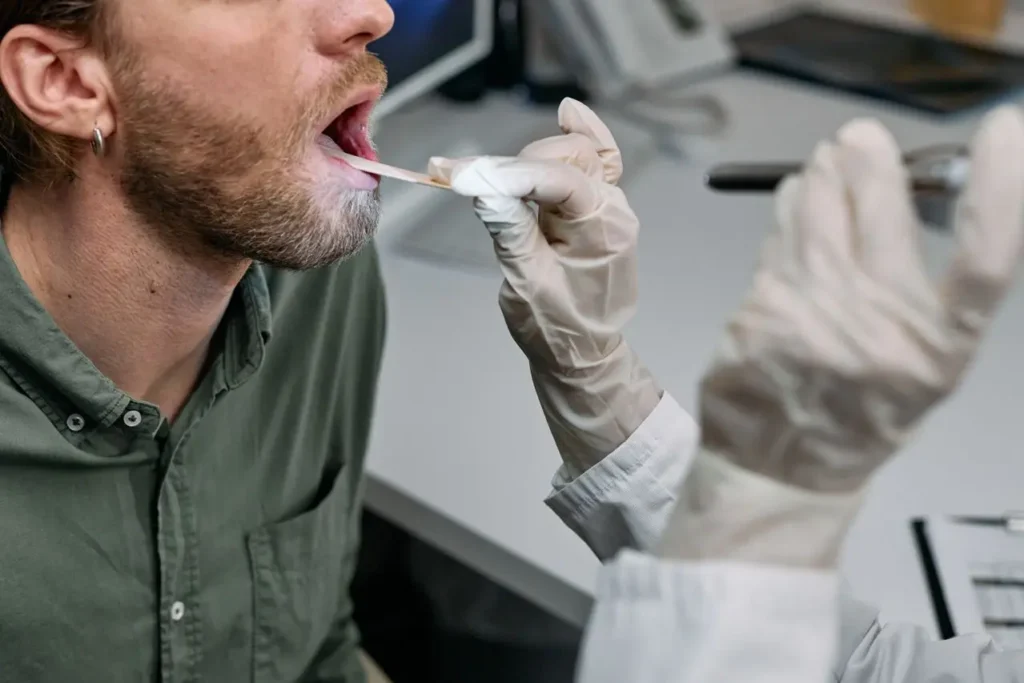
The health visitor was looking at the list of vaccines my daughter was about to administer, and almost casually said the word “diphtheria,” in addition to four or five other names that I had half-recognized from the papers I had received the night before. I shook my head, as I think most parents do, and then stopped and asked: What does it really protect against?
She answered me clearly and patiently, and it was enough for me to come home and try to understand what is the diphtheria vaccine used for, instead of nodding at the next appointment or searching without much interest at night and forgetting the details until morning.
This article is all I discovered, I’ve cross-referenced it with NHS guidelines, what is the diphtheria vaccine used for, and it’s written as if I want someone to explain it to me in that appointment room instead of at the kitchen table later.
Table of Contents
What Diphtheria Actually Is (And Why It’s Taken So Seriously)
How It Spreads
Diphtheria is a highly contagious bacterial infection, spread through coughs, sneezes, and close contact with an infected person, or by sharing items like cups or cutlery. It mainly affects the nose and throat, though it can also affect the skin, particularly in places with poorer hygiene conditions. Because it spreads so easily between unvaccinated people in close contact, maintaining high vaccination coverage across a community matters just as much as any individual’s own protection.
Why a “Sore Throat” Illness Can Become Life-Threatening
This was the part that genuinely surprised me. Diphtheria usually starts as something that sounds ordinary — a sore throat, difficulty swallowing, a husky voice, and a mild fever — but the bacteria release a toxin that can cause a thick grey membrane to form in the throat, leading to serious breathing difficulties. Swollen glands in the neck can also produce what’s sometimes described as a “bull neck” appearance. In severe cases, that same toxin can damage the heart and nervous system, and the infection can be fatal. It’s exactly this combination of an innocent-sounding start and a genuinely dangerous potential outcome that explains why it’s taken so seriously as part of the UK immunisation programme.
What the Diphtheria Vaccine Is Actually Used For
Preventing Infection, Not Just Reducing Symptoms
The diphtheria vaccine works by training the immune system to recognise and neutralise the diphtheria toxin before it can cause serious harm. It contains an inactivated form of the toxin, called a toxoid, which stimulates protective antibodies without causing the disease itself. This is genuinely preventive, not something given after infection to treat symptoms — by the time symptoms appear, the goal has always been that the immune system already knows how to respond effectively.
Why It’s Always Given in Combination, Not Alone
One thing that clarified a lot for me: there’s no longer a single stand-alone diphtheria vaccine in routine UK use. It’s always given as part of a combination vaccine alongside protection against tetanus, and usually whooping cough and polio too, which is why the health visitor rattled off several names at once during that appointment rather than just one. Combining several vaccines into a single injection also means fewer needles for a baby overall, which was a genuine relief to hear as a parent watching my daughter through each dose.
The diphtheria vaccine is used to prevent diphtheria infection by training the immune system to neutralise its toxin — and in the UK, it’s always delivered as part of a combination vaccine, never on its own.
How the Vaccine Actually Works in the Body
This was the part I found genuinely interesting once I started reading properly, rather than just accepting the appointment list at face value.
The diphtheria vaccine doesn’t contain live bacteria, so there’s no risk of catching diphtheria from the vaccine itself. Instead, it uses an inactivated version of the toxin the bacteria produce. When the immune system encounters this harmless version, it learns to produce antibodies that can recognise and neutralise the real toxin if it’s ever encountered later. This is why the initial course involves multiple doses spaced weeks apart — each dose strengthens and reinforces the immune response, rather than one single dose providing complete protection on its own.
It’s also why the booster doses years later matter just as much as the initial course. Immunity from inactivated vaccines like this one can gradually wane over time, which is exactly why the schedule includes reinforcement at pre-school age, in the teenage years, and again for adults in specific higher-risk situations, rather than assuming early childhood doses alone last a lifetime. Thinking of it as building and then periodically topping up a store of protection, rather than a single one-off event, made the whole schedule make far more sense to me.
What Happens If a Dose Is Missed or Delayed
Life happens, and this was a genuine worry of mine after my daughter caught a cold right before her 12-week appointment was originally due.
If a dose is missed or delayed, the general NHS guidance is that the schedule doesn’t need to restart from scratch — the next dose can usually simply be given as soon as possible, picking up where the course left off. A GP surgery or health visitor can advise on exact timing if there’s been a longer gap. In our case, we simply rebooked for the following week once she was well again, and the surgery didn’t treat it as anything unusual. It genuinely eased a worry I hadn’t expected to have, since I’d assumed a missed appointment might mean starting the whole course over again from the beginning.
Common Myths About the Diphtheria Vaccine
- Myth: diphtheria doesn’t exist anymore, so the vaccine isn’t necessary. Diphtheria is rare in the UK precisely because of sustained vaccination coverage, not because the bacteria has disappeared. Cases still occur, including some linked to travel and to specific higher-risk settings within the UK in recent years, which is part of why maintaining coverage across the whole population continues to matter.
- Myth: the vaccine can give you diphtheria. It can’t. The vaccine uses an inactivated toxoid, not live bacteria, so there’s no possibility of the vaccine itself causing the infection.
- Myth: one round of childhood vaccination lasts forever. Protection can wane over time, which is exactly why booster doses are built into the schedule at pre-school age, the teenage years, and for adults in specific situations like travel to higher-risk regions.
The UK Vaccination Schedule for Diphtheria
Once I understood what the vaccine does, the next question was when it’s actually given. Here’s the current NHS schedule, laid out simply.
| Age | Vaccine | Also Protects Against |
| 8, 12 & 16 weeks | 6-in-1 vaccine | Tetanus, whooping cough, polio, Hib, hepatitis B |
| Around 3 years 4 months | 4-in-1 pre-school booster | Tetanus, whooping cough, polio |
| 13–14 years (school year 9) | 3-in-1 teenage booster | Tetanus, polio |
| Adults / travellers | Booster (Td/IPV) | Tetanus, polio, if last dose was 10+ years ago |
The 6-in-1 Vaccine (8, 12, and 16 Weeks)
This was the vaccine my daughter was having that day. It’s given as three separate doses in early infancy and covers diphtheria alongside five other diseases in a single injection.
The 4-in-1 Pre-School Booster
Given at around three years and four months, this booster reinforces the protection built up from the initial course, ahead of starting school.
The 3-in-1 Teenage Booster
Given in school year 9, this final routine dose extends protection well into adulthood, alongside tetanus and polio.
Adult Boosters and Travel Considerations
Adults don’t routinely need further doses unless their last one was more than 10 years ago and they’re travelling somewhere diphtheria is more common, or are otherwise at higher risk. Regions with historically higher rates include parts of sub-Saharan Africa and other areas with lower routine vaccination coverage, though risk areas can change over time, so it’s always worth checking current travel health guidance rather than relying on old information. This is worth checking with a GP ahead of travel to certain regions, ideally several weeks before departure.
Common Questions I Had as a Parent
Is It Safe to Combine With Other Vaccines?
Yes. Combination vaccines like the 6-in-1 are specifically designed and tested to be given together safely, and doing so means fewer individual injections for a baby rather than more.
What Side Effects Should I Actually Expect?
Most side effects are mild and short-lived — some soreness, redness or swelling at the injection site, a slightly raised temperature, or general grizzliness for a day or so. My daughter was a little unsettled that evening and completely back to normal by the next morning, which the health visitor said was entirely typical. She also mentioned that infant paracetamol can be used if needed for discomfort or fever, following the dosing guidance on the packet or from a pharmacist. More serious reactions, such as a severe allergic reaction, are very rare, and anyone administering vaccines is trained to recognise and treat them immediately if they do occur.
Why This Vaccine Still Matters Today
Diphtheria Hasn’t Disappeared Globally
Because diphtheria is now rare in the UK, it’s easy to assume it’s not a real risk anymore. It’s still present in parts of the world with lower vaccination coverage, which is exactly why travel boosters are recommended for under-vaccinated travellers to certain regions. There have also been occasional cases identified within specific settings in the UK in recent years, usually linked to gaps in vaccination coverage rather than any change in how the disease itself behaves. Staying current with routine vaccination isn’t just about the here and now — why staying current on vaccinations matters more broadly is something I’ve thought about more generally since researching this, not just in relation to diphtheria specifically.
Vaccination also isn’t the only thing supporting a baby’s developing immune system in those early months — good nutrition plays its own role alongside it, which is part of why I’ve also looked into how certain foods support a baby’s developing immune system during pregnancy and beyond.
Diphtheria feels like a disease of the past in the UK largely because vaccination coverage has kept it that way. Maintaining that coverage, generation after generation, is exactly what keeps it rare.
What I Do Now to Keep Track of Our Vaccination Schedule
I keep my daughter’s red book up to date and set a calendar reminder a week before each appointment is due, rather than relying on the GP surgery’s letter alone arriving in time. It’s a small habit, but it’s meant we’ve never missed or scrambled to rebook a dose since that first appointment, and it’s given me a clear, physical record to refer back to whenever a new question comes up between visits.
I’ve also started asking one clarifying question at every appointment now, the way I wish I’d been doing from the start — not because I distrust the schedule, but because understanding what is the diphtheria vaccine used for made every appointment since feel less like a list being read out, and more like something I actually understand the reasoning behind.
That shift has genuinely changed how I approach every appointment since. I’m not trying to become an expert on immunology, and I don’t need to be — but understanding roughly what each vaccine does and why it’s timed the way it is has made me a far more confident, engaged parent at every single one of these appointments, rather than someone simply nodding along.
Frequently Asked Questions
What is the diphtheria vaccine used for?
It’s used to prevent diphtheria, a serious bacterial infection that can cause severe breathing problems and, in extreme cases, damage the heart and nervous system.
Is the diphtheria vaccine given on its own?
No. In the UK it’s always given as part of a combination vaccine, alongside protection against tetanus and usually whooping cough and polio.
How many diphtheria vaccine doses does a child need in the UK?
A minimum of five doses: three in the 6-in-1 vaccine at 8, 12, and 16 weeks, one in the 4-in-1 pre-school booster, and one in the 3-in-1 teenage booster.
Do adults need a diphtheria booster?
Not routinely, unless their last dose was more than 10 years ago and they’re travelling to a higher-risk area, or are otherwise advised to by a GP.
Is diphtheria still a risk today?
It’s rare in the UK thanks to vaccination coverage, but it’s still present in parts of the world with lower vaccination rates, which is why travel boosters are sometimes recommended.
This article is for informational purposes only and does not constitute medical advice. Please speak to your GP, health visitor, or a qualified healthcare professional about vaccination schedules and decisions for you or your child.

Normally I don’t learn post on blogs, however
I would like to say that this write-up very forced me to check out and do it!
Your writing taste has been amazed me. Thanks,
very great post.
I’m impressed, I have to admit. Seldom do I come across
a blog that’s both equally educative and interesting, and
let me tell you, you have hit the nail on the head.
The issue is something not enough folks are speaking intelligently
about. I am very happy I came across this in my search for something regarding
this.
I simply couldn’t leave your web site prior to suggesting that
I really enjoyed the usual info an individual provide to your visitors?
Is going to be back continuously to inspect new posts
First of all I would like to say awesome blog! I had a quick
question that I’d like to ask if you don’t mind. I was curious to find out
how you center yourself and clear your mind prior to writing.
I’ve had trouble clearing my thoughts in getting my ideas out
there. I do enjoy writing but it just seems like the first 10 to 15 minutes tend to
be lost simply just trying to figure out how to
begin. Any suggestions or hints? Cheers!
Great article! This is the type of info that are supposed to
be shared around the web. Shame on the seek engines for no longer positioning this publish
upper! Come on over and consult with my website . Thank
you =)
Hello to all, it’s truly a pleasant for me to visit this website, it consists of valuable Information.
I am genuinely delighted to glance at this web site posts which carries plenty
of useful data, thanks for providing these statistics.
That is a very good tip particularly to those new
to the blogosphere. Simple but very accurate information… Appreciate your sharing this
one. A must read article!
Great site you have got here.. It’s hard to find excellent writing like yours these days.
I truly appreciate individuals like you!
Take care!!
Appreciate the recommendation. Let me try it out.
Howdy! This is my first comment here so I just wanted to give a quick
shout out and tell you I genuinely enjoy reading your articles.
Can you suggest any other blogs/websites/forums that cover the
same topics? Many thanks!
Excellent website. Lots of useful info here.
I am sending it to several buddies ans additionally sharing in delicious.
And naturally, thank you on your effort!
What’s up to every one, the contents present at this web page are really amazing for people knowledge, well,
keep up the good work fellows.
My brother recommended I would possibly like
this website. He used to be entirely right. This publish truly made my
day. You cann’t consider just how much time I had
spent for this info! Thanks!
Thanks for finally writing about > What Is The Diphtheria Vaccine Used
For? A Parent's Guide – Pure Vitality Tips