Introduction
🟢 Quick Take
A normal gallbladder size is roughly 7 to 10 cm long and 3 to 4 cm wide on ultrasound, though this can shift depending on whether the scan was done fasting or not. Both an unusually large (distended) and an unusually small (contracted) gallbladder can be meaningful findings — size alone isn’t automatically good or bad news. My sister’s ultrasound report looked alarming until we understood what the numbers actually meant in context.
My sister sent me a picture of her ultrasound report with a line lined with a red pen, and asked “Is this serious?” before having a follow-up appointment. Neither of us had any idea what a normal gallbladder size actually was,, so a strange measurement turned a few days into waiting and guessing. What I later learned in their research made the report much clearer, and I wish we had this information before the fear, not after.
Table of Contents
What Counts as a Normal Gallbladder Size
Before anything else, it helps to know what “normal” actually looks like on paper, since most ultrasound reports list raw measurements without much explanation attached.
I’ll admit my own mental image of the gallbladder before all this was fairly vague — a small, vaguely bean-shaped thing tucked somewhere near the liver, without any real sense of scale. Seeing an actual number attached to it, and realising how much that number could shift based on something as simple as when you last ate, changed how I read health reports generally, not just gallbladder ones.
Typical Length and Width on Ultrasound
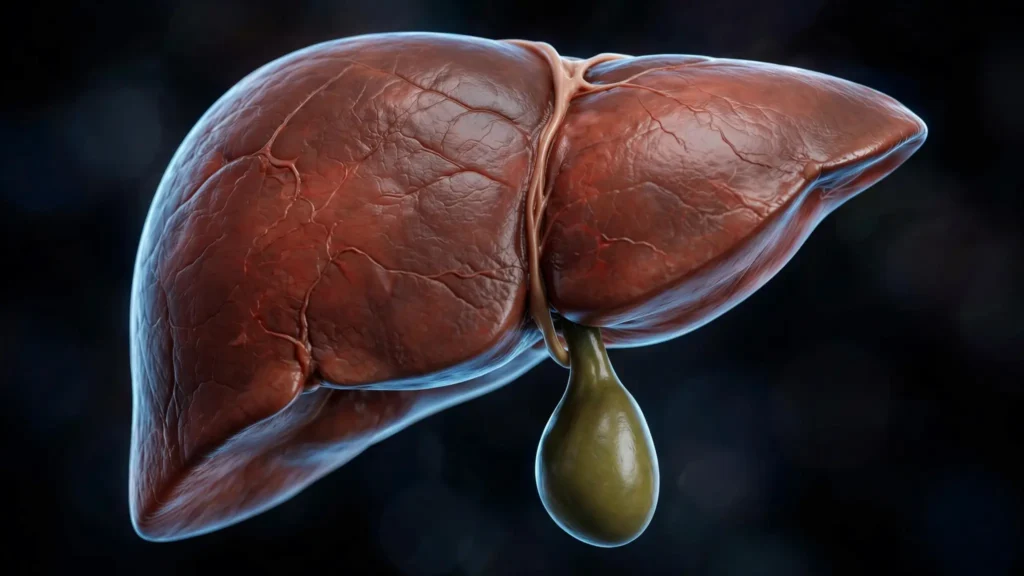
A healthy adult gallbladder generally measures 7 to 10 centimetres in length and 3 to 4 centimetres in width, holding somewhere around 30 to 50 millilitres of bile when fasting. It’s roughly the size of a small pear, tucked just beneath the liver on the right side of the abdomen.
Why Fasting Status Changes the Numbers
The gallbladder’s whole job is to store and release bile, so its size naturally shifts depending on when someone last ate. A fasting gallbladder appears fuller and more distended on a scan, while one scanned shortly after a meal looks smaller, since it has already released bile to help digest food. This is exactly why most gallbladder ultrasounds are done after several hours of fasting — it keeps the measurements consistent and comparable to reference ranges.
| 📏 Quick Reference: Normal Gallbladder Range | |
| Measurement | Typical Normal Range |
| Length | 7–10 cm |
| Width | 3–4 cm |
| Wall thickness | Under 3 mm (fasting) |
| Volume | Approx. 30–50 mL |
The Ultrasound Report That Started This
My sister had been having intermittent pain under her right ribs for a few weeks, the kind that came and went and was easy to blame on something she’d eaten. Her GP ordered an abdominal ultrasound mostly to rule out gallstones, which felt routine enough until the report came back with a note about her gallbladder measurements that neither of us recognised as normal or not.
The report itself was full of clinical shorthand — measurements, abbreviations, a line about wall thickness — with no plain-language summary attached. It’s the kind of document that’s genuinely useful to a doctor and genuinely unsettling to a patient reading it alone at home, which is exactly the position she was in for two days before her follow-up appointment.
She called me that first evening, reading the numbers out loud like they might mean something different out loud than they had on the screen. Neither of us had anything to compare them to, so we did what most people probably do — opened a search engine and found a handful of confusing, sometimes contradictory forum posts that made things feel worse rather than better.
When a Gallbladder Is Considered Too Large
Distension and What It Usually Points To
A gallbladder that measures noticeably larger than the typical range, particularly in width, is described as distended. This often happens when bile can’t drain properly, causing it to back up and stretch the organ beyond its usual size.
Reading this section of the research was the point where I understood why her GP had ordered the scan in the first place. Right-sided pain under the ribs is one of the classic symptoms doctors associate with gallbladder issues generally, which explained why ruling out distension and stones was the first, most sensible step rather than jumping straight to more invasive testing.
Common Causes
The most frequent cause of a distended gallbladder is a gallstone blocking normal bile flow, though prolonged fasting before a scan or other blockages further down the bile duct can also play a role. I’d actually written before about how gallstones can affect digestion and bile flow more broadly, in whether oranges are safe to eat with gallstones, and revisiting that article helped me understand the mechanism behind my sister’s own results a little better.
It also explained why the timing of her scan mattered so much. She’d fasted for nearly ten hours before her appointment, longer than the standard recommendation, which her doctor later mentioned could push measurements toward the higher end of normal even in a completely healthy gallbladder. That single detail turned out to be more relevant to her specific report than any of the scarier explanations we’d been reading about the night before.
This also connected back to something I’d researched after a friend went through a bile duct blockage of his own, which I wrote about in obstructive jaundice urine color. Distension and blockage-related jaundice often go hand in hand, even though my sister’s situation, thankfully, never progressed anywhere near that point.
When a Gallbladder Is Considered Too Small
What a “Micro-Gallbladder” Means
On the other end of the scale, a gallbladder measuring under roughly 3.5 centimetres at its largest diameter is sometimes referred to as a micro-gallbladder. In some cases, a severely contracted gallbladder can be difficult to even visualise clearly on a scan.
This wasn’t something either of us had considered as a possibility before all this — we’d both assumed “abnormal” automatically meant “too big.” Learning that an unusually small gallbladder is its own separate finding, with its own separate set of causes, was a useful reminder that medical numbers rarely work on a simple bigger-is-worse scale.
Chronic Inflammation and Scarring as Causes
An unusually small, persistently contracted gallbladder can point toward chronic inflammation, scarring from long-standing gallbladder disease, or a blockage in the cystic duct that prevents it from filling properly. This wasn’t what showed up in my sister’s case, but understanding it helped explain why doctors pay attention to both ends of the size spectrum, not just an enlarged gallbladder.
It also made me appreciate why a single ultrasound is sometimes followed up with a repeat scan weeks or months later, particularly for borderline findings. A gallbladder that looks unusually small on one occasion isn’t automatically diagnostic on its own — sometimes it simply reflects the timing of the scan relative to a recent meal, the same way an unusually large reading can.
Why Size Alone Doesn’t Tell the Whole Story
Wall Thickness and What It Adds to the Picture
Alongside length and width, doctors also look closely at wall thickness, which should generally sit under 3 millimetres in a fasting patient. A thickened wall can point toward inflammation, known as cholecystitis, even when the overall size measurements look otherwise unremarkable.
Why Doctors Look at the Whole Report, Not One Number
This was the piece that finally settled my sister’s nerves. Her doctor explained that gallbladder size is just one data point among several, including wall thickness, the presence or absence of stones, and how the organ responds during the scan itself. A single measurement sitting slightly outside a textbook range doesn’t automatically mean something is wrong, especially without the surrounding context a trained radiologist and doctor are trained to weigh together.
She compared it to judging someone’s overall health from a single number on a blood test without looking at the rest of the panel — technically a data point, but genuinely misleading without everything else around it. That analogy stuck with both of us far more than any of the technical explanations had.
What This Taught Me About Reading Medical Reports
Watching my sister spiral over one circled number reminded me of something similar I’d gone through while researching stomach size for a completely different article, normal stomach capacity. In both cases, a raw measurement felt alarming purely because neither of us had any reference point for what counted as normal in the first place.
I’ve since started encouraging family members to wait for their doctor’s explanation before googling every unfamiliar term on a report, mostly because context changes everything. A number that sounds dramatic in isolation often turns out to be a completely ordinary finding once a professional walks you through what it actually means.
It also made me more thoughtful about how I write about health topics generally. There’s a real difference between explaining what a measurement means in general terms, which is genuinely useful, and implying that any single number outside a textbook range is automatically cause for alarm, which mostly just adds unnecessary stress to an already anxious moment.
What Happened Next for My Sister
At her follow-up appointment, her doctor confirmed that her gallbladder measurements were within a normal, slightly fuller range consistent with the several hours she’d fasted before the scan, and that no gallstones or wall thickening were present. Her ongoing rib pain turned out to be unrelated to her gallbladder entirely, tracked eventually to a minor muscular issue instead. She was relieved, if a little annoyed at herself for the two days of quiet panic beforehand.
She told me afterward that the appointment itself took less than ten minutes, most of which was her doctor calmly walking through exactly the kind of context we’d been missing — fasting time, the absence of stones, normal wall thickness — before confirming there was nothing to worry about. Two days of anxious googling condensed into a ten-minute conversation that could have happened much sooner if either of us had known what questions to ask, or simply waited for the appointment instead of filling the gap with searches.
Her case never progressed toward anything requiring surgery, but going through this together did make me look back at an article I’d written on gallbladder removal recovery day by day with a slightly different perspective — genuinely grateful her story ended with reassurance rather than a procedure.
When Gallbladder Size Findings Need Prompt Attention
Most abnormal gallbladder measurements are manageable once properly evaluated, but certain combinations of findings and symptoms call for urgent attention rather than a routine follow-up.
🚨 Seek Prompt Medical Care If You Notice
- Severe or worsening pain in the upper right abdomen
- Fever or chills alongside abdominal pain
- Yellowing of the skin or eyes
- Persistent nausea or vomiting alongside abnormal scan results
Frequently Asked Questions
What is a normal gallbladder size?
A normal gallbladder typically measures about 7 to 10 centimetres in length and 3 to 4 centimetres in width on a fasting ultrasound.
What does it mean if my gallbladder is enlarged?
An enlarged or distended gallbladder often points to a blockage in bile flow, commonly caused by a gallstone, though prolonged fasting before a scan can also be a factor.
Can a gallbladder be too small?
Yes. A gallbladder measuring under roughly 3.5 centimetres, sometimes called a micro-gallbladder, can indicate chronic inflammation or a blockage preventing it from filling properly.
Does gallbladder size alone diagnose a problem?
No. Doctors consider size alongside wall thickness, the presence of stones, and other findings together, rather than relying on one measurement in isolation.
Should I be worried if my ultrasound report flags gallbladder size?
Not necessarily. Many size variations are explained by normal factors like fasting status, and a doctor’s full evaluation is the best way to understand what a specific finding means.
Medical Disclaimer: This article is for general information only and is not a substitute for -professional medical advice. Any concerns about ultrasound results or gallbladder health should be discussed with a qualified healthcare provider.
Looking back, that circled number on my sister’s report taught both of us a genuinely useful lesson about reading medical results without immediately assuming the worst. If there’s one thing I’d want anyone researching gallbladder size the way we once did over a panicked phone call to take away, it’s that a single measurement rarely tells the whole story — and a proper conversation with a doctor almost always makes an alarming-looking report feel a lot less frightening.
