QUICK SUMMARY Stiff ankles first thing in the morning usually come down to synovial fluid thickening overnight from hours without movement, not anything more serious. Exercises for stiff ankles in the morning, done in bed before your first steps, work with that mechanism instead of fighting it after the fact. There’s also a genuinely useful rule of thumb worth knowing: stiffness under 30 minutes is normal, stiffness beyond that is worth mentioning to a doctor.
Introduction

My uncle Rafiq used to take the first ten steps every morning as if his ankles had forgotten to move all night. By the time he reached the kitchen for tea, he was completely relaxed, and whenever someone mentioned him, he would ignore it as “just old age”. Seeing the same movement repeated in the morning prompted me to do thorough research the exercises for stiff ankles in the morning, as it turned out that there is a real mechanism behind it, and the right way to work with that mechanism, rather than waiting every day. I tried a short bed-based routine with Rafiq for several weeks, and the change in those first ten steps was immediate. Here’s exactly what we got.
Table of Contents
Why Ankles Get So Stiff Overnight
Synovial Fluid Thickens When You Stop Moving
Joints rely on synovial fluid to stay lubricated and move smoothly. That fluid circulates through movement — every step, every ankle rotation redistributes it around the joint. Hours of stillness overnight let it thicken and settle, which is exactly why the first steps out of bed feel stiffer than anything later in the day.
It’s a completely normal physiological process, not a sign that anything is wrong. The stiffness easing within a short window after you start moving is the fluid redistributing and warming back up, doing exactly what it’s meant to do.
This was genuinely reassuring for Rafiq once he understood it. He’d spent years quietly assuming the stiffness meant his joints were wearing out, which is a common enough worry that it kept him from ever really investigating the pattern. Knowing there was a straightforward, ordinary mechanism behind it changed how he approached mornings almost as much as the exercises themselves did.
The 30-Minute Rule Doctors Actually Use
There’s a genuinely useful distinction worth knowing here. Mechanical morning stiffness, the kind caused simply by overnight stillness, typically eases within about 30 minutes of movement. Stiffness that lasts considerably longer than that is treated differently by doctors, since prolonged morning stiffness is a recognised marker they watch for with certain inflammatory joint conditions. I’ve covered this 30-minute distinction in more detail in a piece on autoimmune disease warning signs, and it’s worth keeping in mind as a general rule of thumb, not a diagnosis.
Why I Started Taking Morning Ankle Stiffness Seriously
The Difference Between “Just Getting Older” and Something Worth Tracking
Rafiq’s stiffness always resolved within about ten minutes, which, once we understood the mechanism, was actually a reassuring sign rather than a concerning one. That’s worth separating clearly from a different situation entirely — an ankle that’s unstable or gives way because of a past injury, which is its own distinct problem I’ve written about separately in a routine built around rebuilding stability after an ankle sprain. Morning stiffness that resolves with movement and post-injury instability that shows up unpredictably are genuinely different patterns, even though both involve the ankle.
Once that distinction was clear, it became obvious Rafiq’s situation was the ordinary, manageable kind — which made building a proper morning routine feel worthwhile rather than pointless.
That reframing mattered because it changed the goal entirely. Rafiq wasn’t trying to fix a damaged joint or prevent an injury from recurring — he was simply working with a completely normal overnight process to make the transition into the day more comfortable. That’s a far more achievable target, and it made the whole routine feel less like treatment and more like a sensible morning habit.
The Morning Routine That Actually Loosened Things Up
This is the exact routine Rafiq started doing before his feet even touched the floor. Each move takes under two minutes, done right in bed or standing beside it.
Ankle Alphabet (Bed-Based)
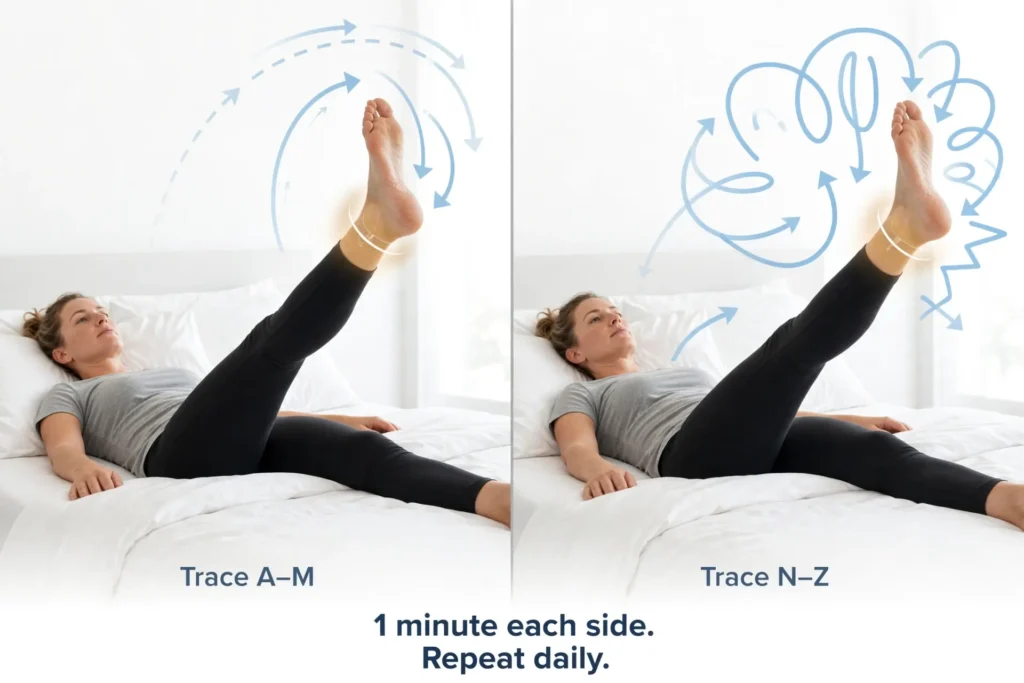
Lying in bed, use your big toe to trace the letters of the alphabet in the air, moving only the ankle. This moves the joint through nearly its full range of motion before you’ve even sat up, encouraging synovial fluid to redistribute gently. Rafiq usually stopped somewhere around the letter M, which was already enough to notice a genuine difference by the time he sat up.
Seated Ankle Circles
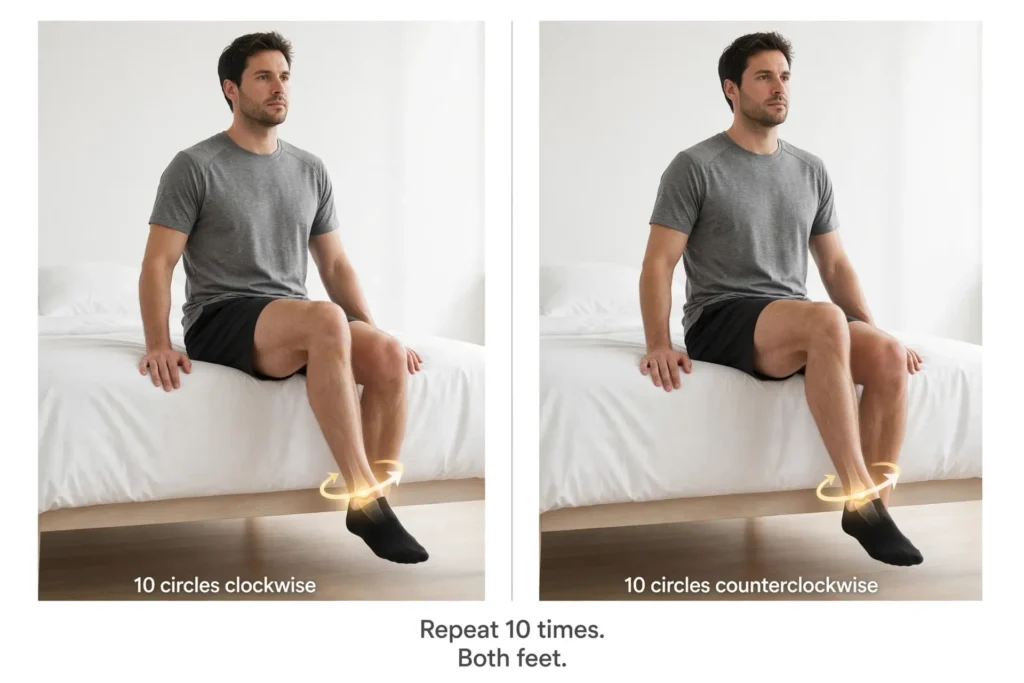
Sitting on the edge of the bed, lift one foot slightly and rotate the ankle slowly, 10 circles each direction, both feet. This continues warming the joint gradually, rather than asking it to bear full weight immediately.
Standing Calf Raises (Bed or Wall-Assisted)

Standing beside the bed or a wall for support, rise onto your toes and lower slowly, 10–12 reps. This engages the calf and ankle together, warming the muscles that support the joint before a full day of walking begins.
Toe Curls and Spreads
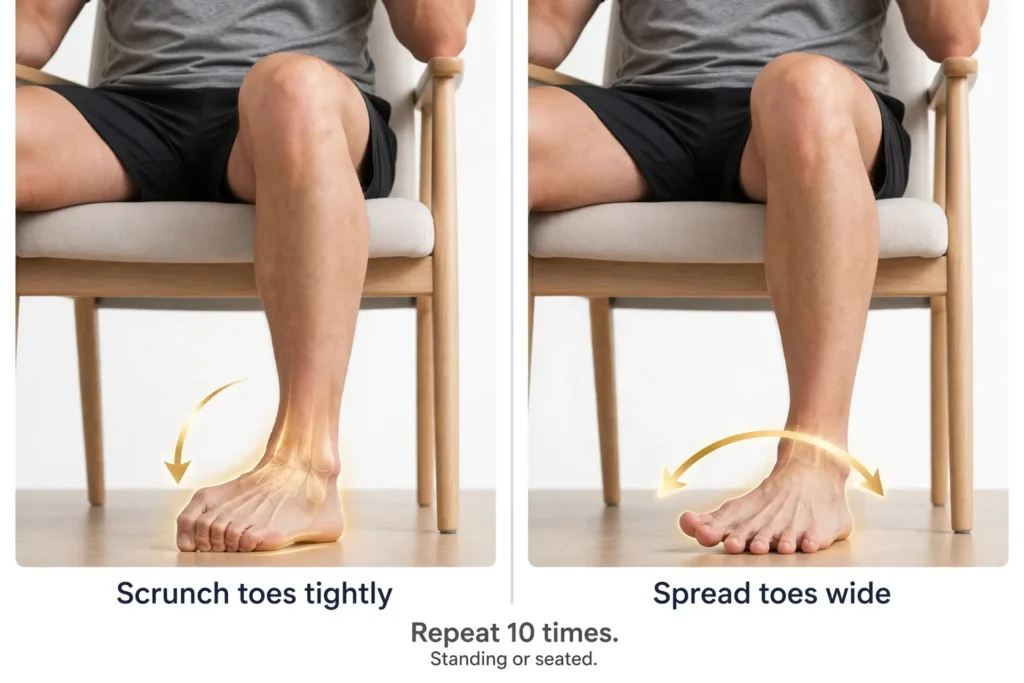
Standing or seated, scrunch your toes tightly, then spread them wide apart. Repeat 10 times. This activates the smaller muscles of the foot that support the ankle joint and often stay completely dormant during sleep.
Gentle Standing Ankle Rocks
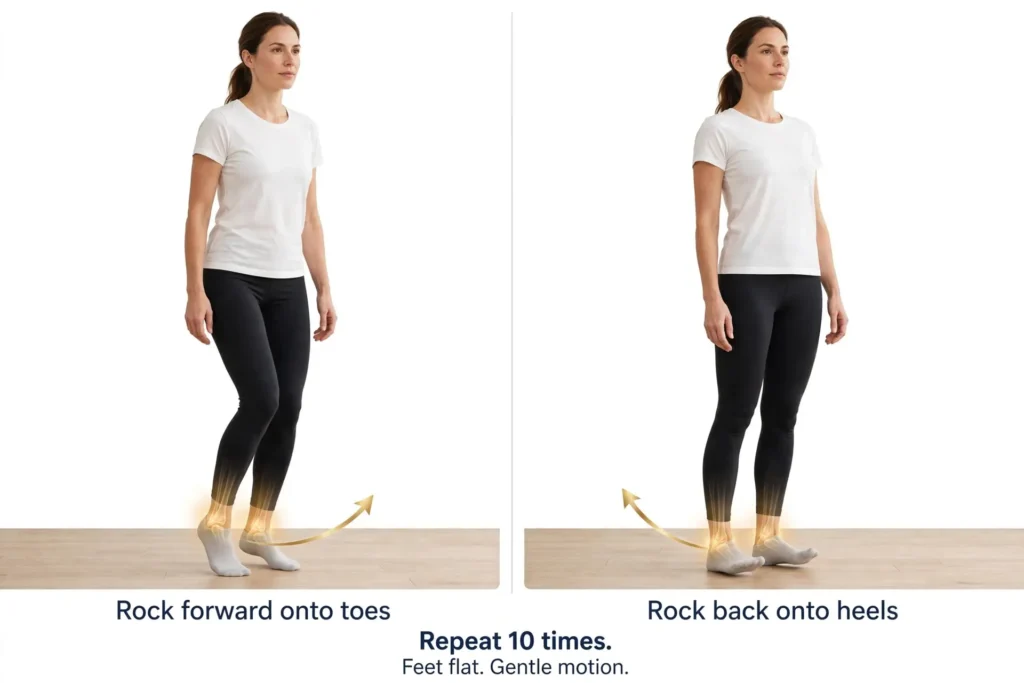
Standing with feet flat, gently rock your weight forward onto your toes, then back onto your heels. Repeat 10 times. This finishes the warm-up with a movement pattern close to actual walking, bridging the gap between bed and your first real steps of the day. It’s the closest thing in the routine to an actual dress rehearsal for walking, which made it feel like the natural final step before heading toward the kitchen.
“The real shift wasn’t any single move — it was doing all of it before standing up, not after. By the time Rafiq’s feet touched the floor, the joint had already started warming up instead of being asked to do it cold.”
Quick Reference: The Routine at a Glance
| Exercise | When to Do It | Duration |
| Ankle alphabet | Still lying in bed | 1 min |
| Seated ankle circles | Sitting on bed edge | 1 min |
| Standing calf raises | Just after standing | 1 min |
| Toe curls and spreads | Standing or seated | 30–45 sec |
| Standing ankle rocks | Before walking off | 30–45 sec |
Building It Into a Morning Habit
Why Doing This in Bed Matters More Than Doing It Later
Doing the routine before standing, rather than after a few stiff steps to the bathroom, made a genuinely noticeable difference. Warming the joint before weight-bearing begins is a completely different approach from stretching it out after the stiffness has already been felt.
This ordering felt slightly counterintuitive to Rafiq at first — his instinct was that moving around normally would be enough of a warm-up on its own. In practice, the first few unassisted steps were exactly the part that felt worst, which meant doing the gentle version in bed first genuinely changed the experience of every step that followed.
Supporting Joint Health Through Diet Too
Muscle and joint function benefit from adequate magnesium intake, which supports normal muscle relaxation and function. I’ve written before about magnesium-rich foods that support muscle and joint function, and it’s a sensible addition alongside a morning mobility routine rather than a replacement for it.
Rafiq made a small adjustment to his breakfast around the same time he started the morning routine, mostly out of curiosity about whether diet played any role at all. It’s hard to isolate exactly how much that specific change contributed, but treating joint health as something influenced by more than just movement felt like a reasonable, low-effort addition worth making regardless.
What Changed After a Few Consistent Weeks
By the second week, Rafiq’s shuffle had shortened considerably — what used to take ten stiff steps to resolve now settled within two or three. He mentioned, almost as an aside, that he’d stopped dreading getting out of bed in colder weather specifically, which had always been the worst time of year for him.
Mistakes That Made Morning Stiffness Worse
A few habits quietly worked against progress early on, and they’re easy mistakes to make when stiffness feels like something to just push through rather than address directly, especially when it’s been a lifelong habit.
Jumping Straight Out of Bed Without Warming Up First
Rafiq’s old habit was to swing his legs out and stand immediately, stiffness and all. Asking a cold, stiff joint to bear full weight immediately made those first several steps considerably more uncomfortable than they needed to be. It’s such an ordinary habit that it never occurred to him it might be part of the problem — most people simply get up the way they always have, without ever questioning whether the order of movements matters.
Ignoring the Pattern Because “It Goes Away Anyway”
Because the stiffness always resolved on its own, it was easy to dismiss entirely rather than actually address it. Staying broadly active as we get older matters here too, something explored in more depth around how consistent activity eased ongoing joint stiffness, particularly in colder weather, which lines up closely with what Rafiq experienced once he stopped simply tolerating the pattern.
Skipping Mornings and Only Stretching When It’s Bad
Doing the routine only on particularly stiff mornings, rather than every day, meant losing the consistency that actually built lasting improvement. The mornings Rafiq skipped were reliably the ones where the stiffness lingered longest, which made the pattern fairly easy to spot once he started paying attention to it rather than just enduring it.
When Morning Ankle Stiffness Needs More Than Exercise
Morning mobility exercises help manage the ordinary stiffness caused by overnight stillness, but they aren’t the right response to every case. It’s worth speaking to a doctor if any of the following apply:
- Stiffness that consistently lasts longer than 30 minutes
- Visible swelling around the ankle or foot
- Stiffness affecting multiple joints at the same time
- Stiffness alongside unexplained fatigue or other new symptoms
“Rafiq’s stiffness always resolved within ten minutes, which is a reassuring pattern. If yours regularly runs past half an hour, or comes with swelling or other symptoms, that’s worth mentioning to a doctor rather than just working around it.”
What Changed After a Few Consistent Weeks
By the end of the first month, Rafiq’s morning shuffle had all but disappeared. He still noticed a touch of stiffness on particularly cold mornings, but it settled within a minute or two rather than dragging on until his second cup of tea. A neighbour who saw him most mornings even mentioned, without any prompting, that he seemed to be moving differently lately.
Neither of us treated this as a permanent fix for every kind of stiffness. It’s a management routine built around a normal overnight process — genuinely effective for the ordinary kind of morning stiffness, which is the kind most people are actually dealing with.
What stood out most was how small a change it took to get there. Rafiq didn’t need a new diet, a different mattress, or any kind of medical intervention — just five minutes of deliberate movement before his feet touched the floor, done consistently enough to become as automatic as making his morning tea.
FAQs
Why are my ankles so stiff every morning?
Overnight stillness lets synovial fluid in the joint thicken and settle, which makes the first steps out of bed feel stiffer until movement redistributes it.
How long should normal morning ankle stiffness last?
Typically under 30 minutes. Stiffness that consistently lasts longer than that is worth mentioning to a doctor.
What is the best exercise for stiff ankles first thing in the morning?
Ankle circles done while still in bed, before standing, tend to give the quickest relief by gently warming the joint before weight-bearing begins.
Can morning ankle stiffness be a sign of arthritis?
Occasionally. Stiffness lasting significantly longer than 30 minutes is a recognised marker for some inflammatory joint conditions and is worth discussing with a doctor.
When should morning joint stiffness be checked by a doctor?
See a doctor for stiffness lasting more than 30 minutes, visible swelling, stiffness in multiple joints, or stiffness alongside unexplained fatigue.
Final Thoughts
None of these require special equipment or a visit to the clinic. Short workouts for stiff ankles in the morning really made a difference for someone I’d watched walk the same 10 strenuous steps a day for years — and it’s worth trying if your own mornings start with the same slow and careful initial steps.
If you take one thing away from it, it should be considered time versus intensity: Doing a routine before standing, not later, actually reduces those uncomfortable early minutes of the day. Start with the ankle alphabet when you’re lying down, and incorporate the rest of the routine when it feels like a natural part of waking up.
This article is for general information only and is not a substitute for professional medical advice. Please consult a doctor if morning stiffness lasts longer than 30 minutes or comes with swelling or other symptoms.
