The Quick Answer: Yes, pomegranate seeds freeze exceptionally well when you deseed and flash-freeze them first — skip that step and you’ll end up with a solid, unusable block, as my neighbour Kamran found out the hard way. Done correctly, frozen arils stay fresh for up to six months and keep almost all their punicalagins, anthocyanins and fibre intact.
Introduction
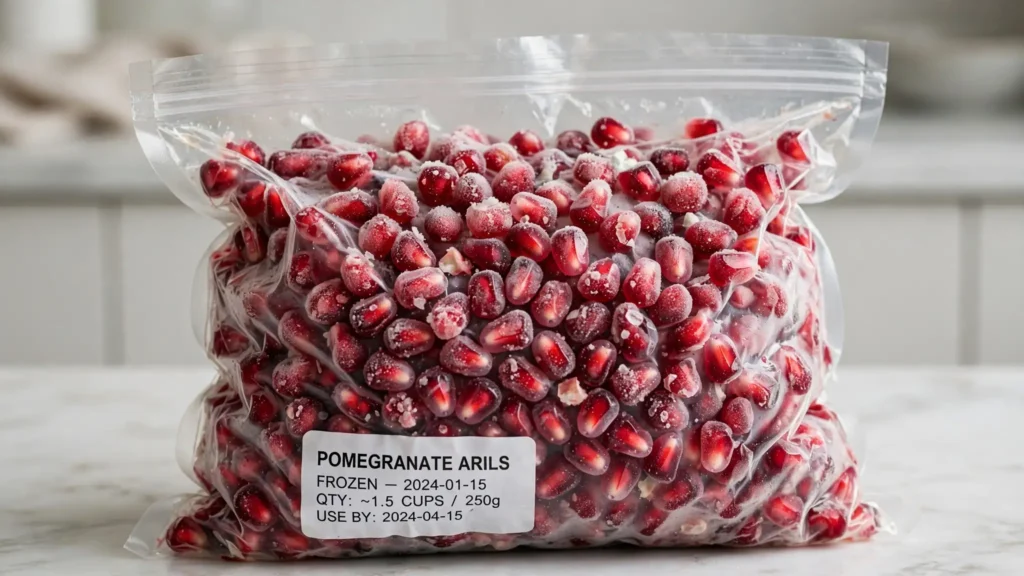
I still remember standing at my kitchen table with half a pomegranate left, wondering if I could save it before the seeds started to wither. Can pomegranate seeds be frozen, or was I going to waste half the fruit for which I had paid a high price in the market? Every article I found online gave me a vague yes without telling me how, so I tried it all autumn while buying the pomegranate myself.
What I learned answered the can pomegranate seeds be frozen question properly, and it changed the number of meals I ate. It also turned out that I wasn’t the only one who barely figured it out—my neighbour had already tried it once, the results of which taught me more than any subject.
Table of Contents
Can Pomegranate Seeds Actually Be Frozen? (The Short Answer)
Yes — and they freeze remarkably well compared to most other fruit. Unlike strawberries or grapes, which tend to go soft and watery after thawing, pomegranate arils have a protective membrane around them that helps them keep their shape and firmness through the freezing process. Done properly, they come out of the freezer looking and tasting almost identical to fresh.
The nutrition side reassured me too. Data cited by the National Institutes of Health (NIH) shows that antioxidants such as punicalagins and anthocyanins are largely preserved during standard freezing. There’s a small drop in Vitamin C, but the overall nutritional profile stays close to intact.
What surprised me most when I first tested this was how little visual difference there was. Set a bowl of thawed arils next to a freshly opened pomegranate and, unless you’re looking closely at the outer layer, it’s genuinely hard to tell them apart. That’s not something I expected from a fruit I’d always assumed was too delicate to freeze well.
Why I Started Freezing Pomegranate Seeds (My Honest Reason)
My interest in pomegranates started with their anti-inflammatory properties. I’d been reading into gut health and chronic inflammation, and pomegranates kept coming up as one of the most well-researched fruits for both. It’s the same reason I looked more closely at anti-inflammatory foods and immune health in an earlier article — the two topics overlap more than most people realise.
The UK Seasonality Problem
In the UK, pomegranates are seasonal, expensive out of season, and only cheap for a narrow window — mainly autumn through early winter. So I started buying them in bulk while they were affordable. The catch was obvious almost immediately: eating five pomegranates a week isn’t realistic for anyone. I needed a way to preserve pomegranate seeds long-term without losing the nutrients I was buying them for in the first place.
I noticed the price difference the first winter I paid attention to it — a single pomegranate could cost roughly double in spring compared to what I’d pay for the same fruit in November. That gap alone was enough to convince me that buying in season and freezing the surplus made far more sense than paying a premium the rest of the year just to keep eating them regularly.
What My Neighbour’s Frozen “Ice Block” Mistake Taught Me
Before I’d even worked out my own method, my neighbour, Kamran, mentioned he’d tried freezing a batch from his own bulk buy. He hadn’t done any research first — he’d simply deseeded a pomegranate and tipped the arils straight into a freezer bag.
“I just tipped them in the bag and forgot about it,” he told me. “By the morning it was basically one solid block of ice. I ended up chiselling at it with a butter knife for ten minutes and lost half of them.”
That conversation is what pushed me to test the process properly rather than assume freezing was as simple as it sounds. It isn’t — and the step Kamran skipped turned out to be the single most important part of the whole method.
Over that autumn I actually froze pomegranate seeds four different ways — straight into a bag, in a shallow dish, flash-frozen on a tray, and flash-frozen with a paper towel underneath to absorb excess moisture. Only two of the four gave me seeds that separated easily and tasted right after thawing, and both involved the flash-freeze step. It wasn’t a one-off fluke; the method held up every single time I repeated it.
How to Freeze Pomegranate Seeds: Step by Step
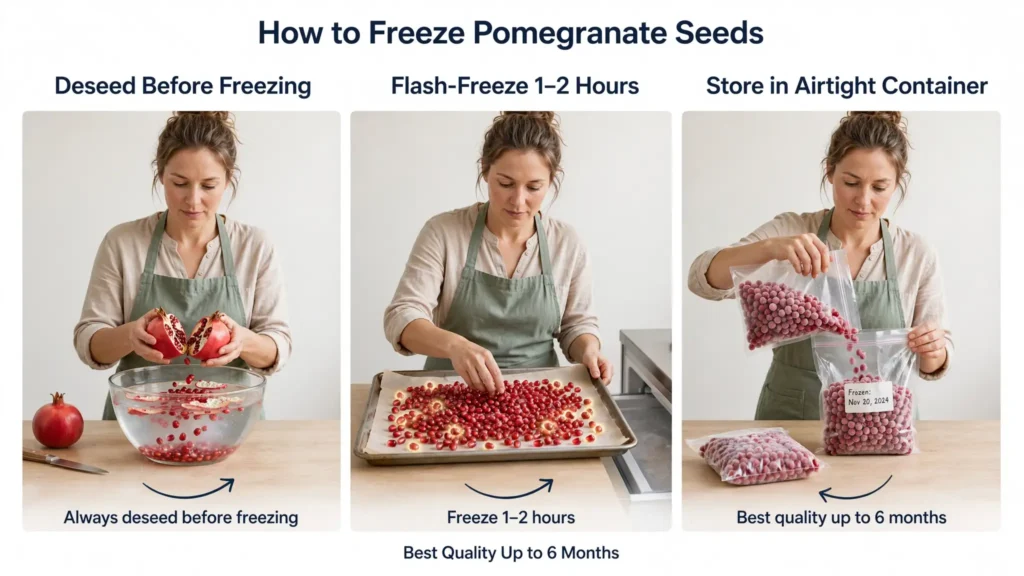
Step 1 — Deseed the Pomegranate First (Never Freeze It Whole)
This part is non-negotiable. Freezing a whole pomegranate makes it almost impossible to deseed afterwards — the skin toughens and the membrane turns into a soggy mess. Always deseed before freezing.
My preferred method: score the pomegranate around the crown, gently pull it apart over a large bowl of cold water, and tap the back of each half with a wooden spoon. The arils sink, the membrane floats, and cleanup is genuinely easy. I ruined a white shirt the one time I tried it without the bowl of water — trust me on this one.
Step 2 — The Flash-Freeze Method (Do Not Skip This)
This is exactly the step Kamran skipped, and it’s the difference between individually loose frozen seeds and one solid, unusable clump. After deseeding, spread the arils in a single layer on a baking tray lined with parchment paper, making sure they aren’t touching. Freeze the tray for 1 to 2 hours until the seeds are firm.
I made the same mistake myself the first time, before Kamran’s story confirmed I wasn’t alone. Skip the flash-freeze and you’re guaranteed a block you’ll have to break apart with a knife, losing seeds in the process. The reason it matters comes down to how ice forms: freeze the arils touching each other and the moisture between them binds them into one mass as it solidifies. Freeze them separately first, and each seed forms its own individual ice shell instead — which is exactly why they stay loose once bagged.
Step 3 — Transfer to an Airtight Container
Once flash-frozen, move the arils into a heavy-duty freezer bag or airtight container. Push out as much air as possible before sealing, since trapped air causes freezer burn, which dries the seeds out and dulls the flavour. Label the bag with the date so you know exactly how long it’s been in there.
I portion mine into small bags of around 80g each — roughly one serving — so I can grab exactly what I need without opening the whole batch each time.
How Long Do Frozen Pomegranate Seeds Last?
Stored consistently at -18°C (0°F), frozen pomegranate seeds hold their best quality for up to 6 months and remain safe to eat for up to 12 months. Beyond that, texture and flavour start to noticeably fade, even if they’re technically still fine to eat.
What Happens to the Nutrition When You Freeze Pomegranate Seeds?
This was the question I cared about most, given why I started eating pomegranates in the first place. I’d already looked into how preservation methods affect fruit nutrition for a different article, and the same principle held true here — the preservation method matters, but it rarely wipes out the core nutritional value when it’s done properly.
Freezing doesn’t destroy pomegranate’s antioxidant power. Punicalagins, the compounds responsible for most of the fruit’s anti-inflammatory effect, are largely preserved during freezing, making frozen arils nearly as nutritious as fresh ones.
- Punicalagins and anthocyanins: largely stable — these drive most of the anti-inflammatory effect
- Vitamin C: a minor reduction, but a meaningful amount is retained
- Dietary fibre: fully preserved — freezing doesn’t touch fibre content
- Potassium and folate: unaffected by the freezing process
In short, if you’re eating pomegranate seeds for their antioxidant and anti-inflammatory benefits, freezing them isn’t a compromise. It’s simply smart storage.
What struck me most was how small the gap actually is between fresh and frozen. I’d assumed freezing would be a meaningful trade-off, the way it can be with some vegetables that turn watery and bland once thawed. Pomegranate arils don’t behave that way, largely because the seed’s membrane physically protects the juice sacs inside it from the ice crystals that damage more delicate fruit cells. That structural difference is, in my experience, the whole reason this fruit freezes so much better than most.
How to Use Frozen Pomegranate Seeds
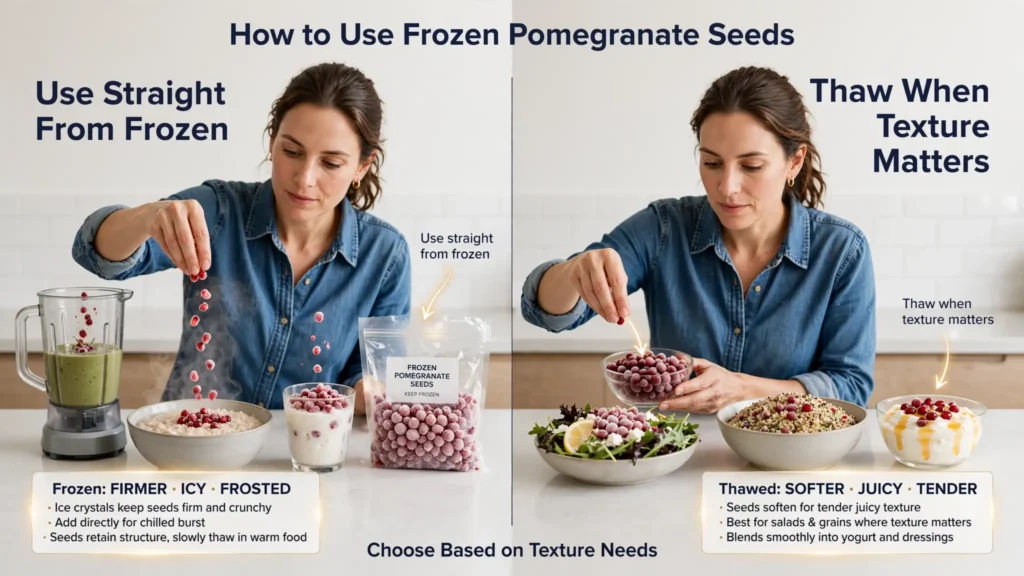
Straight from Frozen — No Thawing Required
- Smoothies and protein shakes: straight into the blender, no prep needed
- Morning porridge: scatter on top and they thaw gently in 2–3 minutes from the bowl’s heat
- Frozen yoghurt topping: eaten deliberately frozen for a crunchy, icy texture — my favourite way to eat them in summer
When You Should Thaw First
For recipes where texture matters — salads, grain bowls, or desserts — thaw the seeds first. Easiest method: move them from freezer to fridge the night before, or leave them at room temperature for 30 minutes if you’re short on time.
I’ve stirred thawed arils into Greek yoghurt with honey for breakfast, tossed them through a quinoa and feta salad for lunch, and used them in a pomegranate molasses marinade for chicken. One combination I keep going back to is thawed seeds folded through a rocket and goat’s cheese salad with a squeeze of lemon — the slight give in a thawed aril works better there than a frozen one, which stays too firm against the softer leaves. Once there’s a stash in the freezer, you find excuses to use it everywhere. If you’re also weighing up whether pomegranate causes bloating when you eat more of it, portioning frozen seeds like this makes it much easier to keep servings consistent.
Common Mistakes to Avoid When Freezing Pomegranate Seeds
- Skipping the flash-freeze step: results in a solid clump that’s impossible to portion — exactly what happened to Kamran
- Freezing wet arils: leftover moisture forms ice crystals inside the membrane, turning seeds mushy on thawing
- Using thin sandwich bags: these don’t protect against freezer burn — use heavy-duty freezer bags or rigid containers
- Freezing the whole pomegranate: the fruit becomes almost impossible to work with once thawed
- Storing beyond 12 months: flavour degrades noticeably — always label and date your bags
Pomegranate Seeds vs Other Frozen Fruits — How Do They Compare?
I’ve frozen a lot of fruit over the years, so here’s an honest comparison from my own kitchen. It’s worth reading alongside whether fruit sugar in grapes affects weight, since a lot of the same questions about sugar and nutrition come up when comparing high-antioxidant fruits like pomegranates and grapes.
| Fruit | Freezes Well? | Texture After Thaw | Nutrition Retained? |
| Pomegranate seeds | Excellent | Firm and juicy | Very well |
| Blueberries | Excellent | Soft, slightly mushy | Very well |
| Grapes | Moderate | Soft and watery | Moderate |
| Strawberries | Moderate | Soft | Well |
| Bananas | Great for smoothies | Mushy when thawed | Well |
Pomegranate seeds consistently come out ahead on texture, which makes them one of the most satisfying fruits to freeze for everyday use.
Conclusion
Freezing pomegranate seeds has become part of my autumn routine, and it’s undoubtedly worth it. When pomegranates are cheapest and most plentiful, I buy a bag, spend a weekday afternoon unseeding, and keep enough in the freezer to last until spring.
The habit itself has changed. Before I knew it, I used to buy a pomegranate every few weeks and eat it in one sitting so that nothing was wasted. Now I eat them almost every day — in smoothies, on porridge, in salads — just because they’re already prepared and ready. If you’re delaying buying pomegranates because of price or hassle, here are two solutions: buy in bulk, freeze in a layer, place in airtight bags, and have the fruit ready in the freezer for six months. I also went on to look into if eating more pomegranate affects weight once I started eating them this often — worth a read if you’re planning to do the same.
Looking back, the whole thing started with an overripe half-pomegranate that I didn’t want to throw away. In the end, it’s a small habit — planting seeds a few times a year on a weekday afternoon — but it’s the little habit that quietly changes how often you eat well, because the effort has already been made.
Medical Disclaimer: This article is for informational purposes only and does not constitute medical or nutritional advice. Always consult a qualified healthcare professional before making significant changes to your diet.
Frequently Asked Questions
Can you freeze pomegranate seeds without them going mushy?
Yes — flash-freeze the arils in a single layer for 1 to 2 hours before transferring them to an airtight container, which stops ice crystals from damaging the seed membrane.
How long can you keep frozen pomegranate seeds?
Frozen pomegranate seeds stay at peak quality for up to 6 months and remain safe to eat for up to 12 months when stored at -18°C (0°F).
Do frozen pomegranate seeds lose their nutritional value?
Not significantly — punicalagins and anthocyanins are largely preserved, with only a slight reduction in Vitamin C.
Can you eat pomegranate seeds straight from the freezer?
Yes — frozen arils can go straight into smoothies or over porridge with no thawing needed; for salads, thaw them overnight in the fridge first.
Can you freeze a whole pomegranate?
It’s not recommended, since freezing the whole fruit makes it very difficult to deseed afterwards and ruins the texture of the skin.

4 thoughts on “Can Pomegranate Seeds Be Frozen?”