Quick Summary:
Yes — you can eat watermelon skin, and the white rind in particular is genuinely worth keeping. It contains more L-citrulline, fibre, and antioxidants than the red flesh most of us eat, but it’s worth scrubbing the whole fruit first and peeling away the tough outer green layer if you’re eating it raw.
Introduction
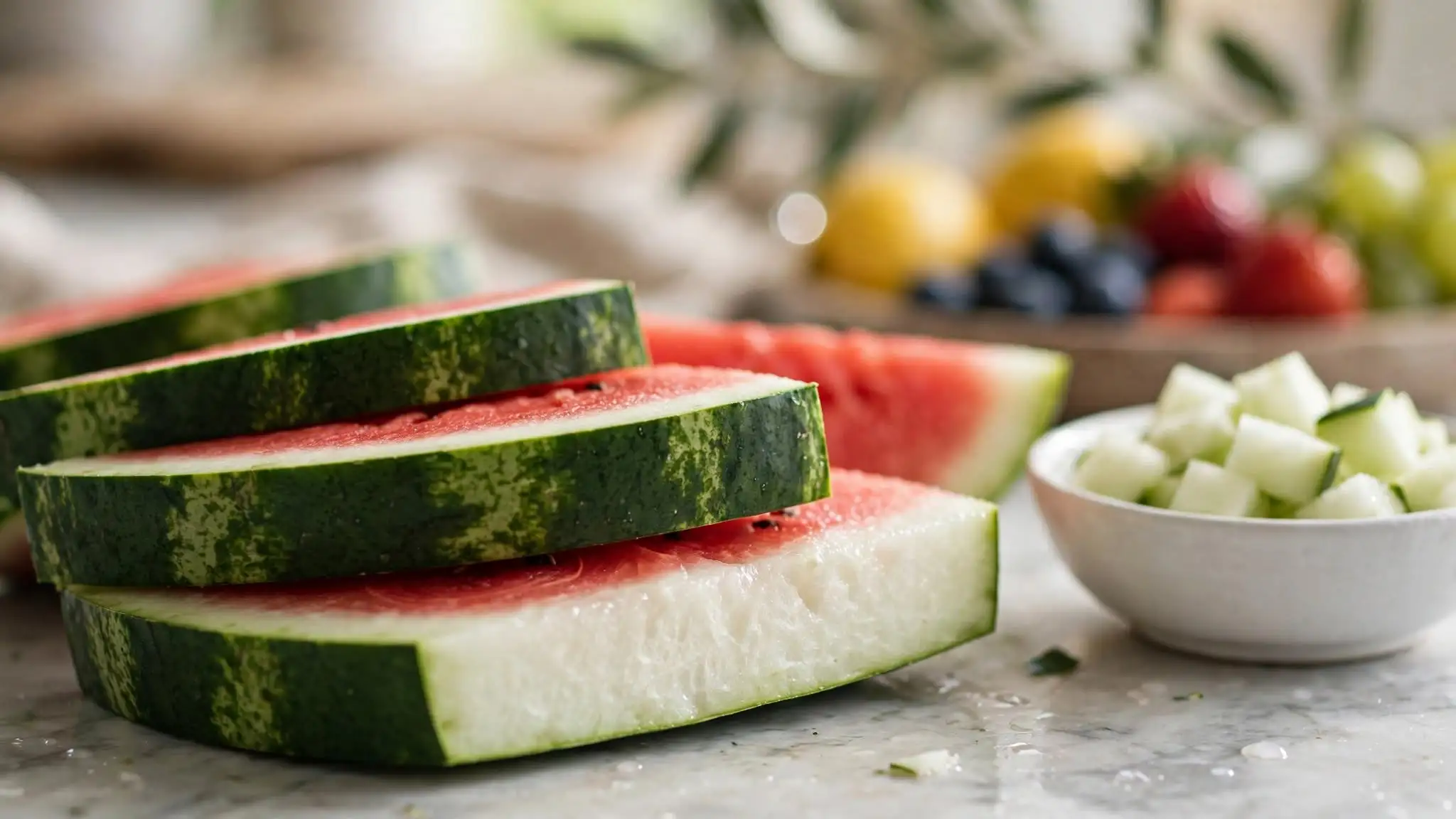
I spent close to thirty years cutting a watermelon down to the red middle and binning everything else without a second thought. So when my cousin Adeel asked me, mid-conversation about food waste, “can i eat watermelon skin?” I gave him the answer most people give: a shrug, and “probably, but why would you?” That question sat with me longer than it should have.
It followed the same pattern as something I’d already been through with watermelon seeds a few months earlier — another part of the fruit I’d been discarding automatically, for no better reason than habit. So I did what I did the first time: I stopped, looked properly at what I was throwing away, and actually tried eating it. This article is what I found when I finally answered can you eat watermelon skin for myself, instead of repeating the assumption everyone around me seemed to share.
The rind makes up roughly a third of the fruit by weight, which meant I’d effectively been buying a whole watermelon and eating about two-thirds of it, every single time, for as long as I could remember. Once I actually sat down and read into what the rind contained, the habit stopped making sense to me. What follows is everything I found — the nutrition, the research behind it, the safety questions worth taking seriously, and exactly how I prepare it now.
Table of Contents
So, Can You Eat Watermelon Skin? (Direct Answer)
Yes, completely. Both the white inner rind and the dark green outer peel are technically edible. In practice, almost everyone who eats watermelon rind means the pale white-to-light-green layer just beneath the flesh — not the tough, waxy, dark green outer skin. The white rind has a mild, crisp texture that’s genuinely pleasant to eat; the very outer layer is fibrous and mostly there to protect the fruit.
It’s also not some fringe idea. Pickled watermelon rind is a long-standing tradition in the American South, stir-fried rind is common in Chinese cooking, and it turns up in curries and chutneys across parts of India and West Africa. Treating the whole rind as waste is largely a modern habit rather than a universal one.
What actually surprised me was how ordinary it tasted the first time I tried it. I’d built up a small, entirely unfounded expectation that it would taste bitter or unpleasant — the kind of thing you eat because it’s good for you, not because you’d choose to. It didn’t. It tasted like a milder, slightly firmer cucumber, and it took on the flavour of whatever I paired it with almost immediately.
What’s Actually Inside Watermelon Skin

Citrulline — Why the Rind Beats the Flesh
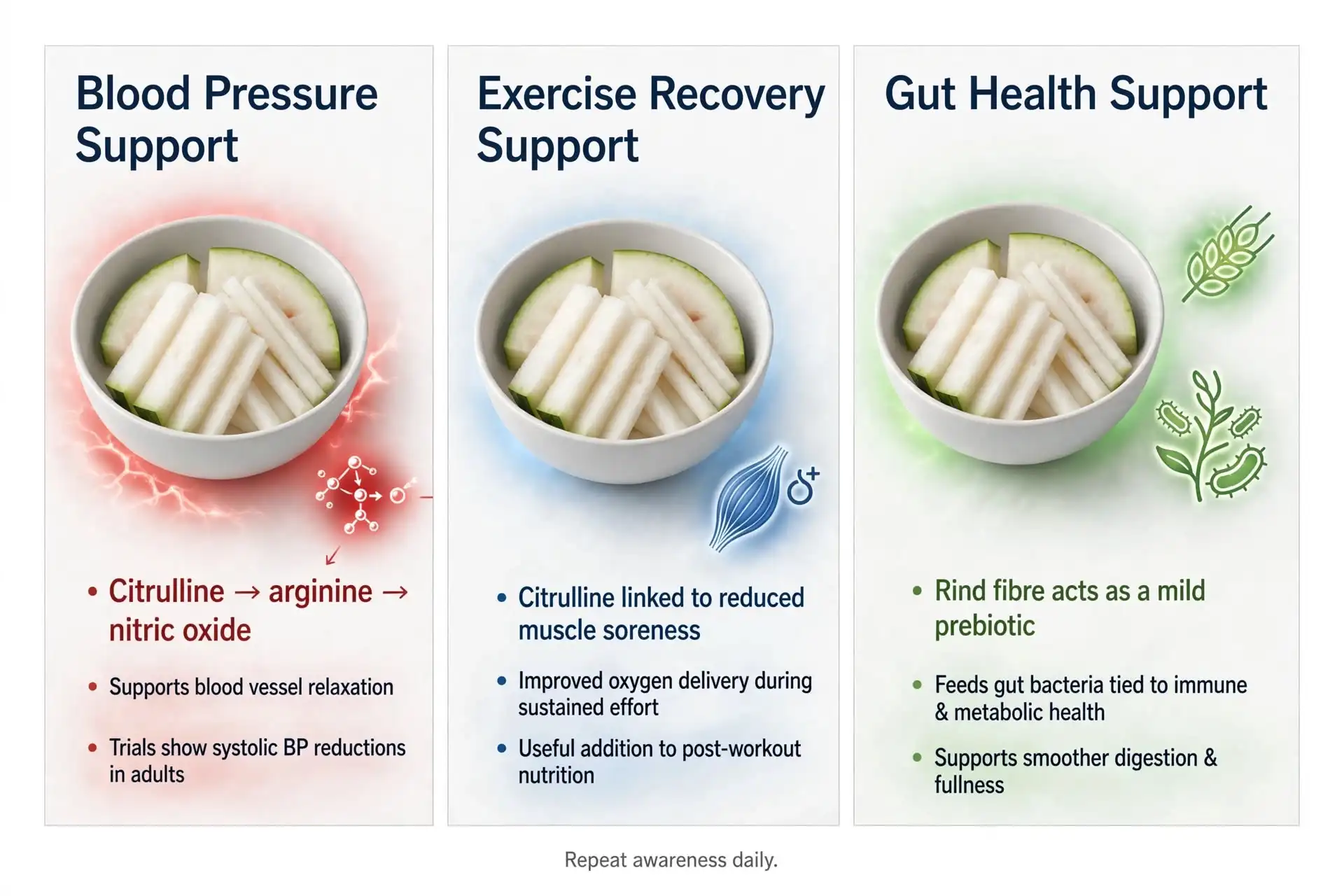
The single most interesting thing I learned is that watermelon rind contains meaningfully more L-citrulline — the amino acid watermelon is best known for — than the red flesh most people actually eat. Your body converts citrulline into arginine, which your blood vessel walls then use to produce nitric oxide, a signal that relaxes and widens blood vessels. That mechanism is the reason watermelon (and its rind, specifically) keeps coming up in research on blood pressure and circulation.
What made this stick with me wasn’t just the mechanism — it was realising the part of the fruit doing the most nutritional work was the exact part I’d been scraping into the bin. The red flesh gets the reputation, the recipes, and the Instagram photos. The rind, quietly, does more of the biological heavy lifting.
Fibre You’re Not Getting From the Flesh
The rind also carries noticeably more fibre than the watery flesh. Fibre slows digestion, feeds the gut microbiome, and is a big part of why the rind left me feeling fuller than the flesh alone ever did. It’s a small but real gap in most people’s diets — most UK adults still eat well under the recommended daily fibre intake [2], and a food you’re already buying quietly closing part of that gap felt worth paying attention to.
Vitamin C, B6, and the Antioxidants Most People Compost
The rind also provides modest amounts of vitamin C and vitamin B6, along with phenolic compounds and antioxidants that help counter oxidative stress at a cellular level. None of this is dramatic on its own — but stacked together, it’s a genuinely useful nutritional profile for something that was, in my case, going straight into the compost bin.
Vitamin B6 in particular plays a role most people underestimate — it’s involved in converting food into usable energy and supports normal brain function, which made it feel like a genuinely relevant addition rather than a token nutritional bonus point.
Outer Green Skin vs White Rind — Which to Actually Use
The dark green outer layer is tough, waxy, and largely flavourless. It’s not harmful, but the texture makes it unpleasant raw. Most preparations — including every one I actually use — peel that layer away and keep only the white rind underneath, which is where the texture and the nutrition line up best for everyday eating.
Citrulline, Roughly Speaking: Red flesh delivers a modest amount of L-citrulline per serving. The white rind delivers several times more from the same size portion. It’s the single strongest nutritional argument for keeping the rind instead of composting it.
The Health Benefits Research Actually Supports
Blood Pressure and the Nitric Oxide Pathway
High blood pressure is a genuinely serious risk factor for heart attack and stroke [1], which is part of why the citrulline-to-nitric-oxide pathway in watermelon rind gets so much research attention. Several trials looking at citrulline intake in middle-aged and older adults with elevated blood pressure have found meaningful reductions in systolic readings. For anyone with mildly raised blood pressure, dietary citrulline from the rind is a genuinely accessible, food-based option — not a replacement for medication, but a reasonable addition to discuss with a GP.
Exercise Recovery and Muscle Soreness
Citrulline also shows up in the exercise science literature for a different reason: it’s linked to reduced muscle soreness and improved oxygen delivery during sustained effort. For anyone who trains regularly, the rind is less a nutritional curiosity and more a genuinely practical recovery food to add alongside the usual post-workout routine.
Digestion and Gut Health
The extra fibre in the rind acts as a mild prebiotic, feeding the gut bacteria that research increasingly ties to immune function and metabolic health. My neighbour, who’s been juicing fruit peels for years before I ever thought to, put it more simply than any study did: “I’ve never once thrown away a rind in my life — you’re just paying for the bit you’re binning.”
Is It Actually Safe? Pesticides, Wax, and Who Should Be Cautious
Supermarket watermelons are frequently coated in food-grade wax for storage, and the outer skin can carry pesticide residue from agricultural treatment. Both are genuine reasons to prepare the rind properly rather than eating it straight off the cutting board.
Scrub the whole watermelon under running water with a produce brush before cutting into it, regardless of whether you plan to eat the rind [3]. This meaningfully reduces surface residue and dirt. If you’d rather sidestep the outer green layer’s wax and residue concerns entirely, peeling it away and using only the white inner rind — which most culinary traditions already do — solves the problem almost completely. Choosing organic watermelon removes the wax concern outright.
None of this is unique to watermelon, either. The same scrubbing habit matters for any produce where the skin is going to be eaten rather than peeled — it’s just a step that’s easy to skip when you’ve spent years treating a fruit’s skin as something you’d never touch.
Talk to Your Doctor First If: you have kidney disease — citrulline is processed by the kidneys, and higher intakes may not be appropriate with impaired kidney function — or if you’re on blood pressure medication, since dietary changes that affect blood pressure should be discussed with your GP before you make them a habit.
Common Mistakes People Make With Watermelon Rind
The first mistake I made, before I’d even tried eating it, was assuming the whole rind — dark green skin included — was meant to be eaten the same way. It isn’t. Trying to eat the tough outer layer raw is the single most common reason people try watermelon rind once and never again; it’s fibrous, waxy, and genuinely unpleasant without the white layer beneath it doing the work.
The second mistake is skipping the scrub. It’s tempting to treat the rind as disposable right up until the moment you decide to eat it, which means the outside of the fruit often gets a quick rinse at best. If you’re planning to eat any part of the skin, it needs the same scrubbing you’d give a cucumber, not the cursory rinse you’d give something you were about to peel and discard.
The third is expecting it to taste like the flesh. It doesn’t, and it isn’t trying to. Judging the rind against the sweetness of the red middle is why a lot of people give up on it after one bite instead of pairing it with flavours — vinegar, garlic, chilli — that actually suit its mild, slightly vegetal taste.
How I Actually Prepare and Eat It Now
Raw
The white rind eaten raw is the easiest entry point: mild, slightly crisp, close to cucumber or courgette. It takes on whatever seasoning or dip you’d normally pair with raw vegetables — a squeeze of lime and a pinch of chilli flakes turned it into something I’d genuinely reach for on its own, not just as an experiment.
Pickled
Pickled rind is one of the most established traditional preparations, particularly in the American South. A basic brine of water, white vinegar, sugar, and salt turns it into something genuinely flavourful and shelf-stable. My first jar was good enough that I looked forward to it — the only real test of whether a change like this actually sticks. It keeps for weeks in the fridge, which makes it one of the few genuinely low-effort ways to stop rind going to waste in bulk.
Stir-Fried or Sautéed
Sliced thinly and stir-fried with garlic, sesame oil, and a splash of soy sauce, the rind softens into something with real depth of flavour. It’s one of the simplest food swaps I’ve made without overhauling a single other thing about how I cook.
Blended Into Smoothies
Blending is the most efficient way to get the rind’s citrulline content into your day — the flavour disappears entirely into whatever else is in the blender. It’s the kind of small change you can build into an existing routine rather than one that demands you rethink your whole diet.
| Method | Best For |
| Raw slices | Easiest, no prep beyond cutting — good for snacking alongside the fruit |
| Pickled | Most flavourful, keeps for weeks in the fridge |
| Stir-fried | Best as a side dish, absorbs flavour well, ready in 10 minutes |
| Blended | Highest citrulline delivery, completely undetectable in taste |
Other Fruit Skins Worth a Second Look
Once I’d worked through watermelon seeds and the rind, I noticed the same instinct applied to other fruit I’d been trimming out of habit rather than reason — peach skin was the next one I actually looked into properly. It’s a small pattern, but once you notice it in one fruit, it’s hard not to notice it everywhere else too.
The Food Waste Angle
The rind makes up roughly 30 to 35 percent of a watermelon by weight. For years I’d been paying for the whole fruit and eating maybe two-thirds of it. That’s not a moral failing — nobody had ever given me a reason to question the habit — but it’s a fairly direct example of how small unexamined choices quietly compound into outcomes we never actually chose on purpose.
It’s also just a more honest way to think about what you’re actually paying for at the till. A watermelon isn’t priced by the red flesh alone — you’re paying for the whole thing, rind included, whether or not you eat it. Once I started using the rind properly, buying watermelon stopped feeling like buying two-thirds of a fruit and throwing the rest away.
Conclusion
I still remember the shrug I gave Adeel when he first asked me can you eat watermelon skin. I wouldn’t give the same answer now. The rind goes into a smoothie, a stir-fry, or a pickling jar most weeks — the red flesh does what it always did, and far less of the fruit I paid for ends up in the bin. If you’re already reading about what’s actually in the foods you buy, eating watermelon while pregnant is a natural next read, especially if fruit safety during pregnancy is on your mind.
Medical Disclaimer: This article reflects my personal experience and general nutrition information drawn from published research. It is not medical advice and should not replace a consultation with your GP or a qualified healthcare professional, especially if you have an existing health condition.
Frequently Asked Questions
Is watermelon skin safe to eat raw?
Yes. The white inner rind is safe to eat raw and has a mild, cucumber-like flavour; the tough outer green layer is safe too but usually peeled away for texture.
Does watermelon rind really have more citrulline than the flesh?
Yes — the white rind contains noticeably more L-citrulline than the red flesh, which is why it gets specific attention in blood pressure and circulation research.
Can eating watermelon skin lower blood pressure?
The citrulline in the rind converts to nitric oxide, which can help relax blood vessels, but it should support rather than replace any blood pressure treatment your GP has prescribed.
What does watermelon skin taste like?
The white rind tastes mild and slightly crisp, close to cucumber or courgette, and takes on other flavours easily when pickled, stir-fried, or blended.
Do you need to peel watermelon skin before eating it?
You don’t need to peel the white rind, but most people remove the tough dark green outer layer and always scrub the whole fruit before cutting.

5 thoughts on “Can I Eat Watermelon Skin? Here’s What I Learned”
Comments are closed.