Quick Summary: My colleague Sana, who wears a continuous glucose monitor to manage prediabetes, showed me a sharp spike on her app right after a bowl of grapes at lunch. That single graph sent me down a proper research rabbit hole into which fruits carry a genuinely high sugar content, and what her data kept showing over the following weeks changed how I think about fruit portions entirely.
Introduction
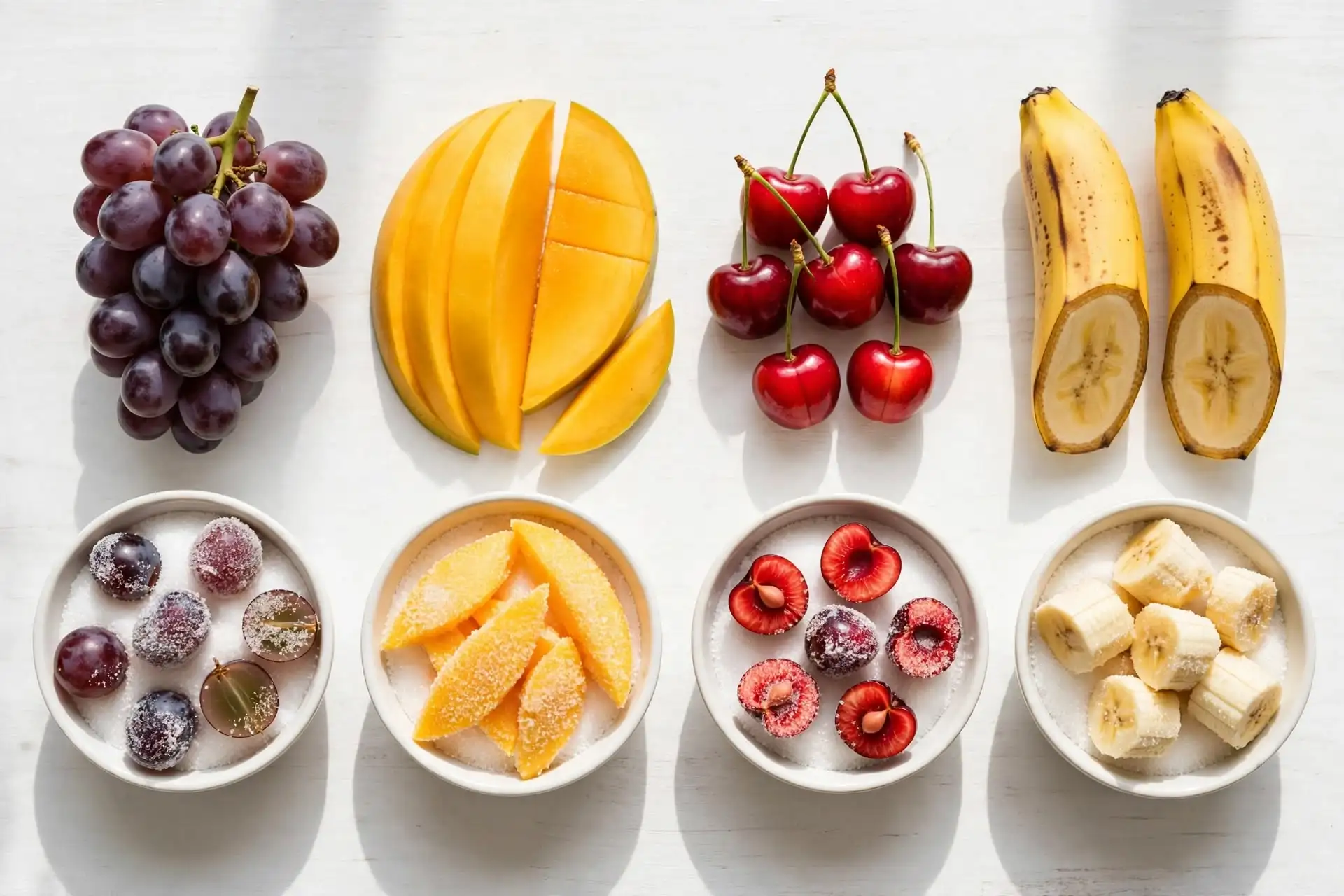
I had never associated high sugar intake with fruit, until one day Sana pulled out her phone at lunch and showed me a graph. She had been controlling prediabetes for almost a year, constantly tracking her blood sugar with a glucose monitor, and the line on her screen suddenly rose shortly after she finished a cup of grapes.
“It’s just the fruit,” he said, half laughing, half really confused. I said almost the same thing to him. It’s this reaction that makes this topic so thoroughly written, because I doubt most people will react the same way I do—fruit falls into a strange, almost inaccessible category in most people’s minds, rarely questioned so thoroughly on anything else on the plate.
Table of Contents
What Sana’s Glucose Monitor Actually Showed
The spike itself wasn’t subtle. Her reading climbed steeply within about thirty minutes of finishing the grapes, then dropped back down almost as quickly over the following hour, a pattern her app flagged automatically as a notable event. I assumed, honestly, that it might have been a fluke, maybe stress, maybe something else she’d eaten earlier that morning interacting with it. Sana herself said much the same thing at the time — she’d assumed the app was being oversensitive, since nothing about the meal had felt unusual to her.
She checked again a few days later, same portion of grapes, similar time of day. Same pattern. Over the following two weeks, she noticed the same shape appearing after mangoes and cherries too, though less consistently than with grapes specifically. That repetition is what moved this from an interesting one-off story into something I wanted to actually research properly rather than just nod along to. It’s one thing to hear a single anecdote about fruit and blood sugar; it’s a different thing entirely to watch the same pattern repeat across two weeks of real data from someone you know.
Why Not All Fruit Sugar Behaves the Same in the Body
The explanation, once I looked into it, made sense in a way that felt obvious in hindsight. Different fruits carry very different amounts of sugar per serving, and how quickly that sugar reaches the bloodstream depends heavily on the fibre content and water content alongside it [1].
A fruit with a high sugar content but relatively low fibre, eaten in a large portion, produces a faster and larger rise in blood glucose than a fruit with a similar sweetness but a much higher fibre-to-sugar ratio. Fibre slows digestion, which slows how quickly sugar enters the bloodstream, and the amount of fibre varies considerably across different fruits rather than tracking neatly with how sweet something tastes. Water content plays a similar diluting role — a fruit that’s mostly water by weight simply delivers less concentrated sugar per bite than a denser, drier one, even at a similar total sugar percentage.
Sana’s dietitian had explained something similar to her early on: fruit isn’t one uniform category nutritionally, no matter how consistently it gets discussed that way in general health advice. A cup of berries and a cup of grapes are both technically “a serving of fruit,” but they behave quite differently once they’re actually in the body. Berries, weight for weight, tend to carry noticeably more fibre and less sugar than grapes, which is part of why they rarely showed up as a trigger in Sana’s data even in fairly generous portions.
The 4 Fruits Sana’s Data Kept Flagging

Grapes
Grapes were the fruit that started this whole investigation, and they turned out to be Sana’s most consistent trigger by a clear margin. Part of the issue is genuinely structural: grapes are small enough to eat by the handful without really registering the quantity, and a “handful” can easily become well over a cup without anyone noticing.
Sana’s largest recorded spikes consistently followed a bowl of grapes eaten on their own, usually while she was doing something else, at her desk or in front of the television, rather than sitting down and paying attention to the amount. She told me she’d never actually measured a “portion” of grapes before this — she just poured some into a bowl and kept refilling it without tracking the running total, which is probably how most people eat grapes if they’re honest about it.
Mangoes
Mango showed up in her data almost as often as grapes, typically after larger portions eaten in one sitting. A whole mango is a genuinely substantial amount of fruit, and treating it as a single reasonable portion, the way most people do, was clearly contributing to the size of the spike her monitor recorded. Once she started cutting a mango into rough thirds and treating one third as a serving rather than the whole fruit, the size of the resulting spike dropped noticeably on her app.
Cherries
Cherries surprised both of us. They feel light, almost like a treat rather than a “real” food, which makes it easy to eat a large bowlful without thinking about it the way you might with something that feels more substantial. Sana’s cherry-related spikes tended to follow the same pattern as her grape spikes, unsurprising given how easy both fruits are to eat continuously without a natural stopping point built into the way you eat them, unlike, say, an apple, which has a clear physical endpoint.
Ripe Bananas
Bananas showed a milder but still noticeable effect, and ripeness turned out to matter more than either of us expected. A fully ripe, spotty banana has considerably more of its starch converted into simple sugar than a slightly under-ripe one, which showed up clearly when Sana compared her readings on different mornings using bananas at different stages of ripeness. She’s since started keeping bananas at a slightly less ripe stage on purpose, buying them a couple of days before she plans to actually eat them rather than letting them sit until fully spotted. It’s a small enough adjustment that she barely thinks about it now, which is usually the sign a habit change has genuinely stuck rather than being something she has to consciously enforce each morning.
Portion Size vs. Frequency — Which Matters More
One question I kept coming back to while looking at Sana’s data was whether portion size or frequency mattered more for the size of these spikes. Her tracked days gave a fairly clear answer: one large portion eaten in a single sitting produced a noticeably sharper spike than the same total amount spread across smaller portions through the day.
That distinction matters practically. It suggests the goal isn’t necessarily eating less high-sugar fruit overall, but eating it in a way that doesn’t ask the body to process a large sugar load all at once, particularly on an empty stomach. Splitting a portion that would otherwise be eaten in one sitting into two smaller sittings a few hours apart produced a noticeably flatter overall pattern in Sana’s data than the same total amount eaten all at once.
The Pairing Trick That Flattened Sana’s Spikes
The single biggest change in her data came from pairing rather than portion size alone. On days she ate grapes alongside a handful of almonds or a small serving of cheese, the resulting spike on her monitor was noticeably flatter and slower than the same portion of grapes eaten alone.
This lines up with what’s generally understood about protein and fat slowing gastric emptying and blunting the speed of sugar absorption. Sana didn’t need to change what she was eating, just what she was eating it alongside, which turned out to be a far easier habit to stick with than cutting fruit out or drastically shrinking portions. A small handful of almonds costs almost nothing in terms of extra effort, and it became her default rather than an occasional afterthought within about a week of noticing the difference on her app.
What This Means If You Don’t Wear a Glucose Monitor
Most people reading this won’t have a continuous glucose monitor generating a graph after every meal, and that’s fine. The underlying lessons hold without one: treat a large bowl of grapes, mango, or cherries the way you’d treat any concentrated sugar source, pair higher-sugar fruit with something containing protein or fat when you can, and pay attention to whether a specific pattern of tiredness or irritability tends to follow certain fruits, the way Sana’s did before she had data confirming it. A rough, practical rule that came out of watching her data: if you could eat an entire bowl of something without feeling meaningfully full afterwards, that’s usually a sign the portion has drifted past what your body can process smoothly in one go.
I’ve started applying the same portion-awareness to fruit-adjacent products too, like dried fruit and fruit juice, which concentrate sugar considerably compared to the whole fruit and rarely get the same scrutiny a packet of sweets would. A small handful of raisins, for instance, represents considerably more grapes’ worth of sugar than most people would ever eat in fresh form in one sitting, simply because the water has been removed and the volume shrinks so much.
Who Actually Needs to Pay Closer Attention
Sana’s situation, managing prediabetes, means she has a genuine medical reason to track this closely, and her experience isn’t a universal warning against these fruits for everyone. A few groups do benefit from being more deliberate about fruit choices and portions specifically.
Worth knowing: People with diagnosed diabetes or insulin resistance should work with a healthcare provider on specific fruit choices and portions rather than relying on general advice alone, since individual responses vary considerably and blood sugar management often needs to be tailored quite precisely. Sana’s own approach, for instance, wouldn’t necessarily transfer exactly to someone else with a different medication regimen or activity pattern, which is exactly why her dietitian keeps reviewing her data rather than applying a one-size rule.
Anyone experiencing reactive hypoglycaemia, where blood sugar drops sharply after eating, should pay similar attention, as should anyone actively monitoring their blood sugar for medical reasons already. If you’ve noticed a consistent energy crash pattern after specific fruits without a diagnosed condition, it’s worth mentioning to a GP if it persists, rather than assuming it’s unrelated to what you’re eating. None of these groups need to eliminate the fruits discussed here; the difference is usually in how closely portions and pairing get monitored, not in whether the fruit itself is permitted at all.
For most healthy adults without these specific concerns, the fruits Sana’s data flagged remain a perfectly reasonable part of a balanced diet in sensible portions, and none of this is a reason to avoid them.
Fruit Isn’t the Problem — Blind Portions Are
I want to be clear about something that’s easy to lose in a piece like this: none of this makes grapes, mangoes, cherries, or bananas “bad” fruits, and cutting them out entirely was never the takeaway Sana or I landed on. Whole fruit, even the higher-sugar varieties, still comes packaged with fibre, water, vitamins, and antioxidants that processed snacks causing a similar energy dip simply don’t offer. That packaging is doing real work in the body, slowing absorption and providing genuine nutritional value that a spoonful of table sugar or a sugary drink never will, regardless of the total sugar number on a label.
The distinction that actually matters is between a fruit having a higher sugar content than another fruit, and a fruit being unhealthy. Those are two different statements, and conflating them doesn’t help anyone make better decisions about what’s actually in their fruit bowl. Sana still eats all four of these fruits regularly; what changed was the amount in front of her at any one time and what else was on the plate alongside it, not the fruit itself.
Conclusion
Sana’s glucose monitor revealed nothing mysterious, just something that’s easy to overlook without data: The high-sugar intake in the larger, unpaired portion of some fruits produces a real, measurable increase, and a small, paired portion doesn’t. Grapes, mangoes, cherries, and ripe bananas aren’t fruits that should be feared or eliminated, just fruits that pay a little more attention to size and context than “it’s just fruit.” If your energy drops most of the afternoon at the expected time, it can be beneficial to see what’s actually in your fruit bowl and how you’re eating it, not just how much you’re eating. Sana didn’t always need a monitor to learn a lesson — a few weeks of meditation changed the habit forever, which is probably true for most people who are willing to feel the pattern.
Medical Disclaimer: This article is for informational purposes only and does not constitute medical advice. Please consult a GP or registered dietitian before making significant dietary changes, particularly if you have diabetes or another condition affecting blood sugar.
Frequently Asked Questions
What are the highest sugar fruits to limit?
Grapes, mangoes, cherries, and ripe bananas are commonly cited as higher-sugar fruits worth eating in moderate, measured portions rather than avoiding entirely.
Is fruit sugar as bad as added sugar?
No, fruit sugar comes packaged with fibre, water, and nutrients that slow absorption, unlike added sugar in processed foods, which lacks these protective factors.
Can eating too much fruit cause energy crashes?
Yes, eating large portions of high sugar fruit, especially alone on an empty stomach, can contribute to a sharper blood sugar rise and subsequent energy dip.
Should diabetics avoid high sugar fruits completely?
Not necessarily, but diabetics should work with a healthcare provider on appropriate portions and pairing rather than avoiding these fruits entirely.
How can I eat high sugar fruit without a blood sugar spike?
Pairing fruit with protein or healthy fat, and keeping portions moderate, can help reduce the speed and size of the resulting blood sugar rise.

1 thought on “4 Fruits to Limit Consumption for Their High Sugar Content”
Comments are closed.