THE SHORT VERSION
Uncle Salim’s mildly elevated cholesterol and his GP’s mention of statins sent me into the avocado research, and what I found wasn’t vague wellness advice but three distinct, peer-reviewed biological mechanisms. Three months of half an avocado a day, alongside his existing routine, brought his LDL down while his HDL held steady, and his statin conversation got pushed back.
Introduction
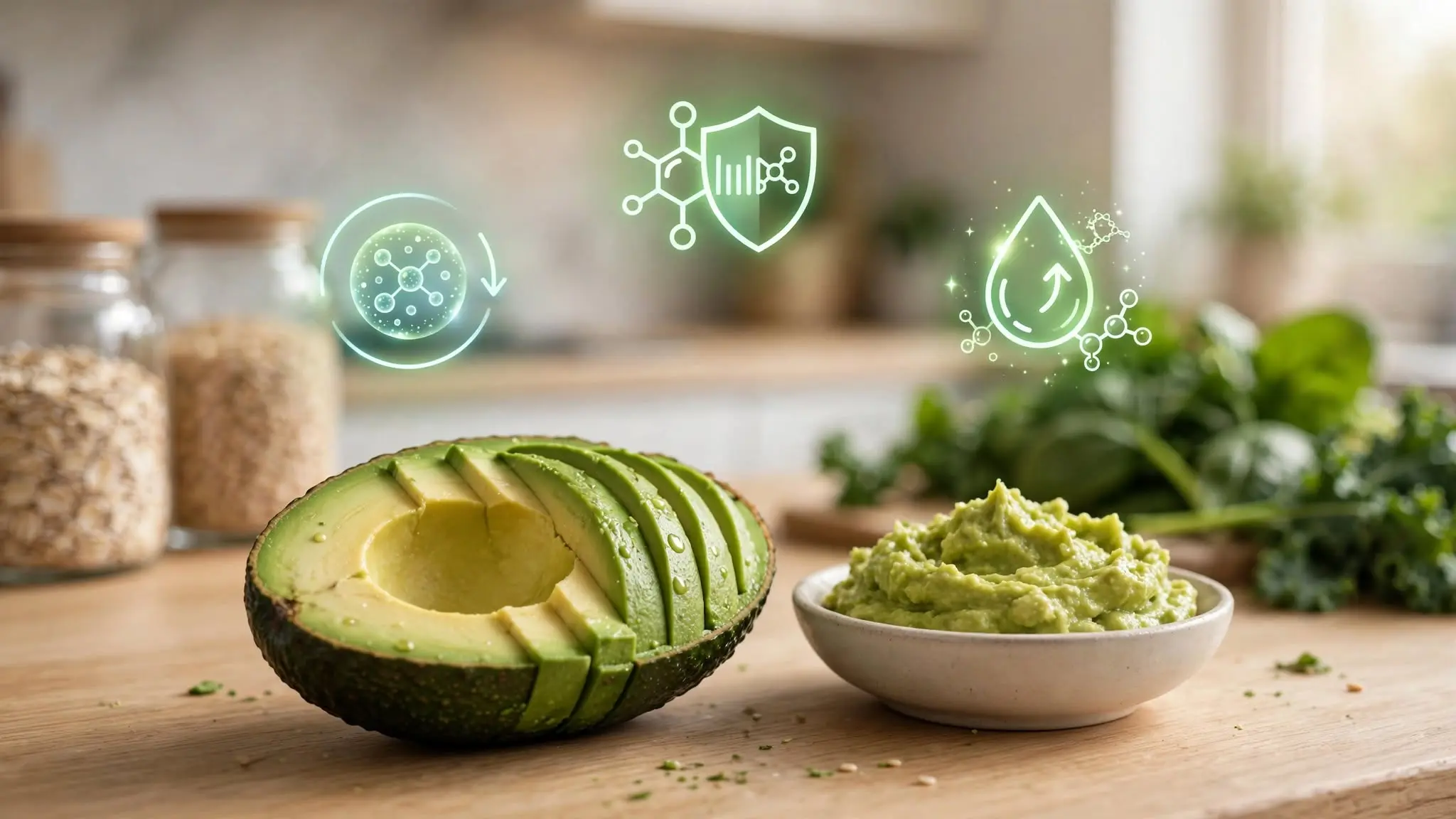
Uncle Saleem is not a man who expresses concern easily. He is an old family friend, so close that “Uncle” was never a formality, and he has lived decades of work and family life in that quiet calm that people either like or drive crazy. So when he came in one evening and almost casually mentioned that his GP had flagged his LDL and mentioned the word ‘statin’ for the first time, I knew that the word had been with him for quite a while before he said anything. That’s what sent me properly into the research on avocados help with cholesterol, not because avocado is in fashion, but because a specific clinical trial kept coming up in everything I read about dietary LDL management. What I found about how avocados help with cholesterol wasn’t the vague “healthy fats are good for you” story I was expecting. It was three different, mechanically defined pathways, backed up by peer-reviewed research.
Table of Contents
The Evening Uncle Salim Came Home With That Printout
Salim brought his blood test results round almost apologetically, like he wasn’t sure it was worth mentioning. His LDL had crept into the range where his GP had raised the statin conversation for the first time in his life. He’d never taken anything stronger than paracetamol, and he wasn’t ready for that conversation.
Understanding What the Numbers Actually Mean
Sitting with him over tea, I realised he didn’t fully understand what the different numbers meant. He kept saying his cholesterol was high, but he meant one specific number, and the distinction matters.
LDL, low-density lipoprotein, is the number his doctor was worried about, the particles that deposit in artery walls and form plaques over time. HDL, high-density lipoprotein, is the protective form, the cleanup crew carrying excess LDL back to the liver. Triglycerides are the blood fats elevated by sugar, refined carbs, and alcohol, a separate risk factor.
Salim listened carefully, then asked the question that shaped everything that followed. “So I need to lower one number and raise another at the same time?” I told him that was exactly the challenge, since most dietary interventions either lower LDL without touching HDL, or lower both. He thought about it. “Find me something that does both properly,” he said.
WORTH KNOWING
Most cholesterol-management advice focuses only on LDL reduction. But low HDL is an independent cardiovascular risk factor — independent of LDL levels. A dietary intervention that lowers LDL while maintaining or improving HDL is significantly more valuable than one that simply reduces total cholesterol. This dual action is one of avocado’s most clinically documented advantages.
Salim’s Position on Medication — And Why Dietary Change Became the First Step
The decision to start daily prescription medication carries particular weight in many South Asian households, and Salim’s was no exception. It isn’t irrationality, it’s a relationship with health that treats medication as a threshold. He wasn’t dismissing his GP’s advice, but he wanted to know whether three months of proper dietary change could move his numbers first.
His GP agreed to a review in three months. I wasn’t looking for folk remedies. I needed clinical evidence specific enough to stake three months of his health on. I’d already been researching other dietary interventions around this time, including the clinical evidence behind pomegranate juice, which I’ve covered separately in a piece on how pomegranate juice and cholesterol science actually connects. Avocado emerged alongside that research as a separate, equally evidence-grounded intervention working through completely different mechanisms.
The 3 Ways Avocado Actually Changes Your Cholesterol

Way 1 — Oleic Acid Targets LDL Directly and Protects It From Oxidation
It was late one night when I found the study that changed everything: a 2015 randomised controlled trial published in the Journal of the American Heart Association, independently funded, with 45 overweight adults on controlled diets. Eating one avocado daily as part of a moderate-fat diet reduced LDL by 13.5 mg/dL compared to controls, a clinically meaningful reduction.
The mechanism is oleic acid, the primary fatty acid in avocado, roughly 60 to 65 percent of its fat content, the same compound behind olive oil’s cardiovascular reputation. It works through two pathways: suppressing hepatic cholesterol synthesis, the liver’s own LDL production, and reducing LDL oxidation, the process that converts ordinary LDL into the dangerous, plaque-forming form.
I showed Salim the study the next time I saw him. He read it carefully, the way he always does, and asked one question: “Is this a proper trial, or a company paying someone to say their product works?” I explained what an independently funded RCT means. He nodded. “Okay. Buy the avocados.”
Way 2 — Beta-Sitosterol Physically Blocks Cholesterol Absorption
The second mechanism surprised me most, and it’s the one that eventually won his wife Nasreen over. Avocado contains beta-sitosterol, a plant sterol with a molecular structure almost identical to cholesterol.
In the small intestine, dietary cholesterol competes for absorption sites on the gut wall. Beta-sitosterol occupies those same sites, and in sufficient concentration, physically prevents dietary cholesterol from entering the bloodstream. One medium avocado contains roughly 76mg of beta-sitosterol, and alongside other plant sterol sources, nuts, seeds, wholegrains, the cumulative effect on LDL is clinically significant.
I explained this over dinner one evening. Nasreen had been quietly sceptical, avocado isn’t part of traditional cooking in their kitchen, and she wasn’t yet convinced it was doing anything. But when I described beta-sitosterol physically blocking absorption, “like a barrier at the door?” she asked, something clicked. “So it stops the bad cholesterol from even getting in?” Essentially, yes. She told Salim to buy more that weekend. Building a diet genuinely rich in heart-protective foods goes well beyond one ingredient, and I’ve covered the broader framework separately in a piece on the best low-sodium foods for a healthy heart, which worked alongside avocado in Salim’s case.
Way 3 — Soluble Fibre Binds Cholesterol and Removes It
This mechanism surprised me most, because avocado gets discussed almost entirely as a fat source. Nobody talks about its fibre. One medium avocado provides roughly 6 to 7 grams of dietary fibre, about a third soluble, and soluble fibre has one of the most well-documented cholesterol-lowering mechanisms in nutritional science.
In the small intestine, soluble fibre forms a viscous gel that binds to dietary cholesterol and bile acids, the fluids the liver produces to digest fats. By binding these compounds before reabsorption, it forces the liver to pull LDL cholesterol from the bloodstream to produce replacement bile acids — the same mechanism that makes oat beta-glucan the most clinically validated fibre for cholesterol reduction, connecting directly to broader gut health, something I’ve explored in more depth in a piece on the foods your gut is genuinely craving.
Salim started having half an avocado with his morning porridge, an unlikely combination that’s become entirely unremarkable in his kitchen now.
How Salim’s Household Actually Made Avocado a Daily Habit
The Avocado Learning Curve Nobody Warns You About
The first week was a mild disaster. Nasreen bought four avocados on a Saturday. By Tuesday they were rock-hard. By Thursday two had gone from rock-hard straight to overripe with no usable middle ground. Salim said nothing, but his face said everything.
The fix came from trial and error: buy them slightly firm, leave on the counter for two days, then move to the fridge, where they hold at perfect ripeness for another three to four days. That one piece of practical knowledge did more for the habit than any research paper.
The Meals That Made Half an Avocado Per Day Effortless
They stopped treating avocado as a special ingredient and started treating it the way most households treat yoghurt — something that just appears at meals. With eggs at breakfast, half an avocado became Salim’s standard weekday breakfast within a fortnight. As avocado raita, mashed with yoghurt, cumin, lemon, and coriander, sitting beside curry and rice, until Salim asked for it again. With morning porridge, half a sliced avocado alongside oats compounds the fibre effect. In smoothies, blended with banana and almond milk, it disappears in flavour but transforms texture. And simply sliced with salt, pepper, and lemon, what Salim eats when there’s no time for anything else.
The Three-Month Follow-Up — What Actually Happened
Salim didn’t say much about the avocado experiment while it was happening. He ate what was prepared, made no complaints, and waited for evidence rather than speculating.
His follow-up appointment came, his blood was taken, and the results came through that afternoon. His LDL had come down meaningfully, his total cholesterol had moved the right direction, and his HDL had held steady, which his GP noted approvingly, since many dietary interventions lower both. His GP recommended continuing the approach and pushed the statin conversation back to a further review months away. Salim read the results twice, folded the printout, and said to Nasreen: “The avocado raita. Keep making it.” That’s about as enthusiastic as his endorsements get.
His story is also a reminder of why paying attention to quiet signals matters, even asymptomatic numbers on a blood test rather than visible symptoms, something I’ve written about separately in a piece on the health signals people commonly ignore until it’s too late.
How Much Avocado Per Day for Cholesterol — The Evidence-Based Answer
The clinical research is consistent on dosage, and it’s more practical than most people expect. Half to one medium avocado per day, roughly 75 to 150g, is the dose associated with meaningful lipid improvements — not a large amount, roughly what fits in a small bowl.
| Avocado Form | Cholesterol Benefit | Notes |
| Whole avocado (½–1/day) | Full — all 3 mechanisms | Best option: oleic acid + beta-sitosterol + fibre |
| Homemade guacamole | Full | Same as whole avocado; avoid added cream or excess salt |
| Avocado oil (cooking) | Partial — 2 mechanisms | Retains oleic acid + sterols; loses soluble fibre |
| Store-bought guacamole | Reduced | Often less actual avocado, excess salt and preservatives |
| Avocado supplements/capsules | Unproven | No clinical trial evidence matches whole-food research |
One caution worth naming: avocado can’t compensate for what it’s eaten alongside. Serving it with heavily processed, high-salt snacks or fried food undermines its own benefit. Understanding what ultra-processed food actually does to cardiovascular health is essential context here; avocado is one piece of a whole picture, not a stand-alone fix.
When Avocado Is Not Enough — And When You Must See a Doctor
I want to be completely honest about the limits, because a fruit has real boundaries on what it can achieve.
SEE A DOCTOR ABOUT MEDICATION RATHER THAN RELYING ON DIET ALONE IF
You have familial hypercholesterolaemia (a genetic condition causing liver overproduction of LDL regardless of diet — statin therapy is typically necessary without delay); your LDL is above 5 mmol/L or total cholesterol above 7.5 mmol/L; you have established cardiovascular disease (history of heart attack, stroke, or significant coronary artery disease — dietary change is complementary to medication, never an alternative); or you see no improvement after three months of consistent dietary change.
Salim’s situation was mildly elevated cholesterol without other cardiovascular risk factors, and a GP who agreed a dietary trial was reasonable first. That’s the specific context in which this approach made sense. Anyone in a different situation should let their GP’s guidance take precedence over anything written here.
My Honest Takeaway — And What Changed for Salim
Three documented mechanisms, not marketing claims: oleic acid, which suppresses LDL production and oxidation, beta-sitosterol that physically inhibits the absorption of cholesterol, and soluble fiber binding cholesterol extraction. Together, they all explain why avocado helps with cholesterol in a way that persisted even under Salem’s own scepticism and suspicions, before the two were convinced of anything beyond the research.
Salim’s stats grew in the right direction in three months, his HDL didn’t fall as well as some interventions, and his statin interaction lagged rather than accelerated. Avocado worked with medical supervision, not replacement, within a plan that his GP was involved in from the start. That’s the version of the story that should be repeated: not a miracle fruit, but a strong evidence dietary tool used correctly.
Medical Disclaimer: This article is for general educational purposes only, reflecting personal research alongside publicly available peer-reviewed cardiovascular and nutritional evidence. It is not a substitute for professional medical advice. High cholesterol is a serious health condition. Never discontinue prescribed cholesterol-lowering medication based on dietary changes without consulting your GP or cardiologist. If you have cardiovascular disease, familial hypercholesterolaemia, or any other medical condition, seek personalised dietary guidance from a qualified healthcare provider.
Frequently Asked Questions
Does avocado lower cholesterol?
Yes — a 2015 randomised controlled trial in the Journal of the American Heart Association found one avocado per day reduced LDL cholesterol by 13.5 mg/dL through three mechanisms: reduced LDL production and oxidation, blocked cholesterol absorption, and cholesterol binding via soluble fibre.
How much avocado should I eat per day for cholesterol?
Half to one medium avocado per day, roughly 75 to 150g, is the dose used in clinical research, with consistency over 4 to 12 weeks mattering more than the exact daily amount.
Does avocado raise or lower HDL cholesterol?
Avocado does not significantly lower HDL, and the JAHA 2015 trial found it reduced LDL while maintaining or modestly improving HDL, improving the overall LDL-to-HDL ratio.
Is avocado oil as effective as whole avocado for cholesterol?
No — avocado oil retains oleic acid and some plant sterols but loses the soluble fibre found in whole avocado, so whole avocado provides all three mechanisms and remains more comprehensively effective.
Can avocado replace statins for cholesterol management?
No — avocado is a meaningful dietary complement but cannot replace statin therapy for those clinically prescribed it, particularly with familial hypercholesterolaemia, established cardiovascular disease, or very high baseline LDL.
