Quick Summary
Frozen isn’t a downgrade from fresh — research consistently shows frozen produce can retain as much or more nutrition than fresh food that’s sat in a fridge for days. The healthiest frozen meals UK supermarkets stock still need the same checks as any ready meal, protein, fibre, and salt per pack, and a handful of ranges, particularly a newly launched protein-focused range from Birds Eye, genuinely deliver on all three.
Introduction
A colleague of mine recently told me that she goes straight through the freezer at every store, on the vague assumption that freezing automatically means lower quality. When I asked if he had ever checked the nutrition panels, he admitted no—he just linked the freeze to school meals and low-effort convenience foods. This conversation took me straight into nutrition research, and what I found surprised me. That’s why I was forced to make a fair comparison of the healthiest frozen meals UK supermarkets, rather than treating whole freezer oil as a compromise. When I started really testing the healthiest frozen meals UK supermarkets against their original label numbers, and what research says about freezing and nutrition, my whole approach to that path changed.
Table of Contents
The Frozen Food Myth Nobody’s Corrected
This is the part that surprised me most, and it reshaped how I thought about the whole comparison before I’d even looked at a single product. I’d carried a similar assumption for years without ever actually questioning where it came from, and it turned out to be far less grounded in evidence than I’d assumed.
Why Frozen Often Retains More Nutrients Than Fresh That’s Been Stored for Days
Fresh vegetables lose nutrients continuously from the moment they’re harvested, through transport, shelf time, and however many days they sit in your fridge before you actually eat them. Frozen vegetables, by contrast, are typically frozen within hours of harvest, locking in their nutritional content at close to its peak. A University of Georgia study comparing fresh produce stored for five days against frozen equivalents found the frozen versions often came out ahead on vitamin A, vitamin C, and folate, a finding that directly contradicts the assumption most shoppers carry into the supermarket without ever questioning it. The research, led by food scientist Ronald Pegg and backed by the Frozen Food Foundation, tested eight common fruits and vegetables including broccoli, spinach, and blueberries under three conditions: fresh on the day of purchase, fresh after five days in a fridge, and frozen. The comparison against fresh-stored produce specifically, rather than same-day fresh, is the detail most coverage of this research misses, and it’s the comparison that actually matters for how most of us shop.
What Freezing Does and Doesn’t Affect
Minerals like iron, calcium, and potassium are essentially unaffected by freezing, they’re stable regardless of temperature. Protein content doesn’t change either. The nutrients most likely to see some reduction are water-soluble vitamins, particularly vitamin C and some B vitamins, though even these losses tend to be modest compared to what fresh produce loses simply sitting in a fridge for a week. Fat-soluble vitamins, A, D, E, and K, also hold up well through the freezing process.
Blanching Before Freezing, and Why It Matters
Most vegetables are briefly blanched, dipped in boiling water then rapidly cooled, before freezing. This step deactivates enzymes that would otherwise continue degrading colour, texture, and nutrients during frozen storage. It does cause a small vitamin C loss upfront, but it’s what allows frozen vegetables to hold their nutritional value reliably for months rather than days, which is a trade worth making given how much fresh produce loses to a week of fridge storage anyway.
Why I Started Actually Checking the Freezer Aisle
My colleague’s comment sent me down a genuine rabbit hole. For years I’d carried a similar assumption myself without ever questioning where it came from. Out of curiosity more than anything else, I started actually reading labels in the frozen section properly for the first time, expecting to find watered-down, lower-quality versions of what I’d normally buy fresh or chilled.
Instead, I found meals with comparable protein and fibre figures to their chilled equivalents, at a lower price, with a shelf life measured in months rather than days. The prejudice I’d been carrying around about that aisle turned out to have very little basis once I actually checked.
What’s Actually Worth Buying
This comparison is based on checking labels across several visits, since ranges and exact formulations shift periodically, and the freezer aisle in particular seems to rotate stock more slowly than chilled.
Birds Eye Get Real — The New Protein-Focused Frozen Range
Birds Eye launched a new frozen range called Get Real in Asda, Waitrose, and Sainsbury’s, built specifically around higher protein. The range includes a Mexican Chicken Burrito Bowl, Red Thai Chicken Curry, Indian Chicken Curry, and Moroccan Chicken Rice Bowl, each ready in around seven minutes from frozen. The sauces are built with chickpeas specifically to boost the protein profile, and each meal delivers an average of 34 grams of protein alongside 8 to 11 grams of fibre and at least two of your five-a-day, priced at around £3.75 for 350g. It’s one of the more deliberately formulated frozen ranges I’ve come across, rather than a health claim added after the fact.
Frozen Vegetables and Fish — the Unsung Heroes
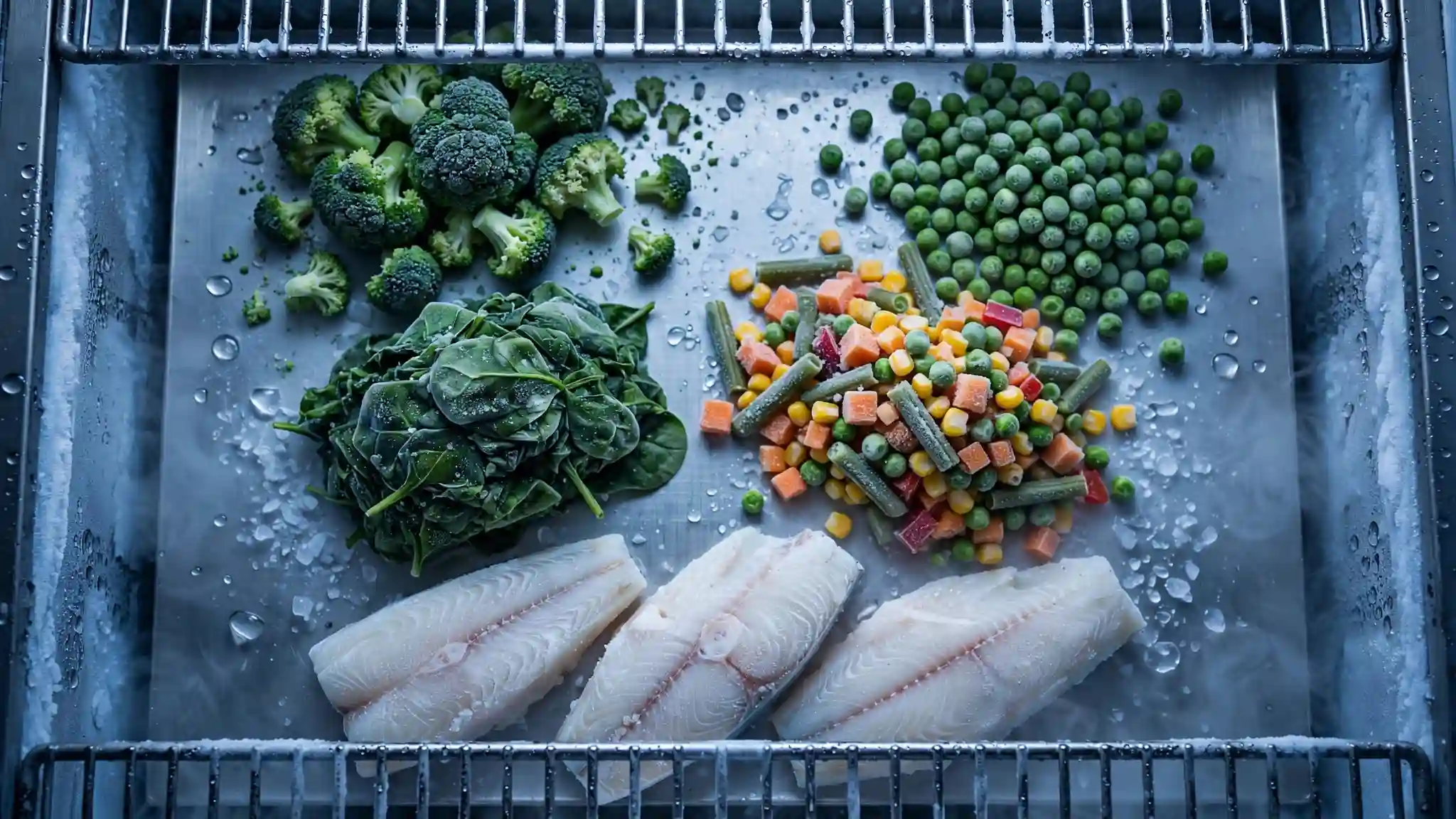
Plain frozen vegetables and frozen fish fillets, without breadcrumb coatings or sauces, are consistently among the best value items in the entire freezer aisle. Treating frozen vegetables as a genuine pantry staple rather than a fallback has probably done more for my actual weekly nutrition than any single frozen ready meal on this list, simply because they’re so easy to add to almost anything without any real thought or planning involved. A bag of frozen mixed vegetables microwaved alongside almost any main closes a fibre gap that most convenience food genuinely struggles with, a pattern I’ve covered in more depth in high-fibre ready meals UK, where the same principle applies to chilled meals too. Plain frozen fish, meanwhile, gives you a reliable protein base without the coating and sauce variability that makes some breaded options harder to judge at a glance.
For Named Ready-Meal Picks by Supermarket
Iceland’s expanded Slimming World range, alongside Tesco, Sainsbury’s, and Aldi’s own healthy ranges, are covered in full detail in my wider comparison of healthiest ready meals in UK supermarkets, including specific named dishes and their exact protein and salt figures. Rather than repeat those numbers here, that guide is the better resource if you want the full chilled-and-frozen supermarket breakdown side by side.
| Category | Protein | Fibre | Standout |
| Birds Eye Get Real range | ~34g avg/meal | 8–11g | New 2025/26 launch, chickpea-based sauces |
| Iceland Slimming World range | Often 20g+ | Decent | See full breakdown in sibling guide |
| Tesco/Sainsbury’s/Asda own-label frozen mains | Moderate | Moderate | Mirrors chilled equivalents, better price |
| Plain frozen vegetables | Low | High | Cheapest way to add fibre and volume |
| Frozen fish fillets (plain) | High | None | Reliable, unprocessed protein base |
Portion Control Is Frozen’s Real Advantage
A frozen meal sits in its portion until you actively choose to reheat it, whereas a chilled meal in the fridge is far easier to eat straight from the tray without much thought, since it’s already defrosted and ready. That single difference in friction has genuinely changed my portion sizes more than any calorie counting ever did. It sounds like a small thing, but the extra step of pulling something from the freezer and waiting for it to cook creates a natural pause that a ready-to-eat chilled meal simply doesn’t offer.
There’s also a practical batch-buying benefit that chilled food simply can’t offer. Buying several frozen meals at once, when they’re on offer, and having them ready across weeks rather than days, removes a surprising amount of the daily decision fatigue around what to eat. On weeks I do have time to cook, I still lean on batch-cooking and freezing my own meals instead, and 60 healthy meal prep ideas covers several options that freeze well if you want to build your own stash rather than relying on shop-bought.
What I’ve Noticed in Other People
A colleague of mine switched to keeping a stocked freezer specifically to cut down on food waste, since chilled meals kept going off before she got to them during unpredictable work weeks. She said the frozen switch alone cut her weekly food waste noticeably, on top of whatever nutritional difference it made. A friend who’s been trying the newer high-protein frozen ranges told me the portion sizes and protein content were the first frozen meals that actually left him satisfied rather than needing something extra straight afterward, a complaint he’d had about frozen food for years before trying one of these. A neighbour who batch-buys frozen fish fillets and vegetables specifically, rather than ready meals, told me it’s become her entire strategy for eating well on a tight budget, since both stay stable in price and quality regardless of season, unlike their fresh equivalents. A colleague from a completely different team mentioned she’d started buying double portions of frozen vegetables specifically during weeks she knew would be hectic, treating the freezer as insurance against the takeaway temptation that usually followed a stressful day.
A Word of Caution: Frozen Doesn’t Automatically Mean Healthy
Frozen pizzas loaded with processed cheese and unhealthy oils are just as much a concern in the frozen aisle as anywhere else, and breaded or battered items in particular are worth checking carefully, since the coating often adds far more calories and salt than the food underneath.
It’s easy to assume the whole aisle got a pass just because plain frozen vegetables and fish did, but the same variation exists here as in any other part of the shop. I’ve covered this general pattern, where a healthy-sounding category hides some genuinely poor individual products, in 23 ultra-processed foods to always avoid, and it’s just as relevant standing in front of a freezer as it is anywhere else in the shop.
How Long Healthy Frozen Meals Actually Keep
Most frozen ready meals keep safely for several months in a freezer running at minus 18°C or below, though it’s always worth checking the specific use-by guidance on the pack rather than assuming every product behaves the same way. Plain frozen vegetables and fish tend to hold their quality for even longer, often six months or more, which is part of what makes them such a reliable pantry staple rather than something you need to plan around precisely.
Reading a Frozen Meal Label the Same Way You Would a Chilled One
It’s easy to slip into treating the freezer aisle as a different set of rules entirely, but the same checks apply here as anywhere else in the shop. Protein per pack, not per 100g, fibre content, and salt as a percentage of your daily reference intake are the three numbers worth going straight to, regardless of whether the meal is sitting in a chiller or a freezer. The only genuinely frozen-specific detail worth adding to that checklist is cooking method, since some meals lose a noticeable amount of texture or flavour in the microwave compared to the oven, which occasionally affects portion satisfaction more than the numbers on the pack would suggest.
My Honest Freezer Rotation Now
None of this required a complete overhaul of how I shop, just a change in which aisle I trusted by default:
1. I check protein, fibre, and salt on frozen meals exactly the same way I would a chilled one
2. I keep plain frozen vegetables stocked permanently, not just as a backup
3. I buy a few meals from the Birds Eye Get Real range specifically for genuinely portion-controlled evenings
4. I check breaded and battered items carefully rather than assuming “fish” or “chicken” on the front tells the whole story
5. On weeks I have more time, I still lean on batch-cooking and freezing my own meals instead of buying pre-made
A Note on This Guide
This is general information based on comparing widely available products and published nutrition research, not a personalised nutrition plan. Ranges and formulations shift regularly, so treat specific figures here as a general guide rather than fixed, and always check the current pack for the most accurate numbers before relying on anything specific mentioned here.
Final Thoughts
Healthiest frozen meals UK supermarkets really stand out from their cold counterparts, and in some respects, especially in terms of nutrient retention and quantity control, freezer oil is considered a better choice than a backup. My partner hasn’t fully gotten to the freezer yet, but he’s started checking the labels there instead of going straight ahead. I stopped taking this oil as a last resort when I checked the figures, and since then it has become a permanent and really useful part of my kitchen. If you’re avoiding the freezer section because of the same assumption, it might be better to check a label or two the next time you get there, rather than going straight down the habitual chiller route.
Frequently Asked Questions
Is frozen food less healthy than fresh?
Not generally. Research shows frozen produce often retains as much or more nutrition than fresh food that’s been stored for several days, since freezing locks in nutrients close to harvest.
What are the healthiest frozen meals in UK supermarkets?
Birds Eye’s new Get Real range, plain frozen fish, and plain frozen vegetables are among the strongest options, offering good protein and fibre without excess processing.
Does freezing destroy vitamins?
Freezing itself preserves most nutrients well. Some water-soluble vitamins like vitamin C can reduce slightly during blanching, but losses are generally smaller than those from days of fresh storage.
Is Birds Eye’s new Get Real range actually healthy?
Largely yes. Each meal delivers an average of 34 grams of protein and 8 to 11 grams of fibre, alongside at least two of your five-a-day, with no artificial additives listed.
How long can healthy frozen meals be stored?
Most frozen ready meals keep safely for several months in a freezer running at minus 18°C, though it’s always worth checking the specific use-by guidance on the pack.
This article is for general information only and isn’t a substitute for personalised medical or dietary advice from a qualified professional.
