6 Simple Steps Every Family Can Start This Week
Evidence-based habits that build lasting health for every person in your household
Introduction
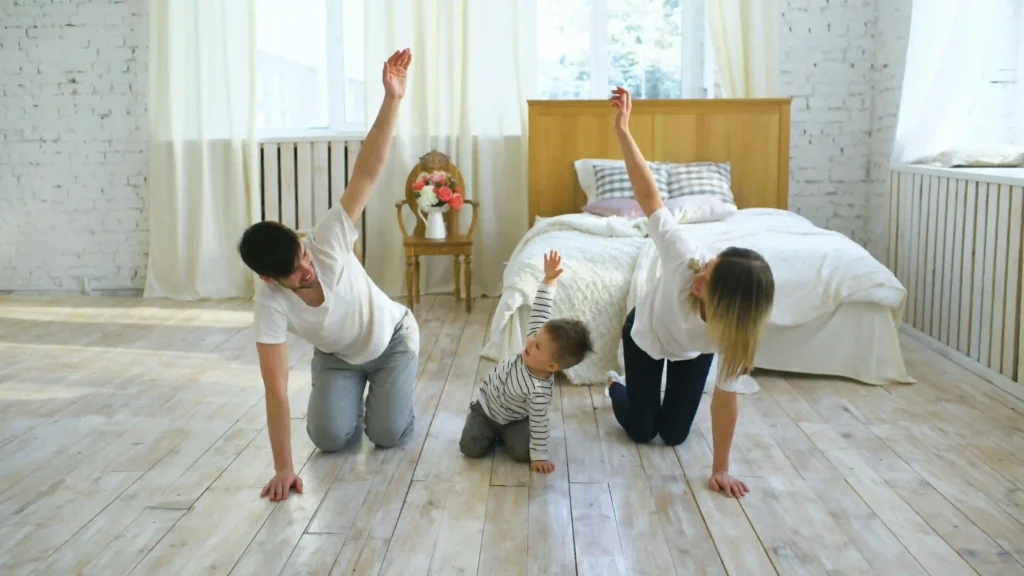
Suppose it were a Tuesday evening. The kids are all tired from school, dinner is out of the box, screens are playing in three different rooms and everyone is in bed past their bedtime. Sound familiar? It’s not a failure for most families, it’s Tuesday. And it’s very normal. Yet it’s also where health is created or slowly undermined, one evening, at a time.
It has been demonstrated over the years in the field of family health and preventive medicine that the healthiest families in the world have nothing to do with having more money, more time, or better genes. They exercise better routines and habits which, unlike genes, can be altered. Every action made in a home, eating, sleeping, activity or emotional, can impact the health of each individual within it for the rest of their life.
This article focuses on 6 steps that can be taken this week based on evidence and practical experience by any family. Not on a new year’s day on January 1st. Not until things slow down. This week. These can be done one per day, or any combination of the above. Pick one. Build from there.
Table of Contents
Why Family Health Matters More Than Individual Health
The majority of health information is directed towards the individual. Health behaviours are not individual; they occur in families. Studies reveal that if one member of a family makes a big change in their health, then within 6 months, all other members follow suit. The household effect is bi-directional – healthy behaviors spread as well as unhealthy behaviors.
Home can have a significant impact on children. Children’s diet, activity and stress reactions observed from age 3 to 12 are their life-long “baseline” behaviour. What you set as an example now, they’ll emulate for years to come. You can not only help yourself to become healthier as a family, but you can also help your kids get a head start that will help them stay healthier for their entire lives that no supplement or school programme can offer.
6 Simple Steps Every Family Can Start This Week
Step 1 — Eat Together, and Eat Better Together 🍽️
Among the most powerful and consistent results of family health science research is that of shared family meals. Children of families that have four or more meals together each week have a more balanced diet, are less likely to be overweight or obese, do better in school, and experience less anxiety and depression. This isn’t only because the food is delicious — eating together establishes a routine, a ritual and a conversation, all of which have their own health benefits that are not related to what is being consumed.
A Leeds mum told how she enforced a ‘no phones’ rule three nights a week.A Leeds mum opened up about her no phones rule which she implemented three evenings a week. In one month her teenage daughter was eating salad in the supermarket, instead of chips, because of her. In three months, the entire family’s consumption of vegetables had doubled, without a single member of the family being lectured on nutrition.The whole family’s intake of vegetables had doubled in three months, but it was not because anyone had been lectured about nutrition, it was because they all enjoyed the food more when they were eating together, but not too quickly together! It’s not a perfect diet that’s the objective. It is always improved, as compared to last week.
This week of action is to try and have 3 family meals (no phones, all present). The food doesn’t necessarily have to be fancy. Eating as a family is better than a perfect meal alone.
Step 2 — Make Water the Default Drink 💧
The average child in the UK drinks a total of eight teaspoons of sugar a day in drinks (fruity juices, squashed, fizzy drinks and flavoured water). This one habit contributes to childhood obesity, dental decay and the energy slump that makes afternoons in the classroom a challenging time.
This is a family situation in particular. If one child is picked out to drink water and the other children have juice, there’s going to be some resistance. If everyone in the family agrees to this change, it is so much easier for kids to agree, as it’s not something they are being punished for! A family in Bristol took their entire family to remove sugar from the house for 1 month. The first week brought out the complaints. By the end of week 3 children were drinking water freely without being prompted to do so. After 6 weeks, both mothers and fathers reported improved sleep and increased energy levels consistently during the day. One easy change in the home — measurable outcomes for everyone in the home.
The action for this week: Take one sweetened beverage off the family’s menu. Not all of them — only one. Replace with water. Build from there.
Step 3 — Move Together 🏃
You don’t need to join a gym or buy any equipment in order to exercise. It needs activity – and families have more opportunities for it than they might be taking advantage of. The World Health Organization (WHO) suggests that children engage in at least 60 minutes of moderate exercise daily while adults should do at least 150 minutes of moderate exercise per week. The reasons for most families not making it to the goal is not a lack of will, but because it is not easy for them to move, it’s not convenient for them to move, and they are not in a car to move.
One dad from Manchester began a two hour hike each night after dinner with his two kids, with no plans to an agenda, just strolling and conversing. In two months, it was now a request from the children and no longer the parent. After 6 months, it was noted that the kids’ school performance had improved significantly while the father had shed pounds, but had otherwise remained the same. Better sleep was the result of physical activity, better mood, which was the result of better sleep, which was the result of better food choices. Movement is not a single blessing, it is a whole chain of blessings.
Walking to school rather than driving, a weekend bike ride, a game in the park – the research speaks for itself: it is just as important to get regular movement throughout the day as it is to get regular exercise. It is type rather than consistency that is important.
Action for this week – organise one family moving activity – go for a walk, swim or cycle. Do it as a joint effort and not obligatory.
Step 4 — Protect Everyone’s Sleep 💤
Sleep is the most consistently undervalued health behaviour in family life. Under-slept children are unable to learn as well, are at higher risk of obesity, have decreased immunity, and mental health is significantly worse. Adults who don’t get enough sleep regularly have higher risks of cardiovascular diseases and a much higher stress reactivity. A lack of sleep doesn’t mean “busy” it’s a health risk for everyone who suffers from it.
For children 6-12 years old, 9-12 hours are recommended. Adolescents require 8-10 hours. Adults require 7 to 9 hours. Most families are lacking in all age groups — and the main cause is screens. One Birmingham mum transferred all of her family’s phone chargers to the kitchen overnight. She’s been resisting her teenage son for a week. By week three, he was sleeping 90 minutes longer a night and his demeanor was clearly different. The solution to the environment altered the whole family’s sleeping pattern. Sleep hygiene is a family issue, and not a single-person exercise.
Action this week: Remove all chargers from all bedrooms – including adult bedrooms. Establish a regular bedtime for the whole family, such as 30 minutes earlier. The rule is not enough to cause the environment change.
Step 5 — Talk About Mental Health — Make It Normal 🧠
One in 6 children in the UK has a mental health problem. Most do not get help, not because it is not there, but because they don’t hear it talked about at home in a way that it is safe to ask for. Poor mental health causes poor physical health — poor sleep, comfort eating, lack of physical activity. Solving it is not an issue outside of the family health. It is integral to it.
The single most impactful way to help normalize mental health discussions is to have them. It’s not about making dinner therapy, but rather making it an opportunity for learning. It is building a space where ‘I am struggling’ is ok to say as ‘I am hungry’. Use open-ended questions like ‘What was the hardest part of your day?’, instead of ‘Did you have a good day?’. Show an example of emotional honesty — ‘I was frustrated today and this is what I did about it! One family added a new addition to dinner conversation, a weekly ‘rose and thorn’ session. Their children were sharing their concerns with others within three months of the time, and they wanted to share them.
This week’s action: pose one sincere open question to each member of the family regarding how the person is feeling. Listen non-judgementally. Observe any changes during the next week.
Step 6 — Stay on Top of Preventive Health 🏥
The biggest health choice that most families make and that they regularly put off is the regular health check-up. Most serious health conditions occur over a course of years, and do not show any apparent symptoms — including hypertension, type 2 diabetes, thyroid disorders, high cholesterol. The families who catch these conditions early are the ones who take regular check-ups, before the symptoms start showing.
For families this involves having annual blood pressure checks for adults over the age of 30, blood glucose tests for those at risk, dental checks once every six months for all family members, eye tests every two years and also ensuring that vaccination is up to date for children. An elevated blood pressure was detected in one father at a routine family health check-up, before it had done any harm. The family approached checkups as a regular joint activity, and not as a worrying activity for the child, which led the children to experience preventive health as routine and unremarkable. It’s one of the longest lasting presents a parent can give.
Action this week: Make an appointment with a health professional (or your partner or one of your children). Just one. Prevention begins one booking at a time.
The Most Important Thing to Remember
Most families do not fail at health because they lack information.
They fail because they try to change everything at once, have one hard week, and conclude they cannot do it.
Pick one step — the one that feels most achievable — and do it consistently for two weeks.
Then add another. Small changes done consistently build lasting health. Every time.
Frequently Asked Questions
Q: How do I get my children interested in healthy eating?
Kids who have participated in food selection and preparation are much more likely to eat healthy foods. Go to the supermarket and give them one vegetable to pick. Allow them to do simple cooking chores. Most importantly – eat the same food! Kids do what their parents do a lot better than what their parents tell them to do.
Q: How long does it take to see results from family health changes?
Improvements in sleep may be evident in 1-2 weeks. Energy level changes as a result of dietary changes will usually occur within 2-4 weeks. Improvements in mental health typically occur in a few weeks after family connection. The changes in the body will take 3-6 months of dedication in order to see weight loss and metabolic changes, but the foundation is laid much earlier.
Q: What if my partner does not want to make health changes?
Make changes visible and positive – start with you. Over and over, it’s been proven that, if one family member makes lasting health changes, so do the rest — not because they’re nagged, but because they see the results and want them too. Set a good example, not a talking down.
Q: How much exercise does a family need each week?
The WHO guidelines suggest 60 minutes of moderate exercise for kids and 150 minutes per week for adults. Consistency is more important for families beginning at low levels of activity. A good beginning is three 20-minute walks each week, rather than an attempt to walk for an hour or two at once followed by nothing more on that day.
Conclusion
There is such a thing as a healthy family, even if they’re not perfect. It simply has to go on trying… together. The shared meals at night, the phone chargers in the bedroom, the walk after dinner, the open question over breakfast: none of these at the time appear to matter. But they add up and quietly but consistently, in the health of each of your household.
Pick one step from this list and begin it this week! The easiest step to take is the one you need to take. Return next week and add another! In 6 weeks you will have created habits that will stay with you for much longer than a resolution – because it’s actually how your family lives.
Which step are you starting with? Leave a comment below we would love to hear. Find another family who needs it and share it with them.
Medical Disclaimer:
This article is for general informational and educational purposes only. It does not constitute medical advice. Always consult a qualified healthcare professional regarding any health concerns.
5 thoughts on “Your Family’s Health Starts at Home”
Comments are closed.