Quick Summary: Three years after my uncle was diagnosed with gout, he mentioned at a family gathering that he still missed his morning orange, almost wistfully, which sent me back into the research to check whether cutting it had ever actually been necessary. It hadn’t. Whole oranges turned out to be low-purine, genuinely helpful for uric acid management, and never once named in his original medical advice.
Introduction
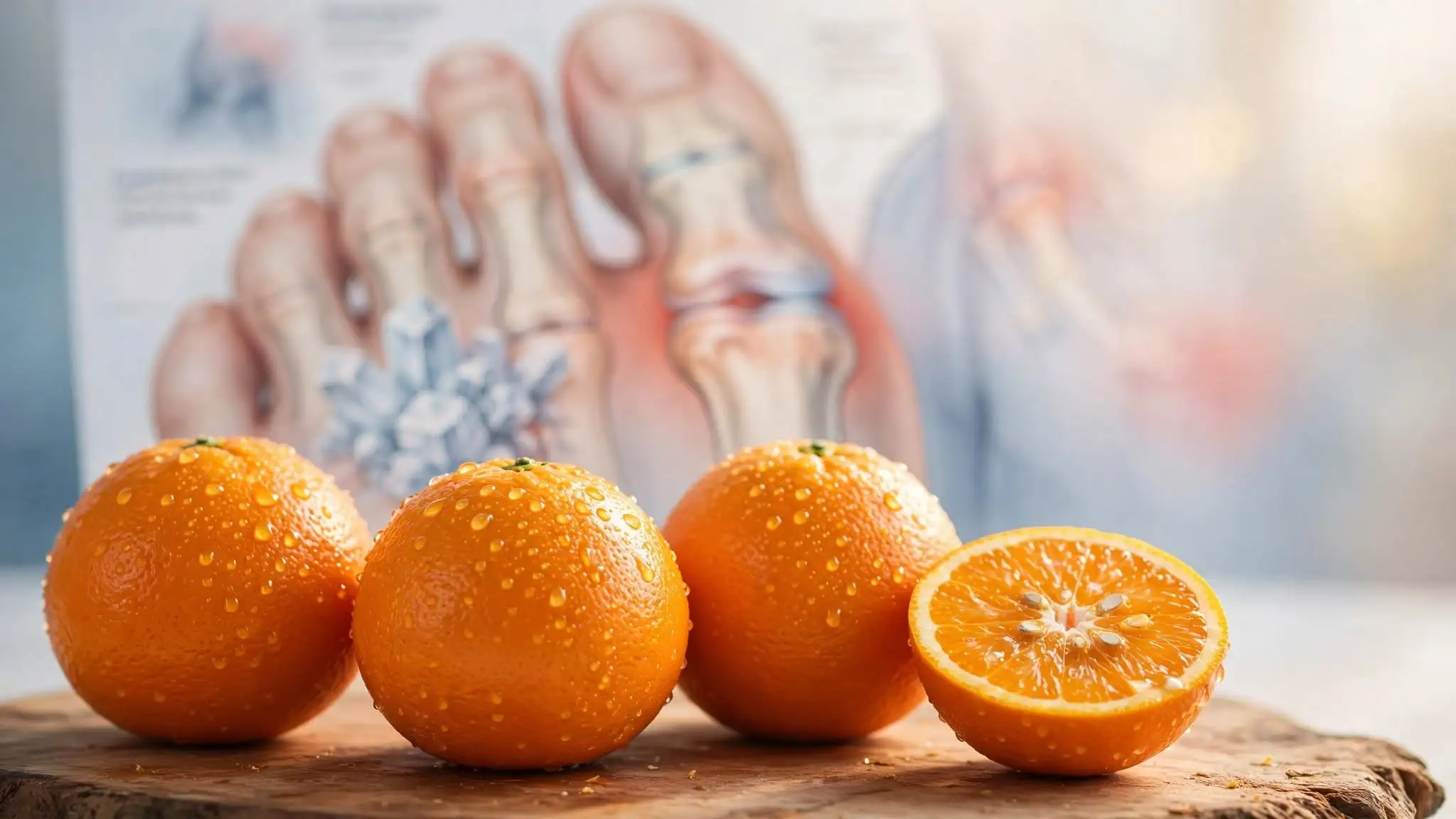
Can I eat oranges with gout? My uncle asked himself that question the moment he was diagnosed in his early fifties, and answered it himself with a firm no, cutting the fruit he’d eaten every morning for decades. Three years later, at a family dinner, he mentioned almost in passing that he still missed it, in a tone that had more resignation in it than complaint. That single comment, not the original diagnosis, is what sent me back to actually check whether he’d ever needed to give it up in the first place. It’s the kind of offhand remark that’s easy to let pass, and I nearly did, before it occurred to me that three years is a genuinely long time to quietly miss something for no reason at all.
Table of Contents
The Advice That Never Actually Named Oranges
When I went back through what his rheumatologist had actually told him, oranges were never mentioned once. The guidance was about purine-heavy foods like red meat and shellfish, alcohol, and reducing sugary drinks generally. Nowhere in that conversation had anyone specifically flagged citrus fruit as a problem. I asked my uncle directly whether he remembered oranges coming up at all, and he genuinely couldn’t recall it — the closest anyone came was a passing mention of “sugary drinks,” which he’d quietly generalised into fruit as a whole category.
My uncle had filled in the gap himself, using a kind of category-thinking that made sense on the surface: oranges are sweet, they’re citric, they contain fructose, and gout advice mentions all three of those words somewhere. He connected dots that weren’t actually meant to be connected, and nobody along the way corrected the assumption, because nobody realised he’d made it. It’s a strange gap in how medical advice sometimes travels — a doctor gives careful, specific guidance, and the patient, left to interpret the parts that weren’t explicitly covered, fills the silence with their own best guess rather than a follow-up question.
So Can You Actually Eat Oranges With Gout?
The short answer, backed by current research and major rheumatology guidance, is yes. Whole oranges are generally safe, and likely beneficial, for most people managing gout. The confusion almost always comes from conflating whole oranges with orange juice, which carries a meaningfully different risk profile entirely. That single distinction, form over food, resolves most of the anxiety people carry about this specific question once it’s actually spelled out.
The Purine Math Nobody Walked Him Through
Where Oranges Actually Rank
Purines are the compounds that break down into uric acid in the body, and elevated uric acid is what eventually forms the urate crystals responsible for a gout flare [1]. Oranges contain roughly 20 milligrams of purines per 100 grams, one of the lowest figures of any commonly eaten food. A medium orange contributes around 26 milligrams of total purines, compared to 100 to 200 milligrams from the same weight of red meat. Organ meats and certain shellfish sit even higher still, often several times that figure, which is where the genuinely meaningful purine risk in a typical diet actually concentrates.
| Food | Purines per 100g | Category |
| Oranges | ~20mg | Very low |
| Dairy / Eggs | Low | Very low |
| Red meat | 100–200mg | High |
| Organ meat / shellfish | 200mg+ | Very high |
From a purine standpoint alone, oranges sit in the same low-risk category as most vegetables, dairy, and eggs, foods that nobody managing gout is typically told to avoid. Seeing the actual numbers side by side was, for my uncle, more convincing than any general reassurance could have been — a medium orange sitting closer to a glass of milk than to a plate of liver in terms of purine load isn’t something you can argue with once you’ve seen it written down.
Why “Sweet” Was the Wrong Category to Judge It By
My uncle’s mistake wasn’t stupidity, it was applying the wrong filter. Sweetness has essentially nothing to do with purine content, which is the actual driver of gout risk from a dietary standpoint. Plenty of genuinely sweet foods are purine-negligible, and plenty of savoury, non-sweet foods, like organ meat and certain seafood, carry the highest purine loads of anything commonly eaten. Judging a food’s gout risk by how it tastes turns out to be almost entirely unreliable as a shortcut. It’s an understandable mistake, since most dietary advice we absorb casually throughout life does group foods by taste or food group rather than by the specific biochemical property that happens to matter for a particular condition.
The Vitamin C Angle His Rheumatologist Actually Confirmed
How Vitamin C Affects Uric Acid Excretion
A single orange provides roughly 70 milligrams of vitamin C, and vitamin C has a documented relationship with how the body clears uric acid. It competes with uric acid for reabsorption in the kidney’s filtration pathways, meaning higher vitamin C intake tends to increase how much uric acid the kidneys excrete rather than returning it to circulation [2]. It’s a genuinely elegant mechanism once you understand it, and one that had never once been explained to my uncle in three years of otherwise careful medical guidance.
This isn’t a single-dose fix. One orange won’t transform anyone’s uric acid levels overnight, but it contributes meaningfully to a cumulative daily intake that several large observational studies have linked to lower serum uric acid over time. Consistency across weeks and months is doing the actual work here, not any single morning’s breakfast, which is a distinction that’s easy to lose when a health claim gets compressed into a headline.
Why This Doesn’t Mean “Take a Supplement”
It’s worth being precise here, because the nuance matters. Clinical guidance on high-dose vitamin C supplements for gout is more cautious, with some rheumatology bodies conditionally recommending against them due to inconsistent trial evidence. That caution applies specifically to concentrated supplements, not to dietary vitamin C from whole fruit, where the evidence and the nutritional context are both considerably more favourable. My uncle’s rheumatologist confirmed this distinction directly when he finally asked, which is the exact conversation that should have happened three years earlier. It’s a small illustration of a bigger point: a lot of dietary confusion isn’t really about conflicting evidence, it’s about a supplement caution and a whole-food fact getting flattened into the same generic warning somewhere along the way.
Whole Fruit vs. Juice — The Distinction That Actually Mattered
What the Research Shows About Juice Specifically
Large observational studies have consistently found that orange juice, consumed regularly, is associated with a higher risk of gout, while whole oranges tracked in the same data show no comparable association. One well-cited study found that a single daily serving of orange juice carried meaningfully elevated risk, with two or more servings daily showing an even stronger association. Whole oranges simply didn’t show the same pattern. It’s the kind of finding that only becomes visible once researchers separate the two forms of the same fruit rather than lumping “citrus” together as one category.
Why Fibre Changes How the Sugar Behaves
A whole orange contains around 3 grams of dietary fibre, which slows how quickly its natural fructose is absorbed. Fructose metabolism increases the breakdown of ATP, which produces uric acid as a byproduct, and rapid, concentrated fructose delivery tends to drive that process harder than the same sugar absorbed slowly. Orange juice removes the fibre and concentrates the fructose from multiple oranges into a single glass, delivering exactly the kind of fast sugar load that whole fruit, by design, avoids. Eating an orange and drinking the juice from several oranges are not, metabolically, the same event at all, even though they sit right next to each other in most people’s mental category of “basically the same food.”
What Three Years of Unnecessary Restriction Actually Cost Him
It’s tempting to treat this story as a minor inconvenience, three years without a piece of fruit he liked, but that undersells what actually happened. My uncle didn’t just lose a small daily pleasure; he spent three years quietly believing his own body had turned against something harmless, treating a completely safe habit as a personal risk he had to manage through willpower.
That’s a real cost, even if it’s not the kind that shows up on a blood test. Unnecessary dietary restriction built on an incomplete assumption tends to compound quietly over years rather than announcing itself, and the toll isn’t just nutritional, it’s the low-grade vigilance of constantly monitoring something that never actually needed monitoring in the first place. When he finally said “three years” out loud after I shared what I’d found, the exasperation in his voice wasn’t really about the orange. It was about how long an unexamined assumption had been allowed to sit unquestioned. I’ve thought about that reaction more than almost anything else that came out of this whole conversation, since it’s rarely the big, dramatic medical decisions that quietly cost people the most over time — it’s the small, unverified ones nobody thinks to revisit.
Rebuilding the Habit Without Overcorrecting
How Much He Actually Eats Now
The change he made was deliberately modest. One medium orange, eaten whole, most mornings, the same way he used to before the diagnosis. He dropped the occasional glass of juice he’d started drinking as a substitute, which was, somewhat ironically, the more genuinely risky habit of the two. He kept every other part of his actual gout management intact: limiting red meat, avoiding alcohol, staying well hydrated, and cutting back on ultra-processed food. Nothing about his broader diet needed to change, which was, if anything, the most reassuring part of the whole process for him.
This wasn’t a swing toward eating fruit without any thought at all. It was correcting one specific, unnecessary restriction while leaving the genuinely useful parts of his diet exactly where they were. That distinction, between fixing a mistake and abandoning caution altogether, mattered to how he approached it, and it’s a distinction worth applying more broadly than just to this one fruit — the goal was never to swing from restrictive to careless, just to replace an assumption with an actual answer.
Other Fruits Worth Knowing About
Tart Cherries and Kiwi — The Short Version
Tart cherries have some of the strongest research behind them for gout specifically, linked in multiple studies to reduced flare frequency and lower uric acid, likely through anthocyanins with anti-inflammatory properties. Kiwi delivers more vitamin C per 100 grams than oranges with somewhat less fructose per serving, making it another reasonable option worth rotating in. Neither needs to replace oranges in a daily routine — the point of mentioning them isn’t to introduce a new restriction dressed up as an upgrade, just to note that variety across a few genuinely low-risk fruits tends to serve gout management better than relying on any single one.
Don’t Overlook Plain Water
Hydration gets less attention than specific foods, but it plays a genuine role in gout management, since adequate fluid intake supports the kidneys in clearing uric acid efficiently. Oranges contribute a small amount of water content alongside everything else they offer, but they’re a minor player next to simply drinking enough water consistently through the day, something my uncle admits he was worse at than his diet during the years he was overthinking fruit. He’s since started keeping a water bottle at his desk, a change that had nothing to do with oranges at all but came out of the same broader conversation about what actually mattered for managing his condition day to day.
When Diet Isn’t Enough
Dietary changes support gout management, but they don’t replace medical treatment for people experiencing frequent flares.
Worth knowing:
If flares are regular or severe, uric acid-lowering medication such as allopurinol is often the more effective intervention, with diet working best as a complement to that treatment rather than a substitute for it. Anyone with a confirmed gout diagnosis experiencing ongoing flares should discuss this directly with a GP or rheumatologist rather than relying on dietary changes alone.
My uncle’s flares have been well controlled through medication for years now, and the orange conversation was always separate from that treatment, never a replacement for it.
Conclusion
Can I eat oranges with gout? For my uncle, and most people who are struggling with the condition, the answer was yes from the start, and their abstinence from one of their breakfast habits for three years was based on an assumption that no one had really checked. Whole oranges are low in purines, provide beneficial vitamin C, and behave very differently from the juices in the body that most people mistakenly mix them with. If you’ve cut your oranges out of caution without asking your doctor specifically, this conversation is worth communicating, as the answer can be much easier than your current restriction. My uncle now gets his orange back most mornings, and the only real regret he mentioned is that he didn’t ask a specific question three years ago.
Medical Disclaimer: This article reflects personal experience and general health information drawn from published research. It is not medical advice and should not replace a consultation with your GP or rheumatologist, especially if you have a confirmed gout diagnosis or are currently experiencing a flare.
Frequently Asked Questions
Can I eat oranges if I have gout?
Yes, whole oranges are low in purines and generally considered safe, and potentially beneficial, for most people managing gout.
Does vitamin C in oranges lower uric acid?
It may help over time. Vitamin C supports uric acid excretion through the kidneys, and consistent dietary intake is linked to lower uric acid levels in several studies.
Is orange juice worse than whole oranges for gout?
Yes, orange juice concentrates fructose and removes fibre, and is associated with higher gout risk in research, while whole oranges show no similar association.
How many oranges can I eat per day with gout?
One medium orange daily is a safe, commonly recommended amount for most people managing gout, alongside a generally balanced low-purine diet.
What fruits should I avoid with gout?
Fruit juices and concentrated fruit drinks carry the highest risk due to concentrated fructose without fibre; most whole fresh fruits, including oranges, are safe in reasonable amounts.

5 thoughts on “Can I Eat Oranges With Gout?”
Comments are closed.