What the Research Actually Shows
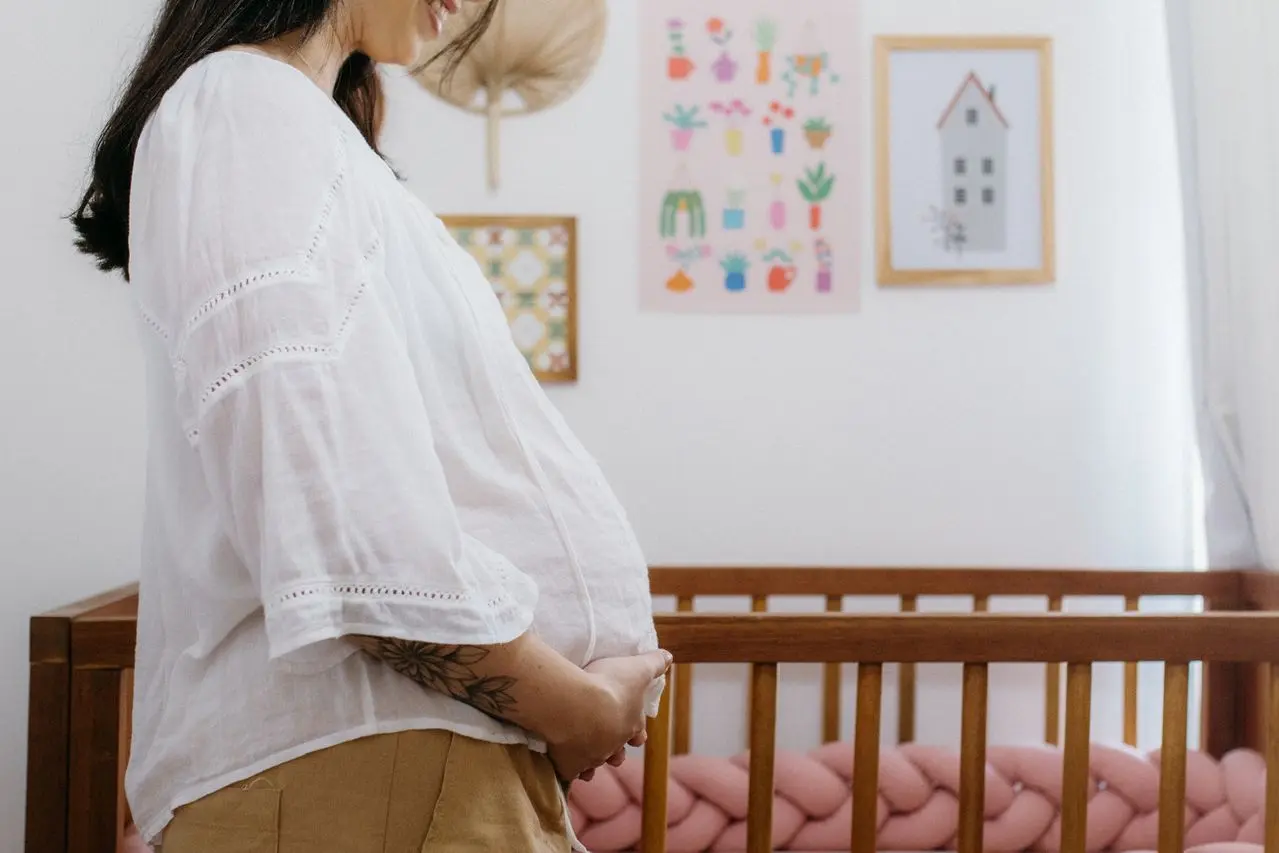
The honest, evidence-based answer to whether depression can cause miscarriage is reassuring — the large majority of miscarriages are caused by chromosomal factors that have nothing to do with a mother’s mental state, and the research linking depression itself to miscarriage risk is weak and heavily confounded. If you’re asking this question after a loss, please know that the guilt driving the question is common, understandable, and not supported by the evidence.
It’s a question I started researching well when I saw a loved one ask me this question over and over again, in the weeks following a miscarriage. “Can depression cause a miscarriage?” is usually not a discreet or clinical question when one seeks it — it is almost always asked in mourning, often by someone who silently thinks about whether their own mind has somehow failed their body. I wanted an honest answer, not a satisfactory story, so the original research is about can depression cause miscarriage and why this answer is so important in talking about pregnancy loss.
I want to talk openly about something before continuing. I am not writing this as someone who has personally experienced an abortion, because I have never experienced an abortion and have not been able to do so. I dismiss him as someone who saw the loss in his loved one, and when I saw how much unnecessary guilt was tied to something that was never in his control, he began to look for real answers.
Table of Contents
Why I’m Writing About This
Watching someone close to me go through a miscarriage taught me things about grief I hadn’t expected. What surprised me more, in the weeks that followed, was the direction her thoughts kept returning to — not just sadness, but a searching, circular guilt. She’d been struggling with her mood for months before the pregnancy, and once the loss happened, that pre-existing low mood became something she quietly blamed herself for, without ever saying it outright until much later.
It came out gradually, in small comments rather than one conversation — wondering aloud whether she’d been “too stressed,” whether her mind had somehow “told her body” something was wrong, whether things might have gone differently if she’d been happier during those early weeks. None of these thoughts were said with any confidence. They were said the way people voice fears they desperately hope someone will contradict.
I didn’t have a good answer for her at the time, and I didn’t want to offer empty reassurance without actually knowing what the evidence said. So I did what I do for this site professionally — I went looking for the actual research, not the comforting version or the alarming version, just what’s genuinely known.
What Actually Causes Miscarriage
Miscarriage is far more common than most people realise before it happens to them or someone they love — affecting roughly 10% to 25% of known pregnancies, according to research published in reproductive health journals. The large majority of these, particularly in the first trimester, are caused by chromosomal abnormalities in the developing embryo — random genetic errors that occur at conception and are incompatible with ongoing development, entirely unrelated to anything the mother did, ate, felt, or thought.
These chromosomal errors typically happen during the formation of the egg or sperm, or in the earliest cell divisions after fertilisation — a stage of biology that unfolds entirely outside conscious control, well before a pregnancy is even confirmed in most cases. Understanding that timeline alone helped the person I love most in accepting that nothing about her mood in the weeks she knew about the pregnancy could plausibly have been the cause.
Other recognised causes include structural issues with the uterus, hormonal imbalances, certain infections, and maternal age, particularly beyond 35. None of the well-established causes centre on a mother’s emotional state, which is an important starting point before looking at what more contested research actually shows.
It’s worth sitting with how common miscarriage genuinely is, because the isolation so many women describe feeling afterward doesn’t match the statistics at all. If roughly one in eight to one in four known pregnancies ends this way, it means most people either know someone who has experienced this, or have experienced it themselves, even when it’s rarely discussed openly. That gap between prevalence and public conversation is part of why guilt and self-blame find so much room to grow unchecked.
What the Research Says About Depression and Miscarriage Risk
This is where the evidence gets genuinely nuanced, and where I think a lot of anxious searching goes wrong. Systematic reviews looking specifically at antidepressant use during early pregnancy found only a small, largely statistical association with miscarriage in unadjusted data — but once researchers accounted for the underlying depression itself, rather than the medication, that association shrank to something described as clinically insignificant.
One large UK cohort study, using data from over a million pregnancies, found an adjusted hazard ratio of just 1.04 for miscarriage among those prescribed antidepressants in the first trimester — meaning an absolute risk difference of roughly half a percentage point, well within the range researchers consider not clinically meaningful. Critically, women who had taken antidepressants in the months before pregnancy and continued into early pregnancy showed no increased risk at all compared to those who stopped.
That last detail is, in my view, the single most important finding in this entire body of research. If depression itself, or the medication used to treat it, genuinely caused miscarriage in any meaningful way, stopping the medication should have shown a clearly lower risk. It didn’t. The risk stayed essentially the same whether treatment continued or stopped, which points strongly toward the underlying condition, not the treatment, as whatever small residual factor exists — and even that residual factor was consistently described as modest.
“The finding that struck me most was this: researchers concluded any small residual association reflects the severity of the underlying depression itself, not a direct causal effect of low mood on pregnancy loss — and even that residual link was described as modest at best.”
In other words, the current evidence doesn’t support depression directly causing miscarriage in any strong, established way. What the research does show clearly is the reverse relationship — miscarriage substantially increases the risk of subsequent depression, anxiety, and post-traumatic stress, not the other way around.
The Guilt Trap
Research into the psychological aftermath of miscarriage consistently finds that women search for causal explanations, and guilt is one of the most common emotions reported. One large prospective study found that roughly 11% of women met criteria for moderate-to-severe depression just one month after a miscarriage, with nearly a quarter experiencing significant anxiety and close to 29% showing signs of post-traumatic stress.
What this tells me, reading it after watching someone I love go through exactly this, is that the guilt almost always comes after the loss, searching backward for a reason, rather than existing as a genuine risk factor beforehand. The mind’s need to find an explanation for something devastating and often medically unexplained is completely human, but it isn’t the same as evidence.
There’s a particular cruelty to how this guilt tends to attach itself specifically to depression and stress, rather than to the far more common, entirely unrelated chromosomal causes. I suspect this happens because depression feels like something a person could, in theory, have controlled or fixed, whereas a chromosomal error feels genuinely random and unpreventable. That perceived controllability, even though it’s not actually supported by the evidence, seems to be exactly what makes this particular guilt so sticky and so hard to talk someone out of with logic alone.
I’ve written before about how chronic sleep problems can quietly compound into low mood over time, and one thing that research reinforces is how tangled these factors can feel from the inside even when they aren’t causally connected in the way they seem. Grief, exhaustion, and hormonal upheaval after a loss can all deepen depression without any of it meaning the depression caused the original loss.
What Actually Matters More: Supporting Mental Health During Pregnancy
Rather than focusing on an unproven causal link, the more useful conversation is about supporting maternal mental health generally, since untreated severe depression during pregnancy is associated with other, better-established risks — including preterm birth and low birth weight — and because pregnancy itself is a period of real vulnerability for depression and anxiety.
UK guidance has shifted in recent years toward individualised, patient-centred decisions about antidepressant use in pregnancy, rather than blanket caution, precisely because untreated depression carries its own genuine risks that need to be weighed against any medication-related ones. That’s a conversation worth having directly with a doctor, not something to decide alone based on fear.
What struck me researching this is how often women stop taking necessary medication out of exactly this kind of unfounded fear, only to face a harder mental health battle later in pregnancy without the support that had been working. The evidence genuinely doesn’t support that trade-off, and I wish more of the public conversation reflected that clearly rather than defaulting to caution built on outdated or poorly controlled early studies.
Diet, sleep, and gentle movement all play a supporting role too, alongside professional care rather than instead of it. I’ve found the evidence-based habits that genuinely support mental wellbeing useful context here, and several of those same principles apply during pregnancy, though always alongside your midwife or doctor’s guidance rather than as a replacement for it. Even something as simple as eating well-tolerated, nutrient-rich fruit during pregnancy is part of the broader picture of feeling physically supported during a vulnerable time, even though it’s a small piece next to sleep, movement, and proper mental health care.
It’s also worth recognising that persistent exhaustion during pregnancy isn’t always “just” tiredness, and can compound low mood in ways that are worth mentioning to a midwife rather than pushing through silently. I’ve written about the everyday causes behind feeling tired all the time, and pregnancy-related fatigue is very much its own category worth discussing openly rather than assuming it’s simply part of the deal.
Supporting Someone Through Depression During or After Pregnancy Loss
The most useful thing I did, in hindsight, wasn’t offering reassurance too quickly. It was listening without immediately trying to fix the guilt, and gently, later, offering the actual research once she was ready to hear it rather than during the rawest part of the grief.
There’s a real balance to strike here. Correcting someone’s guilt too early, before they’ve had space to actually grieve, can come across as dismissing the feeling rather than addressing it. I learned this the harder way, offering research and statistics in the first few days when what was actually needed was simply presence and quiet. The facts became useful later, once the initial shock had settled, not as a replacement for that earlier support.
Encouraging professional support — a GP, a therapist, or a specific pregnancy loss support service — matters more than anything I could offer as a partner. Miscarriage support charities exist specifically because this grief is often under-acknowledged, and connecting with people who understand it directly can help in ways that even a well-meaning partner cannot fully replicate.
Conclusion
If you ask whether depression can cause miscarriage because you carry the burden of guilt after a loss, I want to say it directly: the evidence doesn’t support this fear. Abortions are primarily caused by factors that are beyond our control, and the crime that many women later describe is a sign of grief that finds meaning, not a sign that what you felt or thought caused the event.
I’ve seen someone I want to let go of that guilt little by little, not overnight, and not because an article convinced them, but because every time they investigated more, the evidence was proven. If you’re in the same situation right now, I hope it helps to know that the same evidence exists for you and that you don’t have to defend a cause that research doesn’t support.
Frequently Asked Questions
Can depression cause a miscarriage?
Current evidence does not support depression directly causing miscarriage; the vast majority of miscarriages are caused by chromosomal abnormalities unrelated to mental health.
What are the most common causes of miscarriage?
Chromosomal abnormalities in the embryo account for the majority of miscarriages, particularly in the first trimester, followed by hormonal, structural, and age-related factors.
Is it safe to take antidepressants during pregnancy?
Large studies show only a small, clinically insignificant risk difference; decisions should be made individually with a doctor, weighing medication risks against the risks of untreated depression.
Should I feel guilty if I was depressed during a pregnancy loss?
No. Research does not support depression as a cause of miscarriage, and guilt after loss is a common grief response rather than a reflection of what actually happened.
How can I support a partner who is depressed during or after pregnancy?
Listen without rushing to reassure, encourage professional support such as a GP or therapist, and connect them with pregnancy loss support services when they’re ready.
Disclaimer:
This article reflects personal experience and published research and is for informational purposes only — it is not medical advice. If you are struggling with depression during or after pregnancy, please speak to your GP or midwife. If you are in the UK and need to talk to someone now, Samaritans is free and available 24/7 on 116 123.

1 thought on “Can Depression Cause Miscarriage in Early Pregnancy”
Comments are closed.