THE SHORT VERSION The deadly side effects of Ozempic are not the result of a hidden conspiracy, but the result of a warning label that has been updated four separate times since 2022, each update arriving well after the evidence existed, while at least one serious risk, vision loss, still isn’t formally on the label at all as of August 2026.
Introduction
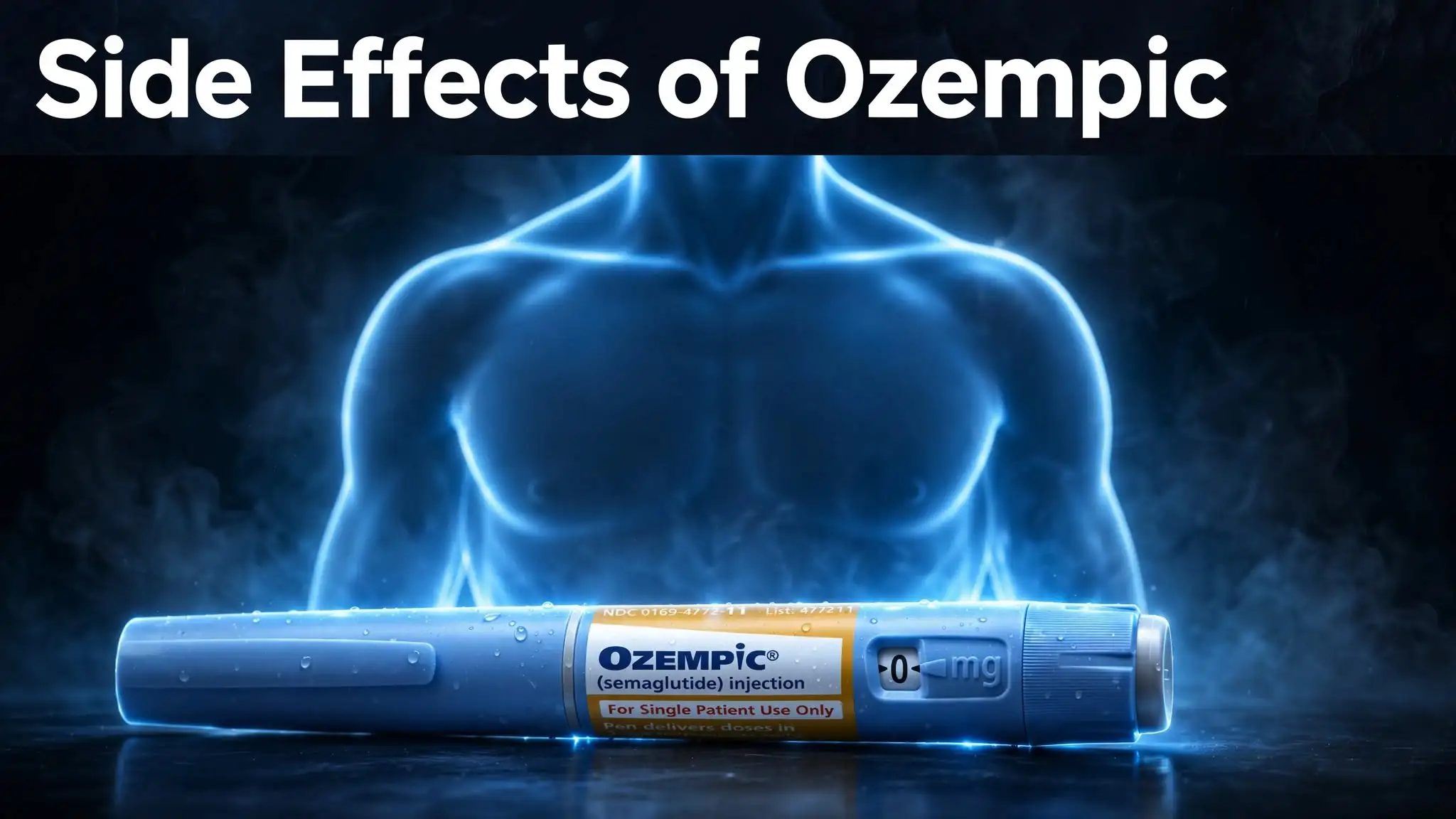
My neighbour Tariq started Ozempic about eighteen months ago, which was prescribed by his GP for type 2 diabetes, which he had been managing with metformin for years. He was happy. Blood sugar figures improved almost immediately, and the weight loss that came with it felt like a real added benefit. He would mention it across the garden fence, half-joking that he wished he had started years earlier. I remember him telling me quite early on that it was “the first thing that really works without hurting me,” a phrase that lingered in my mind after whatever happened next.
Then, about eight months later, he called me in a bit of panic and explained the sudden blurring of one eye. That phone call took me down the path of research that became the basis of this article. What I found were the deadly side effects of Ozempic that patients in some cases only learn about when they have already experienced them, not because someone has intentionally hidden something, but because the difference between the evidence and the difference actually on the warning label can go on for years.
Table of Contents
Why I’m Revisiting This Story
I first wrote about this topic over a year ago, and I said then that this wasn’t a conspiracy story. I still believe that. But revisiting it now, in August 2026, matters because genuinely significant developments have happened since: a new safety signal has grown stronger, a second set of lawsuits has been created specifically around it, and regulators have taken action that wasn’t public last time I looked into this.
Tariq’s experience is what pulled me back into the research, but the numbers I found afterward are what convinced me an update was overdue. This isn’t the same story I wrote before. It’s the same pattern, evidence outpacing disclosure, but the specifics have moved considerably, and I think anyone who read the original version deserves to see how much has actually changed rather than assuming the situation is static.
What Ozempic Actually Is, Before We Talk About What It Does
Ozempic Is a GLP-1 Receptor Agonist Originally Approved for Type 2 Diabetes
Ozempic is the brand name for semaglutide, a GLP-1 receptor agonist first approved by the FDA in 2017 specifically for managing type 2 diabetes. Its cousin drug, Wegovy, uses the same active ingredient at a higher dose and was approved separately in 2021 for chronic weight management. The overlap in mechanism is why side effects identified in one context often apply to both. This distinction matters more than it might seem, because a lot of the public conversation treats “Ozempic” as shorthand for the entire drug class, when in practice the specific dose and the specific approved use both affect how a given risk actually plays out for an individual patient.
How Semaglutide Actually Works Inside the Body
Semaglutide mimics a naturally occurring gut hormone called GLP-1, which slows gastric emptying, increases insulin secretion when blood sugar is high, and signals fullness to the brain. That slowed digestion is genuinely useful for blood sugar control and appetite regulation. It’s also, as it turns out, the same mechanism behind several of the drug’s more serious complications.
The Side Effects That Were on the Label, and When They Were Added
The Warning Label Has Been Updated Four Times Since 2022
Novo Nordisk’s own labelling history tells a story on its own. Gallbladder disease was added as a warning in March 2022. Ileus, a potentially serious bowel obstruction, followed in September 2023. Pulmonary aspiration risk during anaesthesia was added in November 2024. Severe pancreatitis and acute kidney injury were added most recently, in January 2025.
Each of those updates came after real-world reports had already accumulated, not before. That’s a structural feature of how drug safety monitoring works everywhere in the world, not something unique to Novo Nordisk, but it does mean that anyone prescribed Ozempic before a given update was, by definition, taking it without knowing about a risk that later became formally recognised.
What This Timeline Means If You Were Prescribed Before an Update
Tariq started Ozempic after the pancreatitis and kidney injury update in January 2025, so that particular risk was at least disclosed to him on paper, even if it wasn’t the reason for his phone call. But plenty of long-term patients started years before any of these four updates existed, and there’s no retroactive notification system that reaches back to tell them what’s changed. If you were prescribed Ozempic in, say, 2021 or 2022, you would have started treatment without any of the four warnings added since ever being mentioned to you, and unless your GP has proactively raised them at a follow-up appointment, there’s a reasonable chance you still haven’t heard about them directly.
IMPORTANT
In September 2025, the FDA sent a formal warning letter to Novo Nordisk over concerns about the company’s potential failure to properly report adverse events to regulators in a timely manner. That’s a separate, serious development from the label updates themselves, and it’s worth knowing about if you or someone you know has experienced a side effect that felt like it came out of nowhere.
The Side Effects Still Not on the Label
NAION, the Vision Loss Signal That Has Grown Stronger Since Last Year
This is Tariq’s story specifically. The condition is called NAION, non-arteritic anterior ischemic optic neuropathy, a form of sudden vision loss caused by reduced blood flow to the optic nerve. The World Health Organization issued a warning about a possible link between GLP-1 drugs and NAION in June 2025. The European Medicines Agency formally determined it to be a potential side effect later that same year.
What’s changed most significantly since I last covered this is a March 2026 analysis published in the British Journal of Ophthalmology, which reviewed more than 30 million adverse event reports from the FDA’s own database. The researchers found that Wegovy’s NAION signal was roughly five times stronger than Ozempic’s, likely reflecting the higher dose used for weight management. As of August 2026, there has still been no formal FDA label update or safety communication specifically addressing NAION on either drug.
Tariq’s ophthalmologist told him plainly that his vision loss was consistent with NAION and that a possible link to his GLP-1 medication was “something we’re seeing more of, but not something I can prove happened to you specifically.” That kind of honest uncertainty is, frankly, more useful than a false reassurance either way. It’s also, I think, the most accurate way to describe where the science currently stands: strong enough to take seriously, not yet definitive enough for regulators to formally act on.
Gastroparesis, Intestinal Blockage, and the Litigation Built On It
Gastroparesis, a condition where the stomach empties far more slowly than it should, causing nausea, vomiting, and severe abdominal pain, is closely related to the same slowed-digestion mechanism that makes semaglutide effective in the first place. In its most severe form, it can progress toward the ileus and intestinal obstruction risks that were formally added to the label in 2023. This is the underlying injury behind the largest body of ongoing litigation against Novo Nordisk. Unlike NAION, gastroparesis and ileus are already formally acknowledged on the label, which is precisely why the legal claims built around them have been able to proceed as far as they have; the manufacturer’s own documentation now confirms the risk existed, and the dispute in court is largely over when it should have been disclosed and how clearly.
The Lawsuits and Where They Stand Now
There Are Now Two Separate Multidistrict Litigations, Not One
When I first researched this topic, there was a single consolidated set of lawsuits, MDL 3094, covering gastrointestinal injuries including gastroparesis, ileus, and intestinal obstruction, based in the Eastern District of Pennsylvania under Judge Karen Marston. That case group still exists and has grown substantially.
What’s new is MDL 3163, created in December 2025 specifically to consolidate NAION vision-loss claims separately from the gastrointestinal cases. A leadership team of lawyers overseeing that litigation was appointed in March 2026, which tells you the vision loss claims have moved from scattered individual filings to a formally organised legal process in a relatively short space of time.
Case Numbers Have Nearly Doubled in a Year
When this article was first published, MDL 3094 had roughly 2,190 pending cases. As of August 2026, that number has grown to more than 3,928, close to double in about thirteen months. A Rule 702 hearing addressing general causation, warning adequacy, and preemption arguments is scheduled for September 2026. No bellwether trial date has been set yet, and legal analysts following the case generally expect the first actual trials to happen no earlier than late 2026, more realistically 2027. No global settlement has been reached as of this writing.
None of this constitutes proof that Ozempic caused any specific person’s injury. Litigation volume reflects how many people believe they were harmed and are pursuing legal claims, not a verdict on causation. But the scale of it is itself informative about how many people are reporting similar experiences. When I first researched this story, the case count felt notable on its own. Watching it nearly double in a little over a year is a different kind of signal entirely, one that’s harder to dismiss as noise.
What This Means If You’re Currently Taking Ozempic
Questions Worth Asking Your GP Before Continuing or Starting
If you’re currently on Ozempic or considering starting it, it’s worth directly asking your GP or prescriber about your personal risk factors for gallbladder disease, pancreatitis, and any pre-existing eye conditions, since some evidence suggests NAION risk may be higher in people with certain underlying vascular or optic nerve vulnerabilities. It’s also worth asking whether your specific starting date means you were prescribed before or after the most recent relevant label updates. Tariq, in hindsight, wishes he’d asked his GP directly about eye health at his initial consultation, simply because it would have given him a baseline to compare against once the symptoms started.
Red Flag Symptoms Worth Taking Seriously Immediately
Sudden vision changes in one eye, severe or persistent abdominal pain, prolonged vomiting or inability to keep food down, and yellowing of the skin or eyes are all symptoms that warrant urgent medical attention rather than a wait-and-see approach. Tariq’s mistake, by his own admission, was assuming his vision symptoms would pass on their own for almost two full days before calling anyone.
Lifestyle Approaches Worth Discussing Alongside Medication, Not Instead Of It
I want to be careful here, because I’m not suggesting anyone should stop a prescribed medication based on an article. But it’s worth knowing that dietary and lifestyle changes remain genuinely effective tools for blood sugar and weight management, and discussing them with your GP as a complement to, or eventual step-down from, medication is a reasonable conversation to have. I’ve written before about practical, low-burnout approaches to sustainable weight loss and separately about food choices that genuinely support your body under stress, both of which are relevant conversations to bring into a wider discussion with your doctor about long-term management, rather than a substitute for medical advice.
What’s Changed and What Hasn’t
A year on from when I first wrote about this, the underlying pattern hasn’t changed: the evidence keeps arriving before the formal disclosure does. What has changed is the specifics. There’s a new, better-quantified vision loss signal. There’s a second MDL built specifically around it. The gastrointestinal case count has nearly doubled. And the FDA has taken formal action against the manufacturer over reporting concerns, something that wasn’t public knowledge when I last looked at this.
Tariq is doing better now. His vision hasn’t fully returned in the affected eye, but it hasn’t worsened either, and he’s continuing his diabetes treatment under closer specialist observation than before. What changed wasn’t the medication itself. It was how closely he, and now I, pay attention to what a drug’s history actually looks like, not just its label on the day it was prescribed. If there’s one thing I’d want anyone reading this to take away, it’s not fear, it’s the habit of checking a medication’s update history the way you’d check anything else that affects your health, periodically, and out loud with the person prescribing it to you.
Medical Disclaimer: This article is for informational purposes only and does not constitute medical advice. Never stop or change a prescribed medication without speaking to your GP or prescribing doctor first. If you are experiencing a medical emergency, including sudden vision loss, seek immediate medical attention.
Frequently Asked Questions
What are the most serious side effects of Ozempic?
The most serious documented side effects include severe pancreatitis, acute kidney injury, gallbladder disease, bowel obstruction (ileus), pulmonary aspiration during anaesthesia, and a growing safety signal for NAION, a form of sudden vision loss.
Were Ozempic side effects really hidden from patients?
Not deliberately concealed, but the warning label has been updated four separate times since 2022 as evidence accumulated, meaning many patients started treatment before certain risks were formally disclosed.
Is there a separate lawsuit for Ozempic-related vision loss?
Yes, a separate multidistrict litigation, MDL 3163, was created in December 2025 specifically for NAION vision-loss claims, distinct from the earlier gastrointestinal injury litigation.
Is Ozempic still safe to take?
For most patients under proper medical supervision, Ozempic remains an approved and effective treatment, but anyone taking it should discuss their personal risk factors and any new symptoms promptly with their prescribing doctor.
What should I do if I’m experiencing side effects from Ozempic?
Contact your GP or prescriber promptly to report the symptoms, and seek immediate emergency care for sudden vision changes, severe abdominal pain, or persistent vomiting.

2 thoughts on “Deadly Side Effects of Ozempic Being Hidden From Patients”
Comments are closed.