QUICK SUMMARY
That numb, “dead” feeling in the glutes by mid-afternoon has a real name — gluteal amnesia, sometimes called dead butt syndrome — and it comes from hip flexors tightening while the glutes stop firing properly during hours of sitting. Desk exercises for glutes work because they retrain that activation directly, not just stretch around it. The five-move routine below takes under ten minutes a day and needs nothing but a chair.
Introduction
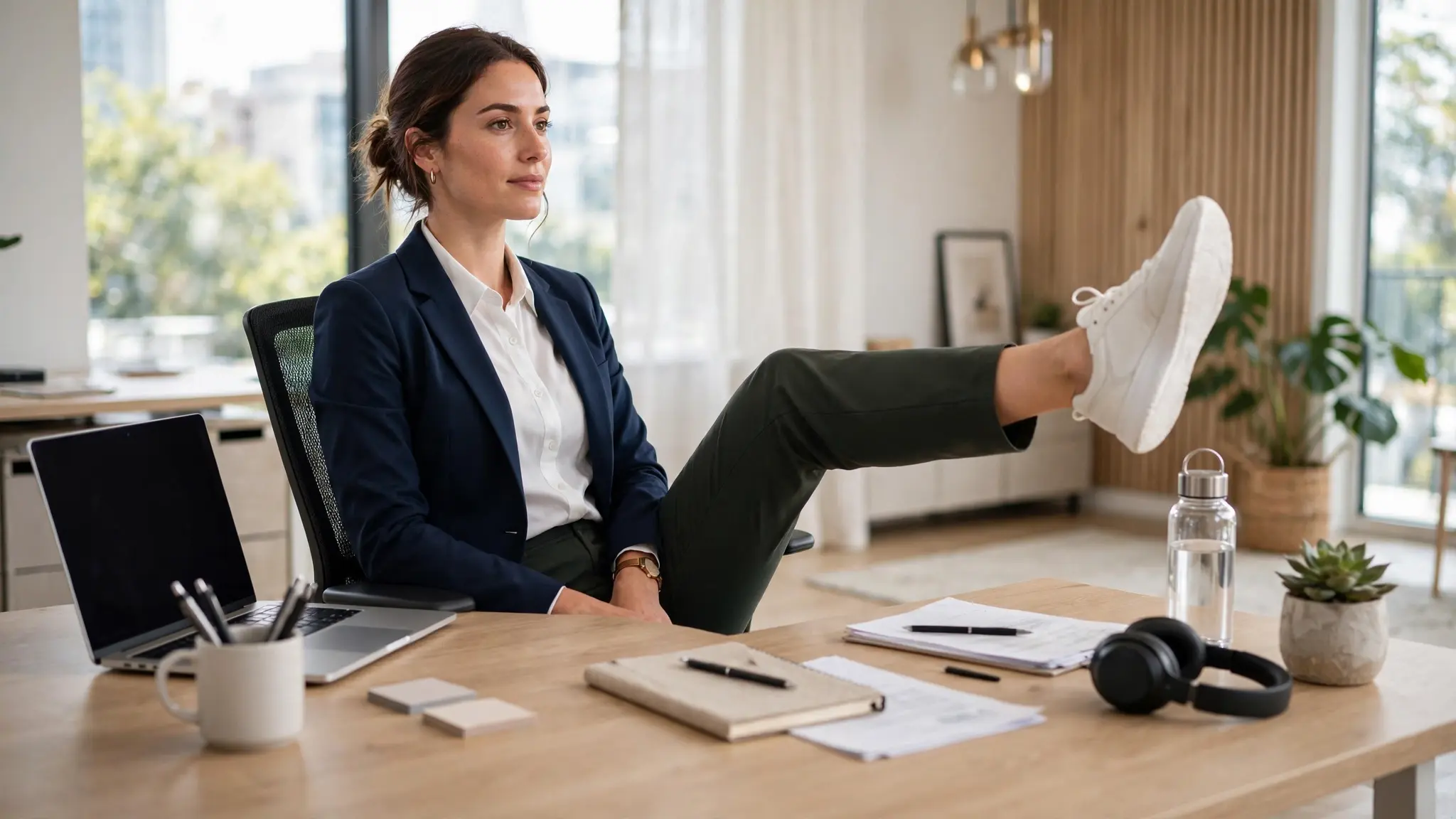
My colleague Zeeshan half-jokingly said that his back was often completely numb by 3 p.m., as if he was sitting on a dead limb and not on the actual muscle. One afternoon he googled in curiosity and came across the term “dead-butt syndrome”, which seemed fictitious to me, until he realized that it was a well-known habit among people who sat most days. That conversation prompted me to do the right research on desk exercises for glutes, as it turned out that it wasn’t just a funny weird feeling—it was a real, well-documented pattern with a real solution. I tested a proper activation routine with Zeeshan for several weeks, and the change in sunburn that afternoon was really noticeable. Here’s exactly what we got.
Table of Contents
Why Your Glutes “Switch Off” From Sitting (Gluteal Amnesia)
The Hip Flexor and Glute Tug-of-War
Sitting holds the hip flexors in a shortened position for hours, and over time they tighten and adapt to that length. At the same time, the glutes sit in a lengthened, understretched position and gradually become less efficient at firing when you actually need them — walking, standing up, climbing stairs. This tug-of-war between a tight front and an underactive back is exactly what’s behind gluteal amnesia, sometimes called dead butt syndrome.
It’s the same underlying mechanism I’ve described before around how tight hip flexors quietly switch off glute support and contribute to lower back pain, just showing up here as numbness and weakness in the glutes themselves rather than pain further up the back.
That overlap makes sense once you understand both problems come from the exact same imbalance. Whether it shows up as a numb backside, a nagging lower back ache, or both at once really just depends on which structure ends up compensating hardest for the glutes not doing their share of the work.
Why This Isn’t Just About How Your Glutes Look
Weak, underactive glutes affect far more than appearance. The gluteal muscles stabilise the hips and pelvis during walking, support balance, and play a direct role in how efficiently you climb stairs or stand up from a chair. When they stop doing their job properly, other muscles and joints often end up compensating, which is part of why gluteal amnesia tends to show up alongside other complaints rather than staying an isolated issue.
This reframing mattered a lot for Zeeshan, who’d assumed this was purely a cosmetic annoyance not worth taking seriously. Once he understood the glutes were quietly involved in almost every lower-body movement throughout an ordinary day, the numbness stopped feeling like a strange quirk and started feeling like something genuinely worth addressing properly.
Why I Started Taking This Seriously
The Numbness That Wasn’t Just “Pins and Needles”
Zeeshan’s first assumption was that the numbness was simply poor circulation from sitting in one position too long, the same as a foot falling asleep. It’s a reasonable guess, but it wasn’t quite right — gluteal amnesia is a muscular activation issue, not a circulation problem, and the fix is completely different depending on which one it actually is.
That distinction mattered because it changed what was worth trying. Shifting position or standing up occasionally helps circulation-related numbness. Gluteal amnesia needs the muscle itself retrained to fire properly again, which meant a shift in position alone was never going to be enough on its own.
Zeeshan tested this himself in a fairly simple way, standing up and consciously trying to squeeze his glutes together right after the numbness set in. Genuine circulation-related numbness tends to fade with any movement at all. His didn’t fade until he specifically focused on contracting the muscle, which was the clearest confirmation that activation, not circulation, was the actual issue.
The Desk Routine That Actually Woke Things Up
This is the exact routine Zeeshan worked through, built specifically around retraining glute activation rather than just stretching the hip flexors. Each move takes under two minutes.
Standing Glute Squeezes

Standing tall, squeeze both glutes together as hard as comfortably possible, hold for 5 seconds, release. Repeat 15 times. This is the most direct activation exercise available, specifically teaching the muscle to fire on command again, and it’s usually the exercise where people first notice the muscle actually responding properly.
Standing Donkey Kicks (Chair-Assisted)
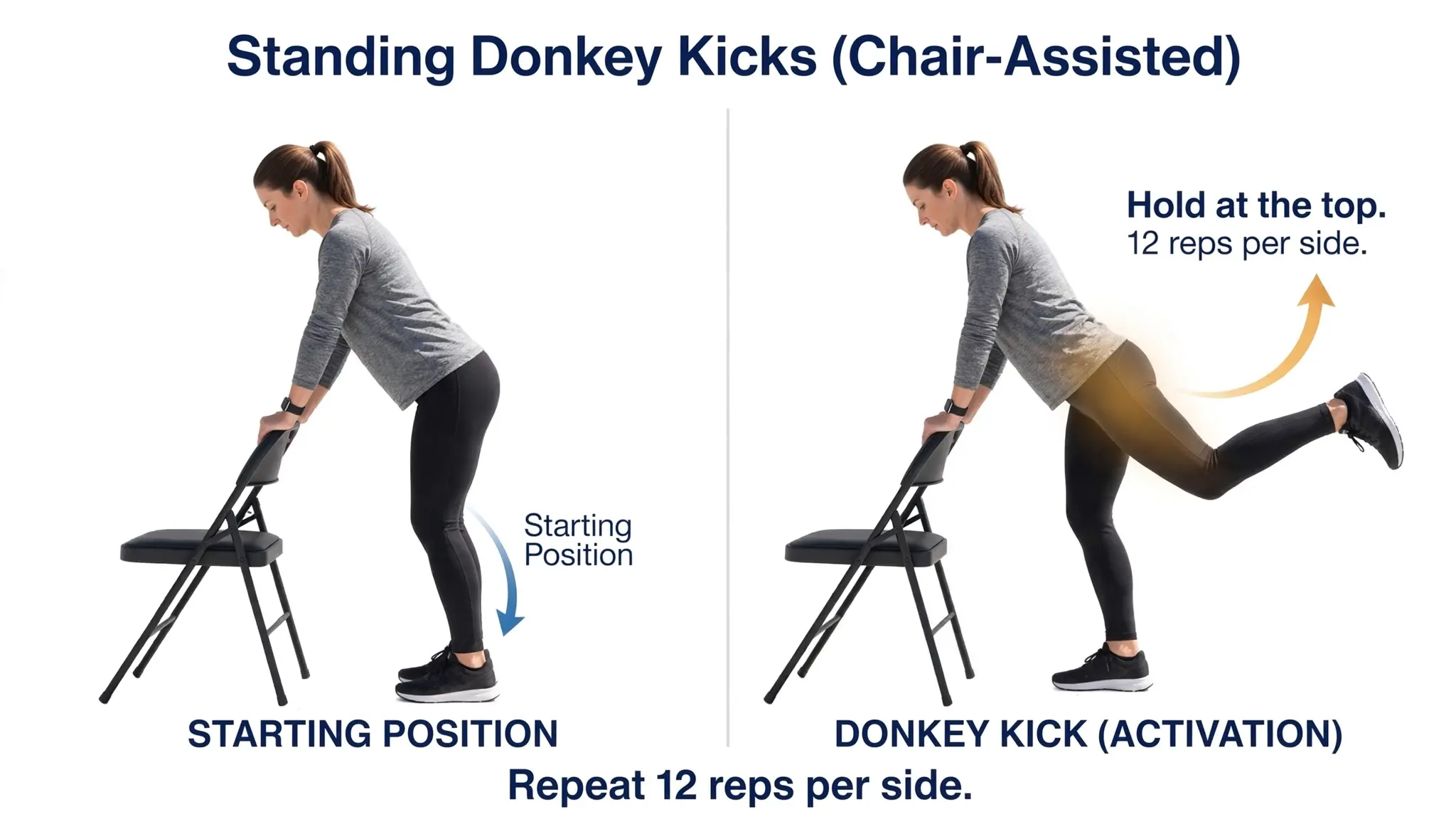
Holding the back of a chair for balance, kick one leg straight back and slightly up, squeezing the glute at the top, then lower with control. 12 reps per side. This isolates the gluteus maximus directly, the primary muscle affected by prolonged sitting.
Seated Glute Bridges (Isometric)
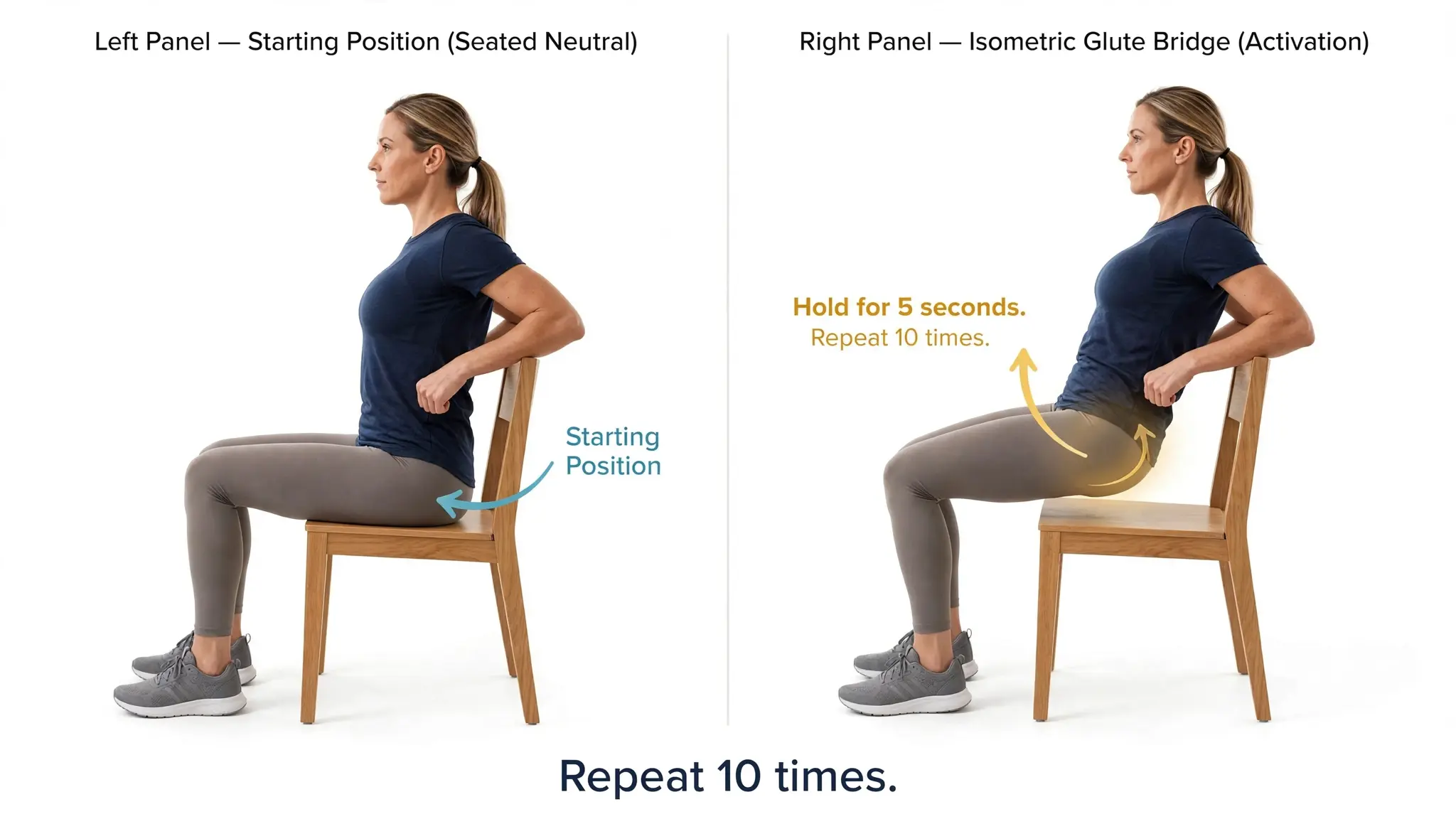
Sitting toward the edge of your chair, press your feet into the floor and squeeze your glutes to lift your hips very slightly off the seat, holding for 5 seconds. Repeat 10 times. This trains activation discreetly, without needing to stand up or draw attention in a shared office.
Standing Side Leg Raises
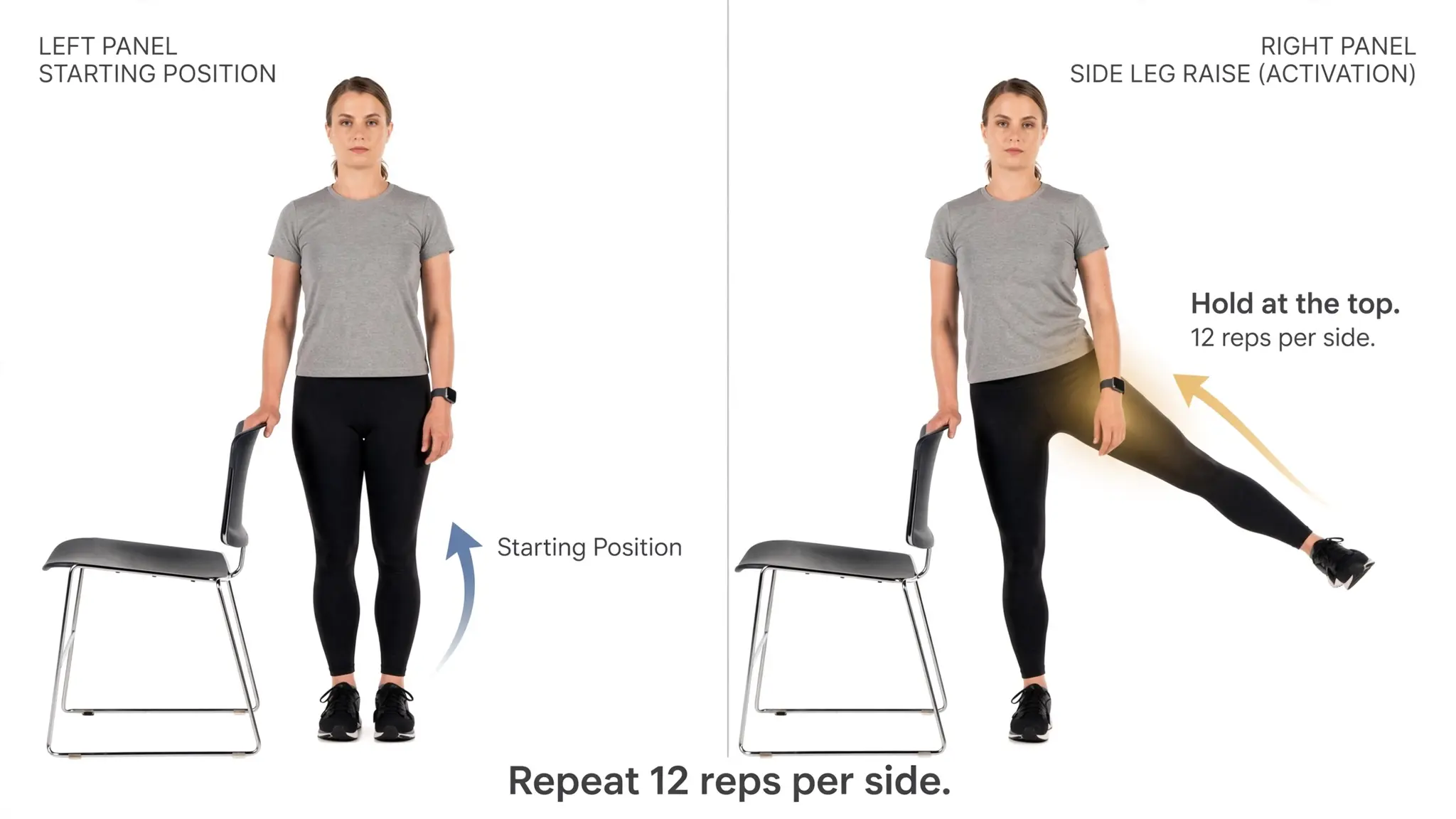
Holding the chair for support, lift one leg straight out to the side, squeezing the outer glute, then lower with control. 12 reps per side. This targets the gluteus medius, the muscle most directly implicated in the clinical name for dead butt syndrome.
Wall-Assisted Clamshells

Lying on your side, or standing with your back against a wall for balance, knees bent, lift the top knee while keeping the feet together. 12 reps per side. This targets the deep hip rotators alongside the glutes, supporting overall hip stability that sitting tends to undermine.
“The real shift wasn’t stretching harder — it was learning to actually feel the glutes fire again. Zeeshan’s first few squeezes barely registered anything at all, which was itself the clearest sign of how disconnected the muscle had become.”
Quick Reference: The Routine at a Glance
| Exercise | Targets | Reps |
| Standing glute squeezes | Activation | 15 x 5 sec |
| Standing donkey kicks | Gluteus maximus | 12 per side |
| Seated glute bridges | Discreet activation | 10 x 5 sec |
| Standing side leg raises | Gluteus medius | 12 per side |
| Wall-assisted clamshells | Hip rotators | 12 per side |
Building It Into an 8-Hour Workday
The Every-Hour Activation Rule
A quick round of standing glute squeezes every hour did more for Zeeshan’s afternoon numbness than a single longer session ever did. Frequent, brief activation retrains the muscle to fire regularly throughout the day, rather than asking it to “catch up” once at the end of it.
In practice, this looked almost invisible from the outside. Zeeshan’s timer would go off, he’d stand briefly beside his desk to do fifteen squeezes, and sit back down within the minute. Nobody around him noticed a pattern, which mattered, since anything too conspicuous in a shared office tends to get quietly dropped within a week or two.
Fixing the Chair and Sitting Posture Too
Posture plays a supporting role here as well. The same general fitness and posture principles that support beginners starting out apply to sitting posture specifically — slouched, tucked-under sitting tends to worsen the hip flexor and glute imbalance, while a more neutral pelvic position reduces how much the glutes are switched off in the first place.
What Changed After a Few Consistent Weeks
By the second week, Zeeshan noticed the afternoon numbness arriving later and lighter than before, rather than disappearing all at once. By week four, it had mostly stopped being something he noticed at all, which was really the whole goal.
Mistakes That Kept the Glutes “Asleep”
A few habits quietly worked against progress early on, and they’re easy mistakes to make when a muscle has been underactive for a long time and the exercises feel deceptively simple.
Squeezing Without Actually Engaging (Faking the Activation)
Zeeshan’s early attempts at glute squeezes barely engaged the muscle at all, more habit than genuine contraction. Consciously focusing on the squeeze itself, rather than rushing through the rep count, made a considerably bigger difference than simply doing more repetitions. It took him a few days of deliberately slowing down before he could reliably tell the difference between a real contraction and going through the motions without actually engaging anything.
Only Doing It Once a Day Instead of Hourly
A single longer session before bed felt productive but did far less than shorter, more frequent activation spread across the actual sitting hours. The muscle needed reminders throughout the day it was actually sitting through, not one workout disconnected from when the problem was happening. This was genuinely counterintuitive for Zeeshan at first, since most fitness advice treats a single dedicated session as the gold standard, but glute activation from sitting responded far better to being addressed throughout the exact hours causing it.
Skipping the Routine Once the Numbness Faded
As the afternoon numbness improved, it became tempting to stop the routine altogether. Consistency here mirrors something true of most sustainable habits — small, regular effort tends to outperform occasional intense bursts, and gluteal activation is no exception, since the underlying sitting pattern hasn’t actually changed even once symptoms ease.
When Glute Weakness Needs More Than Exercise
Desk exercises help manage the ordinary gluteal amnesia that comes from sitting, but they’re not the right response to every case. It’s worth speaking to a doctor if any of the following apply:
- Numbness that spreads beyond the buttocks into the legs or feet
- Pain radiating down the leg alongside the numbness
- Weakness noticeably affecting walking or balance
- Symptoms that don’t improve despite consistent activation exercises
Staying broadly active, not just at the desk but throughout daily life, supports long-term hip and glute health too — something explored in more depth around why ongoing activity protects mobility and balance as we get older, which applies just as much here as it does to general joint health.
“Zeeshan’s numbness stayed confined to the glutes themselves and eased with movement, which is the reassuring, ordinary pattern. Numbness spreading further, or pain shooting down the leg, is a different situation and worth a proper check.”
What Changed After a Few Consistent Weeks
By the end of the first month, Zeeshan’s mid-afternoon numbness had essentially become a non-issue. He also mentioned, almost as an aside, that stairs felt noticeably less effortful, something neither of us had specifically been training for but made sense once the glutes were actually doing their job again.
Neither of us treated this as a one-time fix. It’s a management routine built around retraining a muscle that sitting quietly switches off, which is the part most generic “glute workout” content skips by assuming the muscle is simply weak rather than genuinely disconnected.
What stayed with me most was how much of the early progress had nothing to do with strength at all. The first real breakthrough was simply Zeeshan being able to feel the muscle contract properly again, something that sounds almost too basic to matter but turned out to be the entire foundation everything else was built on.
FAQs
What is “dead butt syndrome” and can desk exercises fix it?
Dead butt syndrome, or gluteal amnesia, is weakened glute activation from prolonged sitting. Consistent desk-based activation exercises can meaningfully retrain the muscle to fire properly again.
How often should I do glute exercises at my desk?
Aim for a short activation routine every hour, since frequent reminders throughout the sitting day work better than one longer session.
What is the fastest desk exercise to activate the glutes?
Standing glute squeezes give the quickest activation, directly retraining the muscle to fire on command in under a minute.
Can weak glutes from sitting cause other problems?
Yes. Weak glutes can contribute to lower back pain, hip instability, and reduced balance, since the muscle plays a central role in supporting the hips and pelvis.
When should glute numbness be checked by a doctor?
See a doctor if numbness spreads beyond the buttocks, comes with radiating leg pain, or affects walking and balance.
Final Thoughts
None of these require gym memberships or special equipment. A short, consistent set of desk exercises for gilts would have made a real difference for someone I’d seen joking about my “dead backyard” before he realized it was a real, correctable pattern — and if that apathetic, unconscious feeling has become part of your afternoon days, it’s worth trying.
If you take one thing from it, think of it as a higher frequency at intensity: short, hourly activity retrains a muscle that shutting down much more effectively than sitting down. Stand for an hour and start the glutes with pressure, and add the rest of the routine when the habit becomes spontaneous.
This article is for general information only and is not a substitute for professional medical advice. Please consult a doctor if numbness spreads beyond the buttocks or comes with pain, weakness, or balance issues.
