The Short Version: I tried easy food swaps instead of another all-or-nothing diet overhaul, sorted by meal and tested in my own kitchen for months. Roughly twelve of the thirty-one genuinely stuck long-term — the rest taught me just as much by failing. None of it involved cutting foods out entirely; it was about finding a slightly better version of what I already ate.
Introduction
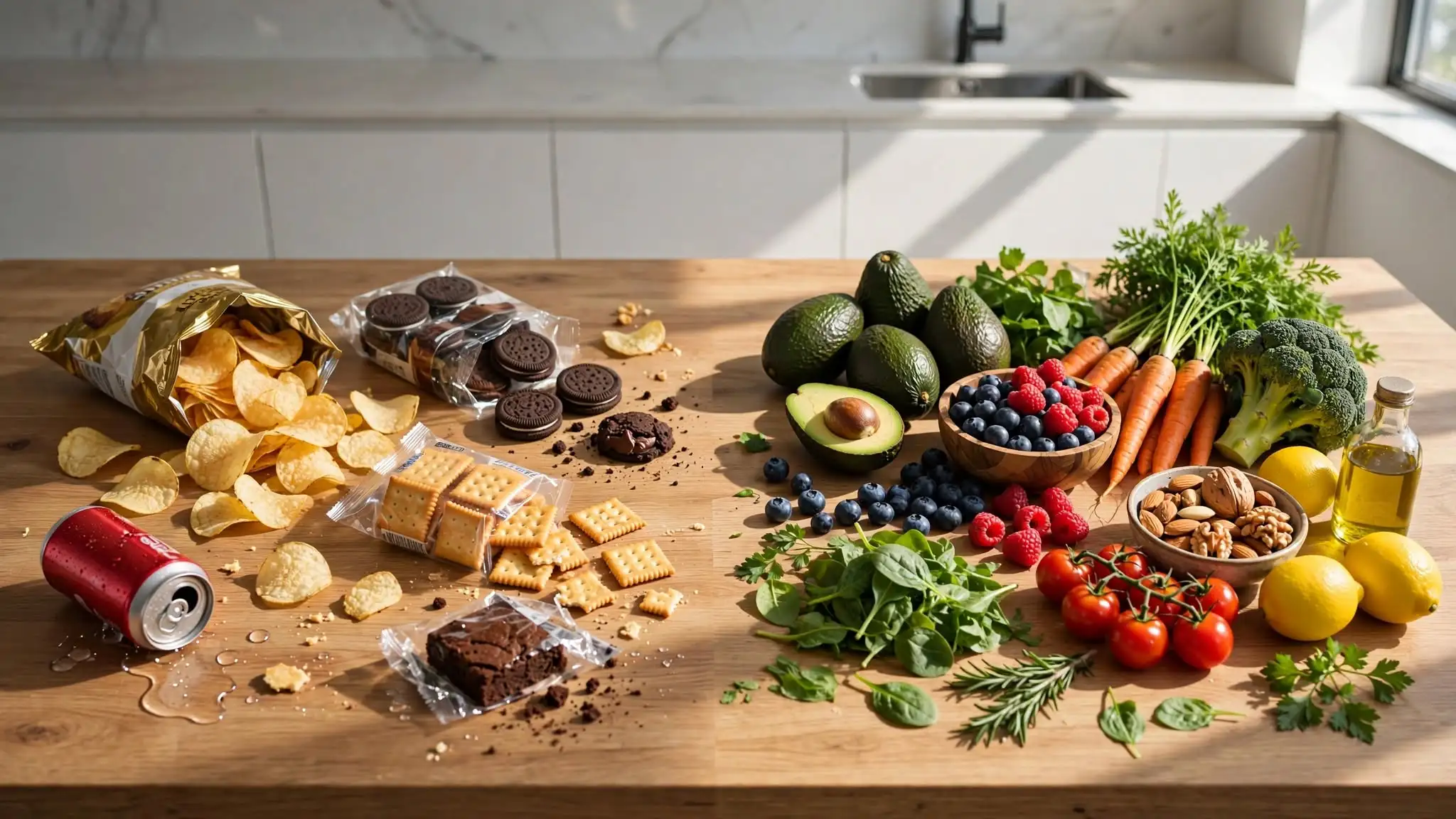
For years, I thought of healthy eating as an all-or-nothing plan. I’m Faizan Ahmed, and every attempt to “cleanse” my diet followed the same pattern: three weeks of rigorous commitment, one night when I ate everything I had forbidden, and then quietly returned to exactly where I started.
What really worked wasn’t a disciplined or rigorous meal plan. It was easy food swaps —small, specific changes that I could add to the meals I already enjoyed, without punishing the food. It’s the honest version I really tried, sorted by meal, adding what stuck and what I left quietly. If you’ve tried the all-or-nothing method and are as tired as I am, easy food swaps are really a different approach.
Table of Contents
Why I Finally Stopped Trying to Overhaul My Entire Diet at Once
The turning point came after a particularly joyless week of meal-prepping lunches I didn’t actually want to eat, while reading about how the choices you make today quietly build or break your health over time. Something in that framing shifted things for me. I wasn’t trying to fix a single bad meal; I was trying to change a pattern, and patterns change through repetition, not willpower.
So I stopped making a list of banned foods and started making a list of swaps instead. Instead of “what am I cutting out?” I started asking “what can I put here instead that’s slightly better?” As I’ve written about in how small changes stack into real results, consistency with something simple beats perfection with something unsustainable, every single time.
Breakfast Swaps — The Ones That Made Mornings Feel Different

Breakfast was where the most automatic, least examined habits lived, which made it the highest-payoff place to start.
Swap 1: White toast → Whole grain or sourdough bread
Whole grain and sourdough both deliver more dietary fibre and a steadier blood sugar response than white bread, without asking anything different of the meal itself. White bread is stripped of the bran and germ during processing, which removes most of the fibre along with a good share of the B vitamins and minerals the original grain contained. Sourdough has the added benefit of a slower fermentation process, which some research suggests may make it easier to digest and gentler on blood sugar than a standard whole grain loaf. I didn’t notice a taste difference within a week, which is honestly the main reason this swap was the easiest of all 31 to keep.
Swap 2: Sugar-loaded cereal → Rolled oats with fresh fruit
Most popular breakfast cereals are among the most heavily ultra-processed foods in the average kitchen, some carrying more added sugar per 100g than a chocolate biscuit despite the health claims printed on the box. Rolled oats with banana or berries swap that added sugar for natural sweetness and real fibre, and cook in three minutes flat in a microwave, so the convenience argument for cereal doesn’t really hold up once you actually time it. Oats also contain a specific soluble fibre called beta-glucan, which has been linked to improved cholesterol levels when eaten regularly, something no cereal box has ever managed to put on its ingredients list.
Swap 3: Flavoured yogurt → Plain Greek yogurt with honey or berries
Flavoured yogurts can contain more added sugar per pot than a biscuit, which genuinely surprised me the first time I actually checked a label instead of trusting the fruit picture on the front. Plain Greek yogurt gives you roughly double the protein of standard yogurt because of how it’s strained, which also makes it noticeably thicker and more filling at breakfast. Adding your own teaspoon of honey or a handful of frozen berries lets you control exactly how much sugar goes in, usually a fraction of what the flavoured version contains, while still tasting like a proper treat rather than a compromise.
Swap 4: Fruit juice → Whole fruit or water with citrus slices
Juice removes the fibre that makes fruit filling and leaves behind the sugar, essentially giving you the least useful part of the fruit in a concentrated, easy-to-overconsume form — a single glass of orange juice can contain the sugar of two or three whole oranges without any of the fibre that would normally slow that sugar down. Eating the whole fruit keeps the cell walls and fibre intact, which slows sugar absorption into the bloodstream and keeps you satisfied for longer than the equivalent juice ever could. I still keep juice around occasionally, but I stopped treating it as a health drink once I understood how differently the body processes it.
Swap 5: Butter on toast → Avocado or nut butter
Both bring healthy unsaturated fats instead of the saturated fat in butter, along with potassium, fibre, and a small amount of protein that butter simply doesn’t offer at all. Avocado in particular is high in monounsaturated fat, the same type found in olive oil, which has been consistently linked to better cholesterol profiles when it replaces saturated fat rather than simply being added on top. Nut butter adds its own benefit of protein, which makes a slice of toast noticeably more filling and less likely to leave you hungry again within the hour.
Swap 6: Fried eggs in sunflower oil → Poached or scrambled with a small amount of olive oil
The egg itself is fine, nutritionally speaking; it’s genuinely what you cook it in that changes the story here, since eggs absorb a surprising amount of whatever fat they’re fried in. A small amount of extra virgin olive oil, or simply poaching, is a straightforward upgrade over sunflower oil, which is high in omega-6 fatty acids that most Western diets already contain in excess relative to omega-3. Poaching removes the added-fat question entirely and, once I got the timing right, took no longer than frying.
Swap 7: Breakfast pastries or shop-bought muffins → Homemade banana oat muffins
Shop-bought muffins and pastries are frequently a combination of refined flour, added sugar, and saturated fat wrapped up in a shape that feels more virtuous than a slice of cake, despite often containing more sugar. Batch-baking a dozen banana oat muffins on a Sunday, using mashed banana and oats instead of refined flour and sugar, turns the same morning craving into a genuinely nutrient-dense choice rather than a guilty one, and they freeze well for weeks. Of all seven breakfast swaps, switching from cereal to oats made the single biggest difference to how I actually felt: it took about four days to stop missing the cereal, and then my energy stopped crashing before lunch and I noticed I’d stopped automatically reaching for a snack by 10am.
Lunch Swaps — Small Changes That Keep You Fuller for Longer
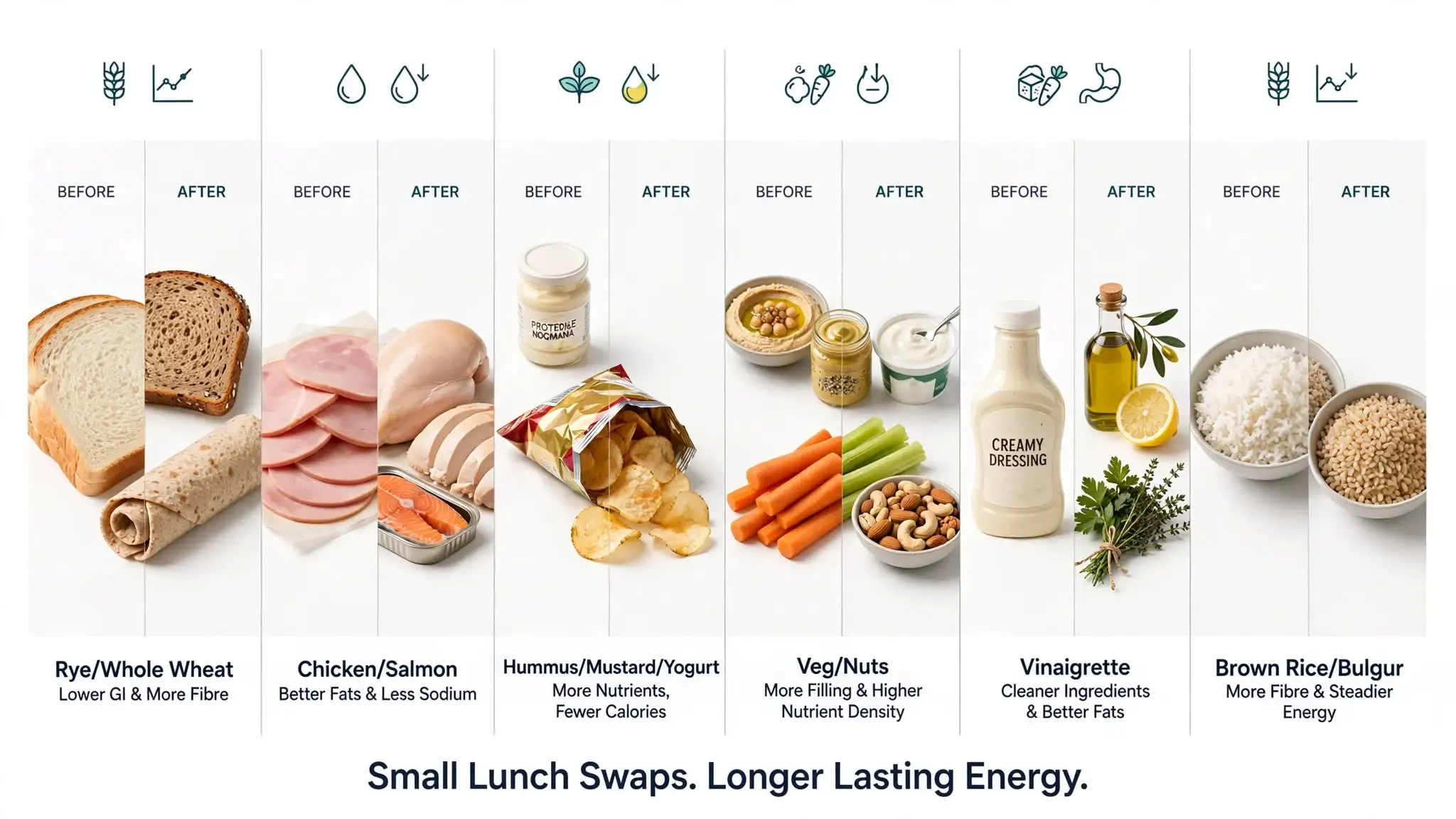
Swap 8: White sandwich bread → Rye or whole wheat wrap
Rye has one of the lowest glycaemic indexes of any bread commonly available, meaning it releases glucose into the bloodstream more slowly than white or even most whole wheat bread, which translates into a steadier blood sugar response and fewer of the afternoon energy dips I used to blame on simply being tired. A whole wheat wrap is a reasonable middle ground if rye’s stronger flavour isn’t for you, since it still carries meaningfully more fibre than a standard white wrap or sliced loaf.
Swap 9: Processed deli meats → Sliced roast chicken or tinned salmon
Processed deli meats are typically high in sodium and saturated fat, and the World Health Organization has classified processed meat as a Group 1 carcinogen based on the consistency of the evidence linking regular consumption to increased colorectal cancer risk. That doesn’t mean the occasional slice is dangerous, but it did make me rethink having it as a daily lunch default. Tinned salmon takes exactly the same effort to grab from the cupboard or fridge and adds a genuine dose of omega-3 fatty acids, which most people in the UK don’t get anywhere near enough of from their regular diet.
Swap 10: Mayonnaise → Hummus, mustard, or plain Greek yogurt
Hummus adds fibre and plant-based protein from the chickpeas it’s made from, while cutting the calories of a typical sandwich spread roughly in half compared to mayonnaise, which is mostly oil and egg yolk with very little nutritional upside beyond fat content. Mustard goes even further, since it’s effectively calorie-free while still delivering genuine, sharp flavour that can carry a sandwich on its own. Plain Greek yogurt mixed with a little lemon and black pepper makes a workable creamy-dressing substitute too, if you want the texture of mayonnaise without the calories.
Swap 11: Crisps on the side → Carrot sticks, celery, or a small handful of mixed nuts
I resisted this one the longest of all 31, mostly because I genuinely liked crisps with lunch and didn’t believe anything else would satisfy that specific crunch. What made it stick, eventually, was keeping a small jar of mixed nuts visibly on the counter rather than tucked away in a cupboard, so reaching for it took no more effort than reaching for a crisp packet. There’s more on why nuts work particularly well as a high-protein snack option in a separate post, but the short version is the combination of fat, fibre, and protein makes them genuinely more filling per handful than crisps, even though the calorie counts look similar on paper.
Swap 12: Creamy salad dressing → Olive oil, lemon juice, and a pinch of herbs
Shop-bought creamy dressings are often where the hidden added sugar in an otherwise healthy-looking salad quietly lives, along with a surprising amount of saturated fat from the cream or mayonnaise base. A basic vinaigrette — olive oil, lemon juice or vinegar, a pinch of salt and herbs — takes about thirty seconds to shake together in a jar and, in my genuinely honest opinion, tastes better than most bottled versions once you get the ratio right. It also keeps in the fridge for a couple of weeks, so the convenience argument for the bottled version doesn’t really apply once you’ve made a batch.
Swap 13: White rice bowl → Brown rice or bulgur wheat
Brown rice retains the bran and germ layers that are polished away to make white rice, giving it roughly three times the fibre and a meaningfully lower glycaemic impact, meaning less of a blood sugar spike after eating it. Bulgur wheat goes even further on fibre and has the added advantage of cooking in about twelve minutes, faster than most people expect and genuinely competitive with white rice on convenience once you’ve tried it a couple of times.
Dinner Swaps — Where the Biggest Nutritional Wins Hide
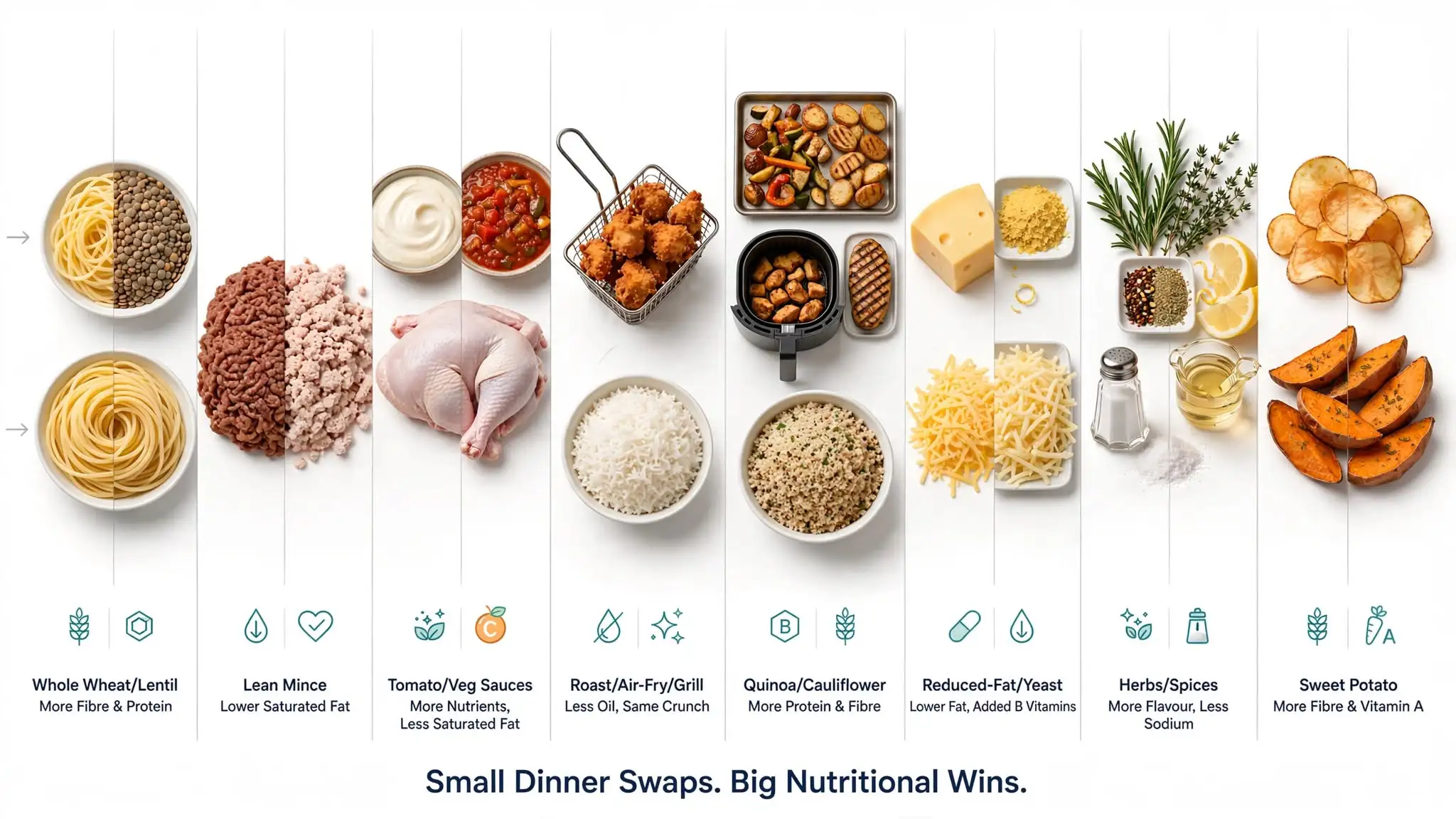
Swap 14: Regular white pasta → Whole wheat or lentil pasta
Whole wheat pasta has meaningfully more fibre and slightly more protein than regular white pasta, and the difference in cooking time is genuinely negligible once you’ve done it a few times. Lentil or chickpea-based pasta goes further still, often containing two to three times the protein of a standard wheat pasta, which makes a modest portion noticeably more filling as the base for almost any sauce. The texture is a little different, denser and slightly nuttier, but a well-seasoned sauce covers that difference completely.
Swap 15: Ground beef (standard) → Lean turkey or chicken mince
Swapping standard ground beef for lean turkey or chicken mince significantly reduces the saturated fat content of a dish while keeping essentially the same texture once it’s cooked into a sauce, curry, or bolognese. In my own experience feeding this to family without announcing the swap beforehand, most people genuinely cannot tell the difference once herbs, garlic, and a proper sauce are involved. The main adjustment is seasoning slightly more generously, since leaner mince carries a little less natural flavour than higher-fat beef.
Swap 16: Cream-based sauces → Tomato-based or blended vegetable sauces
A good tomato-based sauce delivers lycopene, an antioxidant linked to cardiovascular benefits, along with vitamin C, all for a fraction of the saturated fat found in a cream-based equivalent. Blending roasted vegetables such as carrot, courgette, or red pepper into the sauce base adds hidden fibre and micronutrients without any detectable change in flavour, which is a genuinely useful trick if you’re cooking for anyone who’s fussy about vegetables on their plate. I’ve used this specific trick for years without a single complaint from anyone at the table.
Swap 17: Deep-frying or pan-frying in excess oil → Roasting, air-frying, or grilling
The cooking method matters just as much as the ingredient itself, something I underestimated for years. A sweet potato baked in the oven with a light coating of olive oil is nutritionally a very different food from the same potato deep-fried, which absorbs a significant amount of oil during cooking and adds considerably more calories and fat than most people assume. Air-frying gives a similar crisp texture to deep-frying using a small fraction of the oil, which is why it became the appliance I use most often for anything that used to go in a deep fryer.
Swap 18: White rice as a base → Quinoa or cauliflower rice
Quinoa is one of the few plant-based complete proteins, meaning it contains all nine essential amino acids the body can’t produce on its own, which white rice doesn’t provide at anywhere near the same level. It also has considerably more fibre and iron than white rice, gram for gram, and cooks in roughly the same fifteen minutes. Cauliflower rice works well specifically for lower-carbohydrate eating, though I won’t pretend it tastes or behaves like rice — it releases more water during cooking and needs a hot, dry pan to avoid turning mushy.
Swap 19: Heavy cheese topping → Reduced-fat cheese or nutritional yeast
Nutritional yeast has a genuinely cheesy, nutty, almost umami flavour once sprinkled over pasta or roasted vegetables, with none of the saturated fat that comes with a heavy handful of grated cheese. Most fortified brands also add a meaningful dose of B vitamins, including B12, which is otherwise mostly found in animal products and is a common gap for anyone eating less meat and dairy than they used to. Reduced-fat cheese is the simpler, more familiar option if nutritional yeast isn’t something you want to keep stocked, and it still cuts a meaningful amount of saturated fat compared to full-fat versions.
Swap 20: Table salt for flavouring → Fresh herbs, spices, citrus zest, or a vinegar splash
Most people, myself included for years, reach for salt purely out of habit rather than because the dish genuinely needs it, and high sodium intake is consistently linked to elevated blood pressure over time. A squeeze of lemon, a pinch of smoked paprika, or fresh herbs like coriander and basil can change how a dish tastes just as effectively as extra salt, while adding actual vitamin C or antioxidants that salt could never provide. I keep dried chilli flakes and smoked paprika next to the stove now instead of the salt grinder, which has quietly changed how I season almost everything.
Swap 21: Takeaway chips or fried sides → Oven-roasted sweet potato wedges
Sweet potatoes bring considerably more fibre, vitamin A (as beta-carotene), and potassium than a standard white potato prepared the same way, and they have a naturally lower glycaemic index too. Roasted in wedges with a little olive oil and smoked paprika, they satisfy the takeaway-chip craving far more convincingly than I expected the first time I tried it, with a similar crispy-outside, soft-inside texture once you get the oven temperature right. The trick is spacing them out on the tray rather than crowding them, which is the difference between crispy wedges and soggy ones.
Snack and Drink Swaps — The Category I’d Been Getting Most Wrong
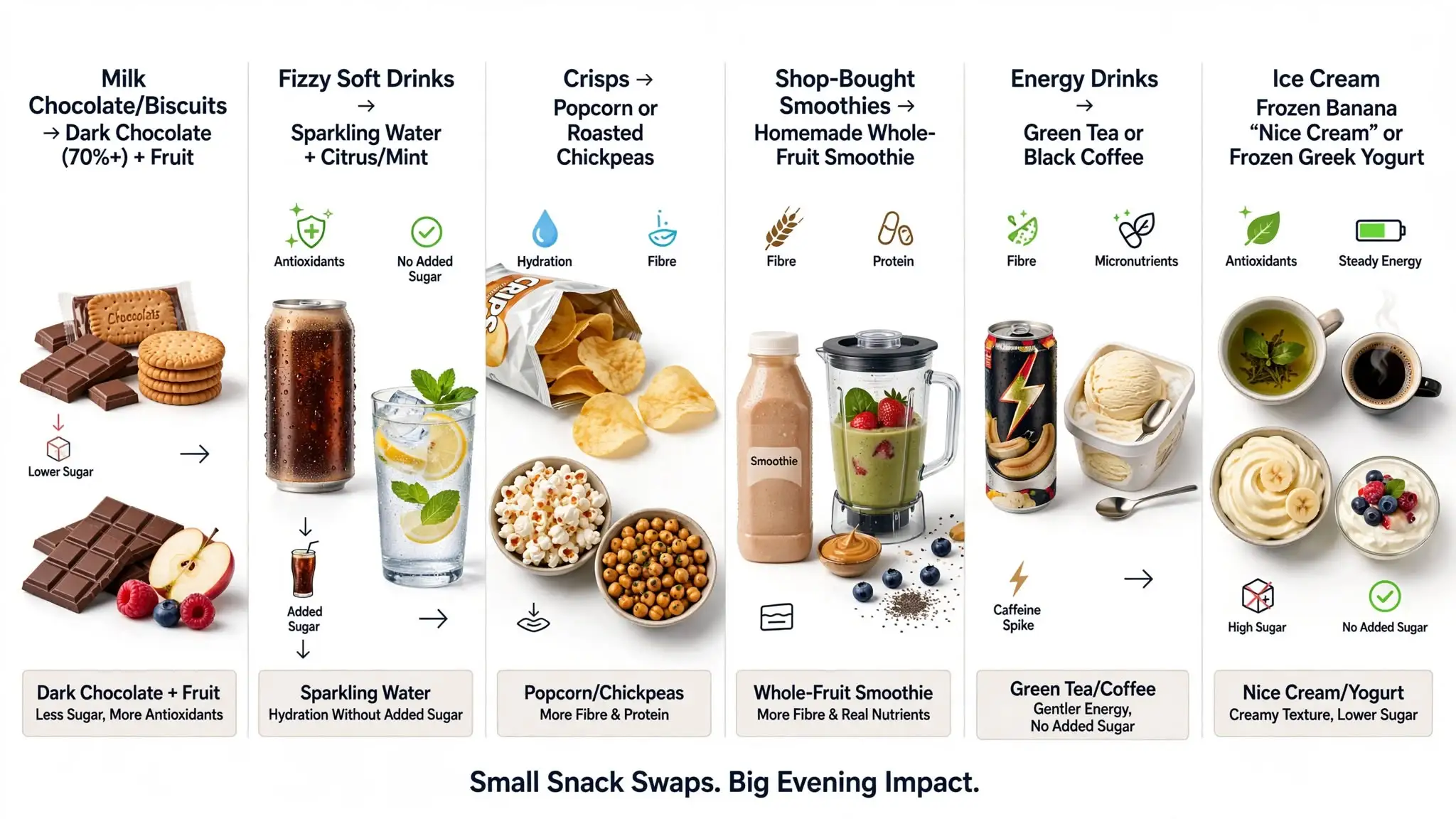
Snacking was where my “healthy eating” reliably fell apart. I’d eat well until 3pm and then undo half of it without noticing. These six swaps made the biggest combined difference to how I felt by evening.
Swap 22: Milk chocolate or biscuits → Dark chocolate (70%+) with a piece of fruit
Dark chocolate above roughly 70% cocoa content has substantially less added sugar than milk chocolate, along with a meaningfully higher concentration of flavonoid antioxidants, since less of the bar is diluted with milk solids and sugar. Paired with a piece of fruit, it genuinely feels like a proper treat rather than a compromise, and a couple of squares tends to satisfy a chocolate craving more completely than a larger amount of milk chocolate does, likely because the stronger flavour means you eat less of it.
Swap 23: Fizzy soft drinks → Sparkling water with citrus slices or mint
The carbonation itself satisfies much of the sensory craving people associate with a fizzy drink, without the added sugar of a regular soft drink or the artificial sweeteners in diet versions, which some research suggests may keep sweet cravings active rather than resolving them. Staying properly hydrated through the day also reduces the false hunger signal that sends a lot of people to the biscuit tin by mid-afternoon, since thirst and hunger cues can be genuinely difficult for the body to tell apart. Citrus slices or a sprig of mint make it feel like an actual drink rather than plain water, which made this swap far easier to stick with than I expected.
Swap 24: Crisps → Lightly salted popcorn or roasted chickpeas
Air-popped popcorn has a fraction of the calories of an equivalent volume of crisps, largely because it isn’t fried in oil, while still delivering considerably more fibre from the whole grain kernel itself. Roasted chickpeas, tossed in a little oil and paprika before baking until crisp, add real protein alongside the crunch and, in my experience, hold that satisfying crunch factor even better than popcorn does over the course of an afternoon.
Swap 25: Shop-bought smoothies → Blended at home with whole fruit and vegetables
Commercial smoothies are frequently made with fruit concentrate or juice as a base rather than whole fruit, meaning much of the fibre has already been stripped out before it even reaches the bottle, despite the healthy branding on the label. Making one at home with frozen fruit, a handful of spinach (genuinely undetectable once blended with banana or berries), and a tablespoon of nut butter for staying power takes about four minutes and gives you the fibre, protein, and micronutrients the shop-bought version usually lacks. It’s also considerably cheaper once you’re buying frozen fruit in bulk rather than pre-made bottles.
Swap 26: Energy drinks → Green tea or black coffee
Energy drinks are largely sugar and caffeine sold at a significant premium, and the sharp spike in energy they provide is typically followed by an equally sharp crash an hour or two later, which often leads to reaching for another one. Green tea provides a gentler dose of caffeine alongside antioxidants and L-theanine, an amino acid that appears to smooth out the caffeine’s effect and reduce the jittery crash that energy drinks and even coffee alone can produce. Black coffee is the simpler swap if the taste of tea isn’t for you, and it avoids the added sugar entirely.
Swap 27: Ice cream → Frozen banana “nice cream” or frozen Greek yogurt
Blended frozen banana, sometimes called “nice cream,” is genuinely creamy in texture with no added sugar beyond what’s naturally in the fruit, and a food processor turns it soft-serve consistency within a couple of minutes. Frozen Greek yogurt is the other option, keeping most of the protein of regular Greek yogurt while delivering a texture close enough to real ice cream that it satisfies the craving properly rather than feeling like a sad substitute.
Quick Start — Try Just Three This Week: don’t attempt all 31 at once. Pick one swap from breakfast, one from your biggest snacking weakness, and one from dinner. Do those three consistently for two weeks before adding more. That’s how habits actually form, rather than resolutions that collapse by Thursday.
Cooking and Pantry Swaps — The Ones Nobody Talks About Enough

Less visible than what ends up on the plate, but they affect every single meal you cook.
Swap 28: Vegetable or sunflower oil → Extra virgin olive oil or avocado oil
Both olive oil and avocado oil are high in monounsaturated fats, the same category of fat linked to improved cholesterol profiles and better cardiovascular health outcomes when they replace less healthy fats in the diet rather than simply being added on top of them. Extra virgin olive oil is the everyday option for dressings and lower-heat cooking, while avocado oil has a higher smoke point and handles roasting or higher-heat frying without breaking down the way olive oil can at very high temperatures.
Swap 29: White refined sugar in baking → Mashed banana, medjool dates, or a little maple syrup
Natural sweeteners such as mashed banana, blended medjool dates, or a modest amount of maple syrup bring fibre and small amounts of micronutrients like potassium that refined white sugar lacks entirely, since refined sugar contributes calories with essentially nothing else attached to it. They also tend to make baked goods noticeably more moist once you adjust the liquid quantities in a recipe slightly, which took a couple of failed attempts on my part before I got the ratios right, but was worth the trial and error.
Swap 30: White all-purpose flour → Oat flour or almond flour in baking
Both oat flour and almond flour add meaningfully more fibre and protein than white all-purpose flour, while lowering the overall glycaemic load of whatever you’re baking, meaning a gentler effect on blood sugar afterwards. Almond flour in particular works especially well in biscuits and dense cakes, giving a slightly nutty flavour and a moist crumb, though it doesn’t behave identically to wheat flour in anything that needs to rise significantly, like bread.
Swap 31: Shop-bought processed condiments → Homemade or whole-food alternatives
Commercial sauces and condiments — ketchup, barbecue sauce, sweet chilli sauce — are consistently among the highest sources of hidden added sugar in the average daily diet, often more per tablespoon than people realise since condiments are rarely thought of as a “food” worth scrutinising. A quick tahini-and-lemon dressing or a simple homemade tomato chutney removes a surprising amount of sugar from daily eating for very little effort, and keeps for a week or two in the fridge, making it a genuinely low-maintenance swap once it’s part of your routine.
The Swaps I Actually Stuck With (And the Ones I Quietly Abandoned)
Honesty first: I didn’t make all 31 of these swaps permanent fixtures. The ones genuinely still in my kitchen now: Greek yogurt, rolled oats, olive oil, lentil pasta, sparkling water, dark chocolate, and roasting instead of frying almost everything. Roughly twelve out of thirty-one — which sounds like a failure until you realise that twelve sustainable changes built into every single day add up far faster than a month of thirty-one changes that all get abandoned simultaneously.
The ones I quietly stopped: cauliflower rice (I don’t enjoy it and I’ve stopped pretending I do), banana nice cream, and nutritional yeast. Letting those go without guilt made it easier to keep the others. That connects to something I’d written about in a different context — that chronic stress from joyless rigidity about food can quietly undermine your health as much as the food itself does.
How to Start Without Feeling Overwhelmed
Picking one to three small changes and repeating them consistently outperforms attempting a complete overhaul every time. The swaps I stuck with permanently were almost all ones I introduced one at a time and then stopped having to think about.
Think about which meal causes you the most nutritional concern and start there. If snacking is the issue, start with swaps 22 to 27. If it’s dinner, try 14 to 21. A structured weekly eating plan can also help if you prefer something concrete to follow.
And if you find yourself running low on energy even after eating reasonably well, that’s sometimes a different signal. I wrote about recognising the physical signs your activity levels need adjusting, which can look similar to a nutrition problem but need a different solution.
Dietary Note: individual nutritional needs vary. If you have a specific health condition such as diabetes, coeliac disease, or a nut allergy, some of the swaps on this list may not be appropriate for you. Speak to a registered dietitian or your GP before making significant changes to your diet.
Conclusion
Looking at all of those 31 things, the real difference wasn’t which food was changing—it was that I was allowing myself to keep something, to leave some, and never to take a failed change as proof that the whole process wasn’t working. The 12 people who had stuck are now just my food, not something I should think about or feel good about.
If you’re starting over, don’t try to adapt all 31 at once—that’s the quickest path to the all-or-nothing cycle I’ve been stuck in for years. Pick a handful of easy food swaps that fit the meals you’ve already eaten, give them a few weeks to automate, and let those that don’t work go quietly. That’s the real way.
This article reflects my personal experience and general nutrition information drawn from published research. It is not medical or dietary advice and should not replace a consultation with your GP or a qualified healthcare professional.
Frequently Asked Questions
Are food swaps actually effective for losing weight?
Yes — consistent food swaps reduce calorie density and improve nutrient quality without calorie counting, and research consistently supports small sustainable changes over dramatic short-term restrictions for long-term results.
Do healthy food swaps really taste as good as the original?
Some do, some don’t — whole grain bread, olive oil, and Greek yogurt taste good to most people, while cauliflower rice doesn’t taste like rice, so being honest about this makes it easier to find the swaps worth keeping.
How many food swaps should I try at once?
Two or three, in the meal category where habits are weakest, since trying too many at once increases the chance of abandoning all of them when one becomes inconvenient.
Can food swaps alone make a significant difference to my health?
Yes — consistently reducing ultra-processed foods, added sugar, and saturated fat is associated with lower risks of cardiovascular disease and type 2 diabetes, without requiring a full dietary overhaul.
Which food swap gives the biggest health benefit for the least effort?
Replacing sugary drinks with water or sparkling water — strong evidence, zero cooking required, and consistently cited by major health authorities as the highest-impact low-effort dietary change.

4 thoughts on “31 Easy Food Swaps to Help You Eat Healthier”
Comments are closed.