There Is No Vaccine. Here Is What Scientists Are Racing to Do
Ebola Vaccine 2026 — Bundibugyo Strain, Why Ervebo Does Not Work & the Race to Develop a New Vaccine
The Question Nobody Expected to Be Asking in 2026
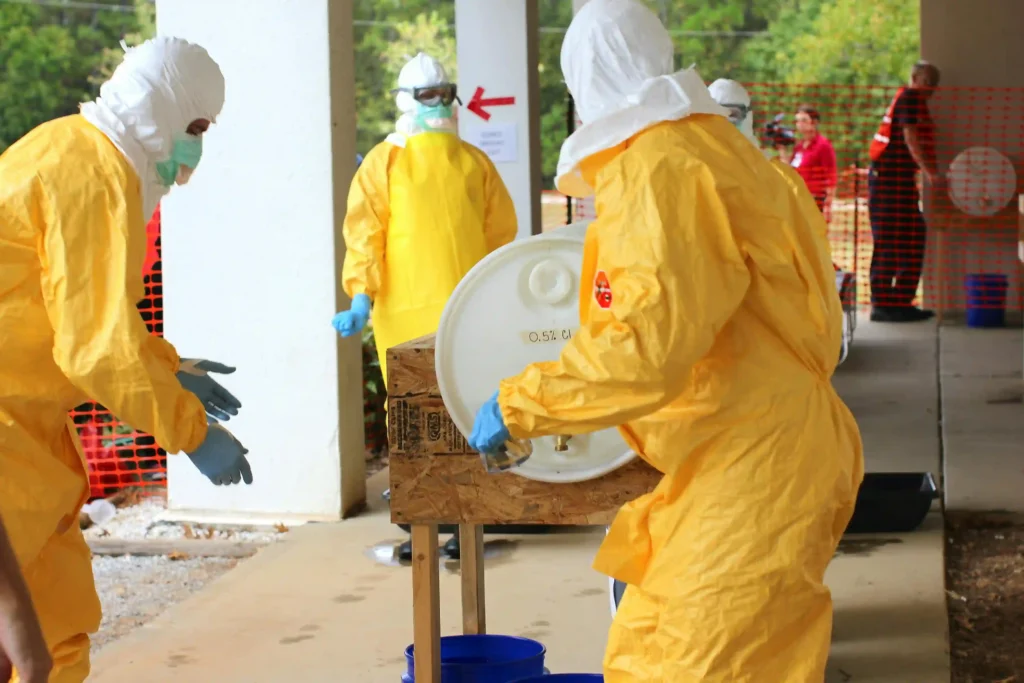
We have an Ebola vaccine. We proved it works. It is used in the field during outbreaks. In 2019, it was approved by the FDA. We built stockpiles. We have trained health workers to use it.
Now, in May 2026, it’s practically obsolete. Not because it has ceased to work. However, this Ebola outbreak in the Democratic Republic of Congo and Uganda is from a different strain — and the vaccine has been developed against a different foe.
A total of 543 people are suspected to be infected with Ebola in the current outbreak in DRC, as of today. At least 177 are suspected dead. The disease has spread to Kinshasa, the capital of DRC’s 17-million population city. It has spread to Uganda. The relatives of the deceased lit the fire at a hospital in Ituri Province, because they could not bury their dead safely. The one thing modern medicine has developed to stop outbreaks of Ebola and it exists in a stockpile largely unused.
This article serves to give an explanation as to why — and what the world is doing to address it.
OUTBREAK UPDATE — May 22, 2026
543+ suspected cases | 177+ suspected deaths | Spread to Kinshasa, North Kivu, South Kivu, and Uganda | WHO national risk for DRC: VERY HIGH | Global risk: LOW | No approved vaccine or treatment for Bundibugyo strain
Table of Contents
Why the Ebola Vaccine Does Not Work for This Outbreak
Ervebo, developed by Merck, is a real scientific miracle vaccine authorized to treat Ebola. It has been developed during the devastating Ebola epidemic in West Africa in 2013-16 which claimed more than 11,000 lives, and has been trialled in emergency situations in Guinea in 2015, with almost 100% efficacy. It has been officially approved by FDA in 2019. During subsequent outbreaks in DRC, it was used in a ring vaccination approach (vaccination of close contacts of confirmed cases) and it was effective.
However, Ervebo has been designed to fight one particular enemy: the Zaire ebolavirus.
The virus infecting Ituri Province is known as Bundibugyo ebolavirus, which is a different species, but still in the same family. The difference between influenza A and influenza B is similar to the difference between chicken pox and smallpox: They both cause illness, they are both called ‘pox,’ but are actually two different viruses, so a chicken pox vaccine would not work on smallpox!
Ervebo contains a surface protein of the Zaire virus. After injection, the immune system becomes sensitised to and attacks a particular protein. The bundles of proteins on the surface of the virus are different in the case of the Bundibugyo virus. Your body will not recognise the antibodies produced following vaccination with Ervebo. Vaccine is the correct intervention and intervention at the wrong time.
The Diagnostic Delay That Made Everything Worse
The detection gap added weeks of uncontrolled spread. Standard rapid field diagnostics in DRC were configured to detect only the Zaire strain. When the first samples from Ituri were tested, they came back negative — not because no Ebola was present, but because the test was looking for the wrong strain. The outbreak had been spreading for four weeks before Bundibugyo was confirmed. Four weeks of community transmission with no public health response.
What Vaccines Exist for Bundibugyo — The Honest Answer
Jean-Jacques Muyembe has been working for 50 years with Ebola. When it was first discovered at the Ebola River in 1976, he was a young virologist and he took some of the original samples. He has attended or led the response to more Ebola outbreaks than anyone living. He said there was no vaccine for this non-Zaire strain of Ebola and a large outbreak was uncommon in his career, he told the public when the outbreak was diagnosed as Bundibugyo in 2026.
His words are respected. The truthful answer to ‘what vaccines exist for Bundibugyo’ is: virtually none ready to use.
Candidate 1 — The rVSV-Platform Bundibugyo Vaccine
Researchers at multiple institutions are trying to tweak the same rVSV platform that was used to make Ervebo to target the Bundibugyo instead of Zaire. The concept is on paper: on the platform, it is proved to be safe and immunogenic in humans. Theoretically, it should be possible to swap the Zaire surface protein with the Bundibugyo surface protein.
The problem: no doses exist. The vaccine is in the laboratory and early development phase. Doses suitable for clinical trials would be prepared from the time of decision to proceed at speed, which is estimated to be 6-9 months. This means there has to be a dose for human testing, at the very least, by the end of 2026, even in the event of an emergency.
Candidate 2 — Could Ervebo Offer Partial Protection?
That’s the issue that is being discussed in the WHO, Gavi and virology labs worldwide, right this minute. Some antibody cross reactivity has been noted in animal studies, where Ervebo provides partial cross protection against Bundibugyo (the surface proteins are similar to each other). But the question is, does that partial protection matter in humans enough to warrant introducing a vaccine for a different virus?
There is a stockpile of approximately 2,000 doses of Ervebo that are geographically near the outbreak area. Gavi is considering the feasibility of emergency deployment or accelerated development with its First Response Fund, a financing mechanism that is specifically developed for PHEIC situations.
WHO’s current stance on the use of Ervebo in confirmed contacts of people with Bundibugyo is that it is being actively considered and guidance is being developed. This is not an easy decision to make; investing in a vaccine that is not proven to be effective can give false sense of security, divert resources, and may even be harmful from the vaccine itself.
The Vaccine Development Race — Timeline
To understand when a Bundibugyo vaccine could realistically be available — and whether it can help this outbreak — here is the honest timeline:
| Milestone | Estimated Timeline | Status |
| rVSV-Bundibugyo candidate (lab stage) | Exists now | Laboratory / pre-clinical |
| Manufacturing doses for Phase 1 trial | 6–9 months (Nov 26–Feb 27) | Not started |
| Phase 1 safety trial in humans | 2027 | Not started |
| Phase 2 efficacy trial | 2027–2028 | Not started |
| Emergency use authorisation | Earliest 2028 | Contingent on trial results |
| Full regulatory approval | 2029 or later | Contingent on Phase 3 |
The bottom line: There is no vaccine specific to Bundibugyo which will have a significant impact on the current outbreak of 2026. This outbreak will be managed — or not managed — via the traditional, pre-vaccine practices of public health: contact tracing, isolation, safe burial practices, PPE, and community involvement.
What the Global Response Is Actually Doing Right Now
With no specific vaccine, the response is not empty. Far from it. The international mobilisation is the most significant since the 2013–16 epidemic.
- Not more than $60 million has been allocated for DRC and neighbouring countries, UN Relief Chief said
- WHO: $3.9 million emergency funds released; continental incident management team set up with Africa CDC
- MONUSCO UN peacekeeping mission: airlifting 30 tonnes of essentials such as medicines, tents and protective gear
- Involvement of MSF (Doctors Without Borders) to scale up operations in the province of Ituri.
- CDC: 30+ staff deployed to DRC, to support American nationals affected, working safely
- Red Cross: door-to-door awareness creation support and safe and dignified burial teams put in place.
- First Response Fund, to expedite any potential vaccine or treatment candidates, is being explored by Gavi.
The ground realities of the challenge are harsh. Ituri Province has been a conflict zone for years. 1.9 million people are in need of humanitarian assistance. The population is highly skeptical of health authorities, largely because of political instability in the past few years and, specifically, the 2018-19 outbreak of Zaire Ebola in the region, in which health workers were attacked by militia. This week, one hospital was set ablaze by the relatives who were grieving the death of their loved one, feeling cut off from their body.
These are not problems of logistics that can be solved with money. They need community trust, community leadership and community structure. The 2018-19 lesson was that to achieve technical excellence in healthcare delivery, community partnership is a must; this outbreak ultimately ended in the same region after 3000+ cases. That lesson has been learned and applied, but in a more challenging security backdrop.
A Systemic Failure — Why There Was Never a Bundibugyo Vaccine
Bundibugyo virus was discovered in 2007. It was known by the scientific community. It had been aware that it was responsible for the death of as many as 50% of those infected. For 19 years, there was no serious effort by the governments and pharmaceutical firms or any international health body to develop a vaccine against it. Why?
Both previous outbreaks have been relatively small and quickly contained. 131 cases in 2007–08. 38 cases in 2012. No one had to deal with the issue of long-term vaccine development because the disease went away.
The West African epidemic of the 2013–16 time frame compelled the world to come up with Ervebo not so much because of the scientific challenge as it was politically and commercially inevitable. Prior to this epidemic, Ebola had been known to the world for 37 years but there was no vaccine approved for any strain.
For years, Dr Richard Hatchett, the chief executive of the Coalition for Epidemic Preparedness Innovations (CEPI), has said the world must be ready to make vaccines against viruses before they can make an outbreak and become a pandemic. The Bundibugyo gap is a case study in what can happen when this argument is ignored. The scientific knowledge existed.Science existed. The platform existed. The money was not invested.
Frequently Asked Questions
Q: Is there an Ebola vaccine for the 2026 outbreak?
No. The approved vaccine for Ebola virus, Ervebo (Merck), is specifically for the Zaire strain of the virus. The outbreak in the DRC in 2026 is due to a different strain (Bundibugyo) that has different surface proteins. Ervebo is not effective at preventing or preventing the onset of Bundibugyo. There is a vaccine candidate at the laboratory stage specifically for Bundibugyo but it would take 6-9 months to produce doses for clinical trials. There won’t be a vaccine to make a dent in the ongoing outbreak.
Q: Why doesn’t the Ebola vaccine work for this outbreak?
Ervebo is aimed at the surface proteins of the Zaire ebolavirus. The antibodies (the immune response it generates) are specific to Zaire’s proteins. Different surface proteins are not recognised by the antibodies. It’s like when you get a flu vaccine for one strain and then this other strain comes along. The platform remains the same, the objective is different.
Q: How many people have died from Ebola in 2026?
There have been at least 177 suspected deaths in DRC, along with 543+ suspected cases, as of 22 May 2026. There have been 2 confirmed cases with 1 death reported in Uganda. There are concerns that the outbreak is probably considerably more widespread than reported due to limited surveillance in Ituri Province caused by the four-week delay in detection and conflict in the area.WHO has reported that the extent of the outbreak is likely to be much greater than reported because of limited surveillance in parts of the Ituri Province due to the four week delay in detection and conflict in the area.
Q: When will an Ebola vaccine for Bundibugyo be ready?
It can take 6-9 months to manufacture a vaccine, and the earliest a vaccine that has been proven to be safe and effective in humans could be ready for use would be late 2026 or early 2027. If early trial results are good there would be earliest emergency use authorisation in 2028. Complete regulatory clearance would be obtained in 2029 or beyond. This timeframe would make it impossible to have any new Bundibugyo vaccine to influence the current 2026 outbreak.
Q: Is Ebola spreading to other countries?
Concurrent with this, confirmed cases of Bundibugyo have been reported in Uganda (via imported cases from DRC) and suspected cases have been reported in the provinces of Kinshasa, North Kivu, South Kivu and Tshopo in DRC, both intra and urban spread. The global risk rating is still low. WHO and CDC say there should be no world-wide panic — it does not spread through the air or with casual contact, but only by direct contact with bodily fluids.
Conclusion — The Gap the World Chose to Leave Open
The science was not to blame for the death of the nurse on 24 April 2026 in Bunia. She lost her life due to the fact that the science was not applied. A vaccine against Bundibugyo could have been developed years ago on the rVSV platform used to develop Ervebo. The knowledge existed. The investment did not…
The DRC outbreak of 2026 makes it all too clear that it is impossible to be prepared for a pandemic by investing in vaccines after a pandemic outbreak occurs. This has been the argument of CEPI, Gavi and WHO for years. It has not received due consideration.
The lesson is too late for this outbreak to the people of Ituri Province now. Worldwide reaction is activated. Contact tracers are in action. The PPE is being brought by air. Community engagement teams are establishing relationships, one by one. These are the tools that they’ve used; in small outbreaks, with easier conditions, they have!
But the strongest weapon — a vaccine — will not come in time for the 543 who were already infected, or the next individual with a fever that began this morning in a DP camp in shadow of a still active conflict zone. This is the price of the hole in the world that the world created.
Medical Disclaimer
This article is for informational purposes only. For travel health advice and outbreak updates, visit WHO.int and CDC.gov. Do not make health decisions based on this article alone.
Sources:
WHO PHEIC Statement & Outbreak Page (May 17–22, 2026) | Wikipedia — 2026 Ituri Province Ebola Epidemic (May 22, 2026) | UN News (May 22, 2026) | Gavi — Bundibugyo Vaccine Pipeline (May 22, 2026) | Al Jazeera — When Will Vaccine Be Developed (May 21, 2026) | Time Magazine — WHO Global Emergency (May 17, 2026) | WHO DON602 Official Statement