Why I Couldn’t Stop Thinking About This
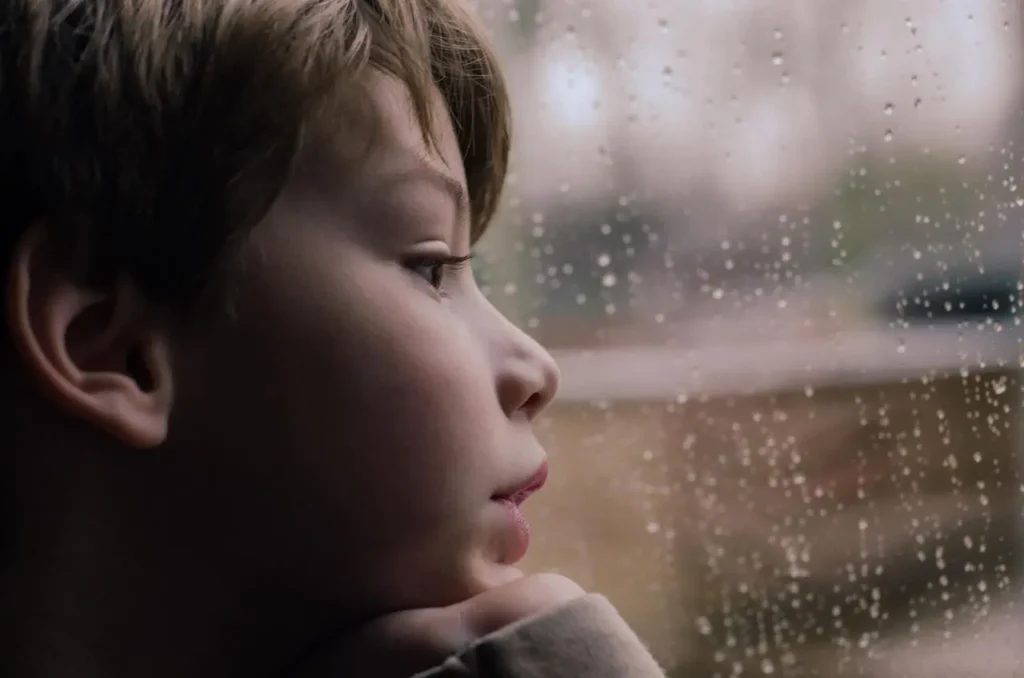
A few months ago, a reader wrote to me about his youngest son – a family who first reached out after reading one of my earlier pieces on childhood developmental changes —a toddler who was talking, laughing, and arriving on time at every milestone. Then, near her third birthday, she began to lose the words she already knew. Doctors initially blamed hearing problems, then speech delays, and then possible autism. It’s been almost two years since someone spoke out loud about childhood dementia .
This story stayed with me even after I closed the mail. I’ve spent many years writing about mental health and mental well-being on this site, mostly for adults. But the symptoms of childhood dementia are such that almost no parent learns to recognize, and when most families get answers, the disease is already two years older.
That’s why I sat down to write this guide properly, not as a clinical fact sheet, but as something I really want any concerned parent to read while looking for answers at 2 a.m.
Symptoms of childhood dementia rarely look as people expect. There are no obvious warning signs. Instead, it’s a slow disintegration — a child who was on the right track and suddenly starts to retreat. Understanding what this analysis looks like and how quickly it can be detected is the purpose of this article.
Table of Contents
What Is Childhood Dementia, in Plain English
Childhood dementia is an umbrella term for more than 100 rare genetic disorders that cause progressive damage to a child’s brain. It is not the dementia most of us picture when we think of an ageing relative. There are no plaques building up slowly over eighty years, and no gradual “getting older.”
Instead, children with these conditions are usually born looking completely typical. Many hit their early milestones right on time: first words, first steps, first day of nursery. Then, at some point between infancy and the early school years, things start to move in reverse. Skills a child already had — talking, walking, feeding themselves, recognising family — begin to fade.
It affects roughly 1 in every 2,900 children born worldwide, a prevalence similar to childhood cancer. I would guess most people reading this have never heard the term before today. That gap, between how common it is and how little we talk about it, is honestly a big part of why I wanted to write this piece properly.
Quick facts worth sitting with
- Childhood dementia affects around 1 in 2,900 children worldwide.
- Every eleven minutes, somewhere in the world, a child dies from a condition that causes childhood dementia.
- Average age of onset is around 2.5 years old.
- Diagnosis typically takes two or more years after symptoms first appear.
What Causes It, and Why It Is Never a Parent’s Fault
The overwhelming majority of childhood dementia cases come down to genetics. A mutation — a small error in the DNA a child inherits — triggers a rare metabolic or neurodegenerative disorder. About two-thirds of cases are caused by inborn errors of metabolism, meaning the body’s chemical processes cannot break down certain substances properly, and those substances build up in the brain over time, damaging nerve cells as they accumulate.
I want to be direct about something here, because I know how a parent’s mind works once a diagnosis lands: this is not caused by anything you did or did not do during pregnancy, by feeding choices, by screen time, or by a vaccination schedule. In most families, there is no prior history of the condition at all. It is a new or inherited mutation that neither parent knew they carried.
The Conditions Behind Childhood Dementia Symptoms
There is not one single disease called childhood dementia. It is a category, similar to how “cancer” covers dozens of distinct diseases with different causes and outlooks. A few of the more commonly diagnosed conditions are worth knowing by name, because recognising them can shorten that painful diagnostic wait.
- Batten disease (also called neuronal ceroid lipofuscinosis, or NCL) is the single leading cause worldwide, affecting roughly 7 to 8 in every 100,000 births. It typically causes vision loss, seizures, and progressive cognitive and motor decline, usually starting somewhere between five and ten years old.
- Sanfilippo syndrome is one of the disorders that is hardest to read about, because its early symptoms are so easily mistaken for something else entirely. Children often develop completely normally until age two to six. Then hyperactivity, sleep problems, and speech delay start to appear — and those same symptoms are the bread and butter of an ADHD or autism assessment. This overlap is exactly why so many families spend years being told to “wait and see.” If autism has ever come up in conversations about your child, our guide on World Autism Awareness Day 2026 is a useful companion read for understanding where the two conditions overlap and where they clearly diverge.
- Niemann-Pick disease type C and various leukodystrophies (disorders that damage the brain’s white matter) round out the more commonly diagnosed causes, alongside rarer conditions such as Krabbe disease and juvenile Tay-Sachs disease.
Early Warning Signs Every Parent Should Know
This is the part I think matters most, so I want to keep it as concrete as I possibly can.
Early-Stage Signs
- Losing words or phrases a child previously used with confidence
- Regression in toilet training after it was already established
- New clumsiness or a change in how a child walks or runs
- Irritability or hyperactivity that feels different from their usual temperament
- Slower learning at nursery or school compared to before
Middle-Stage Signs
- Noticeable loss of previously acquired skills (feeding, dressing, full sentences)
- New seizures that were not present before
- Sleep disturbances that do not respond to a normal bedtime routine
- Withdrawal from friends, family, or activities they used to enjoy
Later-Stage Signs
- Significant loss of mobility and communication
- Difficulty swallowing
- Increasing dependence on caregivers for all daily tasks
A note I would want every parent to sit with
One missed milestone is not a diagnosis. Children develop at different paces, and the vast majority of developmental delays have nothing to do with childhood dementia. What matters is the pattern: a child who is losing skills they clearly already had, rather than simply being a little behind their peers.
How Childhood Dementia Is Diagnosed
Here is a statistic that frustrates me every time I read it. An accurate diagnosis takes, on average, two or more years after symptoms first appear. That delay is not because doctors are not trying. It is because these are individually rare conditions, and the early symptoms overlap heavily with far more common childhood diagnoses, including autism, ADHD, epilepsy, and general developmental delay.
If a paediatrician suspects a neurodegenerative disorder, the workup usually includes a detailed developmental assessment that tracks regression rather than just delay, neuropsychological testing of memory, attention, and language, an MRI or CT scan to look for structural changes in the brain, an EEG to check for seizure activity, and biochemical blood and urine tests to look for metabolic abnormalities.
If you are a parent reading this because something feels off, my honest advice is this: trust the pattern you are seeing, and ask directly about regression rather than delay. Those are two very different conversations with a paediatrician, and using the right language from the start can genuinely speed the process up. Do not be afraid to ask for a referral to a paediatric neurologist or a geneticist if your concerns are not being taken seriously at the first appointment.
Is There Treatment? The Honest Answer
Most forms of childhood dementia do not yet have a cure, and I am not going to pretend otherwise, because that would not be fair to you. But no cure does not mean nothing can be done.
Symptom management — for seizures, sleep, pain, and behaviour — can meaningfully improve a child’s day-to-day comfort and quality of life. Physical, occupational, and speech therapy can help preserve existing skills for longer than they might otherwise last. And there has been real, measurable progress on the treatment front. Cerliponase alfa, an enzyme replacement therapy, was approved specifically for one form of Batten disease known as CLN2, and has been shown in clinical studies to slow the loss of motor and language function. Gene therapy trials are currently underway for several other forms of these conditions, and early results from some of those trials are genuinely encouraging.
It is not a cure for the category as a whole, not yet. But it is proof that research investment translates directly into more good days for these children and their families.
Why This Gets So Little Funding, and Why That Needs to Change
This is the part that genuinely frustrates me as someone who writes about health for a living. Childhood dementia collectively affects roughly as many children as childhood cancer does. Yet it receives a fraction of the research funding, the media coverage, and the public awareness that childhood cancer rightly commands.
The childhood cancer movement proved that coordinated advocacy, sustained funding, and consistent public awareness can move survival rates dramatically over the course of a few decades. There is no biological reason the same cannot happen here. The barrier has always been visibility, not possibility.
What I Would Want a Parent to Know About Supporting a Child With Dementia
If you are caring for a child with one of these conditions, or supporting a family who is, a few things are worth holding onto.
First, an Individualised Education Plan can help preserve as much of a child’s routine, learning, and dignity at school as possible, for as long as possible. Second, palliative care for a child with a progressive condition is not about giving up. It is about comfort, symptom control, and quality of life at every stage of the illness, not only at the end of it.
Third — and this is the part I do not think gets said enough — caregiver burnout in these situations is real, and it is not a character flaw. Watching a child lose skills they once had is a specific, ongoing kind of grief that does not get much public recognition. If you are a parent or caregiver in this position, it is worth reading more broadly about the emotional toll of long-term caregiving in our Mental Health category, because the support you are able to give your child depends, in part, on the support you are willing to accept for yourself.
Sibling support matters here too. Brothers and sisters of a child with a degenerative condition are often quietly grieving in the background while most of the family’s attention is understandably elsewhere. A short conversation, a specific check-in, or simply naming what they might be feeling can go a long way.
Organisations and Resources for Families
A few places are worth bookmarking if this topic touches your family directly: the Childhood Dementia Initiative, the Batten Disease Support and Research Association (BDSRA), and the National Organization for Rare Disorders (NORD) all offer disease-specific guidance, research updates, and genuine family support networks, often run by people who have lived this exact experience themselves.
Frequently Asked Questions
What is childhood dementia?
Childhood dementia is an umbrella term for over 100 rare, mostly genetic neurodegenerative disorders that cause children under 18 to progressively lose brain function and previously learned skills.
What are the earliest signs of childhood dementia symptoms in toddlers?
The earliest signs usually include losing words or skills a toddler already had, new clumsiness, increased irritability, and slower progress at nursery compared to before — regression rather than simple delay.
Is childhood dementia the same as autism or ADHD?
No, but early symptoms like hyperactivity, sleep problems, and speech delay overlap significantly, which is why many children are initially misdiagnosed with autism or ADHD before the correct diagnosis is reached.
Can childhood dementia be cured?
Most forms currently have no cure, though treatments like cerliponase alfa for one type of Batten disease can slow progression, and several gene therapies are in active clinical trials right now.
How long can a child live with childhood dementia?
Life expectancy varies widely by the specific condition involved, but many children with the more severe forms do not survive into adulthood, which is part of why earlier diagnosis and greater research investment matter so much.
Final Thoughts: Awareness Is Where Change Starts
I started writing this piece because one email stopped me in my tracks. I am finishing it hoping it does the same for someone else — a parent who has been told to “wait and see” one too many times, or a reader who had never heard these words before today.
If something about your child’s development feels like it is moving backward rather than forward, please do not sit with that feeling alone. Talk to your paediatrician, ask specifically about regression, and do not let “he’ll grow out of it” be the final answer if your instincts say otherwise. You know your child better than anyone else in the room.
Medical Disclaimer This article is for general information only and is not a substitute for professional medical advice. Please consult a qualified healthcare provider for any concerns about your child’s health or development.

6 thoughts on “Childhood Dementia”
Comments are closed.