The Short Version
Guava leaves have real, specific clinical evidence for a handful of conditions — acute diarrhoea, post-meal blood sugar spikes, mildly elevated cholesterol, and oral infections — through mechanisms scientists can actually trace. They’re a supportive remedy with genuine biological activity, not a cure-all, and not a replacement for medical treatment. The evidence, condition by condition, is below.
The Tea My Aunt Never Explained
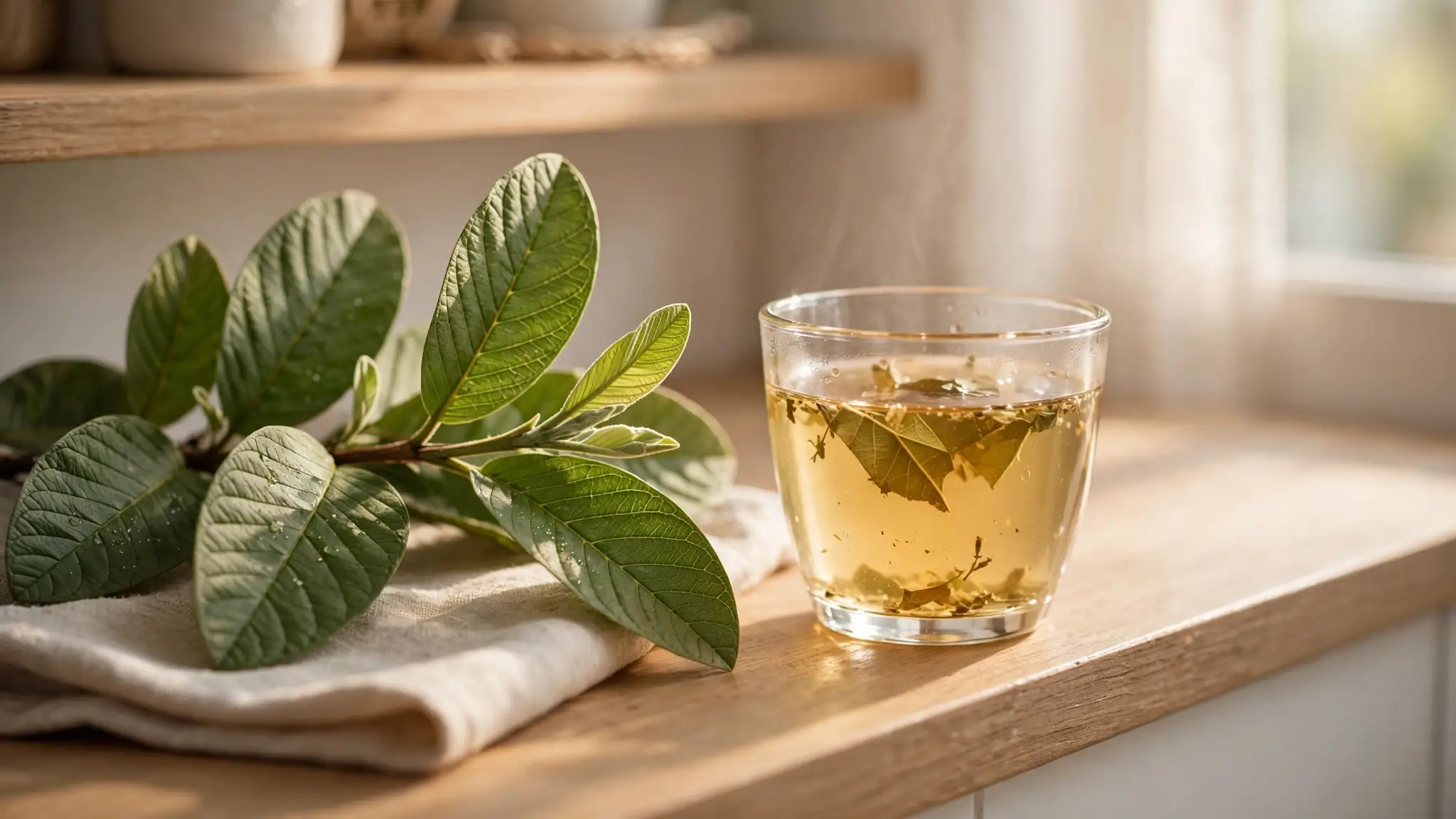
I was not introduced to guava leaf tea from any wellness trend or social media post. It came from my aunt, who had been drinking quietly for years, without making any noise, calling it an herbal medicine, without attributing any miraculous properties to it. He just made it his morning tea.
“It helps my stomach, and my sugar feels steadier after breakfast. My mother made it this way too.”
That was it — no explanation other than his mother’s kitchen and her body’s reaction.
It was this kind of quiet, racial confidence that made me so curious to reflect on it, the way I write about everything on this site. What I found really surprised me — not because guava leaves are a miracle cure, but because the answer to what diseases guava leaves can cure is more specific and evidence-based than I anticipated.
This article is what I found: what the research actually proved, where it is still thin, and how I personally felt while drinking this tea in the same way that my aunt has been doing for decades.
Table of Contents
Why Guava Leaves Are Used as Medicine — The Science Behind the Tradition
What Makes Guava Leaves Medicinally Active
The guava tree — Psidium guajava — is best known for its fruit. The leaves, far less celebrated in Western wellness circles, actually carry a more concentrated and specific bioactive profile.
The most studied compounds include quercetin and kaempferol — flavonoids with documented anti-inflammatory and antioxidant activity — alongside luteolin and apigenin, which have been studied specifically for their effects on glucose metabolism. The leaves also contain gallic acid and ellagic acid, polyphenols with genuine antimicrobial properties, plus tannins, which create the tea’s mild astringency and have a direct, beneficial effect on gut function.
This isn’t a single-compound story. It’s the combined action of a dense phytochemical matrix that appears to work synergistically.
Traditional Use vs Clinical Evidence — Being Honest About Both
Guava leaves have been used medicinally for centuries across South Asia, West Africa, and Central America. But centuries of traditional use is a different kind of evidence than a randomised controlled trial. It’s meaningful, and it’s often exactly where research should look first — but it isn’t the same as clinical proof.
The areas where modern science has most convincingly backed up traditional use are diarrhoea, post-meal blood glucose, antimicrobial activity, and lipid management. These have the most consistent human and animal trial data behind them. Other claimed benefits — cancer prevention, anxiety relief, hormonal balance — have laboratory support but lack robust human evidence so far. I want to present both categories honestly, because that’s the only version of this worth trusting.
What Diseases Can Guava Leaves Cure? The Conditions With the Strongest Evidence
Once I moved past the generic “10 benefits of guava leaves” listicles and into the actual research, the picture that emerged was more specific — and more credible — than I’d expected.
Diarrhoea and Gut Infections — The Most Consistent Clinical Evidence
This is where the evidence is most solid. A trial published in a peer-reviewed ethnopharmacology journal found guava leaf extract significantly reduced the duration and severity of symptoms in patients with acute diarrhoeal disease — a result that’s held up across several smaller studies too.
The mechanism is specific and traceable. Quercetin and gallic acid inhibit the growth of several common gut pathogens, including strains responsible for food poisoning and acute gastroenteritis. The tannins add a complementary effect — their astringent action on the gut lining reduces the fluid hypersecretion that drives diarrhoeal symptoms in the first place.
When my aunt told me the tea “helped her stomach,” I now understand fairly precisely why it likely did.
Blood Sugar Management — The Most Clinically Relevant Finding
This is the piece of guava leaf research I find most genuinely compelling, and probably the most relevant for a large share of people reading this.
Research has found that guava leaf tea consumed after meals measurably reduces postprandial blood glucose — the spike that follows eating — in both healthy volunteers and people with type 2 diabetes. The effect is consistent and mechanistically explained rather than anecdotal.
Here’s the mechanism: compounds including luteolin and apigenin inhibit alpha-glucosidase, the intestinal enzyme that breaks complex carbohydrates down into glucose. Slowing this enzyme slows how quickly glucose enters the bloodstream after eating — which is the exact same mechanism targeted by acarbose, a pharmaceutical drug used to manage type 2 diabetes.
I tried tracking my own response informally over a few weeks of drinking it before breakfast. I can’t offer that as clinical data, but the pattern I noticed — a steadier, less sluggish hour after breakfast — lined up with what the research describes.
Cholesterol and Cardiovascular Health
Multiple studies, in both animal models and small human trials, have found guava leaf extract reduces total cholesterol, LDL cholesterol, and triglycerides, while largely leaving protective HDL cholesterol unaffected.
The primary mechanism is beta-sitosterol, a plant sterol that competes with dietary cholesterol for absorption sites in the small intestine, reducing how much cholesterol the body actually takes up from food. One study measuring this over eight weeks of daily guava leaf tea found statistically significant lipid-lowering effects in people with mildly elevated cholesterol.
This isn’t a replacement for medical cholesterol management in people with clinically elevated lipids. It’s a meaningful natural addition for people already supporting cardiovascular health through diet.
Oral Health — Where Guava Leaves Rival Pharmaceutical Preparations
This might be the most underappreciated application in the whole guava leaf conversation. The leaves show consistent antibacterial activity against the main pathogens behind both tooth decay and gum disease.
Several clinical trials have compared guava leaf mouthwash or gel directly against chlorhexidine — the gold-standard antimicrobial preparation in modern dentistry — and found comparable plaque-reduction and antibacterial effects. That’s a meaningful comparison. It suggests guava leaf preparations aren’t just mildly helpful for oral health; in this specific application, they perform close to the pharmaceutical benchmark.
The broader picture of how guava — fruit and leaves together — supports health is worth understanding as a whole. Eating guava on an empty stomach in the morning is where the fruit’s nutritional profile is most fully absorbed — a habit that pairs naturally with the leaf tea ritual.
Skin and Wound Healing — Traditional Use With Growing Evidence
The anti-inflammatory and antimicrobial properties of guava leaf extract have been studied for topical skin conditions including acne, eczema, and minor wound healing. Laboratory studies confirm guava leaf extract inhibits the bacteria most responsible for inflammatory acne, with effectiveness comparable to some standard topical treatments.
The tannin content contributes to wound healing two ways — reducing inflammation at the site and forming a mild astringent barrier that limits bacterial entry. Traditional use of guava leaf preparations for skin conditions across South Asian and Central American herbal medicine makes real biological sense in light of this.
Where the Research Is Promising But Honest Caution Is Required
Cancer Research — Important Context
Laboratory studies have shown guava leaf compounds — particularly lycopene, quercetin, and apigenin — can inhibit the proliferation of certain cancer cell lines in vitro, including breast, prostate, and colon cell lines. That’s genuinely interesting preliminary data.
But in vitro results, from cell cultures in a lab, are categorically different from evidence that a food or extract treats or prevents cancer in living humans. The gap between those two levels of evidence is large, and nutritional research history is full of compounds that showed promise in cells and animals but didn’t replicate in human trials.
I’m not dismissing this research — the antioxidant and anti-inflammatory properties genuinely support overall cellular health. But presenting guava leaf tea as a cancer treatment based on current evidence would be irresponsible.
Anxiety and Sleep — An Emerging but Thin Evidence Base
Some animal research has found mild anxiolytic effects from guava leaf flavonoids, possibly related to interaction with GABA receptors — the same pathway many pharmaceutical sedatives target. The calming quality traditional users often describe when drinking the tea before bed has a plausible biochemical explanation.
Human clinical data here is genuinely thin, though. I drink my tea in the morning, not the evening, and I’m careful not to overstate what the current science actually supports. This is an area to watch, not a conclusion to act on yet.
How to Make Guava Leaf Tea — A Simple, Evidence-Informed Method
The method genuinely matters for both flavour and the medicinal potency of what ends up in your cup. This is what I’ve settled on after trying a few approaches.
Fresh Leaves vs Dried Leaves
Both work, with different practical trade-offs. Fresh guava leaves, if you can get them, offer the most vibrant flavour and highest polyphenol freshness — use 5 to 6 medium leaves per 500ml of water, rinsed and lightly crushed.
Dried guava leaves are more practical for most people in the UK and are widely available from health food shops. Use one heaped tablespoon per 500ml. The active compounds remain stable through drying, and dried leaves keep for months, making them the more convenient daily option.
The Preparation Method That Retains the Most Active Compounds
Temperature genuinely affects potency. A full rolling boil degrades a meaningful portion of the flavonoid content, so I heat the water to around 90-95°C — just before a rolling boil — before adding the leaves.
Rather than steeping like a standard tea bag, I simmer gently for 10 to 15 minutes. This extended, gentle heat extracts more of the tannins and polyphenols than a short steep, without the flavonoid loss of a full boil. The resulting liquid is a warm amber colour, mildly astringent, slightly earthy.
Strain thoroughly before drinking — guava leaf fibre can irritate the gut in some people, particularly those with digestive sensitivity. If you want sweetness, a small amount of raw honey stirred in after the tea has cooled slightly is the gentlest option. Refined sugar undermines the tea’s main benefit and is worth skipping entirely.
When and How Much
For blood sugar benefits specifically, the most evidence-supported timing is immediately before or with a meal — this is when alpha-glucosidase inhibition matters most, since it needs to be present in the gut as carbohydrates arrive for breakdown. My aunt drinks hers before breakfast; I’ve settled into the same habit.
One to two cups a day is the range used in the studies that produced meaningful results. More than that hasn’t shown additional benefit and, in some people, may cause mild nausea, particularly on a fully empty stomach. Start with one cup and observe your own response before adding a second.
Who Should Be Cautious With Guava Leaf Tea
This matters because the genuine therapeutic activity in guava leaf compounds means real interactions exist for certain groups.
- Pregnant or breastfeeding women: insufficient safety data exists to recommend regular use — check with your GP or midwife first.
- People on blood sugar medication: guava leaf tea has a genuine, measurable glucose-lowering effect. Combined with insulin, metformin, or other antidiabetic medication without medical supervision, this carries a real risk of hypoglycaemia.
- People on blood-thinning medication: guava leaves contain vitamin K, which can interact with warfarin and other anticoagulants.
- People with a latex allergy: guava is botanically related to plants in the latex family, and cross-reactivity, while rare, is possible.
- People with a sensitive stomach: tannin content can cause mild nausea on a completely empty stomach — starting with one cup after some food removes most of this risk.
The same thoughtful approach applies to guava fruit itself. The digestive considerations around eating guava at night cover the fruit-level context that sits naturally alongside this leaf-level conversation.
How Guava Leaf Tea Connects to the Broader Guava Picture
Guava leaves and guava fruit aren’t the same thing medicinally, but they come from the same tree, and their therapeutic profiles complement each other well.
The fruit offers outstanding vitamin C, dietary fibre, potassium, and lycopene — nutritional support for immune function, gut health, and cardiovascular resilience as part of a daily diet. The leaves offer a more concentrated, more specifically therapeutic profile: alpha-glucosidase inhibition, antimicrobial action, tannin-mediated gut regulation, and lipid-lowering activity. Together, they’re one of the more complete natural health offerings from a single plant.
If the leaf’s therapeutic side interests you, the sexual and reproductive health dimension is worth a look too — a separate, genuinely well-researched area I’ve covered in a dedicated article on the sexual health benefits of guava leaves, examining how their circulatory and hormonal compounds intersect with libido and reproductive function.
And for anyone who blends guava into smoothies, whether guava and milk can be safely combined is worth understanding too — a combination many people make without realising what’s actually happening digestively.
⚕ A Note for Anyone on Diabetes Medication
Guava leaf tea has genuine biological activity, including a real blood-sugar-lowering effect. If you take insulin, metformin, or any other glucose-regulating medication, please speak to your GP before adding this to your daily routine — combining the two without supervision carries a real risk of hypoglycaemia.
Conclusion — What I Now Understand About My Aunt’s Morning Tea
Now I see her morning ritual differently—no ritual, no explanation, no consciousness that she is practicing a ritual that a growing peer-reviewed study will eventually explain. She just knew it worked. Now the research tells me why.
Guava leaf tea is not the solution to everything. It is not a supplement to be sold or a health shortcut. It’s a plant-based formulation that contains specific, well-defined therapeutic compounds that interact with identified enzymes, measurable biomarkers, and true biological pathways—which are really beneficial for diarrhea, post-meal blood sugar spikes, light cholesterol increases, and oral health, and as more research comes, it’s important to keep an eye out for other diseases.
A cup before breakfast — made correctly, consistently, over the course of weeks — that’s the benefit. Not in a single diet, but in the silent accumulation of the small daily improvements that my aunt discovered decades ago, before I ever found the cause.
Medical Disclaimer: This article is for general informational and educational purposes only and does not constitute medical advice. Guava leaf tea has genuine biological activity that can interact with medications. If you have a medical condition or take prescription medication, please consult your GP before adding guava leaf tea to your daily routine.
Frequently Asked Questions
What diseases can guava leaves cure?
Guava leaves have the strongest clinical evidence for supporting treatment of acute diarrhoea, post-meal blood sugar spikes, mildly elevated cholesterol, and oral infections, working as a supportive remedy rather than a pharmaceutical cure.
What does guava leaf tea do for the body?
It inhibits alpha-glucosidase to slow post-meal blood sugar spikes, delivers antibacterial compounds that target gut pathogens, and provides beta-sitosterol, which competes with dietary cholesterol for absorption.
How do you make guava leaf tea?
Simmer 5-6 fresh or one tablespoon of dried guava leaves in 500ml of water heated to 90-95°C for 10-15 minutes, then strain thoroughly before drinking.
Is it safe to drink guava leaf tea every day?
For most healthy adults, one to two cups daily is considered safe, though those who are pregnant, breastfeeding, or on blood sugar or blood-thinning medication should check with a GP first.
Are guava leaves better than guava fruit medicinally?
In most therapeutic contexts yes, since leaves carry a higher concentration of flavonoids and tannins, though the fruit remains superior for vitamin C, fibre, and potassium.
